
Alcazaba de Málaga: a Practical Guide to the Fortress Palace

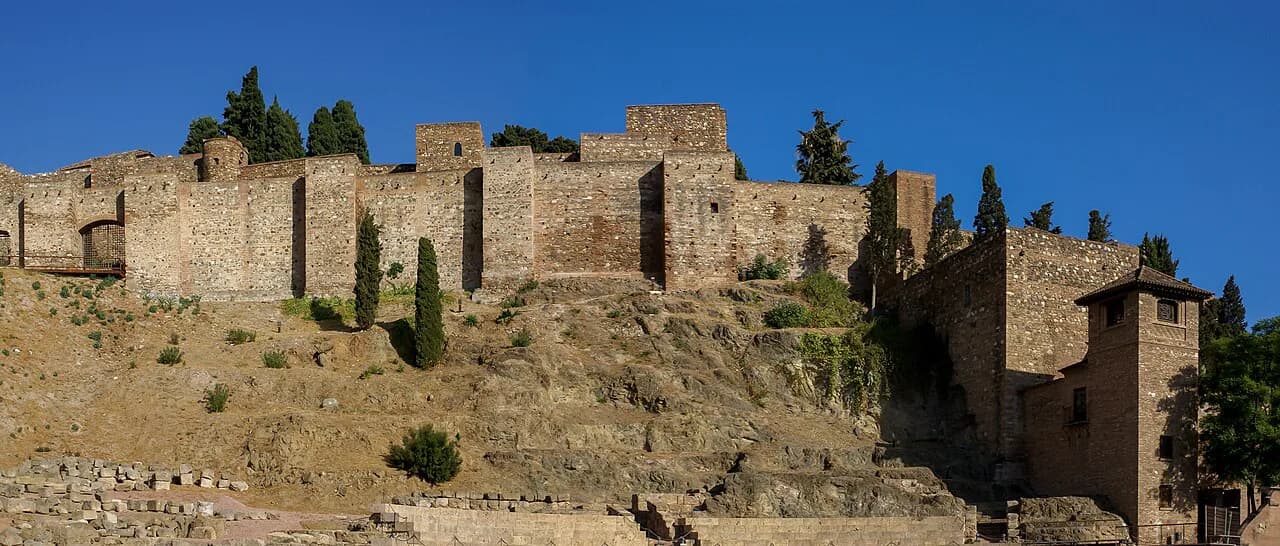
The Alcazaba de Málaga is the fortified palace the Muslim rulers of the city built on the slopes of Monte Gibralfaro, and it is one of the best-preserved complexes of its kind in Spain. You enter from Calle Alcazabilla in the historic centre, spend roughly an hour and a half inside, and leave with a clear picture of how Málaga worked under al-Andalus and after the 1487 conquest.
This is a single monument, not a city itinerary: gates, palace rooms, gardens and viewpoints arranged over a terraced hill. The practical decisions are hours, tickets, footwear and whether you pair it with Gibralfaro Castle on the same day.
Where the Alcazaba is and how to get there
The Alcazaba sits at 2 Calle Alcazabilla, in the heart of the old town, with the Roman Theatre immediately below it and Plaza de la Merced a few minutes' walk away. From Calle Larios or the cathedral you can simply walk to the lower entrance along Alcazabilla.
Two routes avoid the climb: the public lift connects Calle Guillén Sotelo with the upper level of the site, while city buses 1, 36 and C1 stop nearby. Driving is the least appealing option, since you will park in a city-centre garage and walk in regardless.
Opening hours by season, last admission and closing days
Opening hours switch with the season. From 1 April to 31 October the Alcazaba is open from 09.00 to 20.00, and from 1 November to 31 March from 09.00 to 18.00. The last admission is one hour before closing, not the 45 minutes you will see quoted on plenty of websites, so the final entry is 19.00 in summer and 17.00 in winter.
It closes on 1 January and on 24, 25 and 31 December, and is otherwise open every day of the year. Turning up in the last hour is a waste: the route climbs through several terraces and you would be rushed out before reaching the viewpoints.
Tickets: general and concession prices, and the combined ticket
General admission costs €7 and the concessionary rate is €3, for under-16s, over-65s, pensioners, the unemployed, EU students, European Youth Card holders, large families and visitors with a disability rating of 33% or more, with proof checked at the entrance. The price list changed in 2025, so guidebooks still printing €3.50 send you to the ticket machine expecting the wrong figure.
A combined ticket covering the Alcazaba and Gibralfaro Castle costs €10 and stays valid for both monuments for 48 hours. Children under six and practising official tourist guides enter free. Tickets come from the vending machines at the Calle Alcazabilla entrance, and there are no time slots or capacity limits, so the risk is a queue rather than a sell-out.
Free entry days and the Sunday afternoon rush
Entry is free every Sunday from 14.00 until closing, and that is the busiest slot of the week by a distance. Free admission also applies on 28 February for Andalusia Day, 18 May for International Museum Day, 27 September for World Tourism Day and on the European Heritage Days, and the Sunday concession covers Gibralfaro Castle too.
Because each of the two walled monuments takes around an hour and a half, cramming both into one free Sunday afternoon is a rush. Use the 48-hour combined ticket instead and give the Alcazaba its own unhurried visit on a weekday morning.
What to see: the zigzag gateways
The entrance route threads through the Door of the Vault, the Gate of the Columns and the Arch of Christ in a deliberate zigzag. This was military engineering rather than decoration: attackers had to turn repeatedly in a narrow space, exposed to defenders above and unable to swing a battering ram.
Look closely at the stonework as you pass through. The builders reused columns, capitals and blocks from the Roman Theatre at the foot of the hill, so 2,000-year-old marble sits directly alongside 11th-century masonry in the same arches.
What to see: the Cuartos de Granada, courtyards and gardens
The Cuartos de Granada form the residential palace area, with horseshoe arches, columns and the Courtyard of the Fountains. It reads as a smaller preview of what the Alhambra would become, and it is the section worth slowing down for.
Water does the work throughout the gardens and terraced plots, with fountains and channels cooled by the slope and the airflow. That system kept the rooms bearable in summer, which is also why the gardens feel fresher than the exposed walls above them.
What to see: the keep, exhibition halls and viewpoints
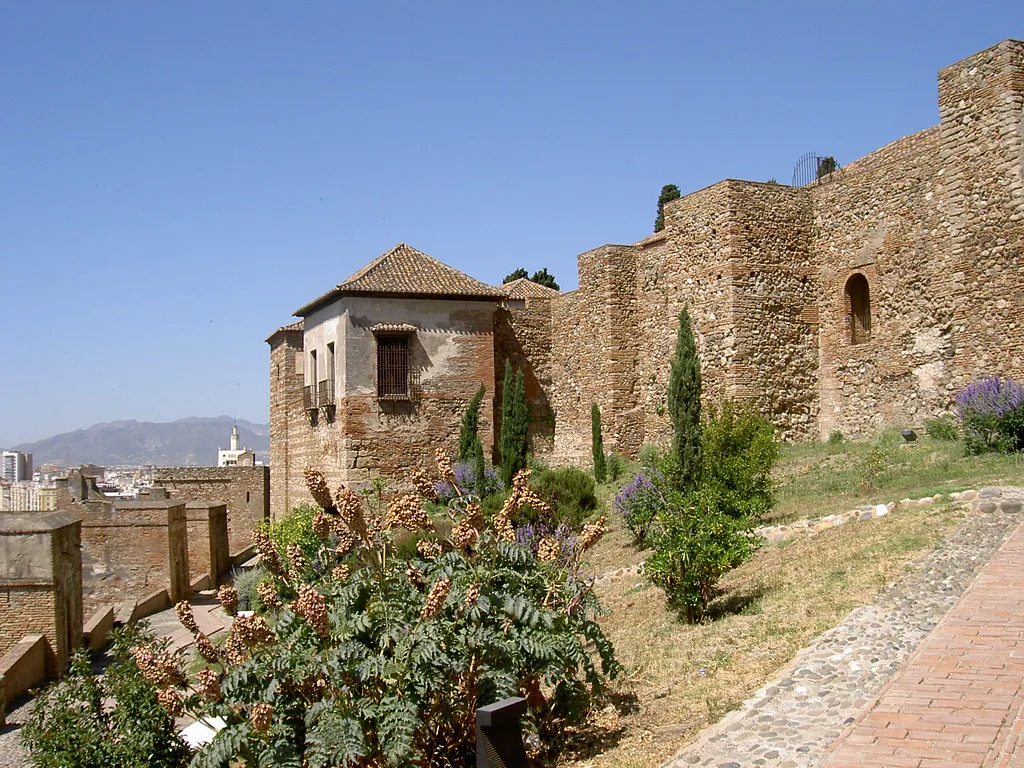
The upper military compound holds the keep and towers, and the route ends at viewing platforms with the harbour, the cathedral and the old-town rooftops spread out below. They explain the choice of site better than any panel: whoever held this hill controlled both the city and the port.
Exhibition rooms display pottery and everyday objects from al-Andalus, which fill in the domestic side of a site otherwise dominated by defences. The complex covers 15,000 square metres, part of it gardens, silos and cisterns built so the garrison could hold out under siege.
How long to allow, and whether to add Gibralfaro Castle
Allow about an hour and a half for the Alcazaba at an easy pace, covering the gates, the Cuartos de Granada and the upper viewpoints. If you add Gibralfaro Castle and the Roman Theatre, set aside the whole morning rather than trying to squeeze them into an afternoon.
A sensible split is the Alcazaba for palaces and gardens, Gibralfaro for the rampart walk and the widest views, and the Roman Theatre below for the historical sequence at no cost. The combined ticket's 48-hour validity means you need not do both fortresses on the same day.
Alcazaba and Gibralfaro are not connected
The Coracha, a walled corridor, once linked the two fortresses, but it is not a route you can walk today. Each monument has its own separate entrance, and getting from one to the other means leaving and heading up the hillside path, a walk of 20 to 30 minutes, or taking a city bus.
Plan the order deliberately. The Alcazaba's lower entrance is in the old town, so it fits naturally with a morning of sightseeing, while Gibralfaro sits above and works better as a separate outing.
Access, footwear and timing your visit for heat
The interior route is cobbled, stepped and constantly changing level, and it is not adapted for wheelchair users. The public lift on Calle Guillén Sotelo reaches the upper level and its views, but it does not make the full circuit accessible.
Wear closed-toe shoes with grip and go early in the morning or late in the day in summer, since several stretches have no shade. Carry water, though there are vending machines at the entrance and in the upper area, and toilets and a cafeteria inside next to the café and at the top of the palace.

Nearby: the Roman Theatre, Plaza de la Merced, the Cathedral and Calle Larios
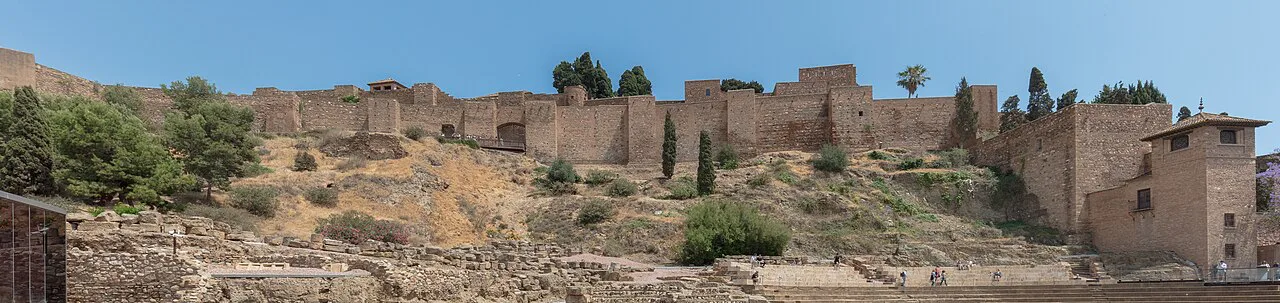
The Roman Theatre sits literally at the foot of the Alcazaba and is free to visit, so it makes the obvious pairing and gives the hill its full historical sequence. From there, Plaza de la Merced, Calle Larios and the cathedral are all within a short walk through the old town.
If you want a second indoor stop for a hot afternoon, the Picasso Museum Málaga and the Carmen Thyssen Museum are both in the centre. Plan lunch after 13.30 and dinner from about 20.30 to 21.00, when Málaga kitchens are actually running.
A brief history: Badis ben Habús, the Nasrids and the 20th-century restoration
Construction is attributed to Badis ben Habús, Zirid king of the Taifa of Granada, in the 11th century, when the collapse of the Caliphate of Córdoba left small kingdoms fighting each other. He built a fortress and palace that could control the city and port at once, with a double ring of walls.
The Nasrids reinforced the defences and renovated the living quarters between the 13th and 14th centuries, then Málaga fell to the Catholic Monarchs in 1487 and the complex slid into long decline. Houses were built against it over the centuries, and the restoration campaigns that followed the rediscovery of the Roman Theatre in 1951 cleared the walls and rebuilt the palaces and gardens.
Practical points: ticket machines, facilities, pets and events
Tickets are bought from machines at the Calle Alcazabilla entrance, with no slot booking to arrange in advance. That simplifies planning but means you may wait at peak times rather than securing an entry time, and Sunday after 14.00 is the one period to avoid if queues bother you.
Pets are not allowed on the premises. The Alcazaba also hosts temporary exhibitions, open-air concerts and historical re-enactments through the year, including evening opening for Málaga's Noche en Blanco, so check the calendar if a performance inside the walls appeals.
Limited time or limited mobility: what to do differently
With an hour to spare, skip the exhibition rooms and head straight for the Cuartos de Granada, then climb to the viewpoints for the harbour and cathedral panorama. That gives you the two things the Alcazaba does better than anywhere else in the city in the shortest time.
With limited mobility, use the Calle Guillén Sotelo lift for the upper level and views rather than attempting the stepped circuit, and pair it with the flat old-town sights instead. The Roman Theatre below is the easiest way to add context without another climb.
Plan Your Visit
The Alcazaba de Málaga rewards an unhurried morning: arrive at Calle Alcazabilla near opening, walk the gates and palace rooms, then finish at the viewpoints before the heat builds. Buy the combined ticket if Gibralfaro appeals and use its 48-hour validity to spread the two hills over separate days. If you're weighing how many days in malaga to allow, this half-day visit slots neatly into a short break.
Explore more Malaga guides
Frequently Asked Questions
How long does it take to see the Alcazaba in Málaga?
Allow about an hour and a half at an easy pace, covering the zigzag gateways, the Cuartos de Granada and the upper viewpoints. Adding Gibralfaro Castle and the Roman Theatre turns it into a full morning.
How much does it cost to visit the Alcazaba in Málaga?
The Alcazaba is ticketed, with a lower concessionary rate for groups such as under-16s, over-65s, students and large families, and a combined ticket that also covers Gibralfaro Castle. The ticket machines at the Calle Alcazabilla entrance show the current general and concession prices, and eligibility for the concession is checked at the gate.
When is entry to the Alcazaba in Málaga free?
Entry is free every Sunday from 14.00 until closing, and that is the busiest slot of the week. Admission is also free on 28 February, 18 May, 27 September and during the European Heritage Days, and the Sunday concession covers Gibralfaro Castle as well.
What are the opening hours of the Alcazaba in Málaga?
From 1 April to 31 October it opens 09.00 to 20.00, and from 1 November to 31 March 09.00 to 18.00. Last admission is one hour before closing, so 19.00 in summer and 17.00 in winter.
Can you walk from the Alcazaba to Gibralfaro Castle?
Not through the monuments themselves: they have separate entrances and the old Coracha passage is no longer a usable route. You leave the Alcazaba and follow the hillside path uphill for 20 to 30 minutes, or take a city bus.
How do you get to the Alcazaba in Málaga?
It is at 2 Calle Alcazabilla in the historic centre, next to the Roman Theatre and a few minutes from Plaza de la Merced. The public lift on Calle Guillén Sotelo reaches the upper level, and city buses 1, 36 and C1 stop nearby.
Is the Alcazaba accessible for wheelchair users?
The interior route is not adapted, with cobbles, steps and constant level changes. The public lift reaches the upper level and its views, but it does not give access to the whole circuit.
What should you see inside the Alcazaba?
Prioritise the zigzag gateways, the Cuartos de Granada with the Courtyard of the Fountains, the gardens fed by water channels, and the upper viewpoints over the harbour and cathedral. The exhibition halls are worth a stop if time allows.