
Roman Theatre Málaga: What to See at the Teatro Romano

The Roman Theatre of Málaga is a first-century auditorium built during the reign of Augustus and used until the third century, lying on Calle Alcazabilla at the foot of the Alcazaba. It is a small, open site in the middle of the historic centre, and the sensible way to visit is to look at it on the way up to the fortress rather than as a destination of its own.
What the Teatro Romano de Málaga is
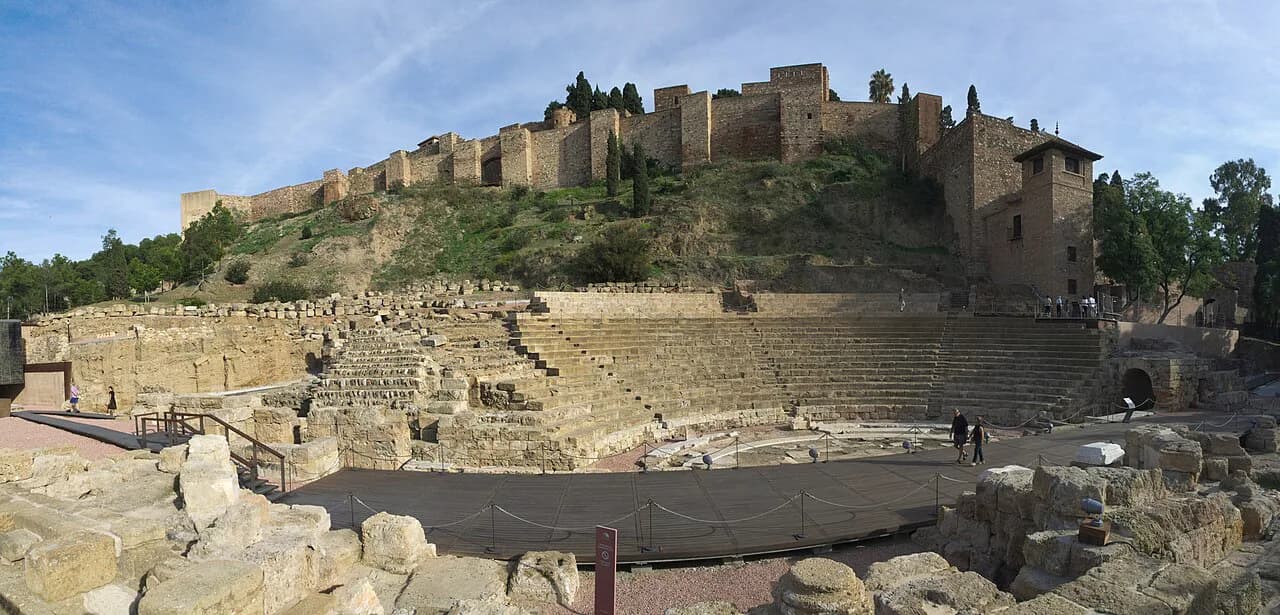
This is a Roman theatre, not an amphitheatre: a semicircular auditorium built into the slope rather than a free-standing oval arena. The structure dates to the first century, went up under Augustus, and stayed in use until the third century, which makes it the city's oldest monument standing in the historic centre.
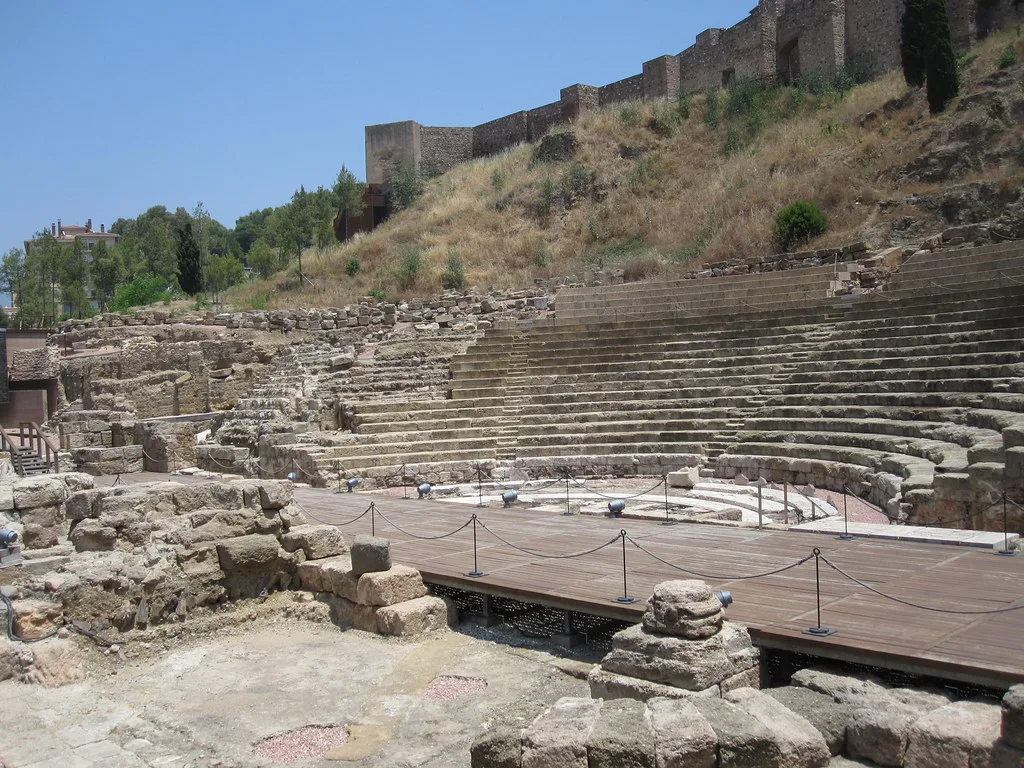
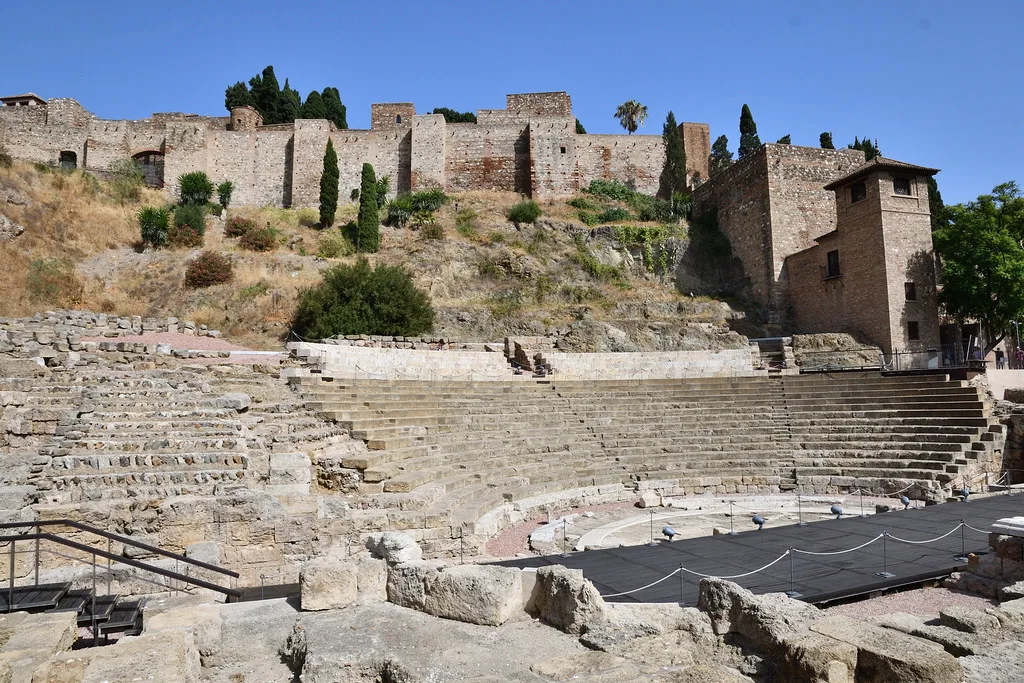
You see the cavea, the tiered seating, cut into the hillside below the Alcazaba, with the stage area at the bottom. The theatre was buried for many centuries and only came to light in 1951, which is why it sits so low relative to the streets around it and why the Alcazaba looms directly above.
Where it sits in Málaga
The address is Calle Alcazabilla, s/n, 29015 Málaga, a short pedestrian street that runs along the base of the Alcazaba hill. It is squarely in the historic centre, a couple of minutes from the cathedral end of the old town and on the main walking route up towards Gibralfaro.
Because it stands open to the street, you will almost certainly pass it whether or not you planned to. If you are mapping out a day of sights, the theatre belongs on any list of things to do in Malaga rather than being a separate outing.
The dimensions worth noticing
The theatre has a radius of 31 metres, stands 16 metres tall, and its orchestra measures 15 metres across. It has three main stands, with gateways leading into the seating, so look at how the entrances were cut through the structure rather than only at the seats themselves.
Knowing the scale before you arrive helps: the auditorium is big enough to read as a proper theatre, yet the surviving stonework is fragmentary, so what you see is a skeleton of the original building. Read the seating and the gateways together and the layout makes sense in a few minutes.
The Alcazaba connection
Look up from the theatre to the Alcazaba's arches and you are looking at recycled Roman stone. Builders of the fortress took capitals and column shafts from the theatre to support the horseshoe arches over its doorways, so the two monuments are physically linked by plundered masonry.
That detail changes how you walk through the fortress afterwards. Instead of seeing only the Arab palace-fortress begun in the eleventh century, you notice Roman fragments built into it, and the theatre stops being a roadside curiosity.
How to get there on foot
Walk to Calle Alcazabilla from anywhere in the historic centre; it is a flat, pedestrian approach from the cathedral and the port side, with buses and taxis dropping off nearby. Allow a few minutes on foot from the old town rather than planning a bus route, because traffic in these lanes is restricted.
From the theatre, the entrance to the Alcazaba is effectively next door, which is the whole reason to pair them. If you want a fuller picture of how the centre fits together before you set off, the area guides cover the streets around Calle Alcazabilla.
How long to allow, and when to come
Give the theatre 15 to 20 minutes if you are reading the information and photographing the seating, and rather less if you simply walk past. It is a short stop, not a half-day sight, and the strongest use of your time is to combine it with the Alcazaba uphill behind it.
Time the visit around Spanish eating rather than British habits. Lunch runs from about 1:30pm to 4pm and dinner starts around 8:30pm to 9pm, so an early-afternoon slot works well: see the theatre and fortress while kitchens are quiet, then eat late. Check the site's own access arrangements before you build a day around it, as these are the details that change.
Nearby sights within a few minutes
The Alcazaba and Málaga Museum are each about 0.1 km away, so both are natural next steps. The Picasso Museum Málaga, the Alameda and Málaga Park, the Casa Natal de Picasso and the cathedral all sit within roughly 0.2 to 0.3 km, which keeps a single morning in this quarter coherent.
A little further out, the Carmen Thyssen Museum is about 0.3 km away and the Pompidou Centre about 0.4 km, while Gibralfaro Castle and the Soho art district are roughly 0.6 and 0.7 km off. Pick two of these rather than trying to tick off all of them in one day.
If you are building a wider itinerary, Gibralfaro is the uphill walk that rewards the effort with views back over the theatre and port.
Practical points before you go
The theatre's published contact details are an email address, teatroromanomalaga.ccul@juntadeandalucia.es, and telephone numbers +34 671 539 212 and +34 951 501 115, with a separate booking email for group visits. Confirming access and any timed entry via those contacts is the reliable route.
The site is managed as a monument rather than a museum, so do not expect galleries or a large interpretation centre on the spot. Treat the visit as an outdoor stop and check the official Malaga tourism pages for current opening arrangements before travelling.
Is the Roman Theatre Worth It?
The theatre is worth ten to twenty minutes of anyone's morning in Málaga, and it is best used as the opening move before the Alcazaba rather than a standalone attraction. Its value lies in two things: seeing a first-century auditorium in the open street, and then spotting its stonework reused in the fortress arches above.
Plan it into a morning with the Alcazaba and one museum, leave the afternoon for a late lunch, and you will have seen the quarter properly without spending a half-day on a site that does not need one.
Explore more Malaga guides
Frequently Asked Questions
Is the Roman theatre in Málaga free?
The theatre stands on Calle Alcazabilla beside the street, but entry arrangements are handled by the site's managers. Confirm any ticket or access conditions through the contact details on the official tourism listing before you go.
Does Málaga have a Roman amphitheatre?
Málaga has a Roman theatre, a semicircular auditorium built into the hillside below the Alcazaba. It is a theatre rather than a free-standing oval amphitheatre, so do not expect an arena.
What is the Roman Theater of Málaga?
It is the city's Roman theatre, built in the first century under Augustus and used until the third century. It lay buried for centuries and was uncovered in 1951, and it sits at the foot of the Alcazaba.
Where is the Roman Theatre in Málaga?
The address is Calle Alcazabilla, s/n, 29015 Málaga, in the historic centre at the base of the Alcazaba hill. It is a short walk from the cathedral and the old town.
How long does it take to visit?
Most visitors need 15 to 20 minutes to read the information and look at the seating, gateways and orchestra. Pair it with the Alcazaba, which is immediately uphill from the site.
What else is nearby?
The Alcazaba and Málaga Museum are both about 0.1 km away, and the Picasso Museum, the cathedral and the Alameda fall within roughly 0.2 to 0.3 km. Gibralfaro Castle is about 0.6 km off.
When should I visit around meal times?
Spanish lunch runs from about 1:30pm to 4pm and dinner from around 8:30pm to 9pm. An early-afternoon visit to the theatre and fortress fits neatly before a late lunch.