
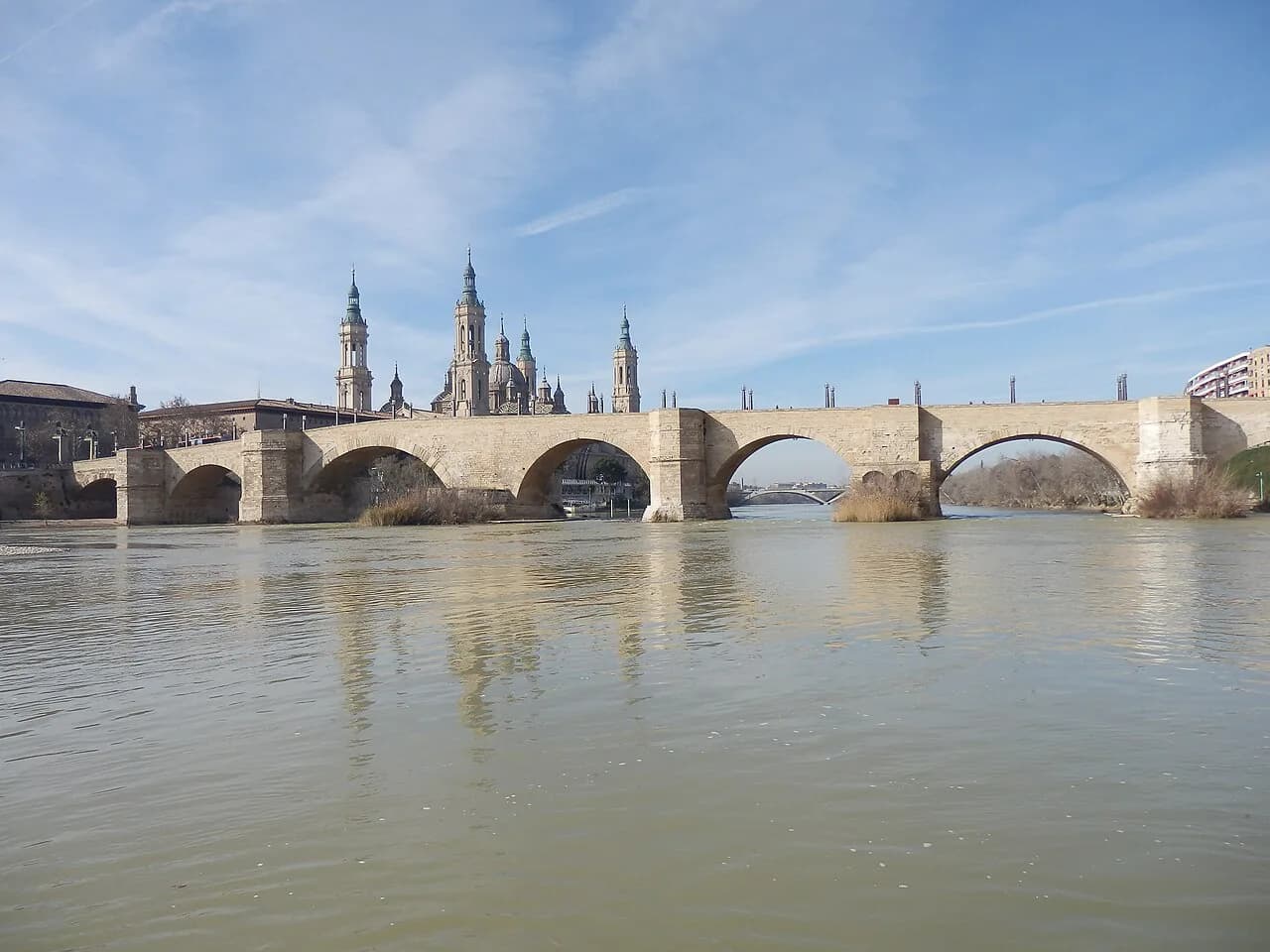
Puente de Piedra: Zaragoza's Stone Bridge over the Ebro

The Puente de Piedra is the stone bridge that carries pedestrians, bicycles, buses and taxis across the Ebro in central Zaragoza, and it is freely accessible at any hour. Treat it as a viewpoint and a piece of city history rather than a ticketed monument: there is nothing to queue for, and the reason to come is the crossing itself and the view back to the Basílica del Pilar.
Allow a slow 20 to 30 minutes to walk it end to end, stop for photographs and read the lions and the memorial cross. Then continue into the old town, where the bridge, the basilica and the Roman-era streets sit within a short walk of one another, which makes it easy to slot into a wider look at the Zaragoza attractions.
What the Puente de Piedra Actually Is
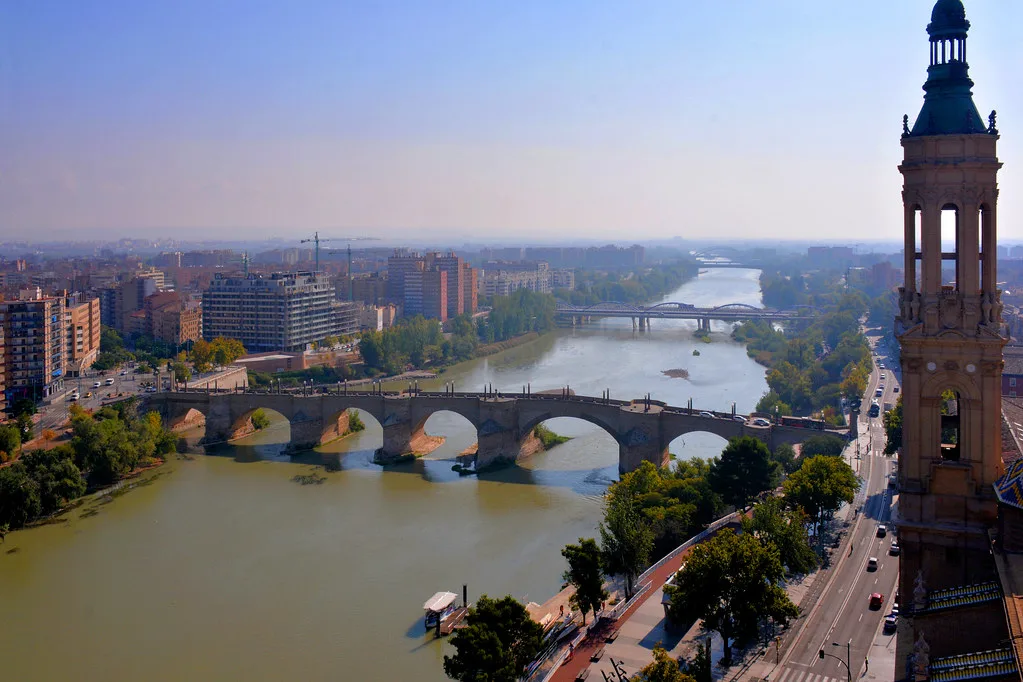
This is a seven-arch stone bridge over the Ebro, although one arch is now buried beneath the modern Paseo Echegaray and no longer visible from the water. For centuries it was Zaragoza's only permanent crossing, which is why it mattered far beyond its modest length: trade, communication and the city's growth all funnelled over this line of stone.
Today it functions as a road bridge as well as a footpath, carrying bicycles, buses and taxis alongside people on foot. That mix is the honest character of the place. If you are picturing a quiet riverside promenade, adjust expectations: you come for the architecture, the river and the Pilar skyline, not for tranquillity.
Where It Is and How to Get There
The bridge spans the Ebro between Zaragoza's historic centre on the right bank and the left bank near the Paseo Echegaray. On foot it is an easy continuation of a old-town wander: from the Basílica del Pilar you are only a few minutes away, so most visitors reach it without needing any transport at all. If one cathedral view is not enough to plan a day around, the wider set of things to do in Zaragoza pairs this stretch of the river with the rest of the old town.
If you are coming from further out, trams and city buses serve the centre and the bridge area, but routes and stops change, so confirm the current network on the operator's own site before you set out. Walking remains the simplest approach, and it lets you arrive from the old town side, where the bridge reveals itself gradually as you reach the river.
The Medieval Construction, 1401 to 1440
The present stone structure was begun in 1401 under the direction of Gil de Menestral and finished in 1440. The project was troubled from the start: one arch collapsed in 1435, before the bridge was even inaugurated, which says something about the ambition of building across this river.
The Ebro has repeatedly tested the bridge. A catastrophic flood in 1643 destroyed two central arches, an event recorded in a painting by Juan Bautista Martínez del Mazo, and the architect Felipe de Busignac led the reconstruction from 1659 with stronger defensive works. In 1813, retreating French troops destroyed an arch during the Napoleonic Wars to slow pursuit, and the medieval towers that once flanked the crossing were finally demolished in 1906.
That flood history explains the protective wall built in the late 18th century under the engineer Agustín Sanz, the Pretil de San Lázaro, designed to hold back high water. Look for it as you approach from the city side; it is a reminder that this crossing has always been as much an engineering problem as a monument.
Older Crossings and the Roman Bridge Myth
A crossing existed here in Roman times, with evidence of a bridge for Caesaraugusta in the 1st century, and after destruction a new bridge was built by Abderramán II in 839. The structure you walk across today, however, is not Roman. It is a 15th-century medieval bridge, despite the persistent urban legend that labels it Roman.
Getting this right matters when you are standing on the bridge: the stone under your feet is late medieval, the latest in a long succession of crossings rather than an ancient survival. Read the story that way and the rebuilt arches and flood defences make sense as layers of repair, not as a single untouched Roman fabric.
The Bronze Lions and the Cruz de Basilio
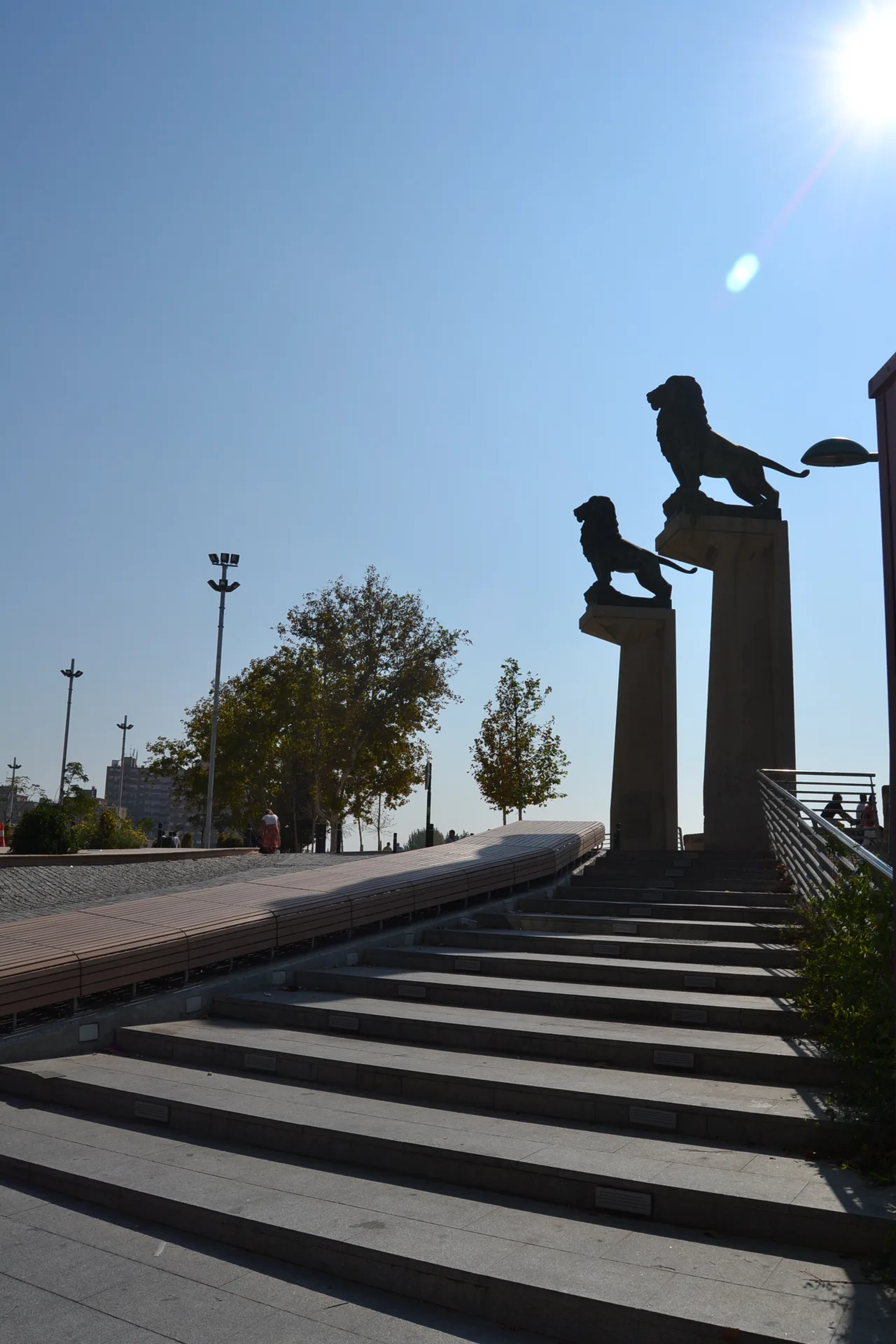
Four bronze lions stand on the bridge, and they are modern additions rather than original fittings. They were sculpted by Francisco Rallo Lahoz and installed in 1991, so they belong to the bridge's contemporary image rather than its medieval design.
The bridge also carries the Cruz de Basilio, a memorial to those killed during the Sieges of Zaragoza. It is easy to pass without noticing, so slow down near it: the bridge compresses several centuries of the city's history into a short walk, from medieval construction to the Peninsular War and on to 20th-century sculpture.
What You See Today: Arches, River and the Pilar
The reward for crossing is the view: the arches stepping over the Ebro and, looking back towards the right bank, the Basílica del Pilar rising above the river. The bridge is a popular viewpoint for locals and visitors alike, and the outlook towards the basilica is the defining image of this stretch of the Ebro.
For a closer look at the basilica itself, including its domes and interior, step off the bridge and continue along the bank. The Basílica del Pilar, Zaragoza is the obvious companion visit, and pairing the two gives you both the exterior view from the water and the interior experience in a single morning or afternoon.
Best Light and Photographs
The views from the bridge are particularly renowned at sunset, when the light falls on the river and the basilica behind you. Daylight generally serves the stone better than darkness, so plan the crossing for late afternoon and stay for the change of light if the timing suits your day.
Shoot from the bridge towards the Pilar for the classic frame, then cross to the opposite bank and turn back for the arches themselves. Because the bridge carries traffic, keep clear of the bus and taxi lanes while composing a shot, and be patient rather than stepping into the roadway for a cleaner angle.
How Long to Allow and What to Combine
Budget 20 to 30 minutes for the bridge itself and its immediate banks. That leaves plenty of time to walk into the old town, where the Basílica del Pilar and La Seo, Zaragoza sit close together and can be visited in the same half-day without any transport. For a broader plan of the city beyond the river, our list of things to do in Zaragoza helps you sequence the rest of the day.
If you want art rather than architecture, the Museo Goya Zaragoza is another old-town draw that fits neatly after a river crossing. Check each venue's own page for current opening hours and any entry arrangements before you build an itinerary around them, since these are the details that shift.
For a longer day, the Aljafería Palace lies away from the river and makes a natural second stop, or first stop, depending on which side of the centre you start. It is a different kind of visit from the bridge: an enclosed palace rather than an open crossing, so read up before you go.
Nearby Places to Continue
Beyond the basilica, the Puerta del Carmen and the Monumento a Agustina de Aragón are other central landmarks worth folding into a walk. Neither needs a dedicated trip of its own, but both sit naturally on a route that begins or ends at the river, and they add context to the siege history commemorated on the bridge.
If your interests run to food and market halls, the Mercado Central de Zaragoza is a sensible next stop in the old town, and it suits the Spanish rhythm of a late lunch better than an early one. Plan the bridge for mid-morning and the market for lunch, or reverse the order if you prefer to walk off a meal along the Ebro.
Anyone building a fuller itinerary can use a wider list of things to do in Zaragoza to sequence the basilica, the bridge and the museums without doubling back. The bridge works best as a short, free hinge between the riverbank and the old town rather than as a destination in itself.
Honest Trade-offs
This is a working traffic bridge, not a quiet riverside promenade, and the constant flow of buses and taxis is part of the experience. If you want a calm walk along the water, use the banks either side instead, and treat the bridge as the crossing that connects them.
There is no ticket, no booking and no opening time to plan around, which makes it an unusually low-effort sight. The trade-off is that it rewards a little reading beforehand: knowing which features are medieval, which are 1991 additions and which commemorate the sieges turns a five-minute walk into something worth the detour.
Plan Your Visit
Cross the Puente de Piedra as part of a walk between the Basílica del Pilar and the left bank, allowing half an hour and timing it for late-afternoon light if you can. Look for the lions, the Cruz de Basilio and the buried arch, and read the flood and war damage as the reason the stonework looks the way it does.
The bridge is free and always open, according to the published descriptions, and it has been a Site of Cultural Interest since 2002. It also forms part of the historic centre included in the UNESCO listing, which is a useful reminder that the crossing is one piece of a much larger old town rather than a standalone attraction.
Frequently Asked Questions
When was the Puente de Piedra in Zaragoza built?
Construction of the current stone bridge began in 1401 under Gil de Menestral and was completed in 1440. One arch collapsed in 1435 before the bridge was inaugurated, and the structure has been rebuilt and repaired several times since, notably after the 1643 flood and during the Napoleonic Wars.
Are the lions on the Puente de Piedra original to the bridge?
No. The four bronze lions were sculpted by Francisco Rallo Lahoz and installed in 1991, so they are a modern addition to a medieval structure. They now form part of the bridge's familiar image but were not part of its original design.
Is the Puente de Piedra a Roman bridge?
Not the structure you walk across today. A crossing existed here in Roman times and a bridge was rebuilt under Abderramán II in 839, but the present bridge is a 15th-century medieval construction. The Roman label is a popular legend rather than an accurate description.
Can you walk across the Puente de Piedra?
Yes. The bridge is open to pedestrians and is freely accessible at any hour, and it also carries bicycles, buses and taxis. Keep to the footway and watch for traffic when stopping to take photographs.
What can you see from the Puente de Piedra?
The main draw is the view along the Ebro and back towards the Basílica del Pilar, which is especially striking at sunset. On the bridge itself you can see the stone arches, the four bronze lions and the Cruz de Basilio memorial to those killed during the Sieges of Zaragoza.
Do you need tickets for the Puente de Piedra?
No. It is a public bridge rather than a ticketed monument, so there is nothing to book and no entry charge. Any nearby sights such as the basilica or the Aljafería Palace have their own arrangements, which are best confirmed on each venue's own page.
How long should you spend at the Puente de Piedra?
Allow around 20 to 30 minutes to walk across, stop for the views and find the lions and memorial cross. Most visitors combine it with the Basílica del Pilar and the old town, which sit within a short walk on the right bank.
What is nearby after visiting the Puente de Piedra?
The Basílica del Pilar and the old town are the closest continuations, with La Seo and the Mercado Central also within walking distance. Further out, the Aljafería Palace makes a contrasting half-day visit, and the Puerta del Carmen and the Agustina de Aragón monument fit into a central walk.