Things to Do in Sitges: Beaches, Old Town and Where to Eat
Plan your days in Sitges with the old town, promenade, beaches, museums and boat trips, plus what to eat, typical meal times and how to get there.
On this page
Sitges gives you the whole coastal package in a town small enough to walk: a medieval old town, a promenade strung with beaches, a Baroque church above the harbour and a dining scene built on seafood and cava. It sits about 45 minutes by road from Barcelona's Prat airport, which makes it workable as a day trip or, better, a two-night base at the start of a Catalonia trip.
Plan your day around Spanish meal times and the town's rhythm. Day trippers from Barcelona arrive through the middle of the day and thin out in the evening, so sightsee in the morning, eat lunch late and save the promenade and old town for when the coaches have gone.
Getting to Sitges from Barcelona
Three options cover the journey from Barcelona, and each asks something different of you. The bus runs directly from the airport to Sitges for around €5 per ticket, with departures roughly every half hour on most days, but you need to check the timetable against your flight.
The train is the cheapest rail option but involves a connection, because there is no direct line from the airport. With luggage and a group, a taxi or ride-hail car is the simpler trade-off: one family paid 55 euros for a 37-minute comfort car from the airport, so compare that against four bus tickets before deciding.
Once you are in town, you will barely need transport. The train station sits in the old town, which makes it a sensible place to start or end a walk, and the beaches, marina and centre are all within strolling distance.
Orientation: Old Town, Promenade and Marina
Get your bearings with three anchors. The old town and its station sit at the centre, the Passeig Marítim runs along the coast past the main beaches, and Port d'Aiguadolç lies east of the old town towards Platja dels Balmins.
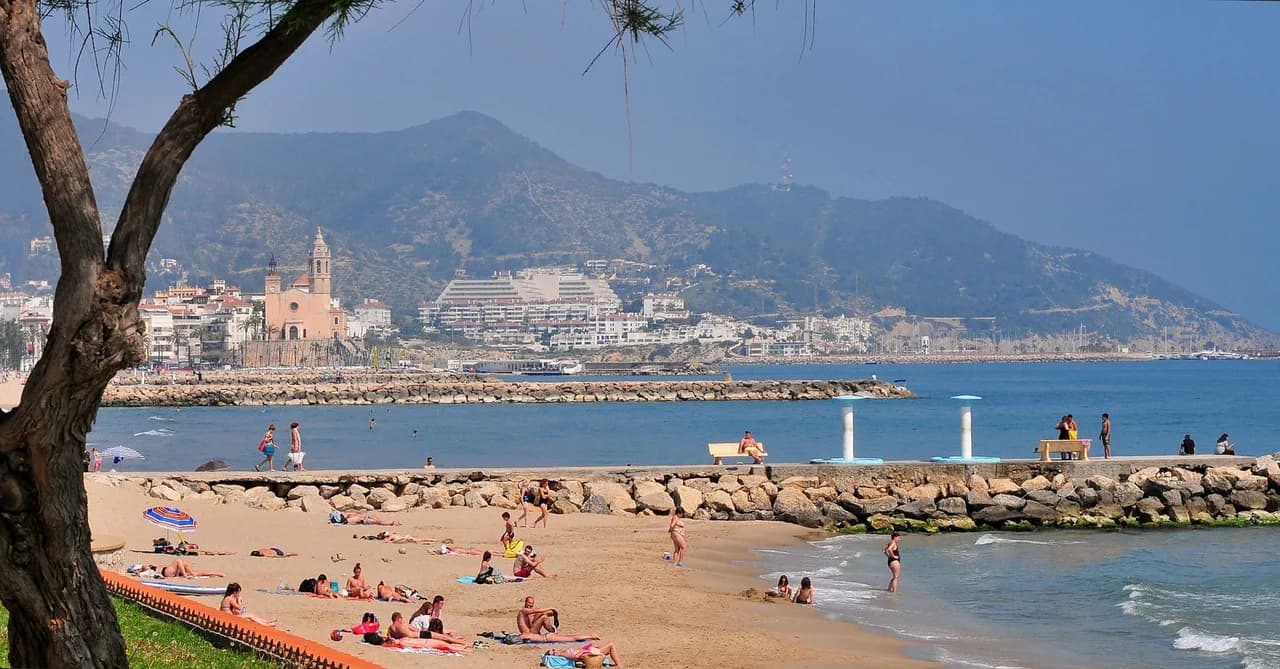
The Church of Sant Bartomeu divides the central beaches: Platja de Sant Sebastià on its east side, Platja de la Fragata and Platja de la Ribera to the west. Knowing which side of the church you are on tells you instantly which beach you are heading for.
Old Town Sitges
The old town is the heart of the visit: narrow cobbled alleys lined with boutiques and cafés, pastel buildings and a medieval street plan that rewards aimless wandering. It gets busy with day trippers, so come early or late and treat the middle of the day as time for lunch instead.
If shopping is part of the plan, the old town's independent shops and fashion boutiques are the main draw; our guide to shopping in Sitges maps out where the worthwhile clusters sit and how to fit them around the sights.
Passeig Marítim: Walking the Promenade
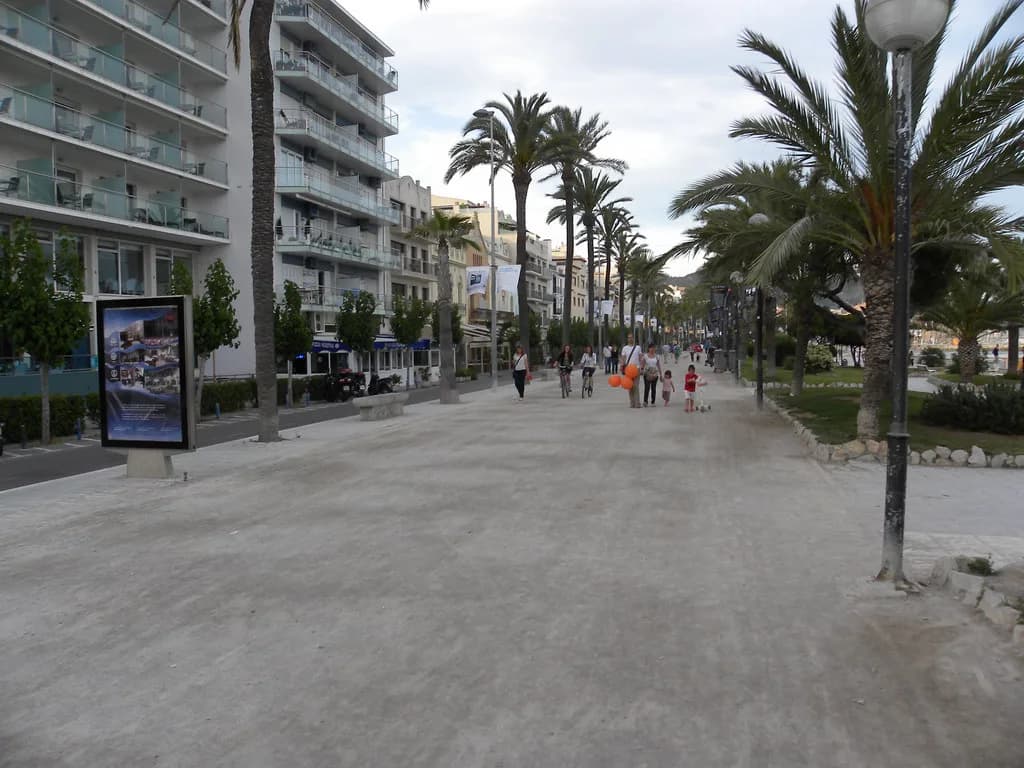
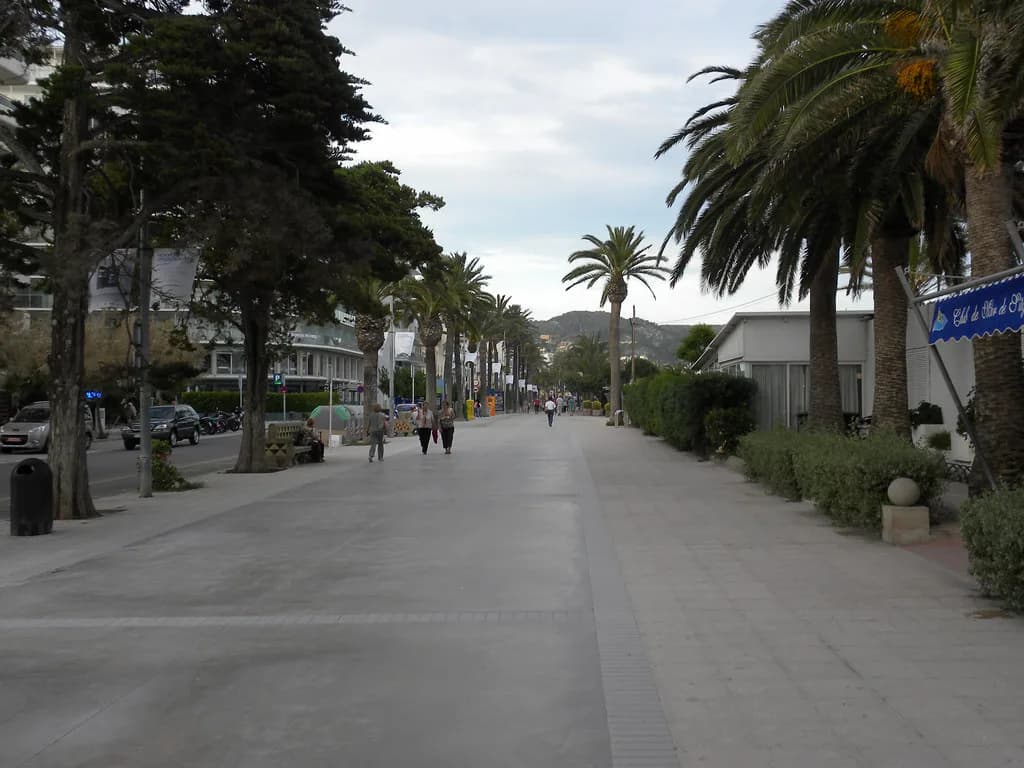
The Passeig Marítim is a wide paved walkway that runs along most of the coastline, linking the main beaches and passing restaurants, shops and constant views of the Church of Sant Bartomeu. It is where locals run, walk dogs and take the evening air, so it doubles as the best free activity in town.
Use it as a spine for the day: walk one direction in the morning before the heat builds, then return along the sand in the late afternoon. It also connects the town's two ends, so you can walk from the old town to the marina without touching a road.
Church of Sant Bartomeu and the Harbour
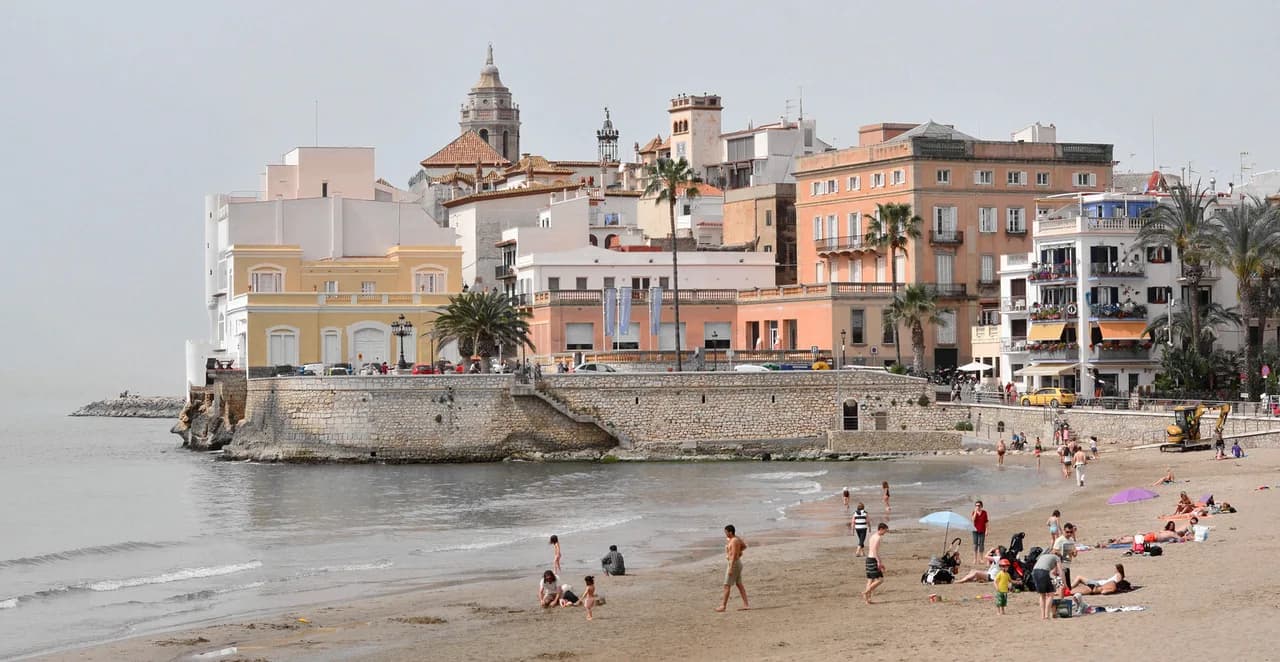
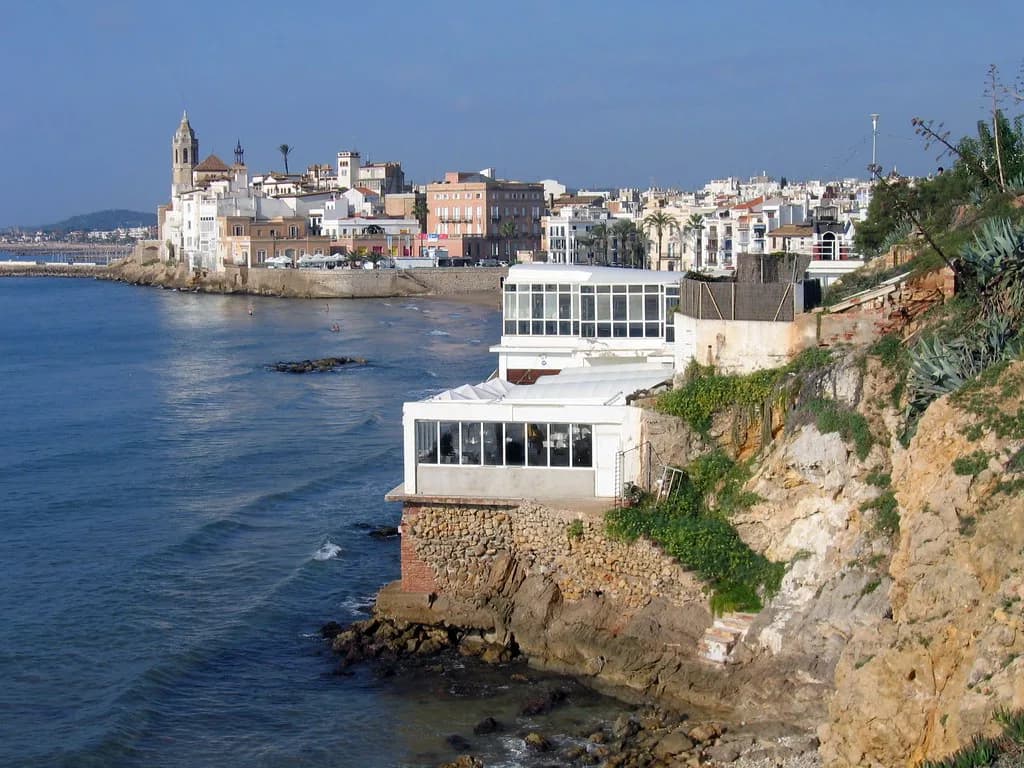
The 17th-century Baroque church presides over the harbour and is visible from the promenade and much of the coast, making it the town's defining landmark. The streets immediately around it are among the prettiest in Sitges, full of ornate windows, archways and old plaques worth slowing down for.
Just outside, a large iron cannon guards the coastal fortifications, a quick stop on the way down to the water. The church's dedication to Sant Bartomeu also gives the town its annual festa, covered in our guide to sitges in july if your dates coincide.
Which Sitges Beach Suits You
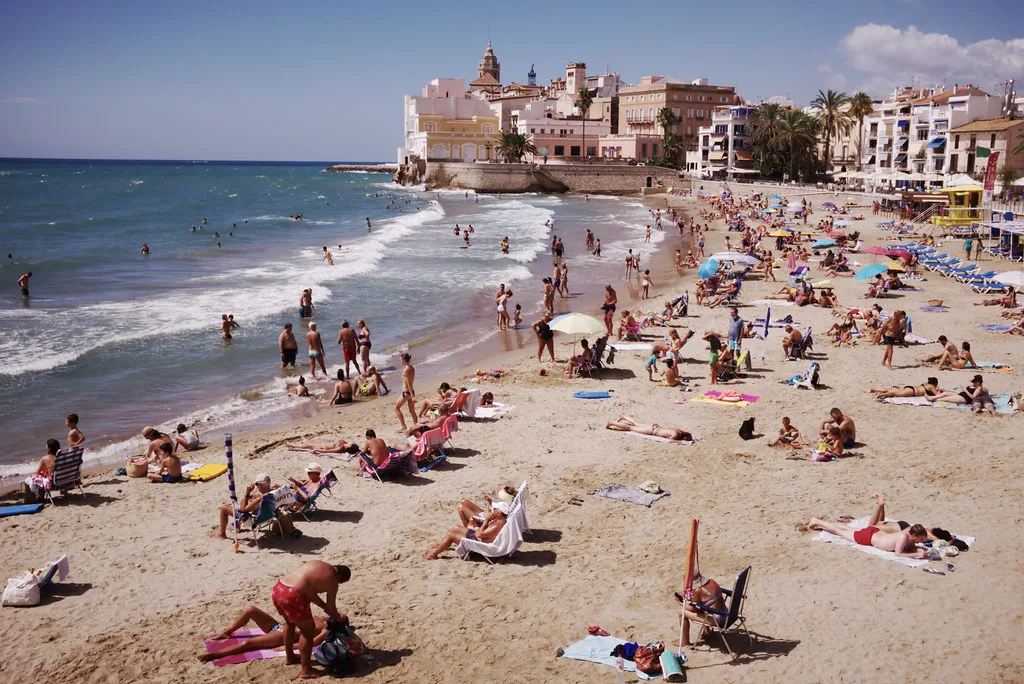
Treat the beaches as a decision rather than a list. Platja de Sant Sebastià, east of the church, is popular with locals and visitors alike and has restaurant-lined streets behind it, which makes it the easiest choice for a swim followed by lunch.
West of the church, Platja de la Fragata is one of the larger beaches, sitting at the base of the church near a jetty and a sailing club. Next door, Platja de la Ribera has a long shorefront, plenty of amenities and beach clubs for a drink at the water's edge.
Head east towards Port d'Aiguadolç and you reach Platja dels Balmins, which is clothing optional. That makes it a deliberate choice rather than a default: fine for adults who want a quieter scene, less so for families with young children.
In late May the beaches felt relaxed and local, with European schools still in session and the town not yet overrun. High summer is another matter, so if you are visiting in august expect to arrive early to claim space on the sand.
Museums for a Cooler Day
The historic centre holds three good museums within a short walk of each other. Cau Ferrat was the home and studio of the artist Santiago Rusiñol, and it sits alongside the Maricel Museum, which holds Catalan artefacts from various periods.
A short distance away, the Fundació Stämpfli offers modern art as a contrast to the historic collections. These are the natural plan for a cloudy day or a few hours out of the midday sun; check current opening days before you build a day around them.
On the Water and Out at Parc del Garraf
Boats can be chartered from Port d'Aiguadolç with a skipper, or you can rent a no-licence boat and drive yourself. It is an easy way to see the Catalan coastline from the water and works well for a family half-day.
Organised excursions from Barcelona pair Sitges with Tarragona on full-day tours of around 10 to 11 hours, listed by TUI Musement. Those are day trips into Sitges rather than out of it, so they suit travellers based in Barcelona rather than anyone staying locally.
For a half-day hike, Parc del Garraf spreads across rugged limestone country with hills, valleys, sinkholes and caves, and its main entrance is about a 25-minute drive east of town between Sitges and Barcelona. Check route maps and entrance details before setting out, as the park is large and exposed.
Walking in the Garraf Massif is best done in cooler months, when the limestone paths are comfortable rather than scorched. If you are weighing up seasons, our guide to sitges in september covers what the weather and crowds look like as summer fades.
Eating in Sitges: What to Order
The dining scene follows the coast's Catalan heritage: fresh seafood, paella and arròs caldós, a brothy rice dish that is the local alternative to a dry paella. Order it at lunch when you have time to sit, and pair it with cava or a white from the nearby Penedès region.
Tapas bars and family-run restaurants fill the narrow streets, with plenty of options for fussier eaters alongside the seafood. For a shortlist of where to book, see our pick of the best restaurants in Sitges, organised by meal and area.
Markets are the other half of the food picture, useful for picnic supplies or a cheap lunch of cheese, ham and fruit. Our guide to sitges markets covers which days the stalls set up and what is worth buying.
Meal Times and How to Plan Around Them
Spanish meal times shape the day here. Lunch runs from about 1:30pm to 4pm and dinner starts around 8:30pm to 9pm, so a late breakfast and a proper afternoon meal will carry you through to a late dinner without snacking.
That rhythm suits sightseeing: see the old town and museums in the morning, eat lunch at 2pm, swim through the hottest hours and walk the promenade before dinner. Restaurants tend to be quiet right at opening, so an early dinner at 8:30pm gets you a table with less waiting.
Many kitchens close one or two days a week, and some shut for part of August or winter, so confirm the day before you plan a specific meal.
Sitges at Night: Bar Strip and Rooftops
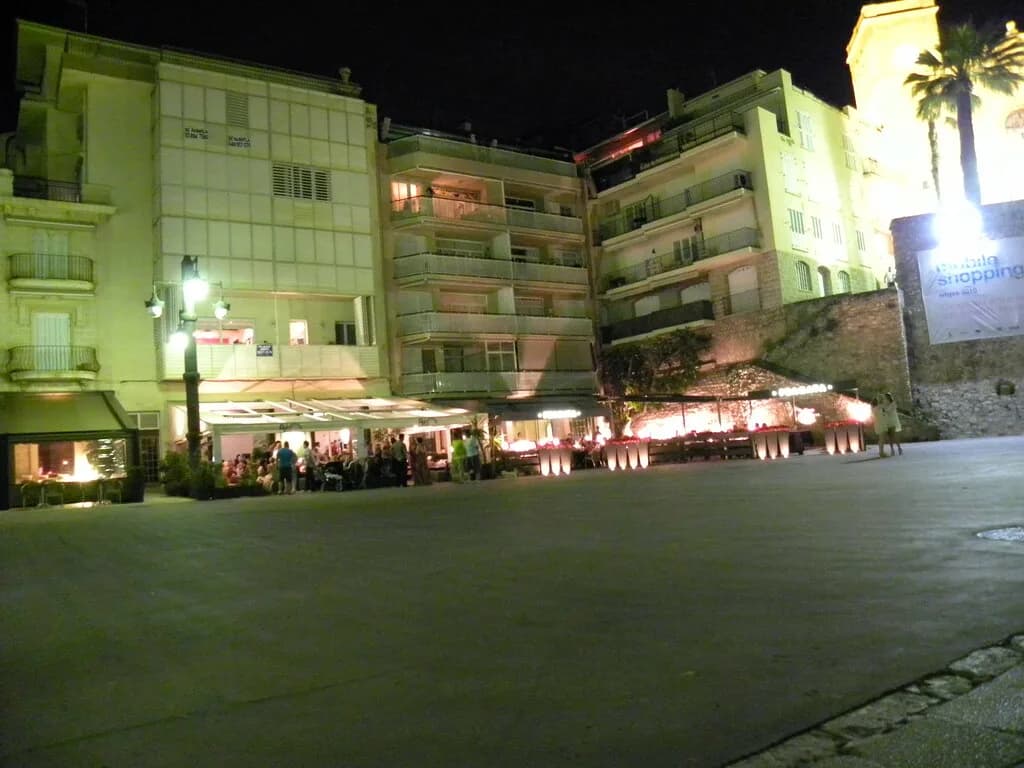
Sitges has more than 20 bars, many packed into a small area along Carrer Primer de Maig, known locally as the Street of Sin. The town is famously inclusive, with a strong gay scene and a welcoming atmosphere that runs from rainbow flags to fashion boutiques.
For something calmer, three rooftop bars offer different views. Sky Bar on the west side of downtown is the sunset spot, with views over both city and coast and a full dinner menu.
Las Vegas Sitges sits in the heart of the bar district above a club, with a dance floor but limited views from its second-floor perch. Radio Rooftop, on the western edge of the coastline, is the one to pair with an evening promenade walk for cocktails and a sweeping sea view.
Sitges with Kids or as a Couple
With children, build the day around the central beaches, the promenade and a boat trip, and eat early at one of the family-friendly restaurants in the old town. Avoid Platja dels Balmins unless the whole group is old enough for a clothing-optional beach.
As a couple, the town rewards slower days: a long lunch with cava, an afternoon in the museums, a sunset drink at Sky Bar or Radio Rooftop and a late dinner. The evening bar strip on Carrer Primer de Maig keeps going well past midnight if you want it.
Day Trip or Overnight Stay
Sitges works as a day trip from Barcelona, but the town empties in the evening and that is when it is at its best. Staying at least one night gives you the quiet promenade and the late dinner that day trippers miss.
Two nights is a comfortable amount for a first visit, covering the old town, a beach afternoon, the museums and a hike or boat trip. If you are deciding between one, two or three days, our guide to how many days in sitges weighs up what fits into each.
Madrid-bound travellers sometimes use Sitges as a base for Barcelona's sights, but the daily commute is wasted time; Barcelona as a base with Sitges as an overnight is the better trade-off. If you would rather stay south of Barcelona entirely, compare these things to do in alicante for a similar castle-and-beach break.
Plan Your Visit
Sitges suits anyone who wants a walkable coastal town with real food and a beach within minutes of the station. Start with the old town and the promenade, choose your beach by who you are travelling with, and book dinner for 8:30pm or later.
Check museum opening days, restaurant closing days and boat schedules directly with operators before you travel, since off-season patterns and August closures vary by business.
Explore more Sitges guides
Frequently Asked Questions
What should you not miss in Sitges?
The old town's cobbled alleys, the Church of Sant Bartomeu above the harbour and a walk along the Passeig Marítim past the central beaches. If you have a full day, add one of the three museums in the historic centre or a boat trip from Port d'Aiguadolç.
Is Sitges worth visiting?
Yes, particularly as a two-night base rather than a rushed day trip. It combines a medieval old town, a long promenade, several beaches and a strong seafood and cava scene in a town you can walk end to end.
How do you get to Sitges from Barcelona?
The bus runs directly from Barcelona airport to Sitges and is the cheapest option. The train requires a connection because there is no direct airport line. A taxi or ride-hail car is the simplest choice with luggage, and the town centre is easily walkable once you arrive.
Which Sitges beach should you choose?
Platja de Sant Sebastià east of the church is the easiest all-rounder with restaurants behind it. Platja de la Ribera suits a longer beach day with amenities and beach clubs, while Platja dels Balmins is clothing optional and best for adults.
What food should you order in Sitges?
Seafood, paella and arròs caldós, a brothy rice dish typical of the Catalan coast. Drink cava or wines from the nearby Penedès region, and use the markets for picnic supplies or a light lunch.
What time do people eat dinner in Sitges?
Dinner generally starts around 8:30pm to 9pm, with lunch running from about 1:30pm to 4pm. Plan a late breakfast and a substantial afternoon meal, and book dinner for opening time to avoid waiting.
Is Sitges good for a day trip or should you stay overnight?
It works as a day trip from Barcelona, but you miss the quiet evenings when the day trippers leave. One or two nights gives you the promenade at dusk, a late dinner and time for a beach afternoon or the museums.
What is there to do in Sitges at night?
The bar strip along Carrer Primer de Maig is the lively centre of the night, with more than 20 bars in a small area. For something calmer, Sky Bar, Las Vegas Sitges and Radio Rooftop offer rooftop drinks with different views.
Sources
Notes for eating well in Spain
Optional updates to our guides.
You might also like
Continue reading
More guides you'll find useful