What to Eat in Lanzarote: Canarian Dishes Worth Ordering
What to eat in Lanzarote, from papas arrugadas with mojo to goat stew and La Geria wine, plus the places where you will actually find these Canarian dishes.
On this page
Lanzarote's cooking is Canarian before it is Spanish: papas arrugadas with mojo, fish straight from the Atlantic, goat from the interior and Malvasía white wine grown in volcanic ash. The island's restaurant scene is concentrated in the resorts, so it pays to decide whether you want resort convenience or a lunch table tied to a sightseeing stop.
The two merge more often than you would expect. Several of Lanzarote's best-known César Manrique attractions have kitchens attached, which means a plate of goat stew or a grilled fish can slot into the same afternoon as a lava tunnel or a national park. Plan the day around Spanish hours and lunch stops make sense of the driving distances.
Below is what to order, how the local wine is made and where these dishes appear on the map. For the fuller sightseeing picture, the guide to things to do in lanzarote sets the food stops against the rest of the island.
Papas arrugadas and the two mojos
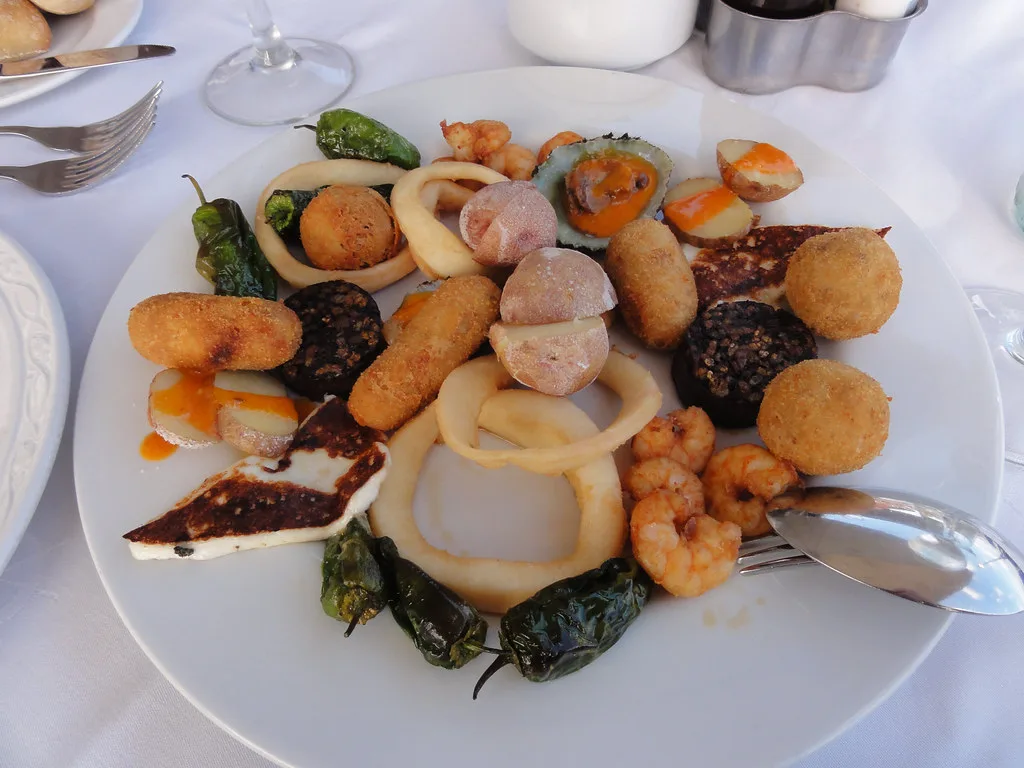
Papas arrugadas are small potatoes boiled in heavily salted water until the skins wrinkle and a fine salt crust forms, then served with mojo. They arrive as a starter or a side, and they are the quickest way to judge a kitchen: bland mojo means the rest of the meal will coast. Order them once early in the trip to calibrate. For a wider read on how these Canarian plates compare across the islands, Ibiza food is a useful comparison for anyone weighing up a second Balearic or Canarian trip.
The two mojos you will see most are mojo rojo, a red sauce built on dried peppers, and mojo verde, a green herb sauce usually made with coriander or parsley. At the Casa Museo del Campesino restaurant, octopus is served with Canarian mojo, which shows how far the sauce travels beyond potatoes. Ask for both mojos when they come as an option and use the red for meat and the green for fish or cheese.
Fish and seafood: what to order and how it is cooked
Lanzarote is an island with a working fishing fleet, and the seafood shows it. Grilled fish is the safe order, usually served simply with potatoes or salad rather than a heavy sauce, and fried fish in batter turns up as a shareable plate in traditional tapas and seafood restaurants. Ask what came in that day rather than defaulting to imported salmon.
The village of El Golfo, below the green lagoon on the west coast, has a cluster of seafood restaurants in the fishing village itself, which makes it a sensible lunch stop between volcanic sights. The other reliable seafood setting is the cave restaurant at Jameos del Agua, where fish appears among the main dishes. Book neither around a tight schedule: both reward a slow sitting rather than a rushed one.
Goat and meat dishes from the interior
Goat is Lanzarote's farming heritage on a plate. Goat's meat stew, slow-cooked and robust, is one of the traditional dishes served at the Casa Museo del Campesino, the Manrique-designed museum and cultural centre in the middle of the island dedicated to the island's rural past. It is a museum first and a restaurant second, so treat lunch as part of the visit rather than a destination in its own right.
For meat cooked with volcanic heat, the El Diablo restaurant inside Timanfaya National Park uses geothermal heat from an open pit to barbecue chicken and rabbit. The bus tour through Timanfaya National Park is compulsory for visitors, so build the meal into the same stop rather than planning a separate drive back. Arrive early, because parking fills and cars are let in one at a time.
La Geria: volcanic ash vineyards and Malvasía
La Geria is Lanzarote's wine country, a sweep of black volcanic ash between San Bartolomé and Playa Blanca. Each vine grows in a circular hollow surrounded by a crescent-shaped stone wall called a zoco, which shields it from the near-constant wind, while the ash holds moisture in a dry landscape. The result is a dry white wine, Malvasía, that is the island's drink to know before you order it.
The vineyards were shaped by the eruptions of the 1730s, which buried this part of the island in ash and left the vine as almost the only crop that would take. Bodegas along the route stop for tastings and tapas lunches, so a La Geria detour fits naturally into a driving day. Go in the growing season if you want green rows rather than bare zocos, and expect wind whatever the month.
Cheese, salt and island produce to take home
Goat's cheese is the island's most portable food souvenir, sold at artisan shops alongside soaps, jams, pottery and local goat's cheese at the Casa Museo del Campesino complex. The artisan shops there do not open on Sundays, so plan a weekday stop if buying is the point. The larger markets, including the Sunday market at Teguise, are the other place to browse island produce and crafts in one go.
Salt is the quieter local product. The Salinas de Janubio on the west coast are Lanzarote's salt flats, worked for the island's salt industry, and a visitor centre explains the process; bags of salt make a light, useful souvenir. Pair a Janubio stop with the Papagayo beaches or El Golfo for a coastal day that ends with something to carry home.
Eating inside the lava tube at Jameos del Agua
Jameos del Agua is a collapsed stretch of volcanic tunnel that Manrique turned into an arts centre, with a natural saltwater lagoon, a turquoise pool and an auditorium holding around 550 people inside the cave. A restaurant and cafeteria serve visitors on site, so lunch can happen underground between the lagoon and the gardens. The setting, not the speed of service, is the reason to eat here.
The tiny blind albino crabs in the lagoon are unique to the cave and are the symbol of the site, which is enough reason to walk the lake slowly before eating. If you want the restaurant at its calmest, go early in the day before coach parties land. Ticket prices and last-entry times vary between published sources, so check the official CACT Lanzarote site before you set out.
Cactus croquettes and other garden-kitchen oddities
The Jardín de Cactus at Guatiza, one of Manrique's last projects, has a cafe serving cactus-themed food including cactus croquettes and prickly pear juice. It is a light lunch rather than a full meal, which suits a day split between the garden and Jameos del Agua fifteen minutes further on. The garden also has a windmill and a shop, so it works as a coffee-and-snack stop rather than a sit-down lunch.
These garden cafes are the practical answer to a common problem: Manrique's attractions sit in the north of the island, away from the resort restaurant strips, and a proper lunch between them saves backtracking. When you build the day, put the garden and the lava tube together and let the croquettes fill the gap. The details of opening change with the season, so confirm before relying on the cafe.
Resort food compared: Puerto del Carmen, Costa Teguise and Playa Blanca
The three main resorts have different food personalities. Puerto del Carmen is the busiest and most package-oriented, with the widest choice of bars and restaurants and a cliff walk towards Puerto Calero lined with places serving fish caught that day. Costa Teguise is quieter and better suited to families, with the Pueblo Marinero cluster of Canarian buildings holding many restaurants, bars and shops.
Playa Blanca at the southern tip is the most peaceful of the three, with the boardwalk carrying most of the bars and restaurants. Its best beaches, including Papagayo, sit beyond a dirt track with a toll, so a long lunch there needs a plan for getting back before dark. If eating well without a car matters most, choose your base by the walkable restaurant strip rather than by the beach.
Spanish meal times and how they shape a day of eating
Lunch runs from about 1.30pm to 4pm and dinner starts around 8.30pm to 9pm, which is later than most British visitors are hungry. The practical move is a substantial lunch at a sightseeing stop and a lighter evening meal, rather than trying to eat dinner at six and finding a half-empty room. Kitchens in resort areas stretch further than the Spanish norm, but do not count on it inland.
Meal times also decide which attractions you can pair with food. Jameos del Agua's restaurant has its own serving hours separate from the site's, so a late-afternoon cave visit may not coincide with a kitchen that is still cooking. Build the drive first, the meal second, and keep a snack in the car for the gap.
Where to stay to eat well without a car
Without a car, your food options shrink to what is within walking distance of your base. Puerto del Carmen and Playa Blanca both put restaurants along a beachfront or boardwalk, so an evening meal needs no taxi; Costa Teguise's Pueblo Marinero does the same job in a compact cluster, with a Friday evening market adding to the mix. Inland villages and the Manrique sites need wheels or a tour.
If you are renting a car, the island is compact enough to drive top to bottom in about an hour and a half, which makes a lunch in La Geria or at El Golfo realistic from any resort. Avoid the narrow unpaved tracks near Timanfaya and Caleta de Famara, as many hire policies exclude them. If driving between food stops and sights is the plan, an itinerary built around the map saves a lot of backtracking.
Practical notes on tickets, timings and booking
If you plan to see more than a couple of the Manrique attractions, a combined ticket lowers the per-site cost, and tickets can be bought at each venue or in advance as a bundle. The savings only work if you actually visit enough sites, so count your list before buying. Timanfaya's park entry includes the bus tour and geothermal demonstrations, which is worth factoring into the day's budget.
Take cash in small notes and coins for the Papagayo dirt-track toll and for small village bars, and book any evening table you care about ahead in high season. If you are weighing up how long to give the island, the guide to how many days in lanzarote sets food stops against the rest of the itinerary. With a week you can eat in three resorts, two villages and one cave without rushing.
Plan Your Eating Around the Island
Start with papas arrugadas and mojo to read a kitchen, then build the rest of the week around fish, goat stew and a bottle of Malvasía from La Geria. The cave restaurant at Jameos del Agua and the garden cafe at the Jardín de Cactus turn sightseeing into lunch, and the Casa Museo del Campesino covers traditional dishes in one sit-down stop.
Match your base to how you want to eat: resort strips for walkable evenings, a hire car for La Geria, El Golfo and the northern Manrique sites. Keep Spanish lunch and dinner hours in mind and the day will fit together.
Explore more Lanzarote guides
Frequently Asked Questions
What food is Lanzarote known for?
Lanzarote is known for Canarian dishes: papas arrugadas with mojo, fish and seafood, goat stew, goat's cheese and the dry white Malvasía wine grown in the volcanic ash of La Geria. Cactus croquettes and prickly pear juice appear at the Jardín de Cactus cafe, and the cave restaurant at Jameos del Agua serves meals inside the lava tube.
What is papas arrugadas with mojo?
Papas arrugadas are small potatoes boiled in very salty water until the skins wrinkle and a salt crust forms. They are served with mojo, usually a red pepper sauce or a green herb sauce. Order them as a starter or side early in your trip to judge how well a kitchen seasons and sauces its food.
What is the local drink in Lanzarote?
The local wine is Malvasía, a dry white produced in La Geria, where vines grow in hollows ringed by crescent-shaped stone walls that protect them from the wind. Bodegas along the route offer tastings, often with tapas. Check individual bodega opening times and whether tastings need booking before you drive out.
Can you eat at Jameos del Agua?
Yes. The site has a restaurant and a cafeteria, and the restaurant has its own serving hours separate from the attraction's opening times. The cave also holds a natural saltwater lagoon and an auditorium. Check the official CACT Lanzarote site for current opening times and last entry before planning lunch around a visit.
How much is a meal out in Lanzarote?
Menu prices vary by resort and by whether you order fish by weight, so check the board or ask before ordering. Attraction tickets are separate from food, and combined tickets for several Manrique sites can lower the total. Check current prices at the venue or on the official site.
What are the meal times in Lanzarote?
Lunch runs from roughly 1.30pm to 4pm and dinner starts around 8.30pm to 9pm. Resort kitchens often stay open longer than inland ones. Plan a substantial lunch at a sightseeing stop and a lighter evening meal, and keep a snack for the gap between an afternoon attraction and dinner.
Where can I try traditional Canarian dishes in one stop?
The Casa Museo del Campesino, Manrique's museum and cultural centre in the centre of the island, has a restaurant serving traditional dishes such as goat stew and octopus with Canarian mojo. It is a museum first, so combine the exhibits with lunch. The artisan shops on site do not open on Sundays.
Sources
Notes for eating well in Spain
Optional updates to our guides.
You might also like
Continue reading
More guides you'll find useful