
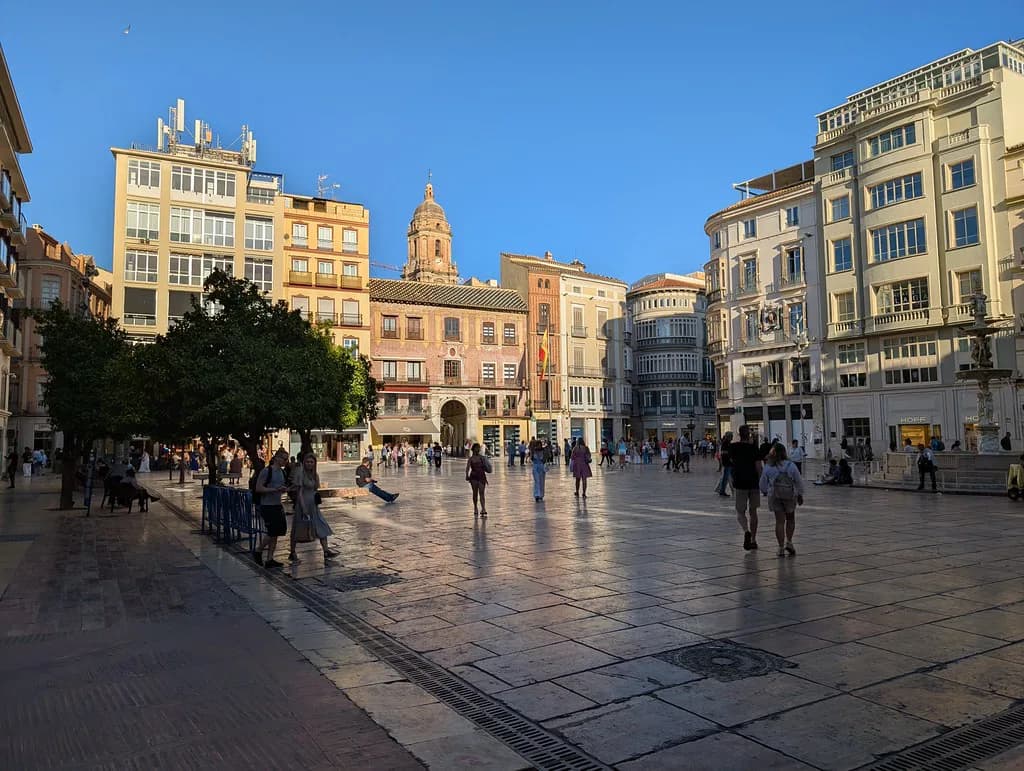
Centro Histórico, Málaga: a guide to the old town
The Centro Histórico is Málaga's old town: a compact grid of pedestrian streets between the Roman Theatre and the cathedral where a Roman ruin, a Moorish fortress and Picasso's birthplace sit within minutes of each other. It suits travellers who want to walk everywhere, eat late and sleep in the middle of things.
It does not suit everyone. Anyone who wants quiet evenings, easy parking or a beach on the doorstep should look east to Pedregalejo, a fishing neighbourhood on the coast. The old town's streets are busy and cobbled, and the fortress interiors involve steps and constant changes of level.
What the Centro Histórico is and who it suits
The district holds Málaga's densest concentration of sights: the Roman Theatre, the Alcazaba, the cathedral and the Picasso, Carmen Thyssen and Pompidou museums all sit inside or on the edge of the old town. You can cover the core on foot in a day without using a bus or taxi.
Come here if your priorities are museums, monuments, tapas bars and evening strolls. Look elsewhere if you need step-free access throughout, cheap parking at your door or a resort-style pool. For a wider comparison of the city's districts, see the Malaga Neighborhoods: 3 Area Guides.
Where the district sits and how to get there
The Centro Histórico wraps around Calle Alcazabilla and the cathedral, a few minutes' walk from Plaza de la Merced, Calle Larios and the port. Arriving on foot from the city's train or bus stations is straightforward, and buses 1, 36 and C1 stop near the Alcazaba.
If you arrive by car, park in a public car park in the centre and walk. The streets inside the district are largely pedestrian, so a car is a liability rather than a help once you are in.
Roman Theatre and Alcazaba: the historic core
Calle Alcazabilla is the spine of the old town, and the Roman Theatre at its foot is the free starting point. The theatre lay buried for centuries, was uncovered in 1951, and dates to the first century, when it was built under Augustus and used until the third century.
The Alcazaba, the 11th-century palatial fortress above it, is the district's main paid visit. Admission is €7 general and €3 concession, and a combined ticket with Gibralfaro Castle costs €10 and is valid for 48 hours. These are the 2025 rates set when the town council raised fares, and many guidebooks still print the old figures.
Opening hours run from 9.00 to 20.00 from 1 April to 31 October, and from 9.00 to 18.00 from 1 November to 31 March, with last admission an hour before closing. The Alcazaba closes on 1 January and on 24, 25 and 31 December. Entry is free on Sundays from 14.00, on 28 February, 18 May and 27 September, and on European Heritage Days, although Sunday afternoons are the busiest slot.
Plan the Alcazaba and Gibralfaro as two separate visits, not one continuous walk. The two have separate entrances, and the uphill path between them takes 20 to 30 minutes, or you can take a city bus. Set aside around an hour and a half for each.
If stairs are a concern, a public lift links Calle Guillén Sotelo with the Alcazaba's upper level, but the interior route is not wheelchair-accessible because of cobbles, ramps and level changes. Bring water and closed-toe shoes, and go early or late in summer for the unshaded sections.
Málaga Cathedral and the streets around it
Málaga Cathedral sits on Calle Molina Lario beside Plaza del Obispo, five minutes from the Alcazabilla. Its unfinished south tower earned it the nickname La Manquita, the one-armed woman, and the interior holds the cedar choir stalls carved by Pedro de Mena between 1659 and 1662.
Entry prices, opening times and closure days vary by ticket type and season, so confirm them with the cathedral itself before you build a day around it. Check the official cathedral site rather than a resale page. The rooftop terrace climbs 200 steps and gives views over the old town to the sea.
Around the cathedral, Calle Larios and Plaza de la Merced are the old town's main axes for shopping and evening walks. Calle Larios runs from the commercial centre toward the port, and Plaza de la Merced is the square where Picasso's birthplace museum stands.
Museums inside the district: Picasso, Thyssen, Pompidou
The Picasso Museum, the Carmen Thyssen Museum and the Museo de Málaga cluster within a few minutes of the Alcazabilla, and the Pompidou's branch sits on the waterfront to the south. The Museo de Málaga combines fine arts and archaeology collections, which makes it a sensible rainy-day stop or a complement to the Roman Theatre.
The Picasso Museum occupies the Palacio de Buenavista in the heart of the old town, a short walk from Plaza de la Merced. The Carmen Thyssen holds 19th-century Spanish painting in the Palacio de Villalón, and the Pompidou's branch is about a ten-minute walk from the cathedral. Book museum tickets directly with each institution and confirm opening days, since some museums close one day a week.
Walking distances: what is within reach on foot
Nothing in the district is more than about 15 minutes on foot from the cathedral. The Roman Theatre and Alcazaba are a 0.2 km walk away, the Picasso Museum 0.2 km, the Alameda park and Málaga Cathedral 0.3 km, and the Pompidou 0.4 km.
Gibralfaro Castle sits 0.6 km away as the crow flies, but the climb is the real distance. Allow 20 to 30 minutes on foot up the hillside, or use the city bus. Soho Málaga, the art district, is 0.7 km from the Roman Theatre and sits between the old town and the port.
Where to eat in the Centro Histórico
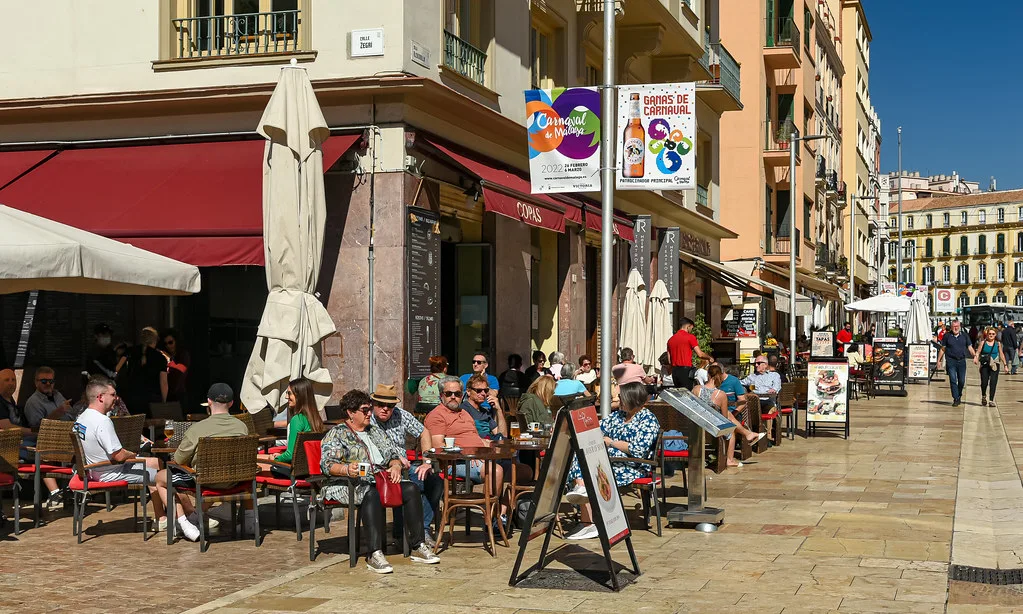
Eating happens late here. Lunch runs roughly 13.30 to 16.00, and dinner starts around 20.30 to 21.00, so a 19.00 table will often be a tourist-hour compromise. The old town's tapas streets fill up after 21.00.
The district's restaurants and tapas bars close on rotating days off, and some shut for part of August or winter. Check the door or the bar's own website for the day you plan to eat, since few places open seven days a week. A good strategy is to book dinner for the old town and save lunches for the market or a bar counter.
Where to stay in the old town, and who should stay elsewhere
Staying in the Centro Histórico puts the monuments, museums and evening tapas within a few minutes' walk. It is the right base if you want to see Málaga on foot and return to your room between sights. The trade-off is noise and higher room rates in peak season.
If you want a beach, a quieter evening or easier parking, Pedregalejo on the east side of the city is a 10-minute drive or a 20-minute bus ride from the centre, with a beachfront hotel and a row of chiringuitos. See Pedregalejo, Málaga for the alternative area.
Practical points: tickets, lifts and timing
The Alcazaba has no time-slot booking and no capacity limit, so you can turn up, but queues are possible at peak times. Tickets come from vending machines at the Calle Alcazabilla entrance. The €10 combined ticket is useful if you plan to see both the Alcazaba and Gibralfaro within 48 hours.
Do not try to fit the Alcazaba and Gibralfaro into one Sunday afternoon. Free entry from 14.00 draws the biggest crowds, and each monument needs about an hour and a half at a relaxed pace. One seen properly beats two seen in a rush.
Soho and the waterfront on the district's edge
Soho Málaga, also called the Barrio de las Artes, begins about 0.7 km from the Roman Theatre and runs down to the port. It is the district's street-art quarter and a natural extension of an old-town walk toward Muelle Uno.
The port and waterfront lie south of the old town, with the Pompidou's branch and the Alameda park between them. Walk it at sunset, when the old town's streets empty toward the water and the bars start to fill.
Plan Your Visit
Base yourself in the Centro Histórico if you want to walk to the Roman Theatre, Alcazaba, cathedral and museums, and accept the noise and cobbles as part of the deal. Treat the Alcazaba and Gibralfaro as two visits, and consider the €10 combined ticket if you are staying more than a day.
Book the big sights directly with each monument or museum and confirm the day you plan to go, since opening hours and days off shift with the season and rotating closures. Compare the old town with Pedregalejo or Soho before you commit to a bed.
Explore more Malaga guides
Frequently Asked Questions
What can you see in Málaga's Centro Histórico?
The district holds the Roman Theatre, the Alcazaba, Málaga Cathedral, the Picasso Museum, the Carmen Thyssen Museum, the Museo de Málaga and, on its southern edge, the Pompidou's Málaga branch. Calle Larios, Plaza de la Merced and Soho are the main streets and squares. Most of these sit within a 15-minute walk of one another.
How long does it take to visit the Alcazaba?
Allow about an hour and a half for the Alcazaba at a relaxed pace, including the gates, the Cuartos de Granada and the upper viewpoints. If you add Gibralfaro Castle and the Roman Theatre, set aside a whole morning, because each walled monument takes about an hour and a half.
Is the Alcazaba connected to Gibralfaro Castle?
No. The two monuments have separate entrances, and the historic coracha passageway that once linked them is not a usable route. You leave one and walk up the hillside for 20 to 30 minutes, or take a city bus. The combined ticket is valid for 48 hours, so you can split the visits across two days.
When is entry to the Alcazaba free?
Admission is free every Sunday from 14.00 until closing, and also on 28 February (Andalusia Day), 18 May (International Museum Day), 27 September (World Tourism Day) and on European Heritage Days. Sunday afternoons are the busiest slot of the week.
How much does the Alcazaba cost?
The Alcazaba charges separate general and concessionary rates, and a combined Alcazaba and Gibralfaro Castle ticket is also sold and stays valid for 48 hours. Rates were revised in 2025, so older guidebook figures are out of date. The ticket machines at the Calle Alcazabilla entrance display the current prices, and the monument's own price list confirms the concession criteria.
What are the main streets in central Málaga?
Calle Alcazabilla is the monument street, running between the Roman Theatre and the Alcazaba. Calle Larios is the shopping spine toward the port, and Calle Molina Lario runs past the cathedral. Plaza de la Merced and Soho, the Barrio de las Artes, are the main squares and districts on the old town's edge.
Where should you eat in the old town?
The Centro Histórico suits late lunches and later dinners, with lunch around 13.30 to 16.00 and dinner from about 20.30 to 21.00. Restaurants and bars take rotating days off, and some close for part of August or winter, so check each place's door or website for the day you plan to eat. For a beachfront alternative, head east to Pedregalejo's chiringuitos.