Salamanca Food Guide: Local Dishes and Where to Eat
What to eat in Salamanca, from cured meats and roast suckling pig to tapas near the Plaza Mayor, plus the Mercado Central and Calle Van Dyck.
On this page
Salamanca food is built on two anchors: the cured meats and sausages of the province, and roast suckling pig served as a sit-down order. Around them sits the everyday bar food of a university city, eaten as tapas at lunch or as a plate of raciones in the evening.
The practical shape of a food day is simple. Coffee and churros on the Plaza Mayor, a tapas crawl under its arcades at lunch, then a proper dinner from 8:30pm or later around the same square. Between meals, the Mercado Central covers picnic supplies and Calle Van Dyck offers the widest spread of options on the newer side of town.
What Salamanca Food Is: Cured Meats, Roasts and Bar Food
The city's cooking is robust inland Castilla y León fare, matched to cold winters and a large student population that eats late and cheaply. Cured sausages and hams lead the shopping list, with roast meats for the sit-down meal and small portions at the bar for everything else.
The Plaza Mayor is the natural place to start, and the surrounding streets are the obvious first stop for a plate of hearty sausages and cured meats. Pair grazing with the main sights so lunch sits in the middle of the day rather than at the end of it, using a plan for things to do in salamanca that keeps the walking short.
Start With Coffee and Churros on the Plaza Mayor
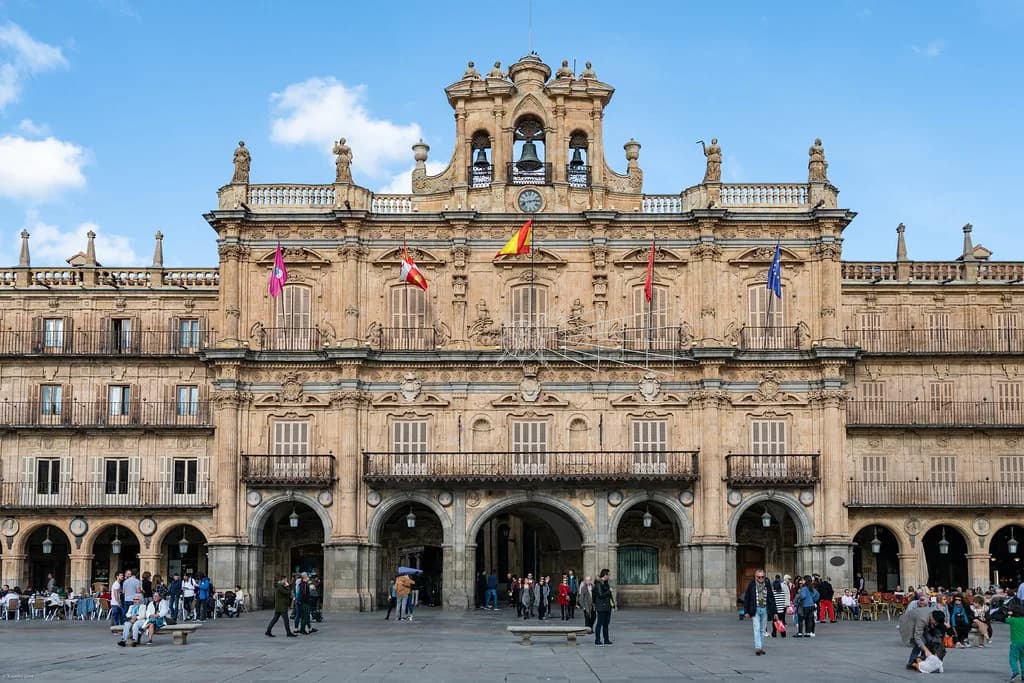
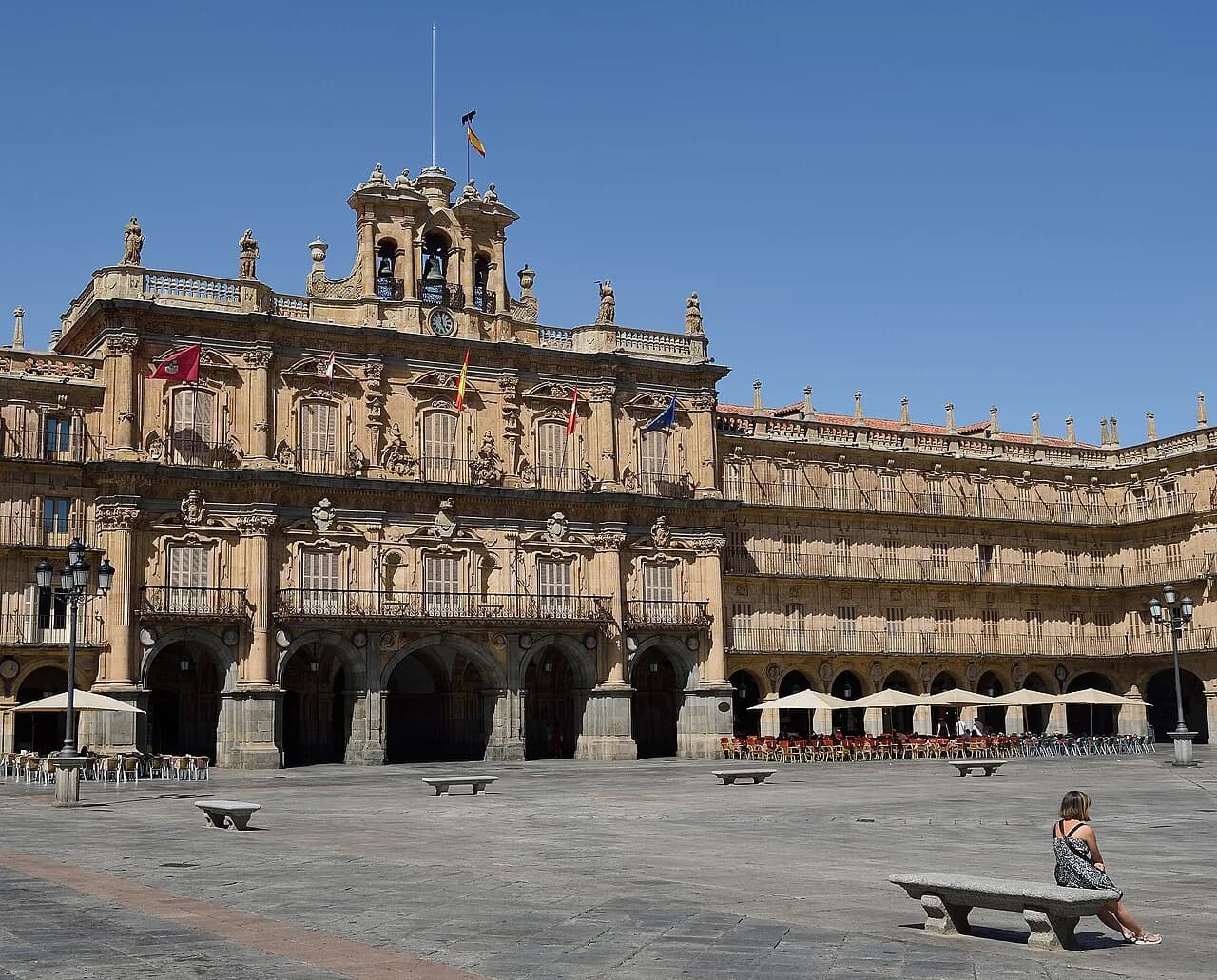
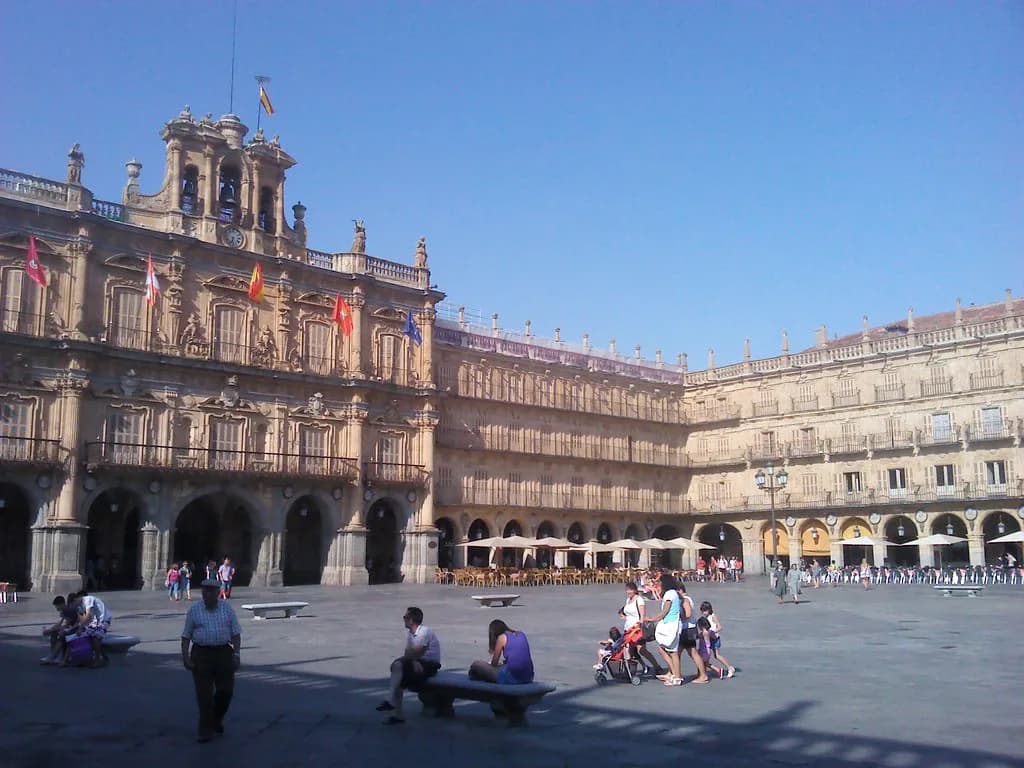
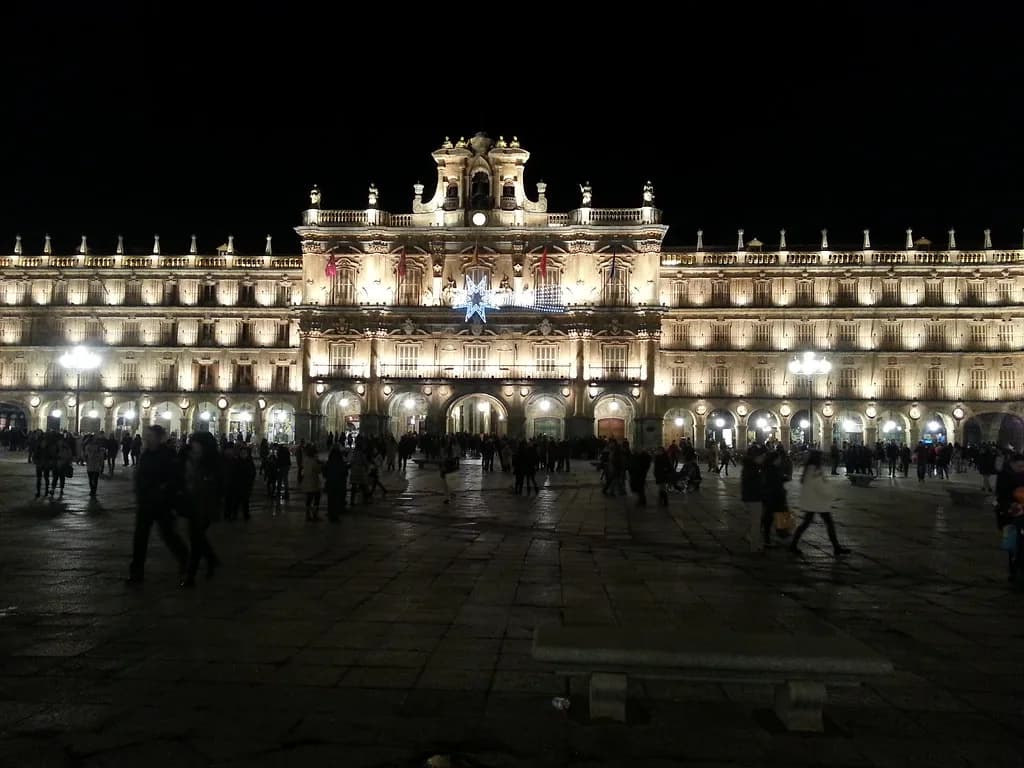
The Plaza Mayor is one of the most beautiful squares in Spain, built in Baroque style to plans by Alberto Churriguera, with three storeys of semicircular arches and balustrades wrapping the perimeter. Its 88 porticoed arches shelter cafés and restaurants, and the square is the busiest spot in the city from morning onwards.
For the first stop, Café Novelty is the hundred-year-old café on the square, with a sculpture of the writer Torrente Ballester inside. Order coffee here and look up at the carved medallions between the arches, which include faces such as Cervantes.
Churros with chocolate are the standard sweet start, and the arcades give you somewhere to sit while the square wakes up. It is also the moment to pick up a map from the tourist office on the square before setting off.
Tapas Around the Plaza Mayor: Sausages and Cured Meats, Bar to Bar
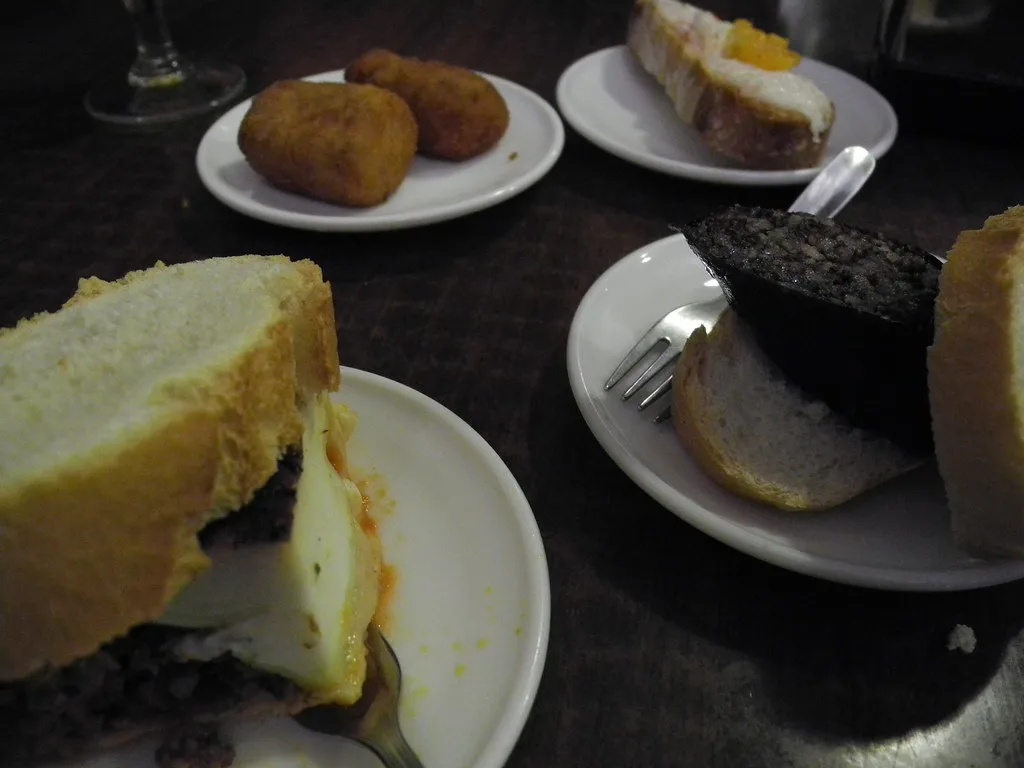
Lunch is the main tapas session here, and the streets around the Plaza Mayor are the best place to sample a range of hearty sausages and cured meats. The method is to stand at one bar, order a small portion and a drink, then move on rather than settling in for a full menu.
Keep the order narrow: a plate of jamón, a sliced sausage or two, bread and a glass of something local. Portions add up quickly if you order several at each stop, so pick one speciality per bar and compare as you go.
If you would rather sit down at lunch, the same area covers restaurants as well as bars, and roast suckling pig is the order that anchors a longer meal. The evening follows the same geography, with dinner in the cobbled streets around the square.
Roast Suckling Pig: The Sit-Down Order That Defines the Province
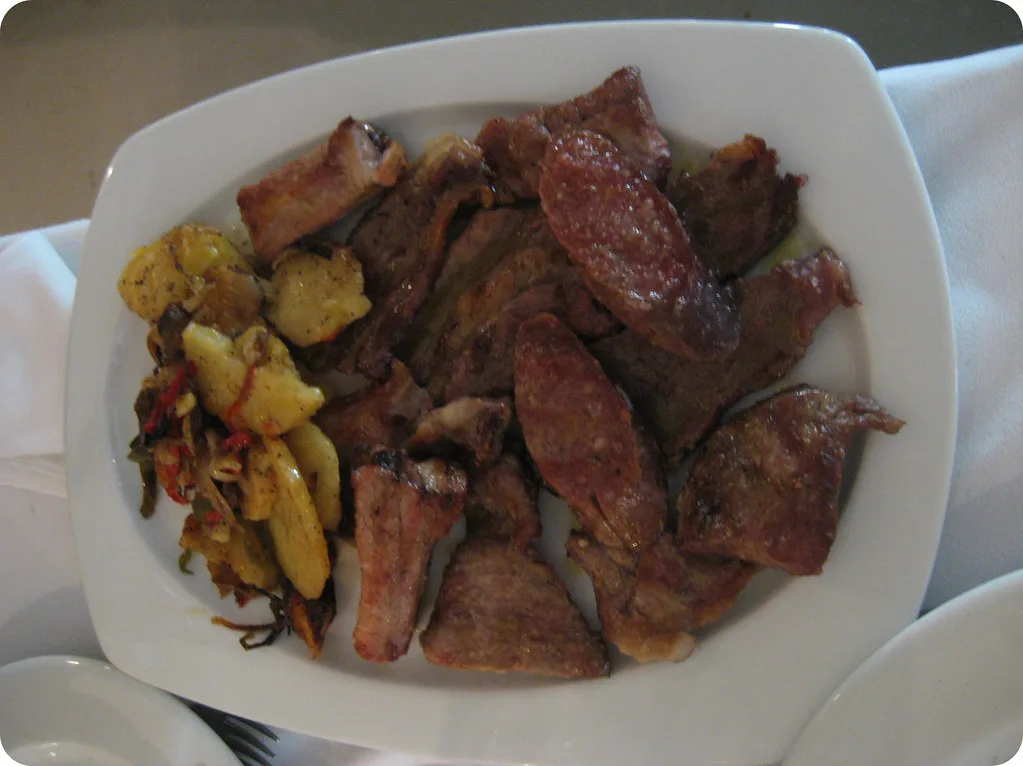
Roast suckling pig is the celebratory dish of Castilla y León, and in Salamanca it is what you order when you want a proper sit-down lunch rather than a crawl. It belongs to the restaurant table, not the bar counter, so treat it as the main meal of the day.
Book the meal for lunch rather than dinner if you want to walk afterwards; a heavy roast sits badly with an evening of bar-hopping. Because kitchen hours and roasting quantities vary, it is worth reserving ahead and confirming the dish is served on the day you plan to eat it.
Ciudad Rodrigo, in the west of the province near the Portuguese border, names roasts, especially suckling pig, among its local specialities alongside hornazo, a type of pie. That makes a westbound day trip a viable alternative if the city restaurants are full.
Salamanca's Ham and Embutidos: What to Ask For and How It Is Served
The province is home to the black Iberian pig, and its ham, chorizo and bacon take their flavour from a diet of acorns. Guijuelo is the name to look for on labels, one of Spain's finest hams, alongside the local embutidos or cured sausages.
In bars, jamón is sliced to order and served with bread or picos; in shops it is sold by weight, which makes it the easiest edible souvenir to carry home. Ask for a taste before committing to a larger cut, and check whether the slices are hand-cut or machine-cut, since the texture differs.
Salamanca's ham is often framed as jamón serrano and embutidos rather than the top-grade ibérico everywhere, so read the label for the curing and the origin. A small vacuum-packed pack travels better than a whole piece if you are flying home.
The Mercado Central: Cheese, Ham, Olives and Picnic Supplies
The Mercado Central occupies a nineteenth-century building just outside the eastern entrance to the Plaza Mayor. Inside, stalls sell seafood, hams and sausages, cheeses, fruit and vegetables, bread and pastries, which makes it the right stop for assembling a picnic or a train journey lunch.
Buy in small quantities: a wedge of local cheese, a handful of olives, a slice of cured meat and a roll covers two people without waste. Vendors sell by weight, so ask for a smaller amount than you think you need and add later.
Go before lunch rather than after, when the stalls are fully stocked and the aisles are quieter. The market is also the place to compare prices on the same ham you saw on a restaurant menu.
Calle Van Dyck: The Modern-Side Grazing Street
Calle Van Dyck sits in the newer part of the city and is busy and much frequented, with a wide range of options. It suits a group that cannot agree, or an evening when you want choice rather than a single speciality.
Expect more variety in style here than around the Plaza Mayor, from casual bars to fuller restaurants. The trade-off is atmosphere: you lose the arcaded square and the monument views, but gain a shorter wait and usually a more local crowd.
It is a sensible fallback on a Sunday evening, when the centre is quieter and the extra choice pays off. Walking time from the old town is short enough to combine both areas in one evening.
Dishes to Try Beyond the Centre: Hornazo, Farinato and Chanfaina
Ciudad Rodrigo, in the west of the province near the Portuguese border, has its own kitchen: hornazo, a type of pie, farinato, a sausage made with breadcrumbs, pork fat, paprika and other spices, and chanfaina, a rice and pork dish. Farinato is best served with fried eggs.
These belong to a day out rather than to the city centre, so plan them with a visit to the walled town itself. The old quarter is a Historic-Artistic Site, and the walk between walls and cathedral justifies the trip as much as the food does.
Hornazo is also the practical option for a packed lunch on the road, since a pie travels better than a plate of rice. Buy it in the morning and eat it outside the walls rather than hunting for a table at peak lunch hour.
Meal Times: Lunch 1:30–4pm, Dinner from 8:30–9pm
Spanish meal times are the single most useful thing to know when you plan a table. Lunch runs from about 1:30pm to 4pm, and dinner starts from 8:30pm to 9pm, so a 6pm hunger pang is a problem of your own making.
Build the day around that rhythm instead of fighting it. Coffee and churros on the square at mid-morning, a tapas lunch from about 1:30pm, then a late dinner near the Plaza Mayor once the kitchens open.
Tapas fits around both ends of the day: a few small plates before the main lunch, and a bar crawl before a late dinner. Snacking through the afternoon is normal; expecting a full restaurant menu at 5pm is not.
What It Costs: How to Read Bar Prices and Build a Tapas Meal
Bar pricing in Spain works on portion size: a tapa is small, a media ración is half a plate and a ración is a full one, and the price rises accordingly. Read the blackboard or menu at the door before sitting, and ask whether the tapa comes with the drink.
A tapas meal is cheaper when you order one or two plates per stop across several bars rather than several plates in one. That way you pay for variety, not volume, and you can stop when you are full.
Prices change with the season and the venue, so compare a couple of menus on the same street before choosing; the spread along one arcade can be wide. For a wider list of options by area and style, see best restaurants, which covers where to sit down rather than only what to order.
Evening: Dinner Near the Plaza Mayor and Where the Night Continues
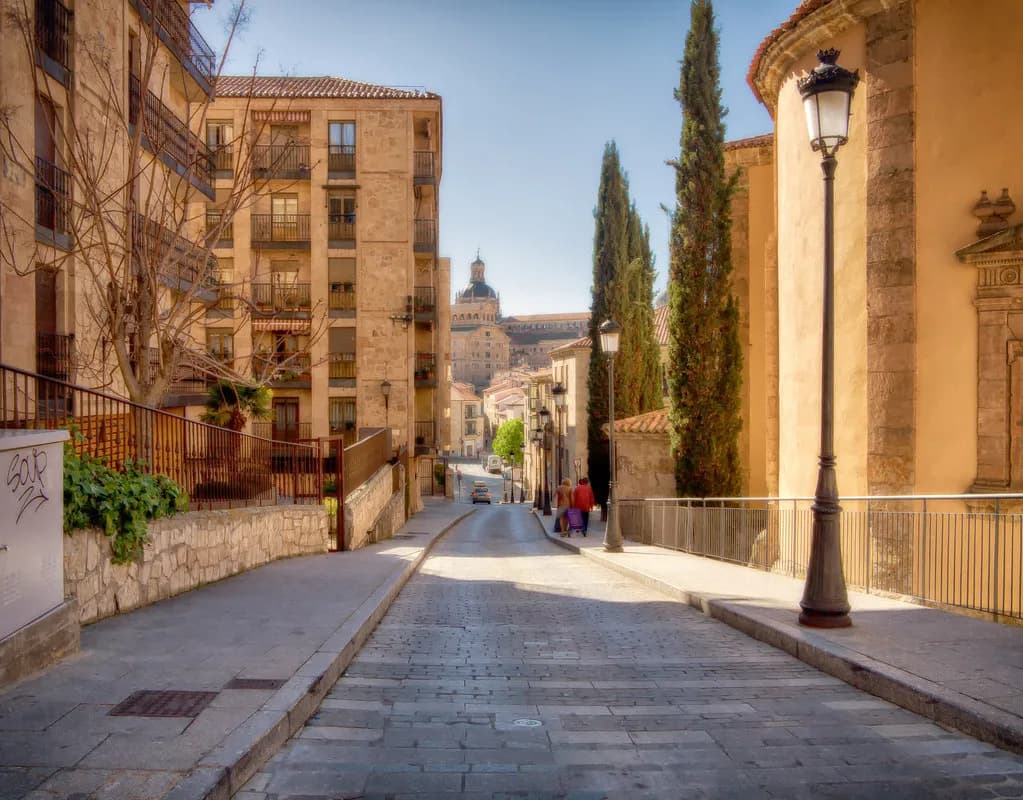
For dinner, head for the cobbled streets around the Plaza Mayor, where the terraces are within sight of the arcades. It is the simplest choice for a first night, and the square still works as a meeting point afterwards.
Salamanca is a university town, and its nightlife is famous for continuing into the small hours, with bars and clubs around the Plaza Mayor and Plaza San Justo and in the Gran Vía and Calle Bordadores area. Venues include converted chapels and rooms decorated like a boat or a submarine.
Eat late and walk home; the centre is compact enough to cover on foot. If you are in the city for more than a couple of nights, how many days in salamanca sets out what to add around the eating.
Practical Trade-offs: Tourist Terraces Versus Local Bars
Terraces on the Plaza Mayor sell position and view, and you pay for both; bars a street or two back sell food at lower prices with less theatre. Mix the two: one coffee or drink on the square for the architecture, then lunch and dinner off it.
Restaurants in Spain commonly close one or two days a week, and some close for part of August or the winter. Check the door or the venue's own page before making a special trip, especially on Sundays and Mondays.
Peak hours are the other trade-off: eat at 1:30pm on the dot or after 2:30pm to avoid the crush, and book ahead for any sit-down roast. Shopping in Salamanca is the companion guide if you want to combine food shopping with the boutiques around Calle Toro and Calle Zamora.
Pairs Well With: A One-Day Walk Between the Cathedrals and the River
A food day works best attached to a short walk. Start on the Plaza Mayor, go down the Rúa Mayor to the Casa de las Conchas, with its façade of shells, then on to the Plaza de Anaya and the city's two cathedrals.
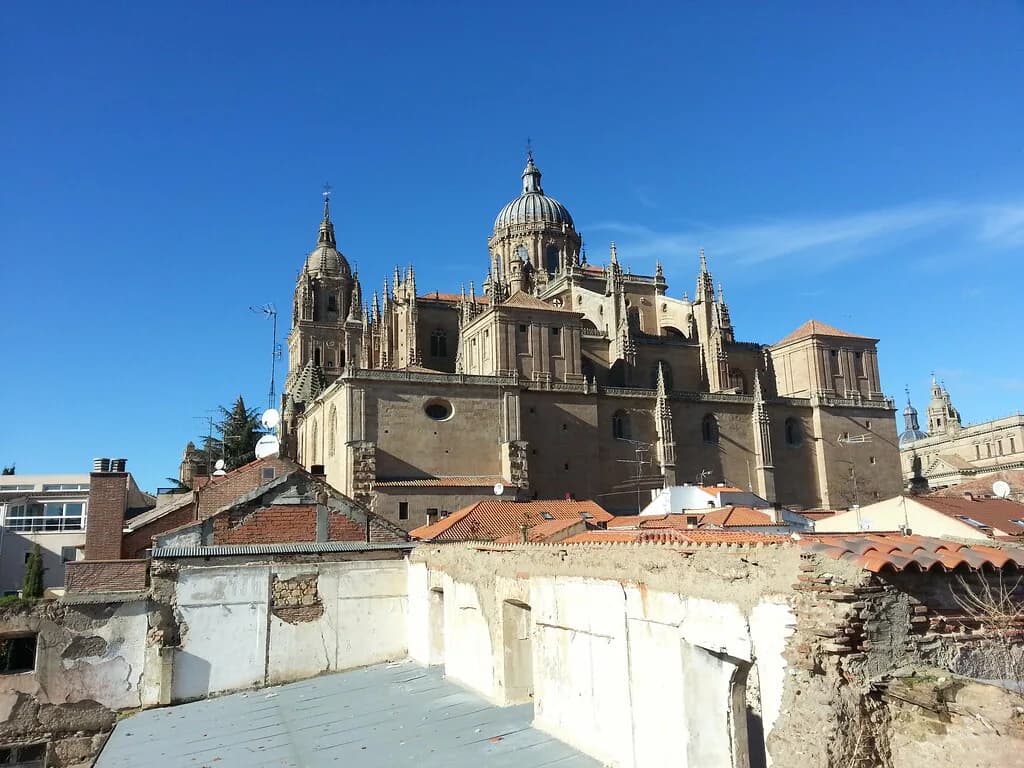
From the ground floor of the Old Cathedral, the Ieronimus tour climbs into the highest parts of both cathedrals, including the 110-metre towers and a terrace with views over the city. It is a good way to work up an appetite for a late lunch.
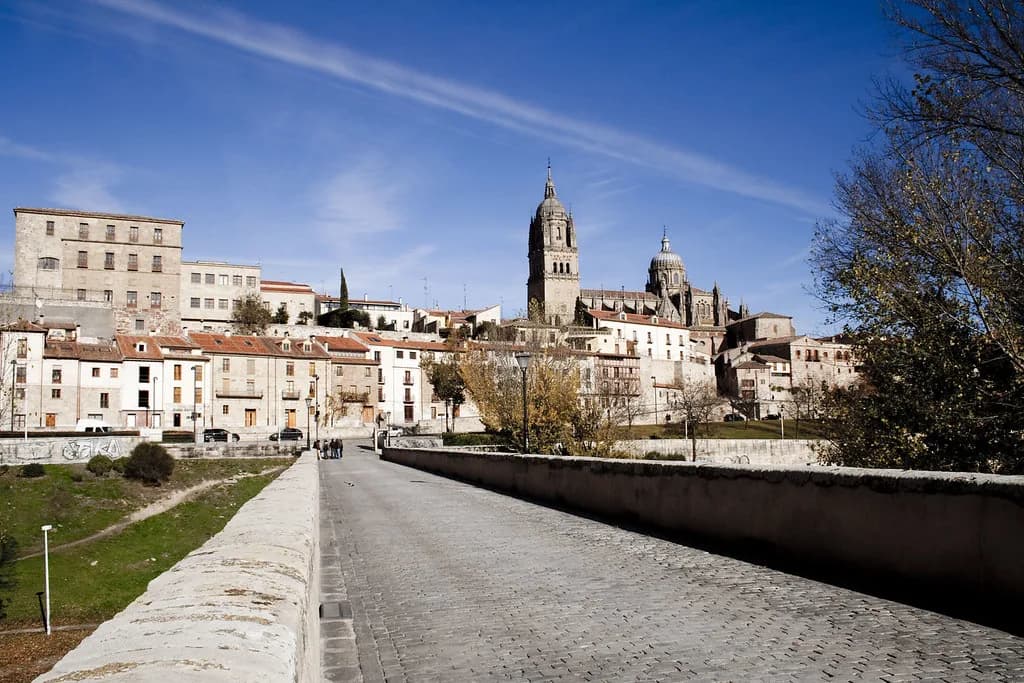
Finish at the Roman Bridge over the Río Tormes for the sunset and the classic view back to the cathedral dome, then return to the centre for dinner. If you only have a single day, one day in salamanca keeps the eating and the walking in the same loop.
Plan Your Eating Around Salamanca
Plan Salamanca food around two meals: a tapas lunch around the Plaza Mayor and a late dinner, with coffee and churros, the market and Calle Van Dyck filling the gaps. Order jamón and embutidos at the bar, book a sit-down roast suckling pig for lunch, and keep the province's hornazo and farinato for a Ciudad Rodrigo day out. If you are comparing inland Castilian cooking with island fare on the same trip, this guide to Ibiza food makes a useful counterpart.
Confirm current opening days and August or holiday closures with each venue before you travel, since Spanish restaurants often shut one or two days a week. The Salamanca attractions hub links the food stops to the monuments so lunch sits between sights rather than in place of them.
Explore more Salamanca guides
Frequently Asked Questions
What should I eat in Salamanca?
Start with cured meats and sausages at a bar around the Plaza Mayor, then order roast suckling pig for a sit-down lunch. Add churros with chocolate at a square café and buy cheese, ham and olives at the Mercado Central.
What food is Salamanca known for?
The province is known for its Iberian pork, especially Guijuelo ham and cured sausages, and for roast suckling pig, which is the celebratory dish of Castilla y León. Tapas built on those cured meats are the everyday version.
Where do locals eat tapas in Salamanca?
The streets around the Plaza Mayor are the classic tapas ground for sausages and cured meats, and Calle Van Dyck on the newer side of the city is busy and offers a wide range of options. Both work better at Spanish lunch or late-dinner times.
What time do people eat dinner in Salamanca?
Dinner starts from around 8:30pm to 9pm, and lunch runs from about 1:30pm to 4pm. Plan a late-afternoon snack rather than expecting a full restaurant meal at 6pm.
Is Salamanca good for food?
Yes, if you like cured meats, sausages and slow-cooked roasts rather than refined tasting menus. The strength is the bar culture and the market, not a long list of smart restaurants.
What is hornazo and where do I find it?
Hornazo is a type of savoury pie from Ciudad Rodrigo in the west of the province, eaten there alongside farinato and chanfaina. It travels well, so it suits a day trip or a packed lunch.
Sources
Notes for eating well in Spain
Optional updates to our guides.
You might also like
Continue reading
More guides you'll find useful