How Many Days in Salamanca? One, Two or Three Days
Two days suit most visitors to Salamanca, with one day for the cathedrals and Plaza Mayor and a third for markets, museums and the river at dusk.
On this page
Two days is the right answer for most visitors. One day gets you the Plaza Mayor and both cathedrals at a brisk pace, while a second day adds the university, Casa Lis and the Convento de San Esteban without rushing. A third day only pays off if you want long lunches, the market and the Roman Bridge at dusk.
Salamanca is compact and pedestrian-friendly, with the major sights within walking distance of each other, and the city is a UNESCO World Heritage site roughly two hours by road northwest of Madrid. That compactness is why two days feels generous rather than tight: you are choosing what to linger over, not racing between districts.
The Short Answer: Two Days Suits Most Visitors
Build your trip around two nights. Day one takes in the Plaza Mayor, the Catedral Nueva and Catedral Vieja, and the Ieronimus Tower climb; day two covers the Universidad de Salamanca, the Cielo de Salamanca, Casa Lis and the Convento de San Esteban. That leaves the evenings free for tapas rather than another church.
The trade-off is energy, not distance. The tower climbs at Ieronimus and La Clerecía are stair-heavy, and La Clerecía alone means 166 steps to the bells, so putting two climbs on the same day will flatten a short break. Spread them across two mornings and keep afternoons for the museums and the riverside.
Anyone with a single day should drop the museums rather than the cathedrals. Casa Lis and the university buildings reward unhurried time, while the old town's sandstone set pieces are what you came for; squeezing both into six hours produces a checklist rather than a visit.
What Fits Into One Day in Salamanca
Start at the Plaza Mayor, built between 1729 and 1755, and walk the arcade under its 88 arches before the café terraces fill. It is the natural orientation point: the Mercado Central sits just outside the square's eastern entrance, so you can loop through the food stands on the way to the cathedrals.
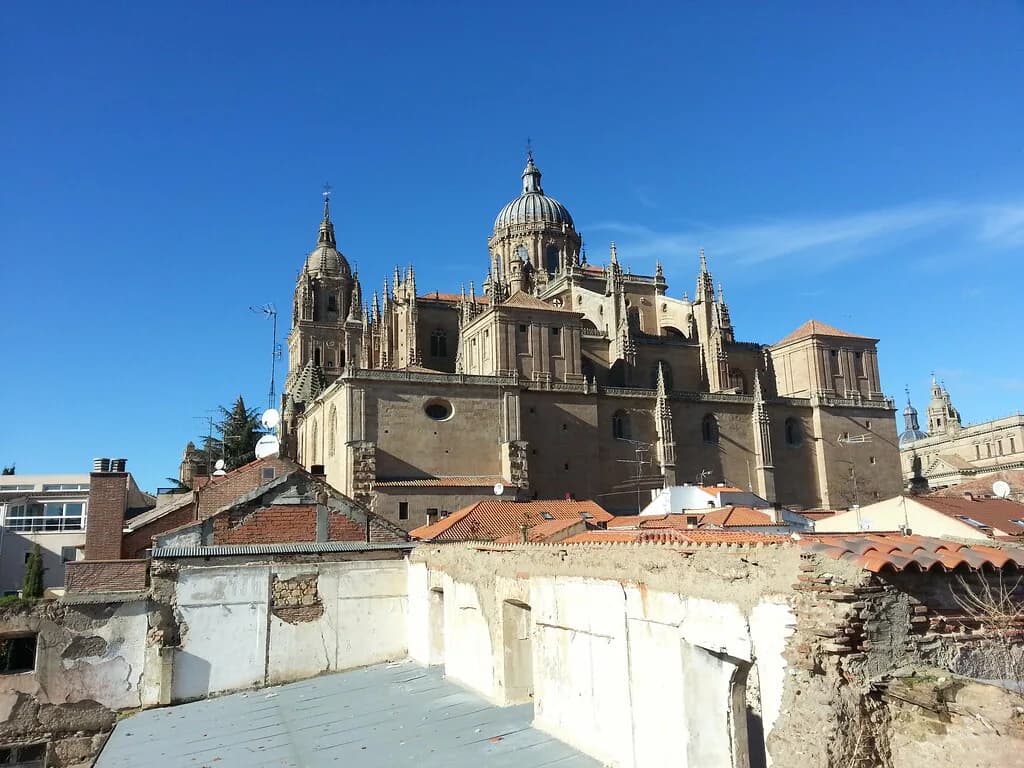
The Catedral Nueva and Catedral Vieja are joined, so treat them as one visit. Look for the modern carvings added to the New Cathedral's façade, including an astronaut and a dragon with an ice cream, then cross to the Old Cathedral for the 15th-century altarpiece with its 53 panels.
Finish with the Ieronimus Tower, where staircases thread through the interior balconies of both cathedrals and out onto the terraces. It is the best view in the city and the reason to keep an hour free at the end of the afternoon rather than booking a timed museum slot.
What a Second Day Adds: University, Casa Lis and the Convents
The Universidad de Salamanca was founded in 1218, and its main façade is a sandstone tapestry of religious scenes, coats of arms and myths. Hunt for the famous frog perched on a skull, then step into the Patio de Escuelas to see the 15th-century ceiling mural known as the Cielo de Salamanca, which is free to visit.
Casa Lis, the Art Nouveau museum below the old wall, holds painting, bronze, ceramics, art deco pieces and a large collection of porcelain dolls, with a café and shop on site. It opens from 11am to 7pm seven days a week, and photography is not allowed inside; in the year of that visit the entry fee was five euros, so confirm the current charge before you go.
The Convento de San Esteban, downhill from the cathedral, has a carved façade showing the stoning of Saint Stephen and a terrace above it with city views and stork nests. Terrace opening hours tend to be clustered around midday and again around 7pm, so check times before planning your afternoon around it.
Two smaller stops fill the gaps between: the Casa de las Conchas, its façade studded with 300 scallop shells and free to enter, and the Garden of Calixto and Melibea, a shady wall-top garden that is the spot for sunset. Both cost nothing and take minutes, which is exactly what a second day is for.
When Three Days Makes Sense
Add a third day if you want the Mercado Central properly rather than in passing. The 19th-century market building sells seafood, hams and sausages, cheeses, fruit, bread and pastries, and it works as a picnic stop or a slow lunch; browsing it properly takes an hour you do not have on a two-day schedule.
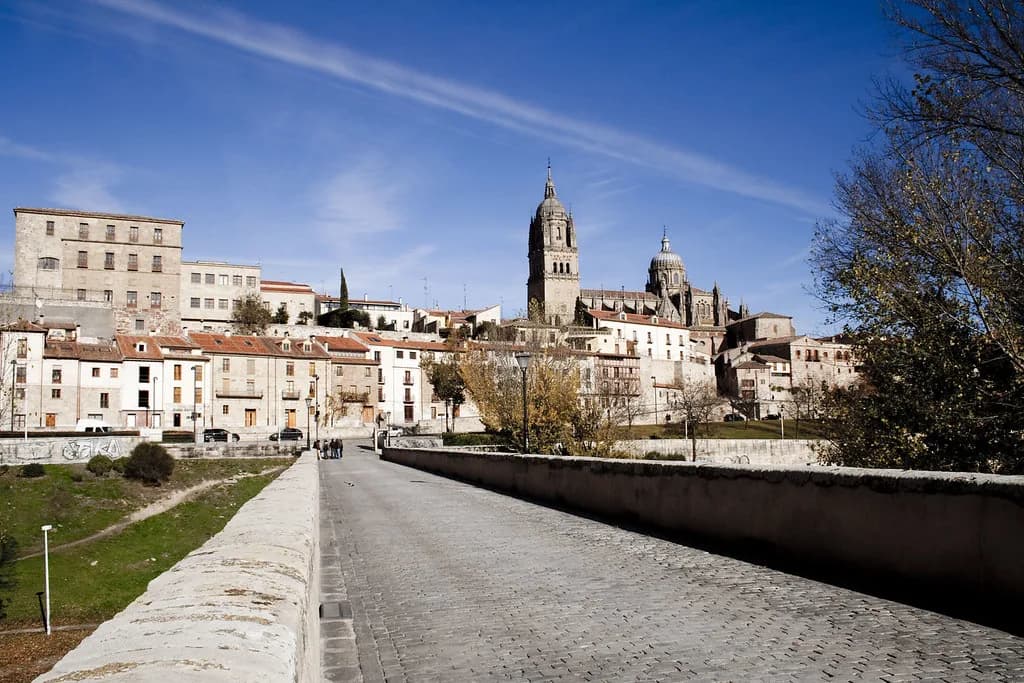
A third day also lets you walk the Roman Bridge at dusk, when the city and the New Cathedral dome are lit. The bridge's 26 arches cross the Río Tormes, much of it rebuilt in the 18th century, with a park and picnic tables on the far bank and a headless Iberian boar statue on the north side.
If markets are your reason for travelling, plan the extra day around them rather than adding a fourth church. Three days is also the point at which a day trip becomes tempting, though Salamanca's own set pieces reward the time more than another bus ride.
Where to Eat: El Huerto de Doña Deseada, El Mesón de Gonzalo and Casa Paca
El Huerto de Doña Deseada cooks with organic ingredients and traditional roots; dishes include steak tartare, Iberian jamón, grilled octopus and red tuna sashimi. The terrace looks onto the New Cathedral and is better still after dark when the building is lit, which makes it a strong choice for a first-night dinner.
El Mesón de Gonzalo and Casa Paca are the other two names worth building an evening around, both serving the local cooking that Salamanca does well. The province is home to the black Iberian pig, and its acorn-fed ham, chorizo and bacon are the things to order wherever you sit.
For a lighter stop, Santa Gloria Coffee & Bakery covers breakfast and A'Taranetella Ristorante Italiano covers the evening when you want a break from Spanish menus. Reserve El Huerto de Doña Deseada if the cathedral-view terrace matters to you, and treat the others as walk-ins.
Spanish Meal Times and How They Shape a Sightseeing Day
Lunch runs from about 1:30pm to 4pm and dinner starts at 8:30pm or 9pm, so the middle of the day belongs to the table, not the ticket queue. Book tower climbs and museum entries for the morning or late afternoon and leave the 2pm to 4pm window free for a proper menu del día.
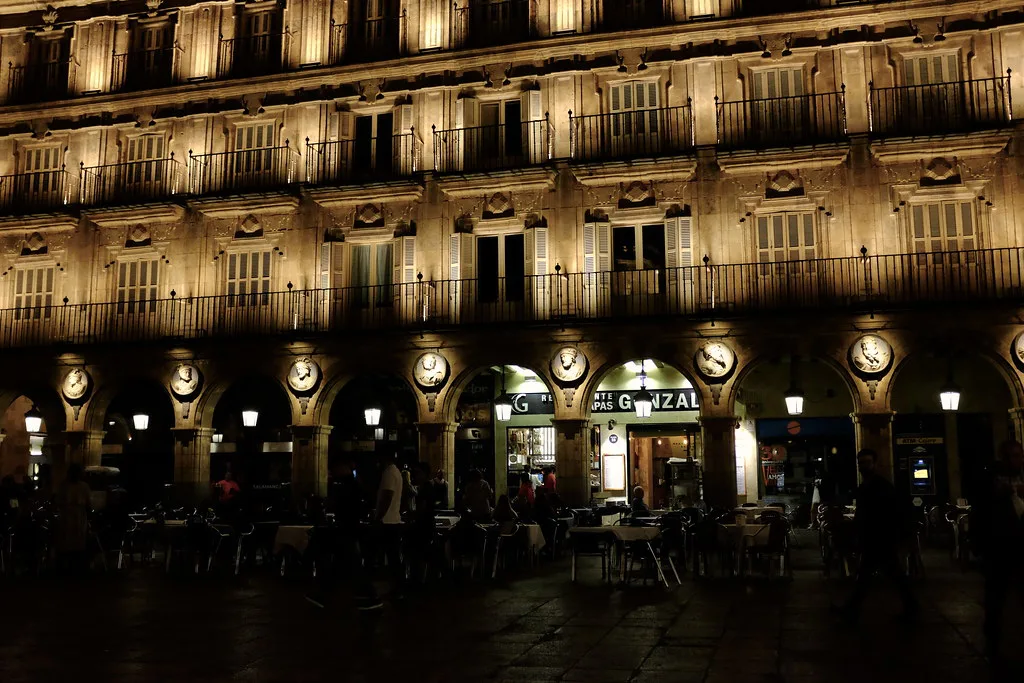
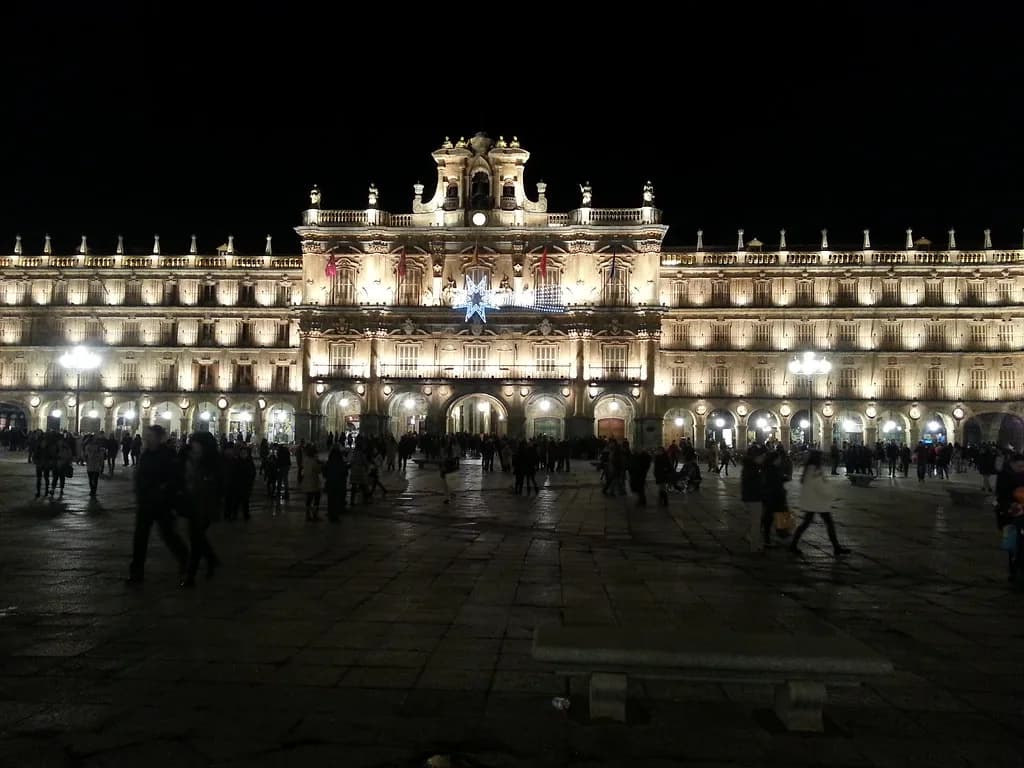
That rhythm also decides your evenings. The Plaza Mayor comes alive after dark, with students, families and older residents sharing the arcades and live music often drifting across the square, so keep dinner early enough to walk back through it rather than taxi-ing past.
Best Time of Day for the Plaza Mayor, the Cathedrals and the River
The Plaza Mayor is at its best twice: mid-morning under an umbrella with churros and coffee, and again after dark when the arcades fill. The square has 88 arches lined with restaurants, shops and ice cream stores, so it doubles as a rain plan if the weather turns.
The cathedrals want morning light through the stained glass, and the Ieronimus balconies are quieter before the lunch rush. Save the Garden of Calixto and Melibea and the Roman Bridge for sunset, when the wall-top garden's view over the Río Tormes and the lit dome across the water justify the walk.
Is Salamanca Worth Visiting Between Madrid and Elsewhere?
Yes, and two nights is enough to justify the detour. Salamanca sits about two hours by road northwest of Madrid and works as a stop on a Castile and León loop rather than a rushed day return, because the old town's highlights are all walkable and the evenings are half the point.
If you are weighing it against another city of similar size, compare what you actually want: Salamanca delivers sandstone architecture, a living university and a market in a compact centre, while a coastal stop delivers beaches. The Alicante comparison is the useful one when deciding how to split a fortnight, so work out how many days in Alicante you would give the coast before committing.
Common Mistakes: Over-Scheduling, Skipping the Climbs and Missing the Market
The most common error is booking two tower climbs and two museums on the same day. Choose Ieronimus for the panorama and La Clerecía only if you want the 166-step bell tower as well, then keep the rest of the day flat and slow.
Second, do not skip the Mercado Central because it looks like a quick stop. It is an authentic 19th-century market with produce, ham, cheese and wine, and it is the easiest place to assemble lunch before the restaurants open properly at 1:30pm.
Third, leave the Cielo de Salamanca and Casa de las Conchas for the gaps in your plan. Both are free, both sit near bigger sights, and both are easy to miss if you fixate on the cathedrals and never look up.
Plan Your Visit
Two days is the plan to book: one for the Plaza Mayor and both cathedrals, one for the university, Casa Lis and the convent, with evenings kept for tapas and the lit-up square. Add a third only for the market, the Roman Bridge at dusk and a slower lunch.
Check current opening times and entry charges with each site before you travel, since museum hours and fees change, and confirm restaurant closing days when you book. Then build the days around a 1:30pm lunch and an 8:30pm dinner, and the city will feel unhurried.
Explore more Salamanca guides
Frequently Asked Questions
How many days do you need in Salamanca?
Two days covers the essentials at a comfortable pace. Day one takes the Plaza Mayor, the Catedral Nueva and Catedral Vieja and the Ieronimus Tower; day two adds the Universidad de Salamanca, the Cielo de Salamanca, Casa Lis and the Convento de San Esteban. A third day suits anyone who wants the Mercado Central and the Roman Bridge at sunset.
Is one day enough to see Salamanca?
One day is enough for the headline sights if you start early and skip the museums. Concentrate on the Plaza Mayor, the two cathedrals and the Ieronimus Tower, and accept that Casa Lis and the university buildings will wait for another trip.
Is Salamanca worth visiting for two nights?
Yes. The old town is compact and walkable, and two nights give you two full days plus an evening in the Plaza Mayor after dark, when the arcades are busy and live music often plays. It is a more satisfying stop than a rushed day trip.
What should you not miss in Salamanca?
The Plaza Mayor, the Catedral Nueva and Catedral Vieja, and the view from the Ieronimus Tower. Beyond those, the frog on the Universidad de Salamanca façade, the Cielo de Salamanca ceiling mural and the Casa de las Conchas are all free and quickly seen.
How do Spanish meal times affect a day in Salamanca?
Lunch runs from about 1:30pm to 4pm and dinner from 8:30pm to 9pm, which parks the middle of the afternoon at the table. Schedule tower climbs and museums for the morning or late afternoon, and keep the lunch window clear.
What is the best time of day for the Plaza Mayor?
Mid-morning for coffee and churros under the arcades, and again after dark when locals and students fill the square. The cathedrals are best in morning light, while the Garden of Calixto and Melibea and the Roman Bridge reward a sunset visit.
Sources
Notes for eating well in Spain
Optional updates to our guides.
You might also like
Continue reading
More guides you'll find useful