Best Tapas in Salamanca: Where to Eat and What to Order
A practical guide to tapas in Salamanca: the dishes to order, which areas to head for, when locals eat and the honest trade-offs of each option.
On this page
The best tapas in Salamanca come from moving between bars rather than settling on one. The city's official tourism route is explicit about this: lunch is the moment to hop from bar to bar trying small portions of local specialities, with cured meats and sausages around the Plaza Mayor and roast suckling pig if you sit down for a full plate. Build the crawl around Spanish meal times and you eat when the kitchens and the crowds are at their best.
What Salamanca does best on a tapas crawl
Salamanca's tapas identity is built on pork: cured meats and hearty sausages in the bars near the main square, and roast suckling pig when you want a plate rather than a nibble. The province also produces acorn-fed Iberian pork, which is why jamón ibérico, chorizo and bacon carry real weight on local menus. Order a couple of cured-meat plates first and judge the bar on those before committing to anything hot.
When to eat: lunch from 1:30pm, dinner from 8:30–9pm
Plan the day around two windows: lunch from 1:30pm to 4pm, and dinner from 8:30pm to 9pm. Arriving at 1:30pm puts you at the counter before the post-work rush, and turning up at 8:30pm gets you a stool before the tables fill. The Plaza Mayor arcades are the first area to crowd, because that is where visitors naturally gravitate at the start of an evening. If you want a quieter counter, eat early and move on before the square gets busy.
The Plaza Mayor and Plaza del Corrillo: the easy, central starting point
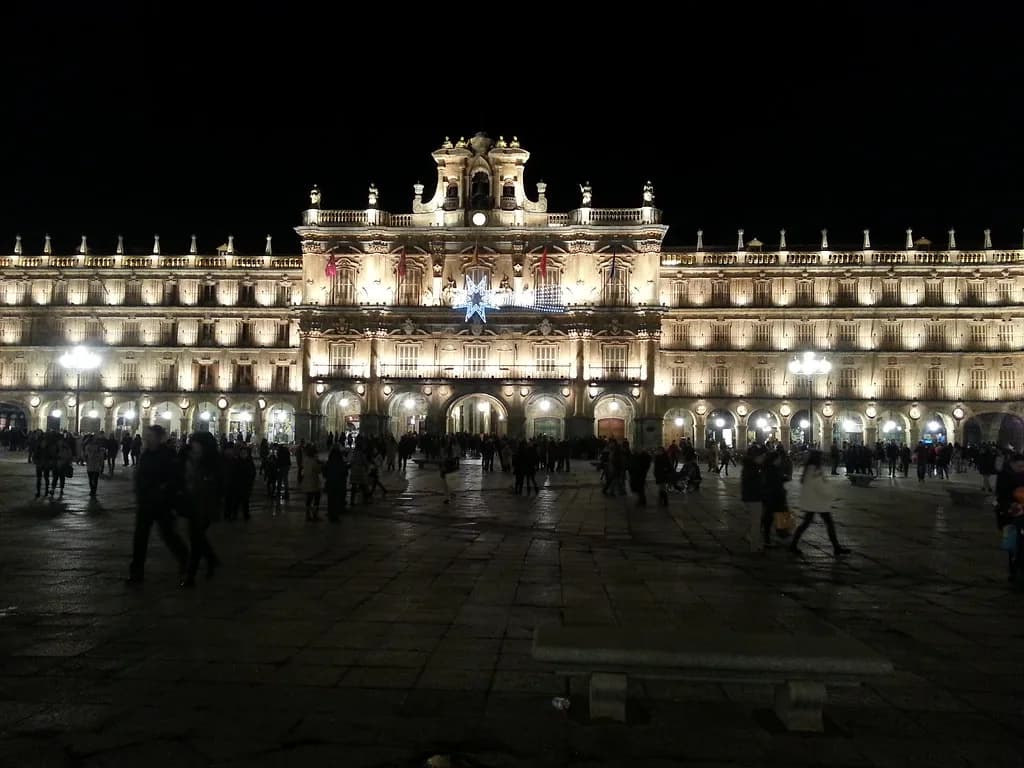
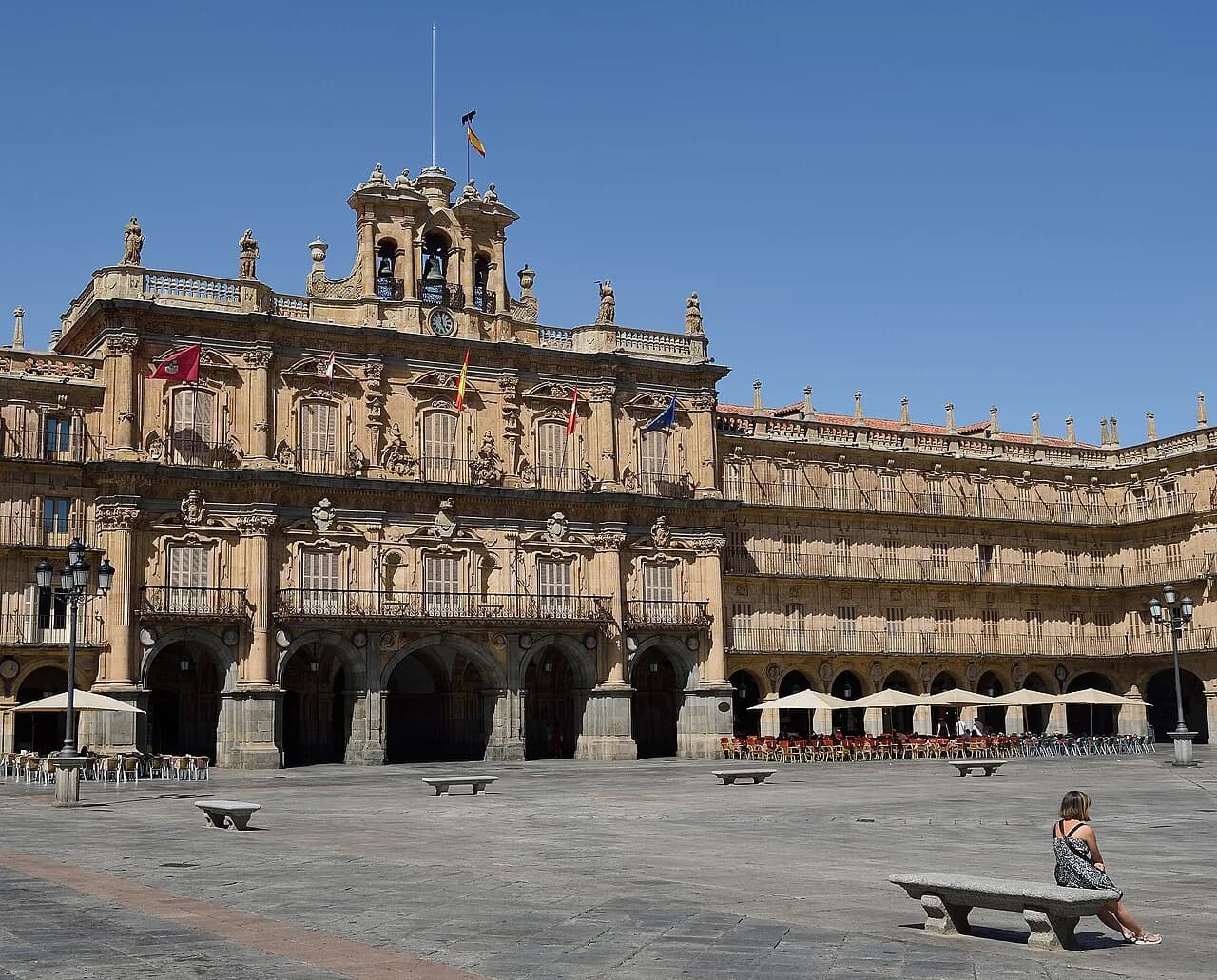
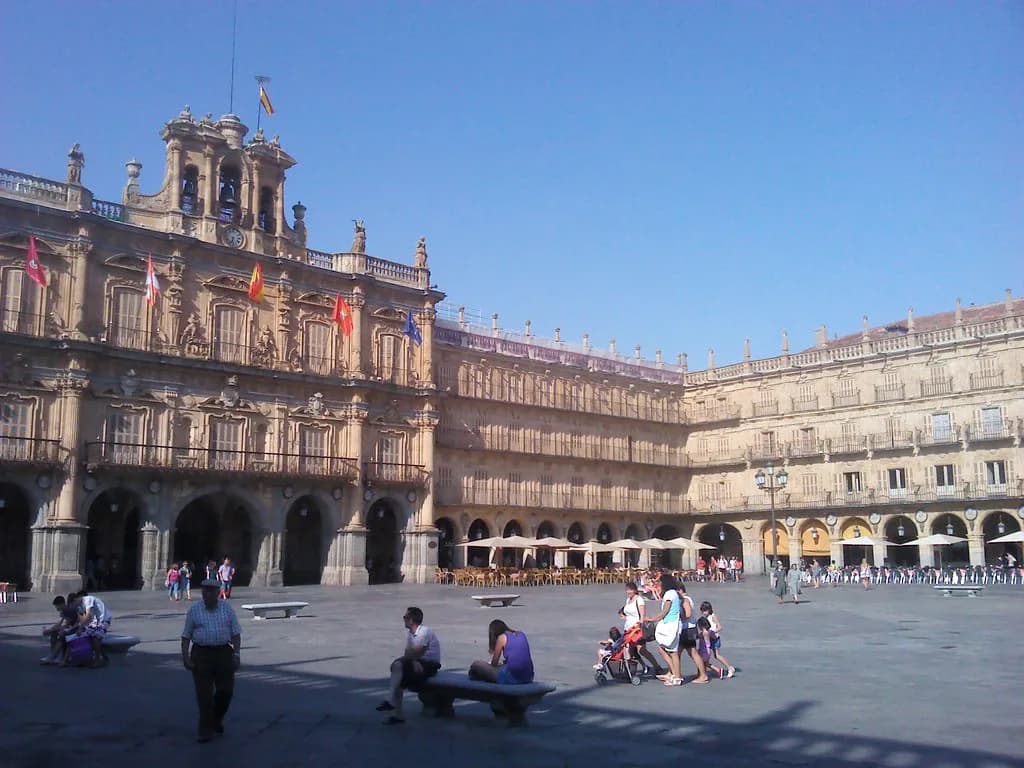
The Plaza Mayor is the obvious place to begin, and it is genuinely impressive: a Baroque square built to plans by Alberto Churriguera, with three-storey façades, semicircular arches and medallions of figures including Cervantes and St Teresa. Eighty-eight porticoed arches ring the square, and the outdoor cafés and restaurants fill them all day. Café Novelty, inside the arcades, is the classic coffee stop, with a sculpture of the writer Torrente Ballester indoors.
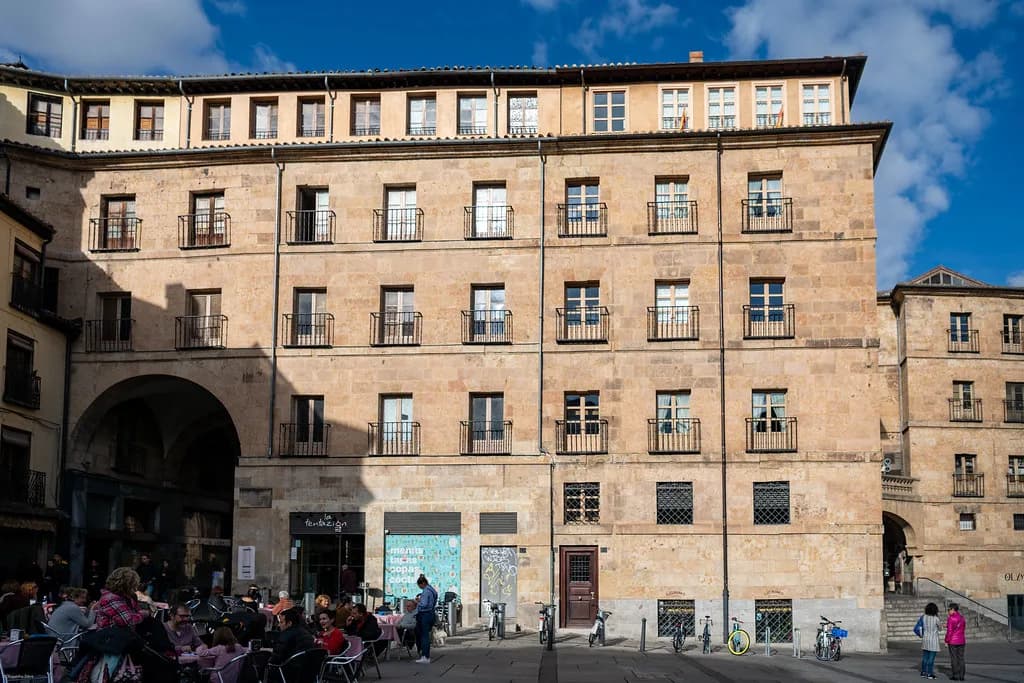
The trade-off is straightforward. The Plaza Mayor is the most convenient and most tourist-facing spot in the city, so you pay for the setting as much as the food. Walk through the Plaza del Corrillo just off the square, where small stalls sell gifts and souvenirs, and then down the Rúa Mayor to the Casa de las Conchas, the Gothic house covered in scallop shells. That short stretch keeps you in the historic centre while easing you away from the busiest tables.
Calle Van Dyck: the busy alternative in the newer part of town
For a different crowd, head to Calle Van Dyck in the newer part of the city, which the official route flags as busy and much frequented, with a wide range of options. It draws a fuller, more local mix than the arcades, and the atmosphere is louder and faster. The trade-off is that you lose the postcard setting: no golden stone, no arcades, just a street of bars doing steady business. Pair it with the Mercado Central and an evening walk back through the old town.
Mercado Central: jamón, cheese and olives for a picnic or light lunch
Salamanca's Central Market sits in a nineteenth-century building just outside the eastern entrance to the Plaza Mayor. Inside, stalls sell seafood, hams and sausages, cheeses, fruit and vegetables, bread and pastries, plus olives and wine. This is the cheapest way to eat well in the centre: assemble a picnic of jamón, cheese, olives and bread and take it to the riverbank or the garden of Calixto y Melibea. Market hours vary through the week, so check before you build a meal around it.
Sit-down options when you want a proper table
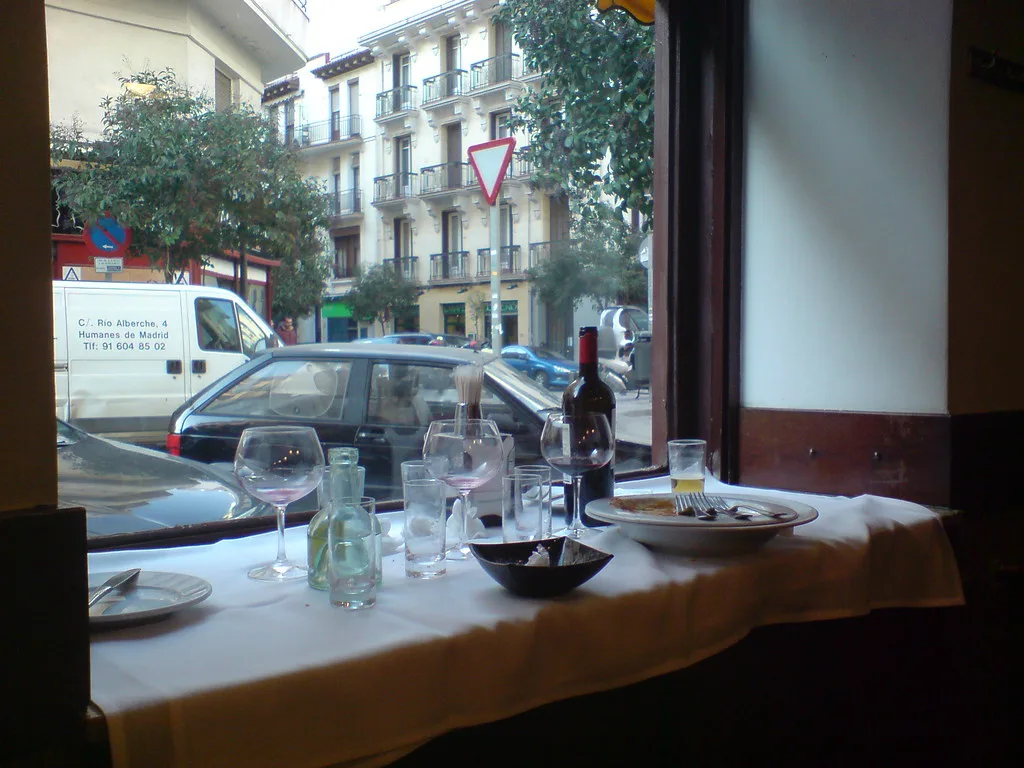
When you want a table and a full plate, three names come up consistently. El Huerto de Doña Deseada serves traditional cooking with organic ingredients, and its terrace looks onto the New Cathedral, which is even more striking after dark when the building is lit. El Mesón de Gonzalo and Casa Paca are the other two sit-down picks, both solid choices for a long lunch rather than a quick crawl. Book ahead for dinner, and expect the best tables to go to those who eat at Spanish rather than British hours.
If you want a wider spread of restaurants beyond tapas, the city's sit-down scene covers roast meats, rice dishes and modern plates. It pays to compare a few options before committing to a single dinner booking, especially in peak season when the centre fills quickly.
Dishes to order: jamón ibérico, morcilla de arroz, hornazo and roast suckling pig
Start with jamón ibérico, carved thin and served at room temperature, then add chorizo and other cured sausages from the province. Morcilla de arroz, a blood sausage bound with rice, is a good test of a bar: it should be well seasoned and served hot, and it appears on tapas menus across the city. Hornazo, a savoury pie, is the other local staple worth ordering at least once, best shared rather than tackled alone.
Roast suckling pig, cochinillo, is the dish to order when you sit down properly: crisp skin, soft meat, and a portion far larger than a tapa. It is rich, so order one between two and add a salad or a plate of peppers rather than a second main. The same pork tradition runs through the province's cured meats, and it is the single clearest thread linking bar snacks to restaurant cooking here.
What to drink and how to pace a crawl without over-ordering
Drink what the bar does well: a glass of red from Castilla y León with cured meats, a caña of beer with fried food, or vermouth earlier in the day. Order one or two plates at a time and eat them before ordering more; tapas arrives fast and a table piled high goes cold. Two or three bars in an evening is a better crawl than five rushed ones. Keep the last stop for a sit-down plate so the night ends with a proper meal.
Practicalities: prices, closing days and the August and winter slowdowns
Tapas prices vary by bar and by how close you are to the Plaza Mayor, so check the menu or ask before ordering rather than assuming a city-wide rate. Restaurants in Spain commonly close one or two days a week, and some shut for part of August or over winter, so confirm the day you plan to visit against the bar's own listings. Menus are usually posted at the door, which makes it easy to compare before you sit down. The same logic applies if you're chasing the best tapas in alicante, where a bar's distance from the main square shifts the price just as much.
To keep the day affordable, eat your main meal at lunch when menú del día pricing is at its most generous, and keep dinner to a few plates and a drink. Carry cash for small market stalls and neighbourhood bars. The overall shape of the trip matters too: a single day gives you one crawl, while two nights let you split the old town and Calle Van Dyck properly.
What to see between bars: the two cathedrals, the university frog and the Roman bridge
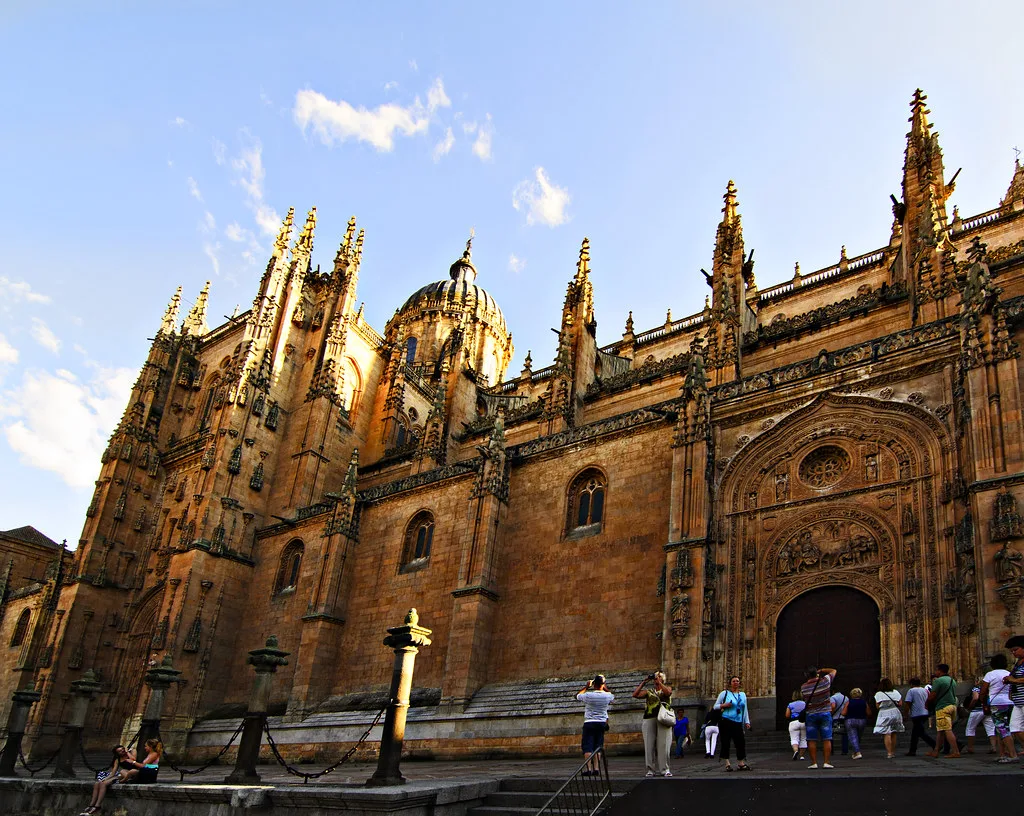
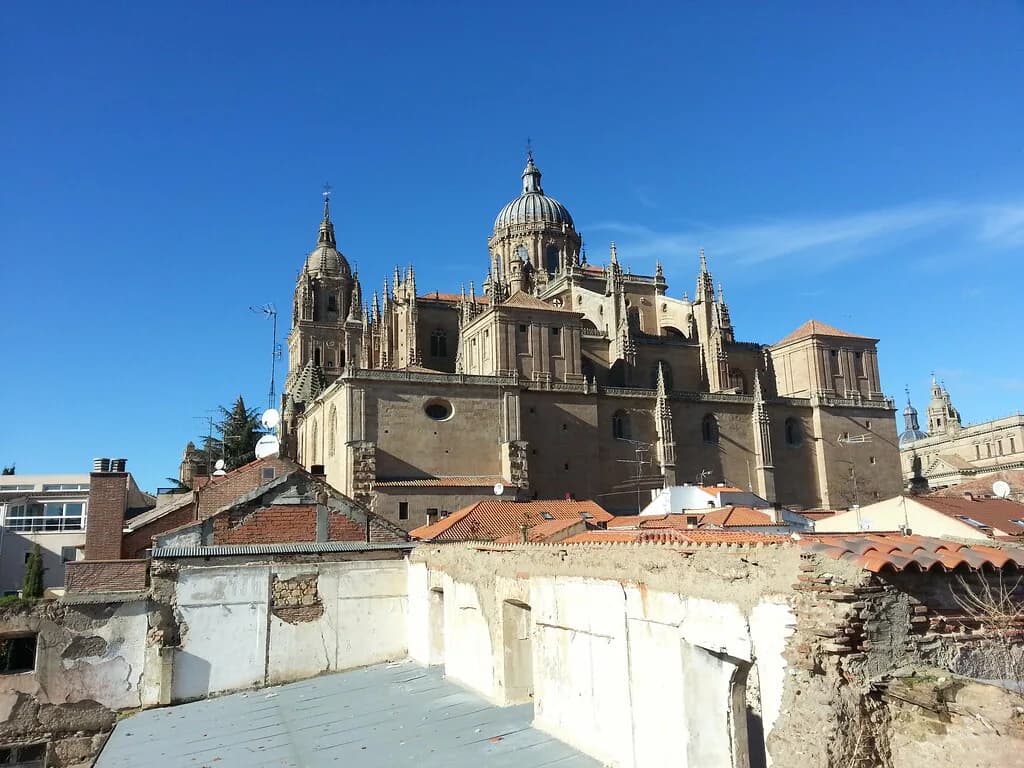
Salamanca packs its sights tightly, so you can walk between bars and monuments without losing an evening. The city has two cathedrals joined together, the Old accessed from inside the New, and the Ieronimus exhibition runs from the ground floor of the Old Cathedral up into the towers of both, with a terrace looking over the city. The New Cathedral's carved doors hide an astronaut and a monkey eating an ice cream among the Gothic and Baroque figures.
The University of Salamanca, founded in 1218, has a Plateresque doorway concealing a small carved frog, and finding it without help is supposed to bring luck in exams. Nearby, the Huerto de Calixto y Melibea is a quiet garden on the old city wall with views to the cathedral, named for the lovers in La Celestina. These are the best pauses between bars, and they cost nothing.
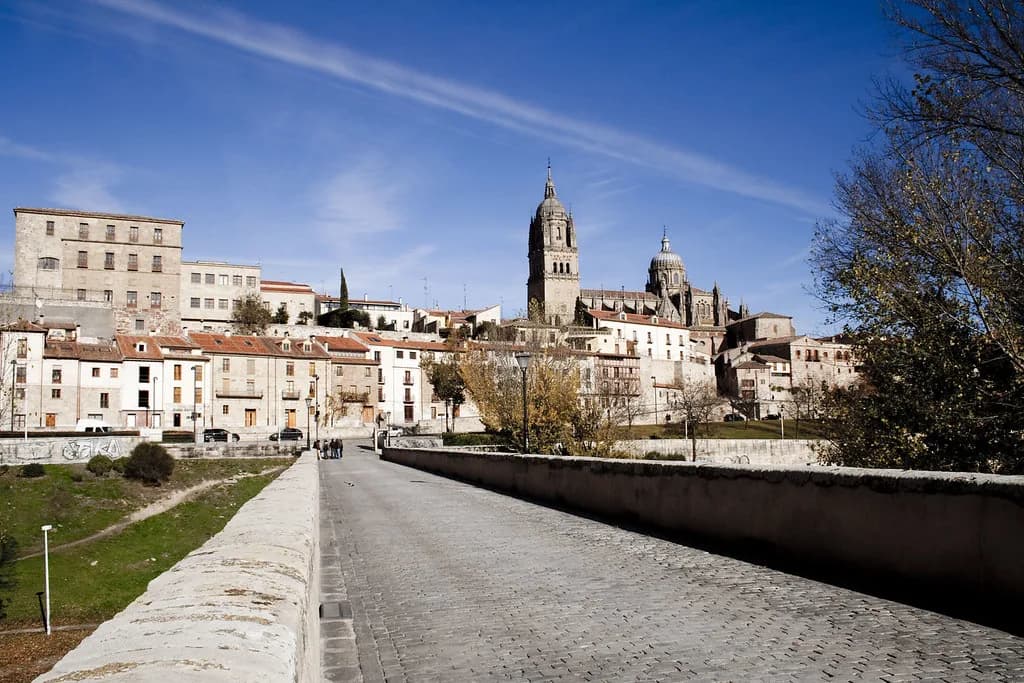
Finish at the Puente Romano over the Río Tormes, a pedestrian bridge whose arches give the best view back to the lit cathedral and the golden stone of the old town. It is the classic end to an evening in Salamanca. A single day covers the centre comfortably, and one day in Salamanca is enough for the cathedral, the university and an evening crawl if you plan the meal times properly.
Worth the detour: Ciudad Rodrigo's farinato and the Sierra de Francia's cured meats
With a car, the province rewards a day out. Ciudad Rodrigo, a walled town west toward the Portuguese border, has its own sausage tradition: farinato, made with breadcrumbs, pork fat and paprika, is best served with fried eggs, alongside chanfaina, hornazo and roast suckling pig. The old quarter is a Historic-Artistic Site and the streets are quiet enough to walk between meals.
South of the city, the Sierra de Francia holds villages such as La Alberca, Spain's first rural village to be given National Historic Heritage status, with stone houses, wooden balconies and a porticoed main square where you can buy ham and local produce. Guijuelo, in the same province, is one of Spain's best-known curing centres for jamón serrano and embutidos. The mountain air and the drive are the point as much as the food, and it makes a natural overnight stop rather than a rushed return.
Plan Your Visit
Build your Salamanca eating around the clock rather than a single address: lunch from 1:30pm, a few plates in the Plaza Mayor arcades to start, then a move to Calle Van Dyck or a sit-down table for cochinillo. Keep the cathedral towers, the university frog and the Roman bridge for the gaps between bars. Confirm opening days and August or winter closures directly with each place before you go.
Explore more Salamanca guides
Frequently Asked Questions
What food is Salamanca famous for?
Cured meats and sausages from the province, including jamón ibérico, chorizo and morcilla de arroz, plus hornazo and roast suckling pig when you sit down for a proper meal.
Which area of Salamanca is best for tapas?
The Plaza Mayor arcades and the nearby Plaza del Corrillo are the easiest starting point in the historic centre. Calle Van Dyck, in the newer part of town, is busier and draws a more local crowd, at the cost of the postcard setting.
What time do people eat dinner in Salamanca?
Dinner runs from about 8:30pm to 9pm, and lunch from 1:30pm to 4pm. Eating at the start of those windows gets you a stool before the rush.
Is tapas free in Salamanca?
Not generally. Most bars charge for each plate, and prices vary by bar and by how close you are to the Plaza Mayor, so check the menu before ordering.
Can I eat well in Salamanca on a budget?
Yes. The Mercado Central sells jamón, cheese, olives, bread and wine for a picnic, and a lunchtime menú del día is usually better value than ordering the same dishes at dinner.
What should I see between tapas bars?
The two cathedrals and the Ieronimus tower walk, the University of Salamanca doorway with its carved frog, the Huerto de Calixto y Melibea garden, and the Puente Romano at sunset.
Sources
Notes for eating well in Spain
Optional updates to our guides.
You might also like
Continue reading
More guides you'll find useful