Salamanca Markets: Where to Shop and Eat in the City
Salamanca's markets run from the stalls off the Plaza Mayor to the Central Market food hall. Here is what each sells and how to fit them into a day.
On this page
Salamanca's market shopping is compact and walkable: souvenir stalls just off the Plaza Mayor at the Plaza del Corrillo, a 19th-century covered food market near the square's eastern entrance, and the craft streets around Toro and Zamora for filigree and the Salamanca button. Everything sits inside the old town, so you can browse, buy ham and still see the cathedrals in one loop.
Treat the markets as a morning or late-afternoon stop rather than a whole day out. Spanish lunch runs from 1:30pm to 4pm, so plan heavy browsing and food buying before that window, then let the afternoon lull carry you to the Casa de las Conchas and the cathedrals.
What to expect from markets in Salamanca
There is no single central market that covers the whole city. What you get instead is a cluster: gift and souvenir pitches at the Plaza del Corrillo, a covered food hall at the Mercado Central, a few craft shops on the streets around Toro and Zamora, and the cafés and arcades of the Plaza Mayor to break up the shopping. All of it sits within a short walk of the square.
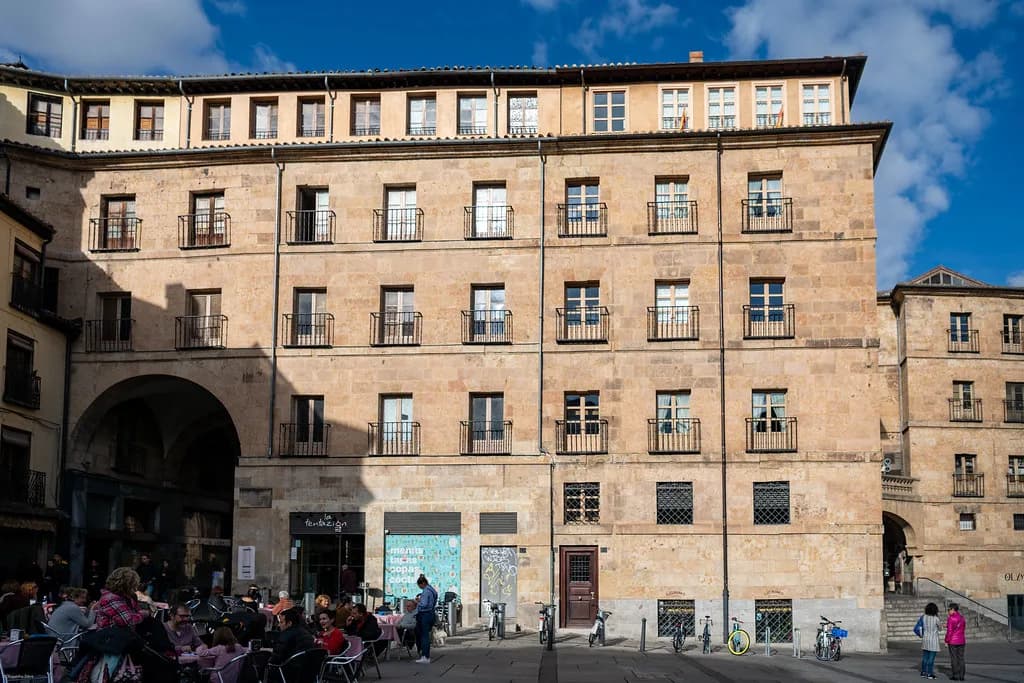
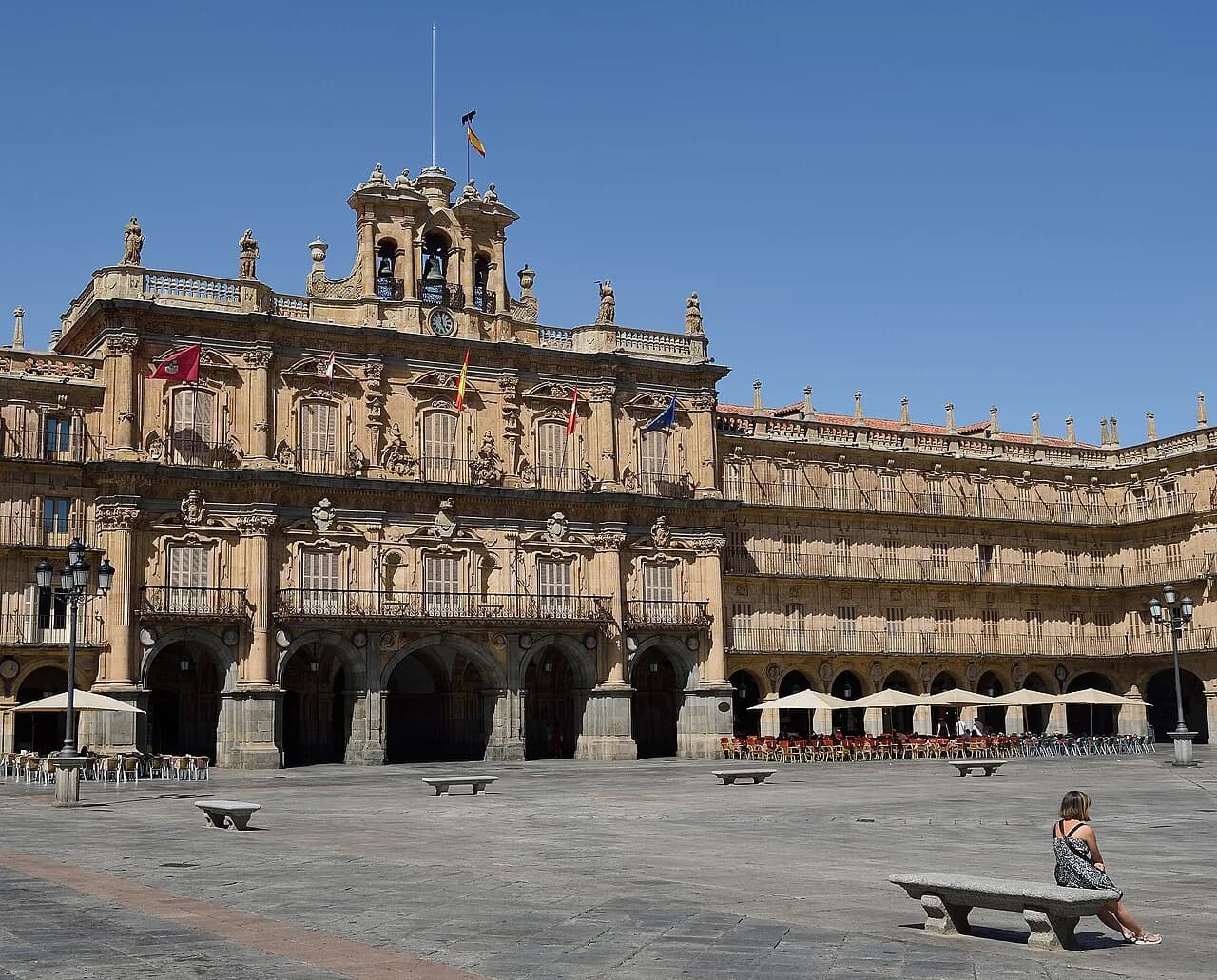
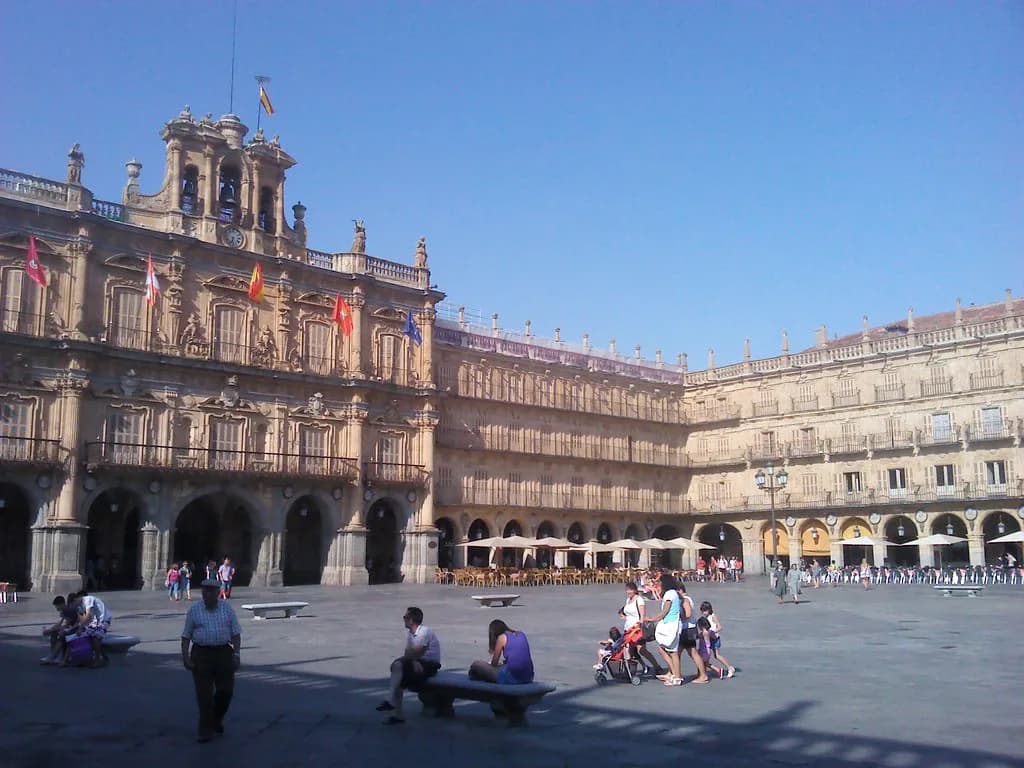
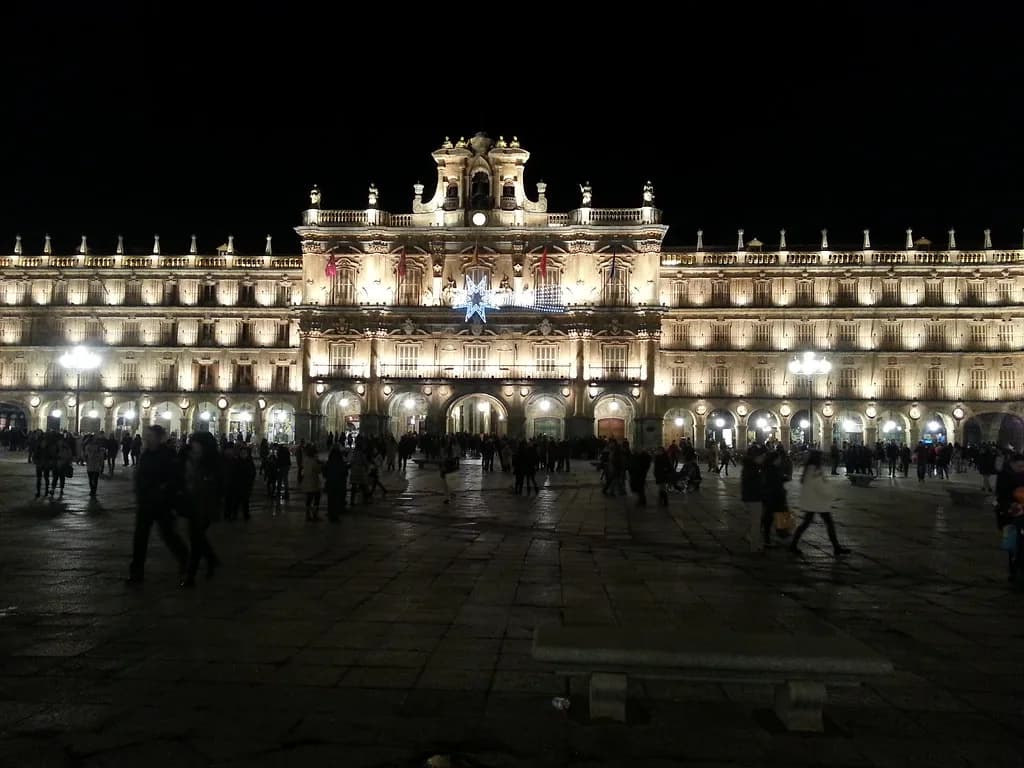
The Plaza Mayor is the natural anchor for a shopping morning. Spain's official tourism site describes it as one of the most beautiful squares in Europe, with 88 porticoed arches, outdoor café tables and carved medallions of figures such as Cervantes between the arches. Use it as a meeting point, a coffee stop and a landmark to return to between purchases.
The stalls at Plaza del Corrillo
Walk out of the Plaza Mayor towards the Rúa Mayor and you pass through the Plaza del Corrillo, where small stalls sell gifts and souvenirs. This is the most convenient place to pick up a keepsake if you are short on time, but it is also the most souvenir-heavy pitch in the centre, so expect trinkets rather than serious food shopping.
The Corrillo sits on the walking route from the Plaza Mayor to the Casa de las Conchas, so pair the stalls with a look at the shell-covered façade on the same street. The building now houses the city's public library and an information office, which makes a useful stop if you want a map before continuing to the craft shops.
Mercado Central: the covered food market
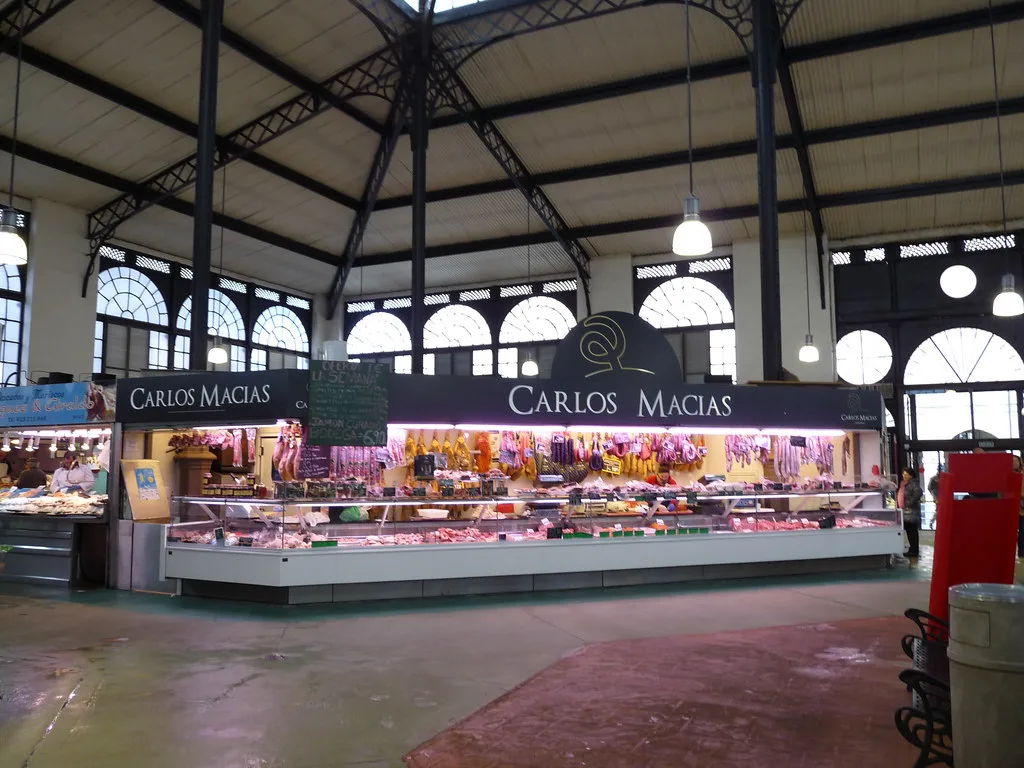
The Mercado Central is the food stop to build your morning around. It occupies a historic 19th-century building just outside the eastern entrance to the Plaza Mayor, and the stalls cover seafood, hams and sausages, cheeses, fruit and vegetables, bread and pastries. Come here for picnic supplies or a snack rather than for souvenirs.
Buying to eat later works well because the market is a short walk from the Plaza Mayor's arcades, where you can sit outside. Pick up cheese, olives and bread here, then take them to a bench or a café table; the market is practical shopping, not a browsing attraction, so go with a list rather than a camera.
Plaza Mayor: coffee between shops
The Plaza Mayor's outdoor cafés make a natural break between the Corrillo stalls and the food market. Café Novelty, a century-old café on the square, is the classic stop for a coffee; inside you will find a sculpture of the writer Torrente Ballester. Take a table under the arcades and watch the square fill up before lunch.
The square has 88 arches and medallions of figures including Cervantes and St Teresa between them, so a slow coffee is also a chance to look at the stonework rather than rush past. If you are planning the rest of the day, the square is the starting point for guided tours and the tourist office, which is useful for confirming market days and opening hours locally.
Buying to take home: filigree and the Salamanca button
For crafts rather than snacks, head to the streets around Toro and Zamora, where the city's boutiques, jewellers and craft shops cluster. Ask for filigree work or the traditional Salamanca button, both of which are small, light and easy to carry home. A little frog souvenir is another local buy, a nod to the carved frog on the university façade.
The frog is worth explaining to anyone you buy it for: legend says a student who spots the carved frog on the university's Plateresque doorway without help will pass that year's exams. The carving sits among dolphins and other figures on the stonework, and finding it is a good excuse to walk the short distance from the craft streets to the university.
Food and drink to look for
Salamanca's food shopping is built around cured meat. The bars around the Plaza Mayor are the place to sample hearty sausages and cured meats, and if you sit down for a restaurant meal, roast suckling pig is the traditional dish to order. For a change of scene, Calle Van Dyck in the newer part of the city has a busy concentration of bars and restaurants.
For the regional purchase worth seeking out, look for ham from Guijuelo, the cured ham produced in the province and one of Spain's best-known. The Sierra de Francia's clear mountain air is used to cure jamón serrano and embutidos, so a vacuum-packed pack from a market stall or delicatessen travels well. Check labels for the Guijuelo name rather than assuming every ham on display is local.
If you want a sit-down meal after shopping rather than a picnic, the city's restaurants divide between traditional Castilian cooking and more modern plates. El Huerto de Doña Deseada, El Mesón de Gonzalo and Casa Paca are among the named options in the centre, though menus and opening days change, so confirm before you build a day around one.
Timing your visit around Spanish meal times
Shop in the morning, before the Spanish lunch window of 1:30pm to 4pm, when the food market is at its most useful for picnic supplies. After lunch, the early afternoon is quiet: use it for the Casa de las Conchas, the cathedrals or a slow coffee in the Plaza Mayor rather than for browsing stalls.
Dinner and tapas start from 8:30pm, so the late afternoon is your second shopping window if you missed something in the morning. Many restaurants close one or two days a week and some close for part of August or winter, so look up the opening days of the specific place you plan to eat at rather than expecting it to be open.
If it rains
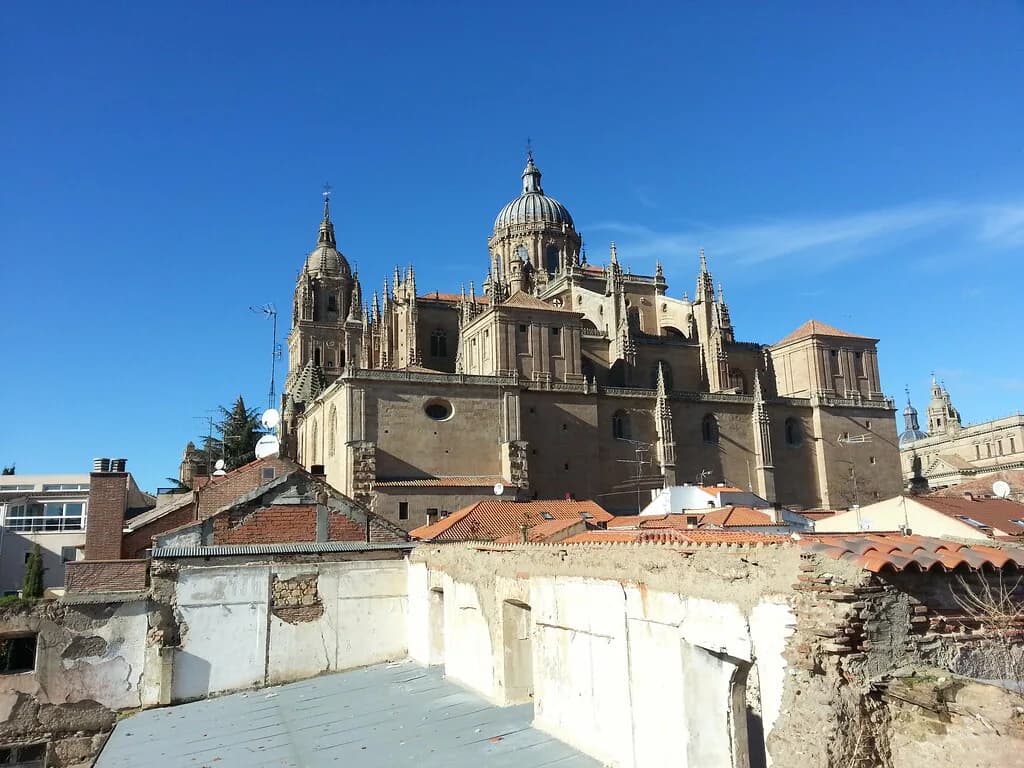
Rain does not stop the shopping. The Mercado Central is covered, and the Plaza Mayor's 88 arches form a continuous arcade where you can walk from café to shop without stepping into the open. The two cathedrals are connected, with the Old Cathedral entered from inside the New, so a wet afternoon has an obvious indoor route.
The Ieronimus exhibition, accessed from the ground floor of the Old Cathedral, takes you up into the towers of both cathedrals and onto a terrace with views over the city. It is a good wet-weather substitute for a walk along the river, though the terrace itself is exposed, so save it for a break in the weather.
Making a day of it
A workable loop starts at the Plaza Mayor, moves through the Corrillo stalls and down the Rúa Mayor to the Casa de las Conchas, then continues to the Plaza de Anaya and the cathedrals before returning to the Mercado Central for food. It keeps the walking short and the purchases manageable.
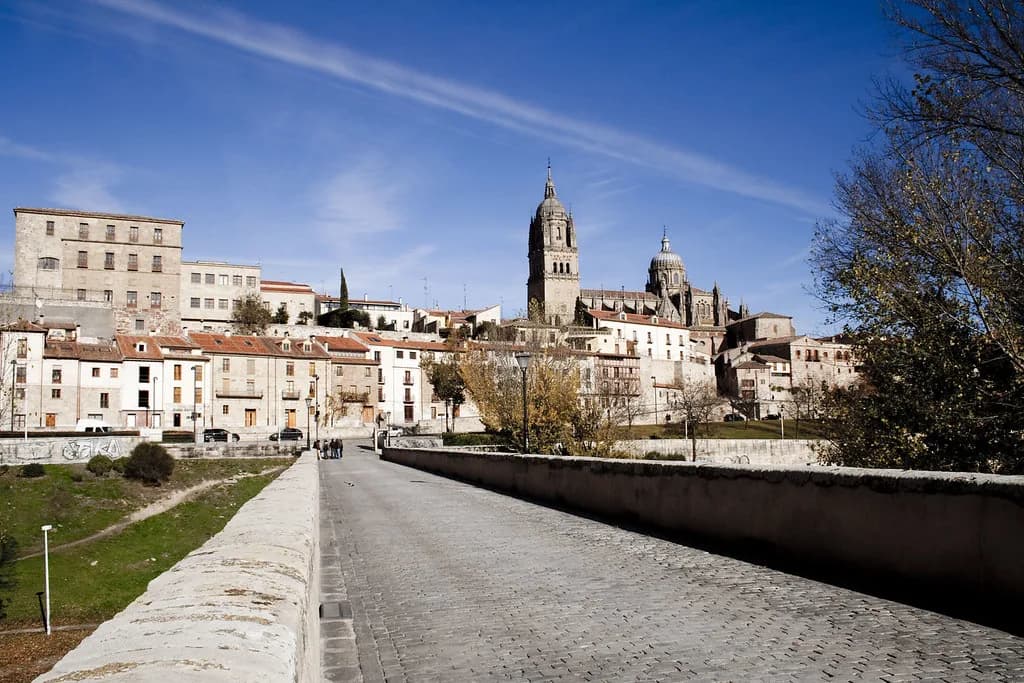
Finish at the Roman Bridge over the Tormes, south of the old town, where the low light turns the sandstone façades gold. Spain's tourism site recommends the bridge and the riverbank as one of the best places for photographs of the city, and the walk back into the centre is short enough to do after a tapas dinner.
Honest trade-offs
The Corrillo stalls are convenient but souvenir-heavy; the Mercado Central is the better stop for real food. If you only have an hour, choose one: gifts by the square, or provisions at the market. Carrying bags through the crowded centre is easier in the morning than in the evening, when the tapas crowds fill the streets.
Salamanca rewards a slower pace than a day-tripper's dash: two nights lets you see the markets, the university and the cathedrals without rushing, and allows a side trip to Zamora or Ciudad Rodrigo. If you are weighing up how long to stay, the answer depends on whether you want the city alone or the wider province.
Plan Your Visit
Build your Salamanca market morning around the Plaza Mayor: coffee at Café Novelty, gifts at the Corrillo, food at the Mercado Central and crafts on the Toro and Zamora streets. Keep lunch at 1:30pm to 4pm and tapas from 8:30pm, and the shopping will fit around the day rather than fight it.
If you want a wider view of the province or a comparison with other Spanish markets, the Fuerteventura guide shows how market culture changes from the mainland to the islands. For Salamanca itself, check current market days and stallholder hours with the tourist office in the Plaza Mayor before you set out.
Explore more Salamanca guides
Frequently Asked Questions
What time do markets in Salamanca open?
Opening hours vary by market and stall. The Mercado Central is a covered food market with individual stallholders, and the stalls at the Plaza del Corrillo keep their own hours. Check current details with the tourist office in the Plaza Mayor for the day you plan to visit.
Where are the souvenir stalls in Salamanca?
The main souvenir pitches are at the Plaza del Corrillo, just off the Plaza Mayor on the way to the Rúa Mayor. The Plaza Mayor itself also has shops and cafés under its arcades, and the streets around Toro and Zamora have craft shops for filigree and the Salamanca button.
What should I buy at Salamanca's Central Market?
The Mercado Central is the place for picnic food: seafood, hams and sausages, cheeses, fruit and vegetables, bread and pastries. For a regional purchase to take home, look for jamón from Guijuelo, the cured ham produced in the province.
Are there markets in Salamanca on a Sunday?
Sunday opening depends on the individual market and stall, and many small shops close on Sundays. Check current details with the tourist office in the Plaza Mayor or the market's own information before relying on a Sunday visit.
What food is Salamanca known for?
Cured meats and sausages are the local speciality, along with roast suckling pig in restaurants. The province produces jamón from Guijuelo, and the bars around the Plaza Mayor are the classic place to try a plate of local cured meat.
Sources
Notes for eating well in Spain
Optional updates to our guides.
You might also like
Continue reading
More guides you'll find useful