Zaragoza Itinerary: Plan 1 to 3 Days in Aragon's Capital
Build a Zaragoza itinerary around the Basílica del Pilar, La Seo, La Aljafería and the El Tubo tapas crawl, with a realistic plan for one, two or three days.
On this page
Zaragoza sits at the midpoint of the Madrid–Barcelona high-speed line, which is exactly why most travellers only see it through a train window. Leave the station and you get a compact old town built around Plaza del Pilar, Roman remains, a Moorish palace and one of Spain's biggest tapas quarters, all walkable in a couple of days.
The plan below works in either direction: one full day for a stopover, two days for the comfortable version, three if you want the river and a slower museum morning. Meals are slotted into Spanish hours, so lunch falls between 1:30pm and 4pm and dinner starts around 8:30pm to 9pm.
Why Zaragoza fits a stop between Madrid and Barcelona
Zaragoza is the capital of Aragon and the fifth-largest city in Spain, with almost 700,000 residents, yet it stays off most short-break routes. It sits between Catalonia and the Basque Country and between northern Spain and Valencia, making it the natural crossroads for a multi-city trip rather than a detour.
If you are driving, treat the city as an overnight rather than a flying visit: the big northern cities are roughly three hours away in any direction, so a couple of hours on the ground rarely justifies the drive. Coming by train is simpler, and Zaragoza Delicias, opened in 2003 and designed by Carlos Ferrater, is a striking arrival in its own right.
For a wider menu of sights before you commit, the Zaragoza Attractions: 6 Visitor Guides cover the main monuments one by one. Treat this itinerary as the scheduling layer on top.
How many days you need: one, two or three
One day covers Plaza del Pilar, both cathedrals and an evening in El Tubo, which is enough to justify stepping off the train. Two days add La Aljafería and the Mudéjar sights plus a museum or the Mercado Central. A third day only makes sense if you want the Ebro riverside and the Expo 2008 grounds, or a slower morning in the Goya and origami museums.
The main constraint is opening hours: several monuments keep split shifts with a long midday gap, so a tightly packed morning and an early afternoon walk beats trying to see everything between 2pm and 4pm. Build the day around two sight blocks and one long lunch.
Before you go: meal times, the cierzo wind and booking La Aljafería
Book La Aljafería online before you travel. Entry runs on timed slots with ID checks, and tickets sell out even in winter, so pick your slot before you fix the rest of the day around it.
Pack for the cierzo, the strong wind that funnels down the Ebro valley. It arrives mostly in autumn and winter but can blow at any time of year, and on a bad day it turns an exposed riverside walk into a short one, so keep an indoor option in reserve.
Tickets for the Basílica tower lift and the combined cathedral pass are sold on site and online, and prices change, so confirm the current figure at the ticket desk rather than budgeting from old guides.
Day 1 morning: Plaza del Pilar, the Basílica del Pilar and La Seo
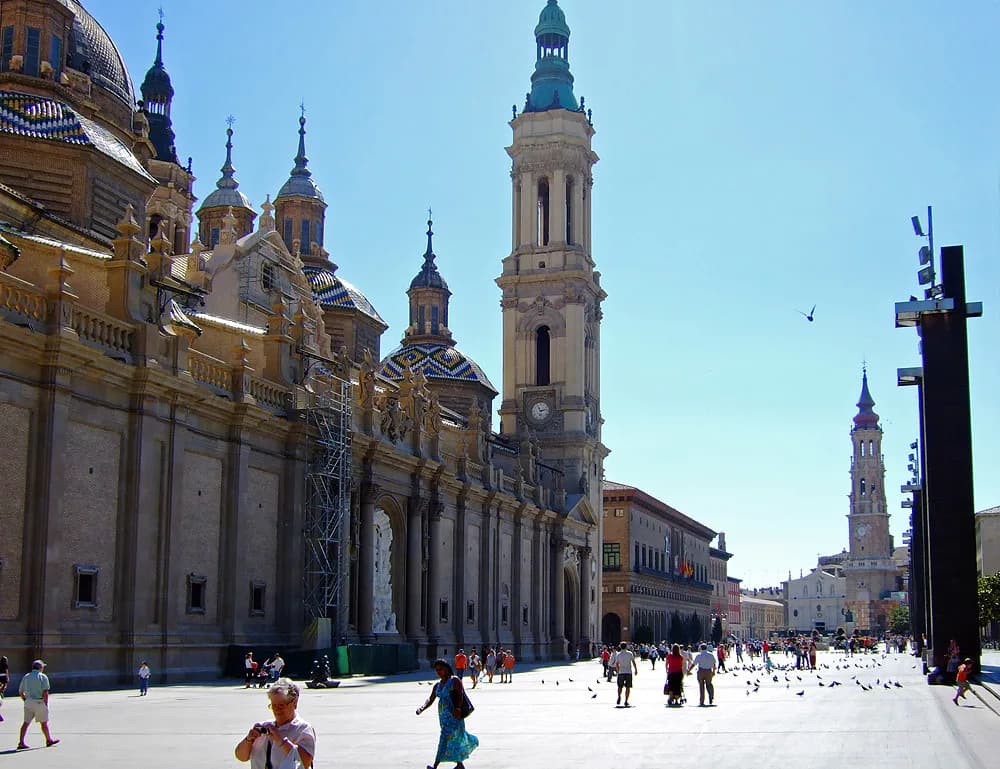
Start at Plaza del Pilar, the largest square in the city at 24,000 square metres and the setting for the Basílica de Nuestra Señora del Pilar. The present Baroque cathedral replaced a Gothic church destroyed by fire in 1434 and ranks among the largest churches in Spain, with a vast hall-like interior, a Renaissance alabaster altar and frescoes by Goya.
Two Civil War bombs that fell on the church without exploding are displayed inside, a detail worth pointing out before you walk in. Give the basilica a full hour; the scale makes a quick lap pointless.
Cross the square to La Seo, the Catedral del Salvador, which began life as a mosque and was converted after Alfonso I took the city in 1118. Look for the Mudéjar brick façade outside and the Gothic alabaster altar within, then check the day's opening hours at the door because the cathedral keeps a midday break.
If you want the full picture of both buildings before choosing where to spend your time, the things to do in zaragoza guide covers them in more depth.
Day 1 afternoon: Roman Caesaraugusta and the Renaissance patios
Lunch first, between 1:30pm and 4pm, then walk the Roman circuit. Caesaraugusta was founded in 14 BC as a river port beside an Iberian village, and five sites survive in the modern centre: the city walls, the forum under an alabaster-clad cube, the river port museum, the thermal baths and the theatre under its huge modern roof.
One ticket covers all five monuments and can be bought at any of them; it was reported at 5.50 euros, so treat that as a guide and check the current price at the first site you enter. The theatre is the most impressive and the hardest to find, so load the location on your phone before setting off.
Fill the late afternoon with the Renaissance courtyards that once belonged to wealthy merchants. The Patio de la Infanta, sold to a Paris antiques dealer in 1903 and bought back by a local bank in 1957, now sits inside the bank's central office and can be visited with its tapestry collection.
Nearby, La Lonja on Plaza del Pilar hosts temporary exhibitions with free entry, and the Palace of the Marquis of Montemuzo opens its narrow patio as part of a small printing museum. Both are short stops that fit neatly before dinner.
Day 1 evening: an El Tubo tapas crawl and what to order
El Tubo is the tapas quarter south of Plaza del Pilar, spreading from Plaza de España and El Coso into a warren of narrow streets that fill up late and stay noisy. Calle Estebanés is the official tubo street, with Calle Mártires and Calle Cuatro de Agosto part of the same circuit.
Order the local specialities rather than the generic plate: a calamari sandwich, ham or anchovy croquettes, jamón batido spread on bread, the small sandwich known as a guardia civil with salted sardines, red pepper and tomato, or huevos con bechamel. Champiñones al ajillo and tortilla de patatas appear everywhere, as they do across Spain.
Eat standing, take one plate per bar and move on; the pleasure is the crawl, not a single table. Dinner realistically starts around 8:30pm to 9pm, so use the earlier evening for a slow walk along the Ebro rather than arriving to empty bars.
If you would rather plan a proper sit-down meal, the best restaurants in zaragoza shortlist gives you named options. For the dishes themselves, the zaragoza food guide explains what to order and when.
Day 2 morning: La Aljafería and the Mudéjar trail
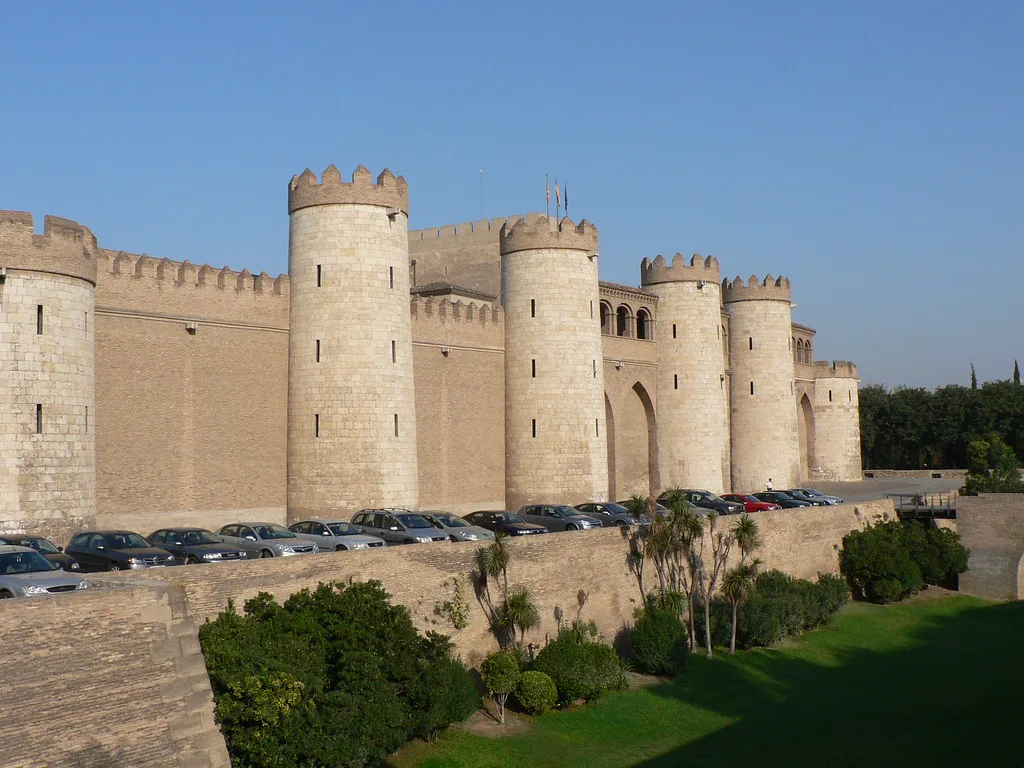
La Aljafería was built in the late 11th century under Áhmad al-Muqtádir as a leisure palace and is the standout Islamic building of the Taifa period in northern Spain. The fortified exterior hides ornate halls, courtyards and gardens, and part of the complex now houses the Parliament of Aragon.
The palace sits about a 15-minute walk from the old town in a residential area, so allow for the walk and arrive at your slot with ID ready. Visits are guided at set times and self-guided otherwise, and the historical rooms are unfurnished, which means an hour is usually enough if you have read up beforehand. Entry was reported at 5 euros, with free access on the first Sunday and Monday of the month, so confirm the current arrangement with the palace.
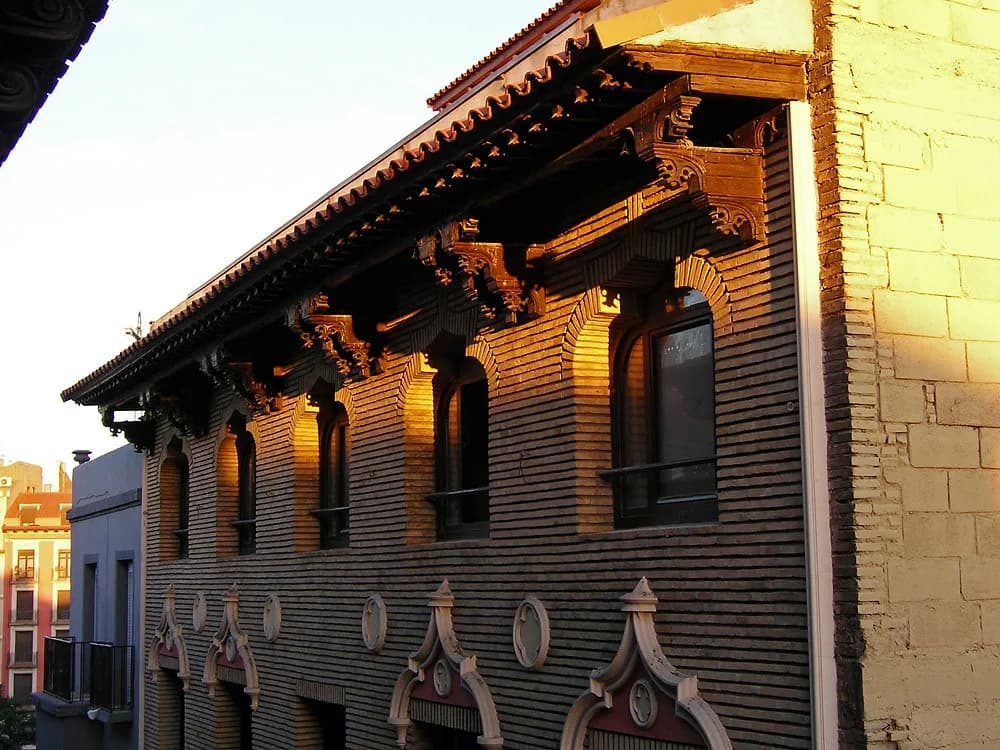
Spend the rest of the morning on the Mudéjar trail, the brick-and-tile style that Aragon's craftsmen developed after the Christian conquest and which UNESCO listed in 1986. Beyond La Aljafería, the best examples are La Seo and the slender bell tower of the Church of San Pablo.
Day 2 afternoon: the Goya Museum, the EMOZ origami museum and the Mercado Central
Give the Goya Museum a couple of hours if Goya interests you, and less if he does not: much of what hangs there is work by artists before and after him rather than the man himself. It holds early oils, studies for major works and the complete engravings. Tickets were listed at 6 euros, so check the current rate at the door.
The EMOZ origami museum is the surprise pick, on the top floor of the historical centre building at Plaza San Agustín. It is small, it is the first museum of its kind in Europe, and it shows original models by leading folders; it closes on Mondays, and tickets were listed at 3 euros.
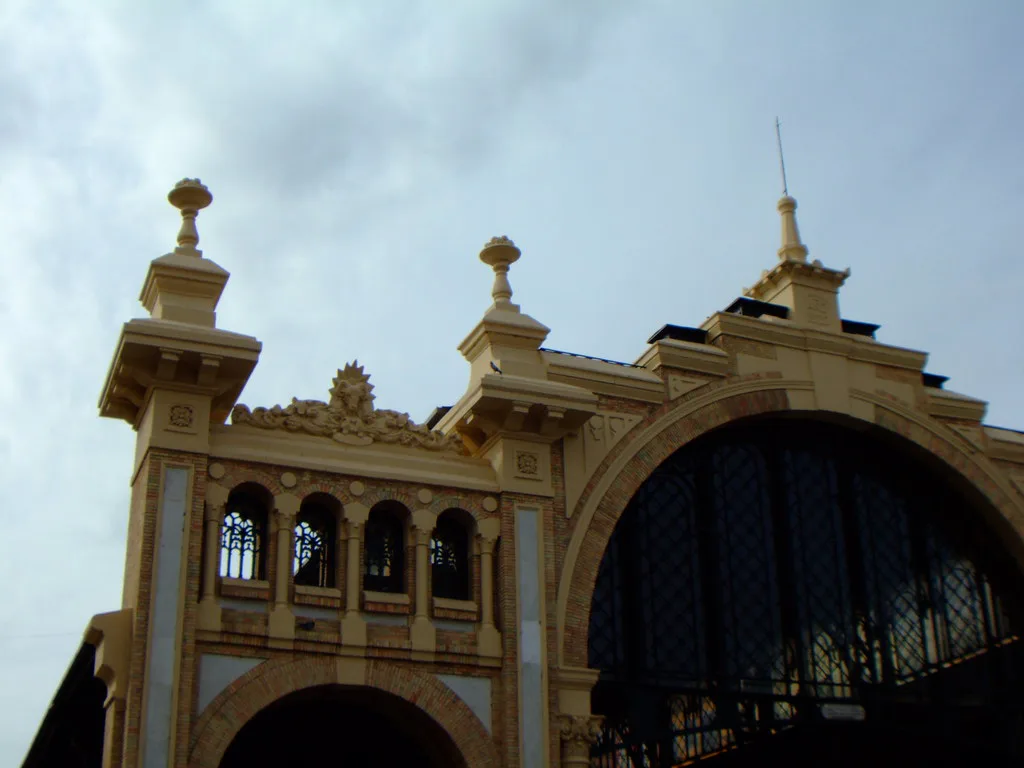
End the afternoon at the Mercado Central next to Plaza del Pilar, recently restored and one of the most beautiful markets in Spain, with a workable balance of food stalls and small restaurants. It is the right place for a late lunch or an early evening plate before the tapas bars get going.
Day 2 evening: sunset from the Puente de Piedra and the Balcón de San Lázaro
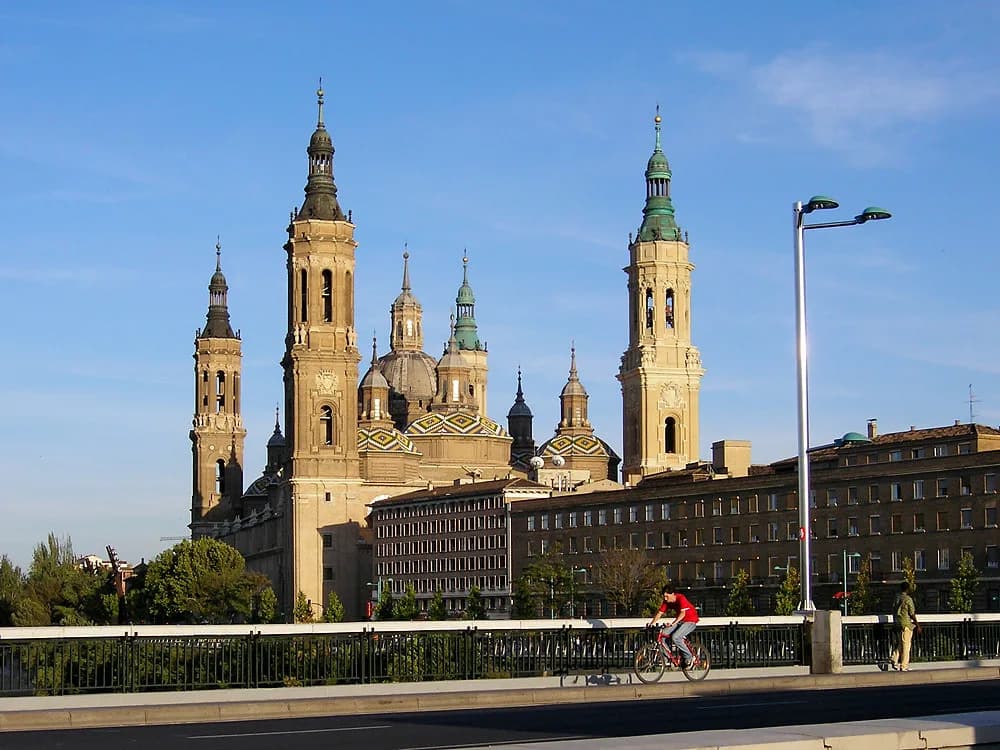
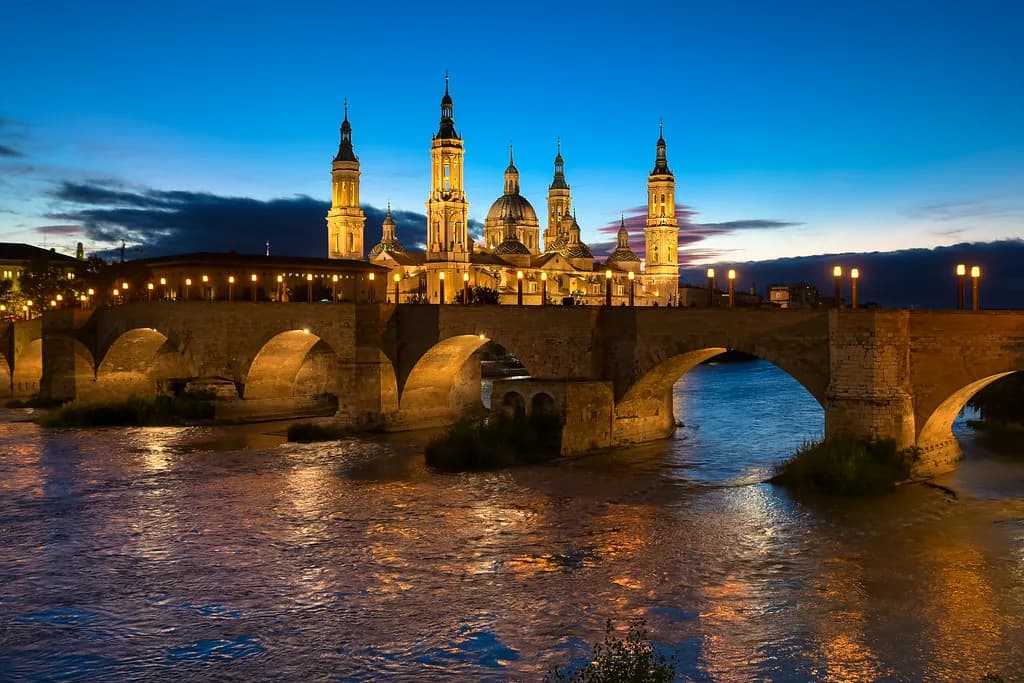
The Puente de Piedra, known as the Bridge of Lions for the bronze statues at each end, gives the classic view back to the basilica. A flood in 1643 swept away its middle section, and the bridge you cross today carries both traffic and walkways.
Cross to the far side and walk the short stretch to the Balcón de San Lázaro, a small observation area that frames the basilica and the bridge together. Sunset is the moment to be there, and it costs nothing.
Day 3 options: the Ebro riverside and Expo 2008 grounds, or a slower museum day
The Ebro is the river most associated with Zaragoza, and both banks have promenades: the old city on the south side, modern suburbs on the north. There are no boats to speak of because the current is strong, so plan a walk rather than a cruise.
Head downstream to the Expo 2008 grounds, most of whose buildings remain, including an aquarium, a convention hall and the bridge pavilion designed by Zaha Hadid, now used as a mobility museum. It is a modern-architecture walk rather than a beauty spot, and the cierzo can cut it short.
The alternative third day is quieter: the Patio de la Infanta, La Lonja and a long lunch. Note that the Museo de Zaragoza, which holds Goya paintings, has been closed for renovation, so check before adding it to the plan.
Fiestas del Pilar: planning around 12 October
The Fiestas del Pilar run for a week around 12 October, opening on the Saturday before and closing the following Sunday, with parades, concerts, markets and bullfights across the city. The Flower Offering is the centrepiece: thousands of participants in traditional dress parade to Plaza del Pilar and pile flowers into a huge pyramid structure around the Virgin's statue.
The city's population swells dramatically that week, so book accommodation well ahead if you want to be there, and expect the tapas quarter to be at full roar. It is loud, crowded and genuinely Spanish rather than solemn.
Where to stay: old town versus the modern city
Stay in the old town if your priority is walking to Plaza del Pilar, La Seo and El Tubo without planning transport, and accept higher rates and noise during fiestas. The modern city around the bank offices and the Expo grounds is quieter and better value, but adds a walk or a bus ride to every sight.
Pick a base within reach of the Mercado Central and the Casco Antiguo if you plan to eat out late; you will be walking back after 11pm.
Getting in and out: Zaragoza Delicias and the high-speed line
High-speed trains on the Madrid–Barcelona line stop at Zaragoza Delicias, which opened in 2003 and uses triangular skylights to flood its huge concourse with natural light. It is a genuinely good station to arrive in, so build in ten minutes to look up.
Multi-day rail-and-coach packages combine Madrid, Zaragoza and Barcelona with a night in the city, which suits anyone who wants the stopover organised for them. Check the day-by-day content before booking, because the Zaragoza time in these tours is often short.
Honest trade-offs: what Zaragoza does and does not give you
Zaragoza gives you Moorish architecture, two major cathedrals on one square and a serious tapas scene without Barcelona's crowds. It does not give you the dense showpiece sights of Andalusia, and its Moorish palace, while important, is less spectacular than the Alhambra or Sevilla's Alcázar.
Treat it as a well-rounded city break rather than a bucket-list destination, and it delivers. Come for two nights, eat late, and leave the third day open for the river.
A one-day version for a Madrid–Barcelona stopover
If you have one day, arrive in the morning and go straight to Plaza del Pilar: the basilica first, then La Seo, lunch at the Mercado Central, and the Roman theatre and forum in the afternoon. Skip La Aljafería unless you have booked a slot in advance, because the timed entry will not bend around a tight train.
Finish with a Puente de Piedra sunset and an El Tubo crawl before a late train. Confirm the day's opening hours for each monument at the door, and book the palace only if the schedule allows a fixed time.
Explore more Zaragoza guides
Frequently Asked Questions
How many days should you spend in Zaragoza?
Two days covers Plaza del Pilar, both cathedrals, La Aljafería and an evening in El Tubo at a comfortable pace. One day works for a Madrid–Barcelona stopover if you drop the palace, and a third day suits the Ebro riverside and Expo 2008 grounds or a slower museum morning.
Is Zaragoza worth stopping for between Madrid and Barcelona?
Yes, if you give it a night. The high-speed line stops at Zaragoza Delicias, and the old town puts the basilica, La Seo and the tapas quarter within walking distance. A couple of hours between trains is not enough to see the monuments properly.
What should you do on a one-day Zaragoza itinerary?
Start at the Basílica del Pilar and La Seo on Plaza del Pilar, have lunch at the Mercado Central, then walk the Roman circuit in the afternoon. End with sunset from the Puente de Piedra and a tapas crawl through El Tubo.
What food should you try in El Tubo?
Look for a calamari sandwich, ham or anchovy croquettes, jamón batido on bread, the guardia civil sandwich with salted sardines, red pepper and tomato, and huevos con bechamel. Bars in Calle Estebanés, Calle Mártires and Calle Cuatro de Agosto all trade in the same style.
Do you need to book La Aljafería in advance?
Yes. Entry runs on timed slots with ID checks and tickets sell out even in winter, so book on the official site before you fix the rest of your day. Some slots are guided and others self-guided.
What happens in Zaragoza during Fiestas del Pilar?
The city holds a week of parades, concerts, markets and bullfights around 12 October, opening on the Saturday before and closing the following Sunday. The Flower Offering fills Plaza del Pilar with a pyramid of flowers, and accommodation books up early because the city is packed.
How do you get to Zaragoza by train?
High-speed trains on the Madrid–Barcelona line stop at Zaragoza Delicias, a light-filled station opened in 2003 and designed by Carlos Ferrater. It is the practical arrival point for the old town.
Sources
Notes for eating well in Spain
Optional updates to our guides.
You might also like
Continue reading
More guides you'll find useful