How Many Days in Zaragoza? A Realistic 1–3 Day Plan
Two to three days in Zaragoza covers the Basílica del Pilar, La Seo, the Aljafería and a tapas crawl in El Tubo. Here is what fits into one, two or three days.
On this page
Two to three days in Zaragoza covers the big sights and a proper tapas crawl without rushing. A single day gets you the Basílica del Pilar, La Seo and an evening in El Tubo; a second day adds the Aljafería Palace and the Roman forum remains; a third buys you Goya, the Museo de Zaragoza and the Mercado Central at an unhurried pace.
The city sits on the Ebro roughly halfway between Madrid and Barcelona, which makes it either a stopover or a destination in its own right. High-speed Renfe trains reach Zaragoza in about 1 hour 15 minutes from Madrid and 1 hour 25 minutes from Barcelona, so treating it as a quick pause between the two undersells it.
Why Zaragoza rewards more than a stopover
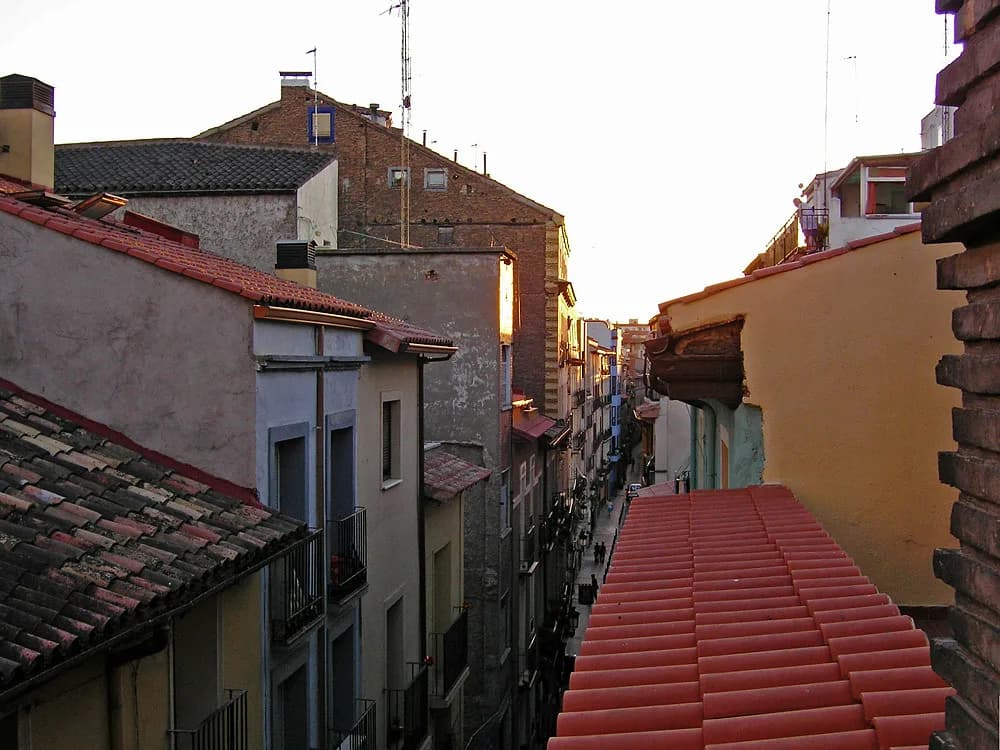
Zaragoza is Spain's fifth biggest city, with a dense old town of tapas bars, grand architecture and two thousand years of history layered on top of each other. Romans, Moors and Goths all left their mark before it became the capital of the Kingdom of Aragon, and the centre still reads like a compact summary of Spanish history.
Spaniards know it for the Basílica del Pilar on the skyline, for Goya and for tapas that rank among the country's best. That reputation matters for planning: the eating is as much a reason to stay as the monuments, and a proper crawl through El Tubo needs an evening you are not spending on a platform.
The centre is walkable and the sights cluster tightly, so extra days go into depth rather than transport. If you are weighing Zaragoza against smaller Catalan cities, our guide to how many days in girona makes the same calculation for a much smaller stage.
One day in Zaragoza: the Basílica del Pilar, La Seo and El Tubo
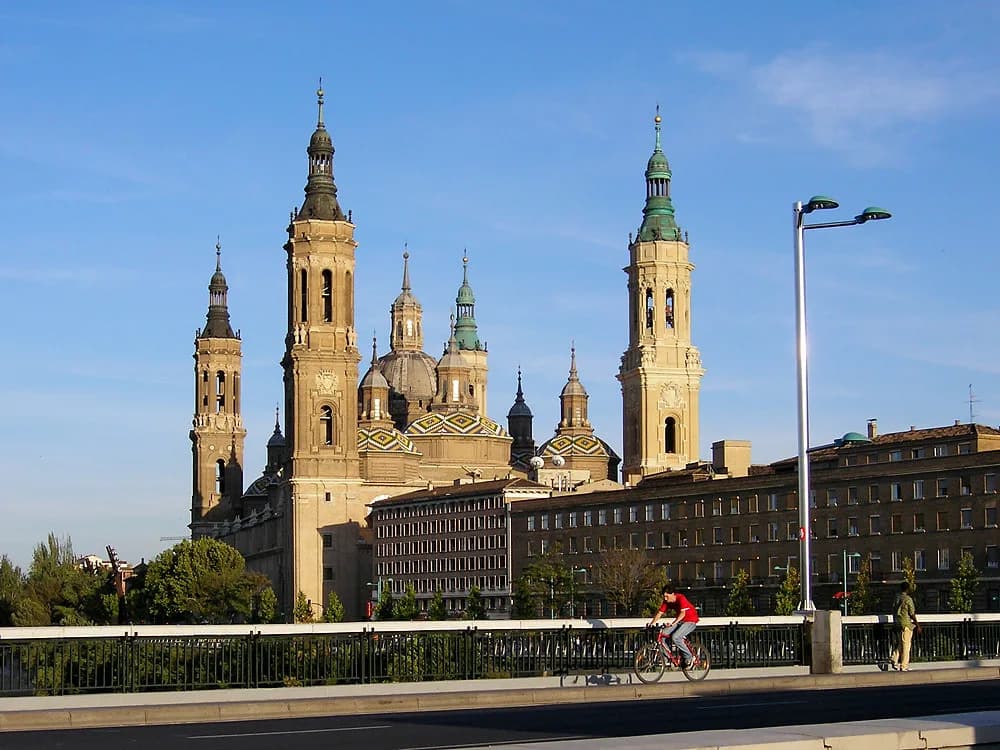
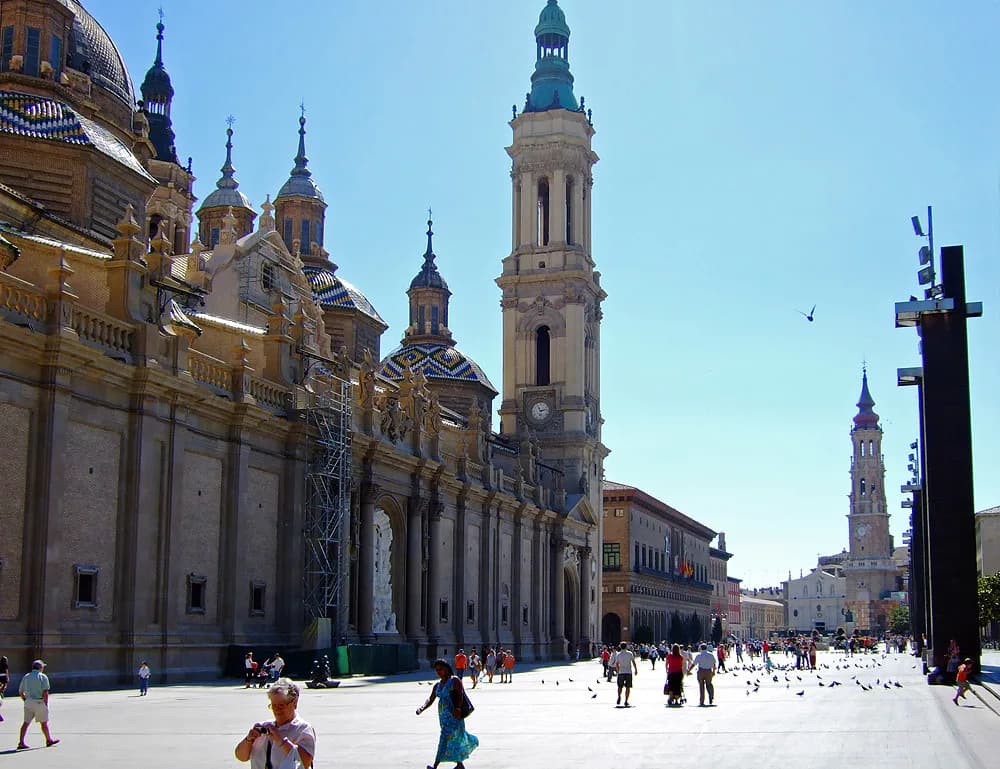
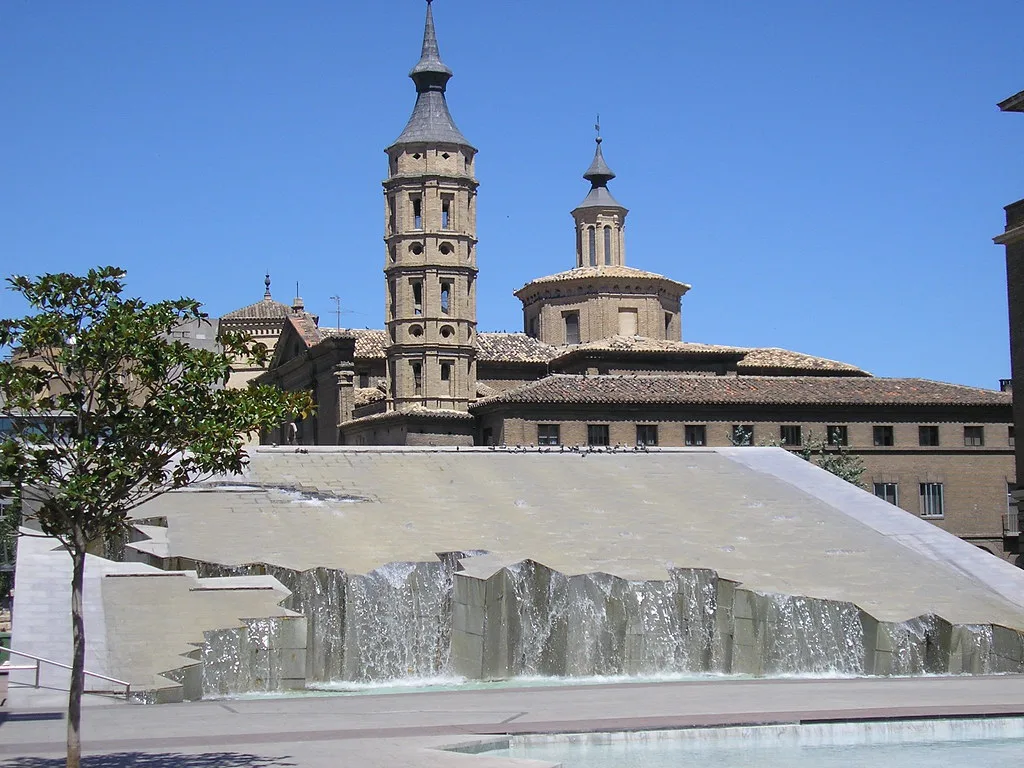
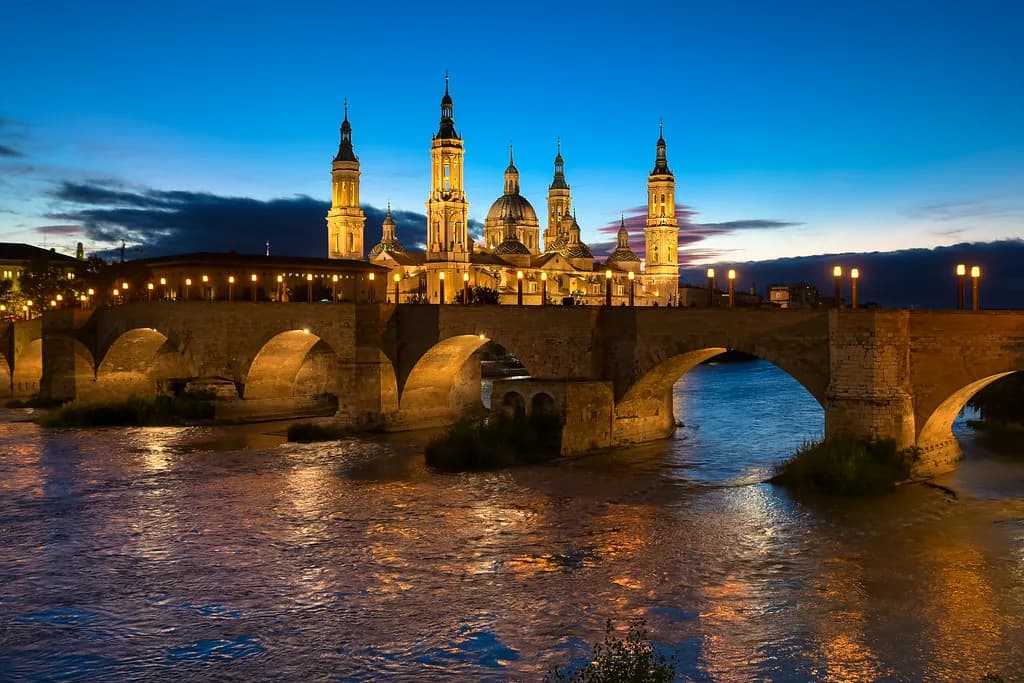
Start at the Basílica del Pilar, the baroque cathedral that dominates the city and, by tradition, marks where the Virgin Mary appeared to the Apostle James on a jasper pillar in the year 40 CE. Take the tower lift for views over the river and rooftops, then cross to La Seo Cathedral, whose brickwork and ceramics show the Mudejar style at its most ornate.
La Seo has been a Roman temple, a Visigoth church and a mosque in turn, and its layered interior is why it holds UNESCO World Heritage status. Both cathedrals sit within a few minutes of each other, so a single morning and early afternoon covers them without haste.
Book an evening for El Tubo, the warren of narrow streets off the Plaza del Pilar where the city's tapas bars are thickest. Arrive around 8:30–9pm, when dinner service starts and the bars fill with locals rather than tourists; order a caña and one tapa at each stop instead of committing to a single bar.
Two days: add the Aljafería Palace and the Roman forum remains
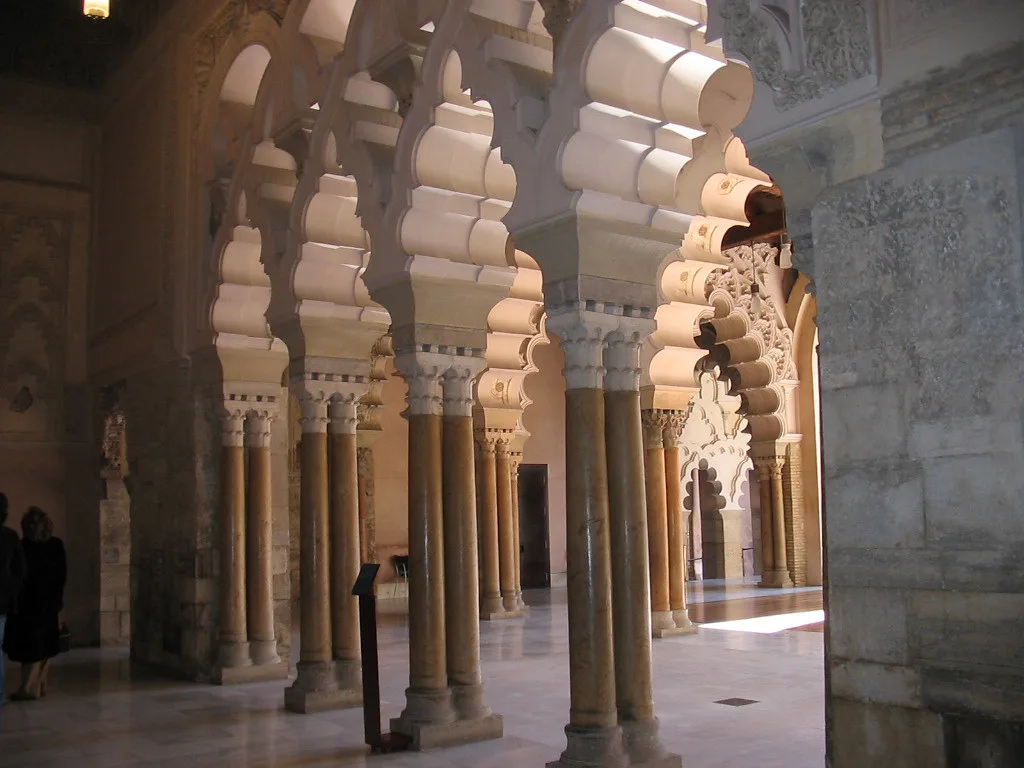
The Aljafería Palace is the best Moorish architecture in Zaragoza outside Andalucía, built as a fortress and residence for the city's Muslim rulers in the eleventh century. It has housed Aragón's regional parliament since 1987, so parts of the building are working government space and visiting is organised around that; the carved arches and courtyards are the reason to come.
The Forum Museum in the Plaza de la Seo takes you underneath the city to the substructures of the Roman forum of Caesaraugusta, with foundations, drains and a collection of Roman finds. Pair it with the Aljafería and you have the second day's historical spine without travelling far.
Finish the day with a walk across the Puente del Tercer Milenio, the 270-metre bridge built for the 2008 Expo, which links Actur, Almozara and Delicias over the Ebro and has separate lanes for walkers and cyclists. It is a modern counterpoint to the old town and a good spot for late-afternoon light on the river.
Three days: Goya, the Museo de Zaragoza and the Mercado Central
Goya was born in a village 28 miles south of the city, and Zaragoza is the best place in Spain to see his work. The Goya Museum, in a Renaissance building, holds more than 250 works across paintings, drawings and prints, including complete sets such as the Desastres de la Guerra.
The Museo de Zaragoza adds 19 works by Goya alongside Roman mosaics, ceramics and fine art in a building dating to the Hispano-French Exposition of 1908. Between the two collections you can spend most of a morning and still have the afternoon free.
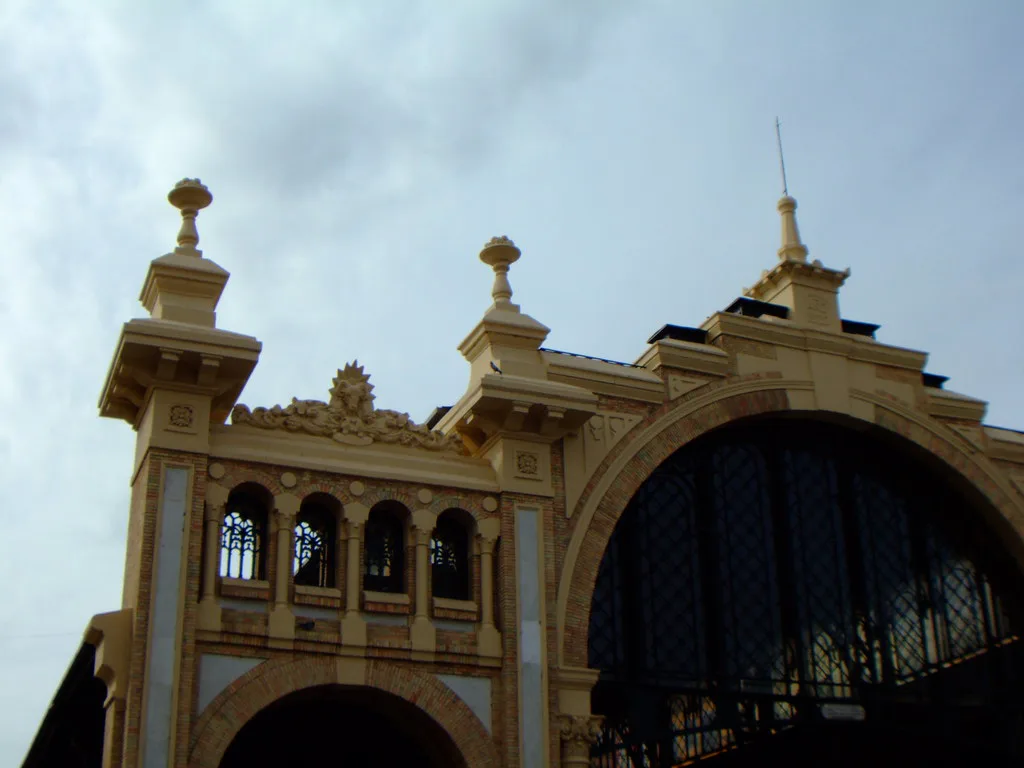
The Mercado Central de Zaragoza, inaugurated in 1903 and designed by Félix Navarro Pérez, is a modernist market hall with stalls of seafood, meat, cheese and produce. Build a picnic from it and walk to the Parque Grande José Antonio Labordeta, one of the city's largest green spaces; the surrounding streets are also the main patch for shopping in Zaragoza.
Families and anyone travelling with children can swap a museum for the Museo Origami, the first museum of its kind in Europe, with six galleries and workshops, or the man-made beach inside Parque del Agua in summer. Both are a better use of a third day than a fourth cathedral.
Where to eat and what to order, from grilled lamb to migas
Start with Casa Lac, which has held a restaurant licence since 1825 and serves tapas in a Modernist dining room. Méli Melo is the opposite mood: a standing bar piled with creative tapas, where you squeeze in shoulder to shoulder with locals.
Aragon is known for its meat, and Los Xarmientos grills lamb, the region's signature dish. La Miguería serves around thirty versions of migas, the fried breadcrumb dish usually made with peppers, meat, garlic and eggs, which makes it a good stop for a group with mixed appetites.
Organise eating around Spanish hours: lunch from about 1:30 to 4pm and dinner from 8:30 or 9pm. Between those windows the bars in El Tubo serve tapas all afternoon, so a late lunch and an early-evening crawl fills the gap without waiting for a kitchen.
Zaragoza hosts a tapas competition every November, when bars invent new creations to compete for the city title. For the wider picture of regional dishes beyond tapas, from roasted lamb to esparragos montañeses, see our guide to what to eat in Zaragoza.
When to go: September and October, and the Fiestas del Pilar
September and October are the best months, with warm days and cool evenings that make walking and eating out comfortable. October also brings the Fiestas del Pilar, a week of parades, flower offerings, concerts, street theatre and fireworks honouring the city's patron saint, La Virgen del Pilar.
Summer heat pushes you indoors after lunch, which shortens sightseeing days and makes the man-made beach a more attractive proposition. The Fiestas themselves are busy; book accommodation well ahead if your trip falls in that week.
How to get there and how to get around
Trains are the best way in: Renfe high-speed services run about 1 hour 15 minutes from Madrid and 1 hour 25 minutes from Barcelona. Buses cost less but take at least two hours longer, which eats into a short trip and rarely makes sense for a one- or two-day visit.
Within the city, the sights are packed into the centre, so walking covers almost everything in the one- to three-day plan. Trams and buses handle the longer runs to Parque Grande or the Expo sites, but you will not spend much on transport if you stay in the old town.
Who should stay longer and who should move on
Stay three nights if you care about art, markets or food and want to eat with locals rather than rush through; the Goya collections, the Mercado Central and a second evening in El Tubo justify it. Two nights suits most first-time visitors, and one night is enough only if you accept that the city gets a flying visit.
Treat Zaragoza as a stopover if you are locked into a Madrid–Barcelona itinerary and can only give it an afternoon; the Pilar and La Seo still deliver a strong impression. Otherwise, give it the two or three days it deserves and take a day longer elsewhere out of the schedule.
Where to stay: Casco Antiguo, La Magdalena and Centro
The old town, Casco Antiguo, puts you in the thick of bars, restaurants and monuments. The NH Gran Hotel de Zaragoza occupies a renovated historic building nearby, while the Hotel Catalonia El Pilar and the family-run Hotel Sauce sit in the same quarter.
La Magdalena to the east is quieter but still close to the sights, and the Centro neighbourhood south of the old town has wide streets, parks and the university. The Hotel Gran Vía sits next to the train station, useful if you arrive or leave early.
Indicative nightly rates in published planning guides range from roughly US$50–75 at the ibis Styles Zaragoza Ramiro to around US$100–120 for the central hotels. Treat them as a planning guide rather than a quote and check the hotel's own site for your dates.
Plan Your Visit
Two to three days in Zaragoza lets you see the Pilar and La Seo, explore the Aljafería and Roman remains, and eat properly in El Tubo. One day is a taster; three days is where the city starts to feel like a destination rather than a stop between Madrid and Barcelona.
Fix your dates around September or October if you can, keep lunch and dinner in Spanish hours, and confirm opening times and ticket details on each sight's official page before you go. If your trip is part of a longer Spanish itinerary, our guide to how many days in Zaragoza works well alongside a comparison of how many days in Alicante and similar city breaks.
Explore more Zaragoza guides
Frequently Asked Questions
Is Zaragoza worth visiting?
Yes. Zaragoza combines the Basílica del Pilar, the UNESCO-listed La Seo Cathedral, the Aljafería Palace and a tapas scene Spaniards rate among the country's best. It is Spain's fifth biggest city but sits off most short-break itineraries, so it feels less crowded than Madrid or Barcelona while offering two thousand years of history.
How many days do you need in Zaragoza?
Two to three days is the right amount. One day covers the Basílica del Pilar, La Seo and an evening in El Tubo; two days adds the Aljafería Palace and the Roman forum remains; three gives you the Goya collections, the Museo de Zaragoza and the Mercado Central without rushing.
What can you see in Zaragoza in one day?
Spend the morning at the Basílica del Pilar and take the tower lift, then cross to La Seo Cathedral for its Mudejar brickwork and ceramics. Save the evening for El Tubo, where the tapas bars fill from around 8:30pm.
Is Zaragoza a good stop between Madrid and Barcelona?
It works well as a stop, with high-speed Renfe trains taking about 1 hour 15 minutes from Madrid and 1 hour 25 minutes from Barcelona. The sights are close together, so even an afternoon gives you the two cathedrals, though a night lets you eat properly in El Tubo.
What food is Zaragoza known for?
Aragon's grilled lamb is the regional signature, served at Los Xarmientos, and migas appears in around thirty variations at La Miguería. Tapas more broadly are the city's calling card, with bars such as Casa Lac and Méli Melo in and around El Tubo.
When is the best time to visit Zaragoza?
September and October bring warm days and cool evenings, and October adds the Fiestas del Pilar with parades, concerts and fireworks. Summer is hot enough that you retreat indoors after lunch, which shortens sightseeing days.
Sources
Notes for eating well in Spain
Optional updates to our guides.
You might also like
Continue reading
More guides you'll find useful