Ronda Itinerary: 2–3 Days of Gorge Views, Tapas and Wine
Plan a two- or three-day Ronda itinerary around the Puente Nuevo, the old town and tapas bars, with meals timed to Spanish lunch and dinner hours.
On this page
Two nights is the right amount of time for Ronda: one full day for the bridge, the gorge and the new town, one for the old town and its Arab heritage, and a final half-day for a village or Roman ruins nearby. Three nights lets you walk down into the El Tajo gorge early, when the path is empty and cool, and still have an easy afternoon. A single day gets you the bridge and the bullring in the coach-heavy middle of the day and little else.
Ronda in two or three days: the short answer
Give Ronda two nights as a minimum. Day one covers the Puente Nuevo, a walk down into the El Tajo gorge and the new town around Plaza de España; day two the old town, the Baños Árabes and the Cuenca Gardens; day three either Setenil de las Bodegas or the Roman site of Acinipo if you have a car. If Ronda is part of a wider trip, our guide to how many days in ronda suits each length of stay explains when to add a night and when not to bother.
The plan below treats the city as a set of areas walked in order, with meals attached to the right area rather than the right clock. That matters because the best sightseeing light and the quietest streets rarely coincide with when you are hungry.
Why Ronda deserves a night, not a coach stop
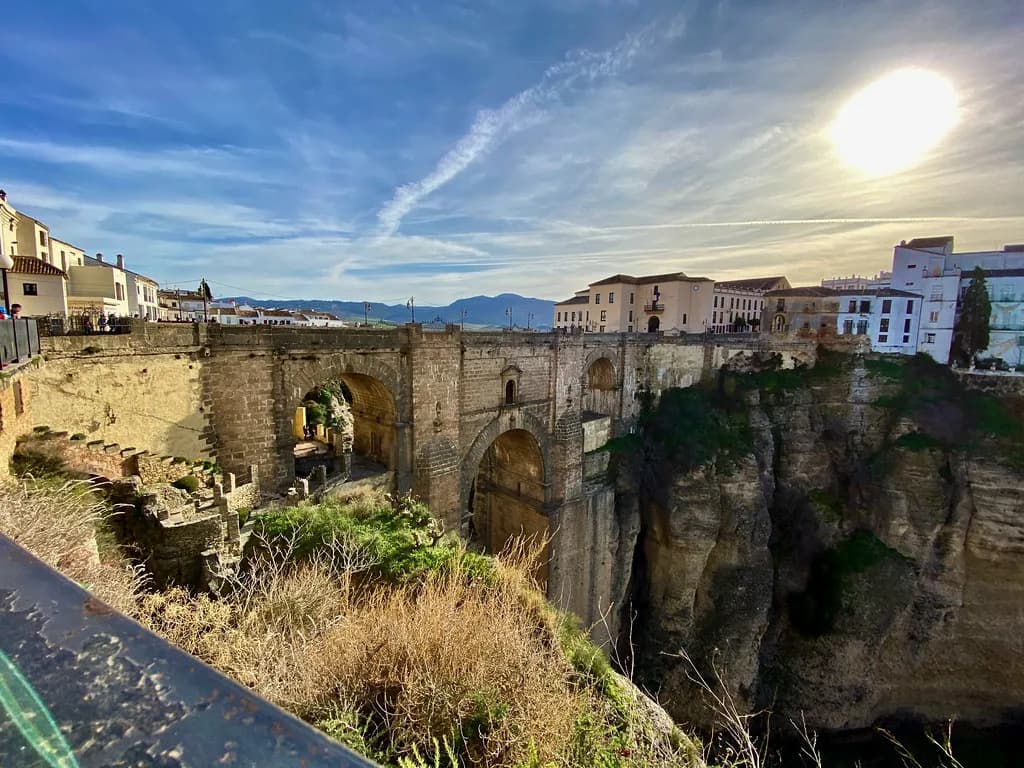
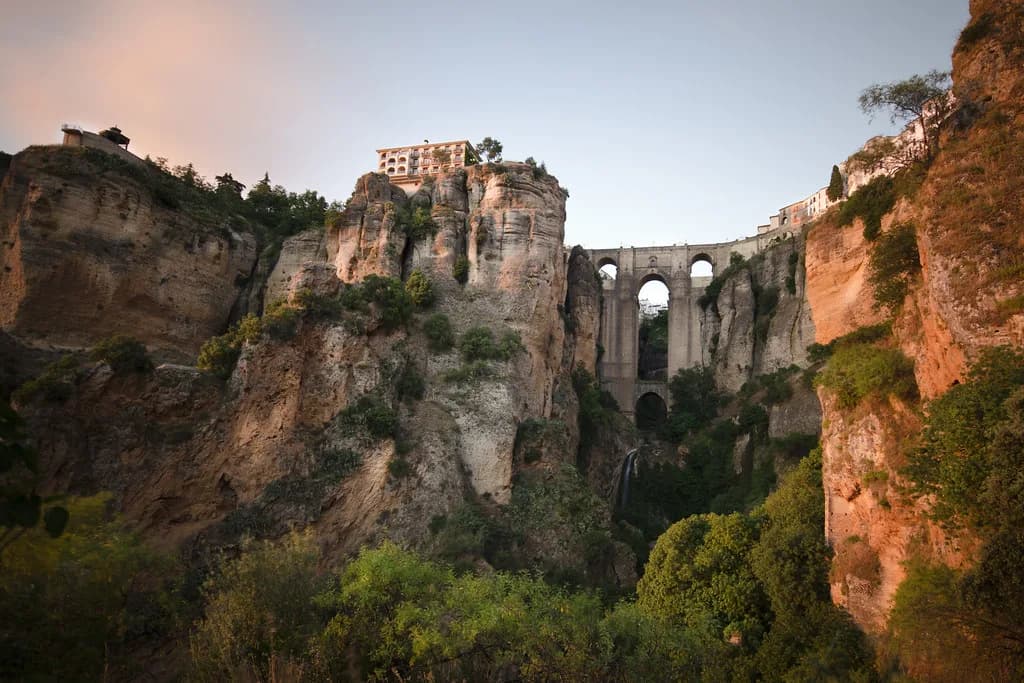
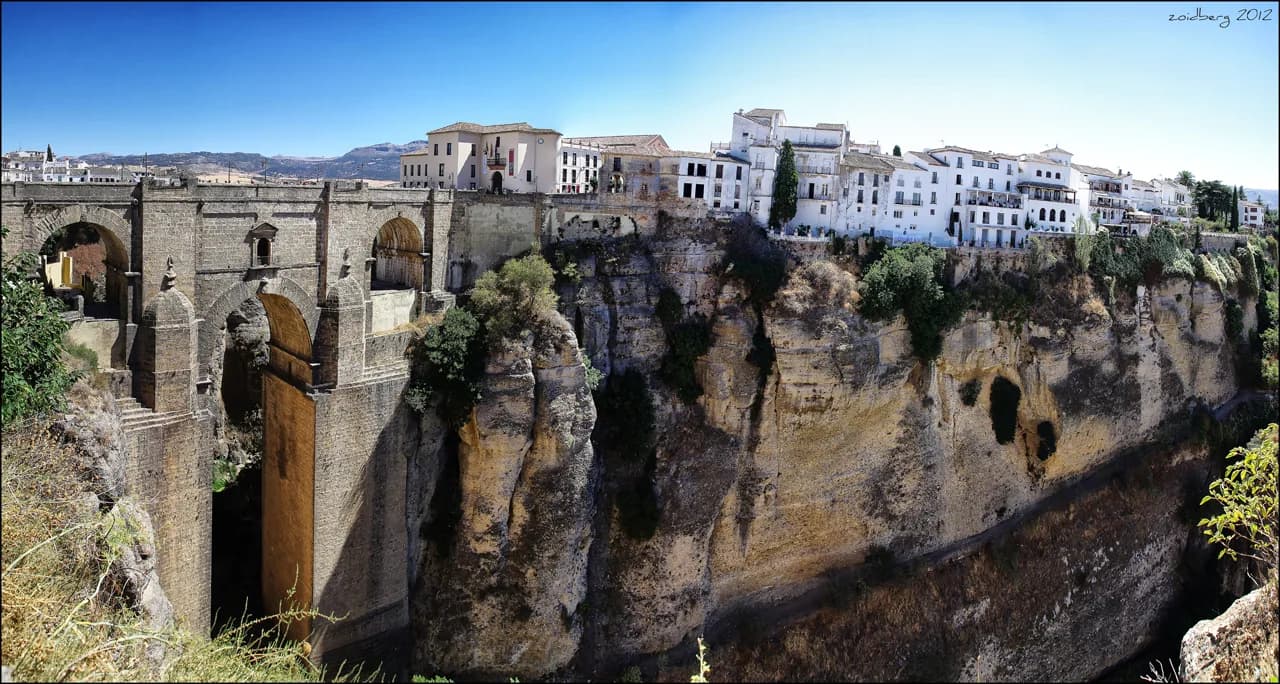
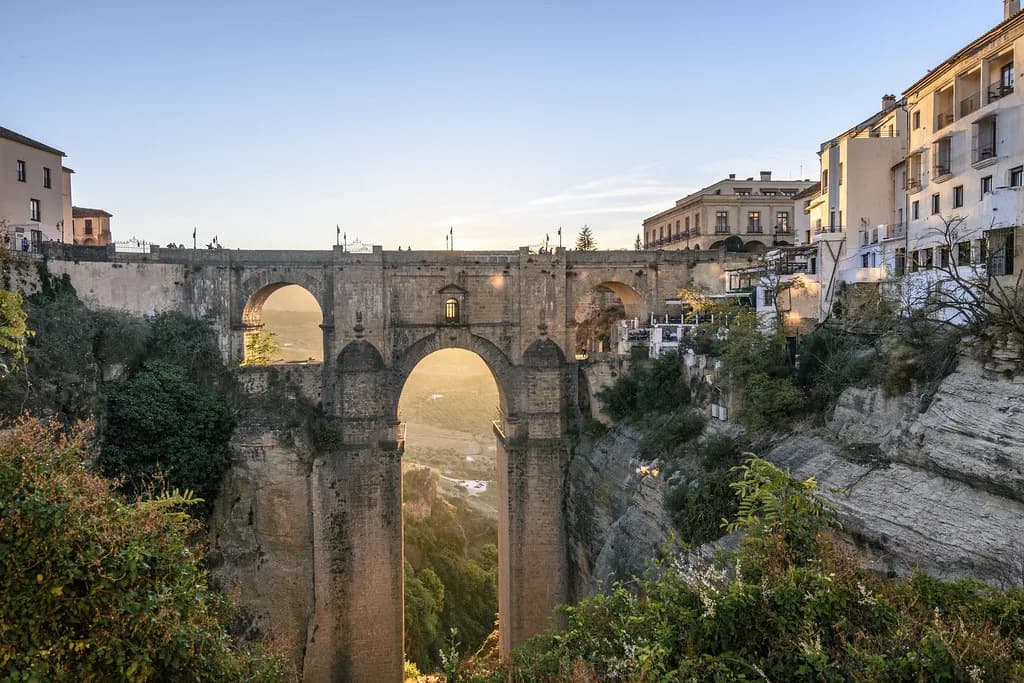
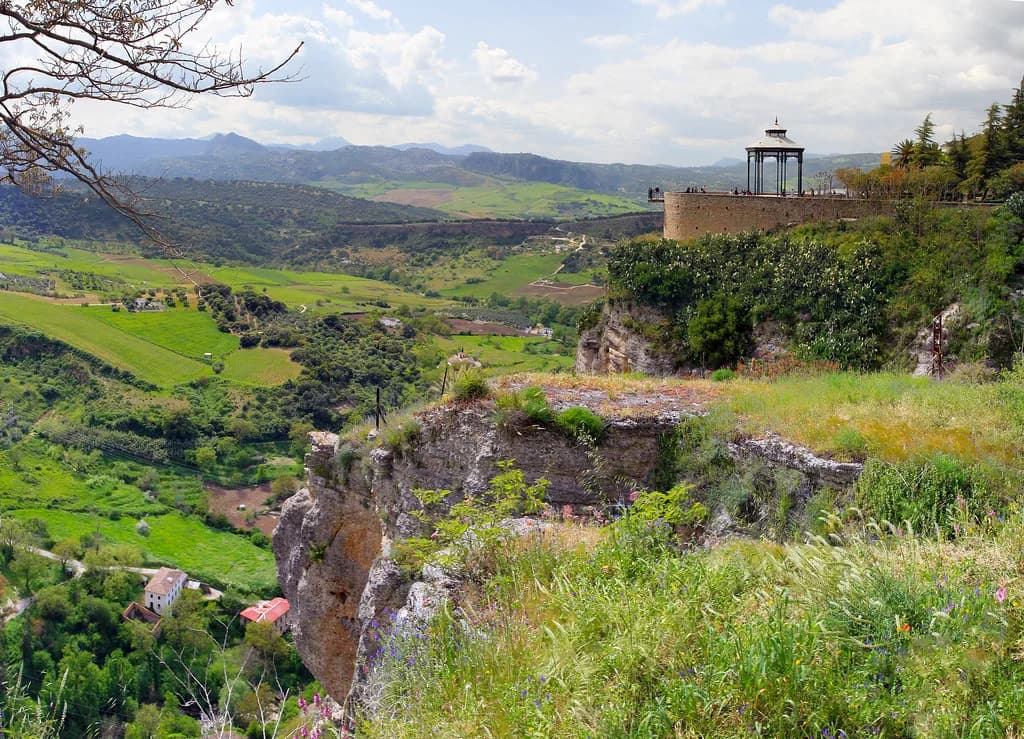
Ronda sits on a rocky promontory split by the Guadalevín river, which has cut the El Tajo gorge more than 100 metres deep in places, and the 18th-century Puente Nuevo links the old and new halves of the city. Early afternoon is when the main bridge viewpoints fill with day groups, so a night in the city buys you the late-afternoon and evening version of the same view, when the cliffside alleys of La Ciudad thin out. Our full list of things to do in ronda covers the viewpoints and monuments in more detail if you want to rearrange these days.
If you genuinely have only a few hours, keep the plan tight: see the bridge from the Mirador de Aldehuela and the Cuenca Gardens, walk the old town's Plaza Duquesa de Parcent, and eat one proper meal. A structured one day in ronda is workable but leaves no slack for the gorge path, which is the part most people remember.
Day 1: Puente Nuevo, El Tajo and the new town
Start on the new-town side at Plaza de España, look across the gorge from beside the Parador, then take the path that drops below the bridge for the view from underneath. The climb back up is steep and the valley bakes by midday, so walk it in the morning or in the late afternoon and carry water.
Above the central arch of the Puente Nuevo is a small bridge museum in a room that once served as a prison, and it shows the arches from below. Entry costs about €3, and the room was once used as a prison for criminals in the 19th century, so it is a cheap add-on if you want the engineering explained as well as photographed. The Puente Viejo, built in 1616, carried the main road between the two halves of Ronda and is now pedestrian only; from it you can see the older Puente Árabe downstream. The Real Maestranza de Caballería de Ronda, the city's bullring, dates from 1785 and holds around 5,000 spectators, with a museum attached. Entry to the bullring and museum is about €9, or €10.50 with an audio guide, and the visit is worth it for the arena architecture even if the tradition itself is not your thing.
Finish with a wander through the Alameda del Tajo park and along the cliff-edge promenade, where the views open onto the surrounding mountains and the houses hanging over the gorge.
Where to eat lunch on day one
Lunch in Ronda runs from about 1:30pm to 4pm, so aim to sit down between 2pm and 3pm and let the meal carry you through the hottest part of the day. Near the bullring, Toro Tapas serves a wide selection of tapas and regional wines, and the boletus risotto and aubergine with honey are the dishes it is known for.
For a more modern menu, Tragatá on Calle Nueva mixes Andalusian and Asian ideas in plates such as an octopus roll, patatas bravas, croquettes and salmorejo; it is small and fills quickly, so arrive as it opens. Bar Sanchez on Plazuela Arquitecto Francisco Pons Sorolla is another compact room where booking ahead makes sense for lunch.
If you want one long, unhurried meal to anchor the day, our pick of the best restaurants in ronda covers the range from tapas counters to sit-down kitchens.
Day 1 evening: tapas and Ronda wines
Ronda's wine region was revived from the 1980s, and local bodegas now work with grapes including Tempranillo, Cabernet Sauvignon and Chardonnay. Entre Vinos on Calle Pozo is a small wine bar with a list that stays close to the region, plus charcuterie and local cheeses, and it works well as a first stop before dinner.
Dinner starts from about 8:30pm to 9pm, so book the evening around a late table and use the gap for a drink. If you want to visit a winery rather than a bar, Bodega Descalzos Viejos occupies a former convent outside the city, and Doña Felisa runs guided tours and tastings that can be extended to include a meal. Both need arranging in advance and a car or transfer to reach.
Two glasses at a bar and a plate or two of tapas each is a sensible way to start the evening without spoiling dinner; dishes arrive as they are ready, so order in waves rather than all at once. For a route built entirely around small plates, see our picks for the best tapas in ronda.
Day 2: old town, Arab baths and Arab walls
Enter the old town through the 13th-century Almocabar gate, the main entrance in the Moorish period, and continue along the restored stretches of city wall. The Puerta de Carlos V and the Murallas del Carmen give you a second walled entry, and parts of the walls can still be walked on top.
At the heart of the old medina is Plaza Duquesa de Parcent, flanked by the church of Santa María la Mayor and the town hall, with sunny terraces for a mid-morning coffee. The Mondragón Palace, the residence of the last city governor, now holds the municipal museum and is worth an hour for its courtyards and cliffside gardens.
Allow the whole morning for this quarter rather than rushing to the next monument: the pleasure here is the whitewashed streets and the jamón shops, which is where the shopping in ronda mostly happens on the old-town side, with Carrera Espinel on the new-town side for ordinary shops.
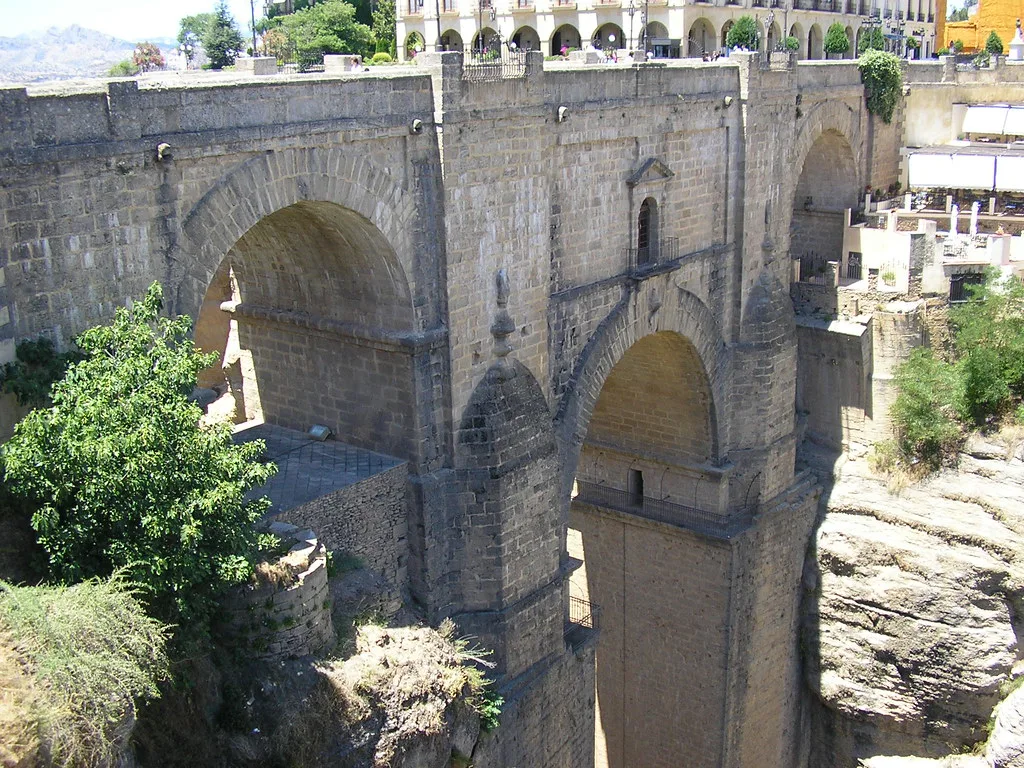
The Arab Baths and Puente Viejo
The Baños Árabes, built in the 13th century, are among the best-preserved Arab baths in Spain, with three thermal rooms at different temperatures and surviving underfloor heating. They open daily with hours that vary by season, entry is about €3.50, and Tuesday afternoons are free. Walk down to the baths before lunch, then loop back over the Puente Viejo and, if you have the legs, cross to the Casa del Rey Moro. Its water mine drops several hundred steps into the gorge, and the gardens are a calm alternative to the main viewpoints. Adult entry is about €10.
The baths are a short walk from the old town but the return is uphill, so budget energy rather than time for this section.
Day 2 lunch and an afternoon in the Cuenca Gardens
Stay in the old town for lunch rather than crossing the bridge. Casa María on Plaza Ruedo Alameda serves Spanish food without a printed menu, with staff steering you through the specials of the day, and Bodega San Francisco on Calle Comandante Salvador Carrasco does Andalusian classics including rabo de toro.
After lunch, take the afternoon gently through the Cuenca Gardens, terraced down the side of the El Tajo gorge between the Puente Viejo and Plaza de España. From the flowered terraces you get the Puente Nuevo from a new angle and, at the right hour, a golden light on the stone. Our guide to what to eat in ronda is useful if you plan to build the rest of the day around food rather than monuments.
If the afternoon is hot, use it for a museum or a shaded terrace and save the gorge paths and viewpoints for the evening, when the light is better anyway.
Day 3: a half-day around Ronda or a slower morning
With a car, Acinipo is the best-value trip out of the city: a Roman town about 20 kilometres away with one of Spain's best-preserved Roman theatres, free to enter and rarely crowded. Without a car, Setenil de las Bodegas, a white village built into a rock gorge, makes the more straightforward half-day by bus or taxi.
Both work as a morning outing with lunch back in Ronda, or as a full day if you add the Sierra de Grazalema or Sierra de las Nieves natural parks. Save a slower morning for your last day if you would rather spend it on churros and the street market than on a road.
Sights around Ronda: Setenil de las Bodegas and Acinipo
Setenil de las Bodegas is famous for houses tucked under the overhanging rock of the Río Trejo gorge, and it is small enough to see on foot in a couple of hours, with lunch in one of the bars built into the cliff. Acinipo, also called Ronda la Vieja, is the archaeological site for anyone who prefers stones and silence to whitewashed streets.
Distances are short but the roads are mountain roads, so a half-day is realistic for one site rather than two. Public transport to the smaller villages is limited, which makes a car the practical choice if you want to combine Setenil with Grazalema in one loop.
Back in the city, the free walking tour is a good use of a final afternoon if you want the history stitched together in one go; tours run on demand and can be cancelled in low season when numbers are thin.
Ronda meal times: lunch from 1:30pm, dinner from 8:30pm
Spanish meal times set the rhythm of a Ronda day. Lunch runs from about 1:30pm to 4pm and dinner starts from about 8:30pm to 9pm, so the sightseeing plan should put the biggest walks between 9am and 1pm and between 5pm and 8pm. Eating at 12:30pm usually means tourist-hour menus and empty rooms; eating at 2:30pm means the kitchen is in its stride.
Tapas bars sit somewhere in between, and a mid-afternoon plate at 5pm can bridge the gap to a late dinner. The practical consequence is that you should carry water and a snack for the long stretch between lunch and dinner, especially on gorge days.
Where to eat and drink in Ronda
Between them, the bars and restaurants above cover most of a short stay: Toro Tapas near the bullring, Tragatá on Calle Nueva, Bar Sanchez near the old town, Casa María by the river, Bodega San Francisco for oxtail stew, and Entre Vinos for a regional glass.
For a broader map of the eating landscape, our Ronda Attractions hub groups the city's guides by area and interest, so you can match a bar to the sight you are already visiting.
If you are fitting Ronda into a longer Andalusian road trip, the Alicante itinerary and the Fuerteventura itinerary show how a food-led city plan is structured elsewhere, which helps you judge how much of each day to give over to eating.
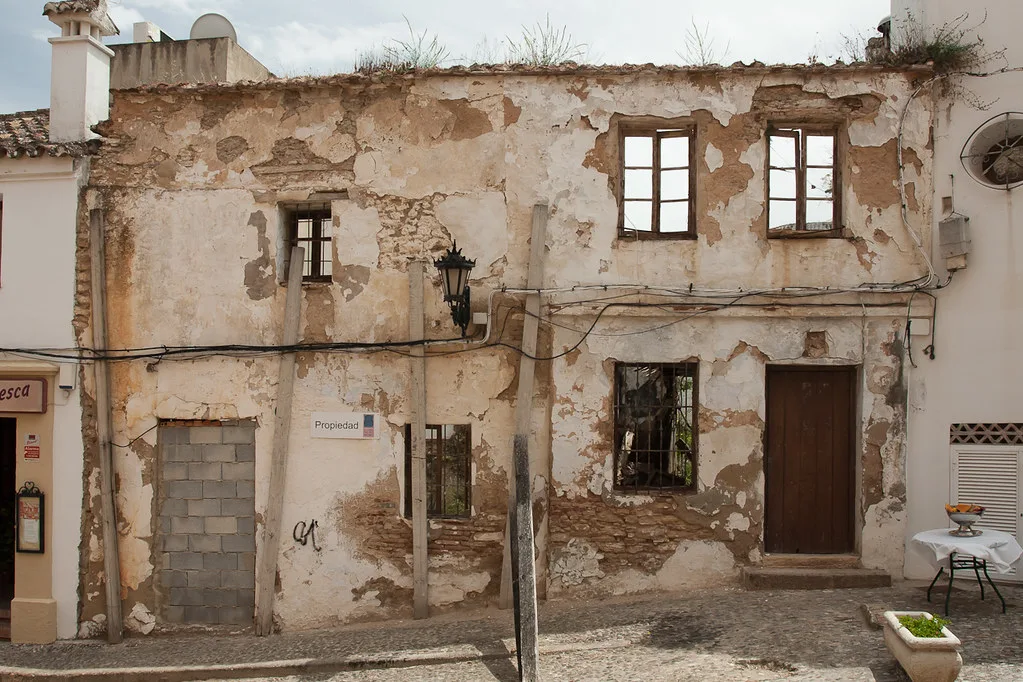
Churros and chocolate: timing your breakfast
Churrería Alba on Carrera Espinel is the place to go for churros with thick hot chocolate and pan con tomate, and it works as a proper breakfast before a gorge walk rather than a mid-morning snack. Go early: Spanish breakfast is a small, quick affair and the good churrerías are busiest before 10am.
Carrera Espinel is also the main shopping street on the new-town side, so pair breakfast with a browse before the day's walking starts.
When to go and how to pace the heat
The shoulder seasons of March to June and October to November are the most comfortable, with milder weather and thinner crowds; November and December bring the heaviest rain. July, August and September are the hottest and busiest months, so if you travel then, plan the gorge walk and any climbing for early morning and keep the afternoon for shaded streets, museums and the Cuenca Gardens.
In high summer the traditional siesta slows the city from roughly 2pm to 5pm, which suits a late lunch followed by a rest and a second outing in the evening. The same logic applies to gorge paths at any time of year: the walk down is easy, the walk back up is the part to plan around.
What a Ronda trip costs: entry fees to budget for
Monument entry in Ronda is modest and mostly paid on the door. Budget about €3 for the bridge museum above the central arch, around €9 for the bullring and museum, about €3.50 for the Baños Árabes, and roughly €10 for the Casa del Rey Moro and its water mine. A winery tasting at Doña Felisa costs about €38.50 per person, or about €69 with a meal.
Add lunch and dinner per person on top, plus a drink between them, and one or two paid monuments a day is enough to give the city some structure without turning the trip into a ticketing exercise. The bridge, the gorge, the old town walls and the Alameda del Tajo cost nothing, which is where most of the value of a Ronda day actually sits.
Ronda itinerary map and practical notes
Ronda is compact: the old town, the bridge and the new town's Plaza de España are all within a 20-minute walk of each other, so most of this itinerary needs no transport. Málaga is about an hour and a half by car and a little over two hours by train, while Seville is roughly an hour and a half by road and Granada about two and a half hours by car.
Parking in the city is tight, so check whether your hotel has a space or can point you to a garage before you book a hotel in the centre. A car is only really necessary for Acinipo, the wineries and the white villages.
Plan Your Ronda Visit
Two nights covers the bridge and gorge, the old town and the Arab heritage, with a third morning spare for Setenil de las Bodegas or Acinipo. Build each day around a 2pm lunch and a table booked for 8:30pm or later, and save the gorge path for the coolest daylight hours.
Ticket prices and opening hours change more often than the views do, so re-check the official monument websites before you set off.
Frequently Asked Questions
Is two days in Ronda enough?
Two nights gives you one day for the Puente Nuevo, the gorge and the new town, and a second for the old town, the Baños Árabes and the Cuenca Gardens. That pace leaves room for a proper lunch and a late dinner rather than a rushed circuit of monuments, and it avoids the busiest stretch of the day at the main bridge viewpoints.
What should you see in Ronda in one day?
Keep it to the Mirador de Aldehuela for the bridge, the path down into the El Tajo gorge, the old town around Plaza Duquesa de Parcent, and one long lunch. The bridge museum, the bullring and museum and the Arab baths are individually inexpensive, but each takes time, so pick one or two rather than all of them. Skip the out-of-town sights entirely if you have only a few hours.
Should you stay overnight in Ronda or visit as a day trip?
Staying overnight is the better choice. The main viewpoints are busiest in the early afternoon, and by late afternoon the cliffside alleys of La Ciudad are far quieter. A night also lets you eat dinner at Spanish hours, from about 8:30pm to 9pm, instead of catching a coach back to the coast before the kitchens get going.
When do people eat lunch and dinner in Ronda?
Lunch runs from about 1:30pm to 4pm and dinner starts from about 8:30pm to 9pm, so plan the longest walks for mid-morning and late afternoon. Sitting down at 2pm gets you a kitchen in its stride, and a mid-afternoon tapas plate bridges the gap before a late dinner.
What does a day of Ronda entry fees cost?
The paid sights are individually modest: the bridge museum, the bullring and museum, the Baños Árabes and the Casa del Rey Moro each charge a small admission. The bridge itself, the gorge paths, the old town walls and the Alameda del Tajo are free, so one or two monuments a day keeps costs low. Check admission on each monument's official site.
Do you need a car for a Ronda itinerary?
Not for the city itself, since the old town, the bridge and Plaza de España are all within a short walk of each other. A car matters for Acinipo, the wineries around Ronda and the white villages such as Setenil de las Bodegas and Grazalema, where public transport is limited. Parking in the centre is tight, so ask your hotel about it before booking.
Is Ronda worth visiting in August?
July, August and September are the hottest and busiest months, so the bridge viewpoints and gorge paths are best done early in the morning. Use the afternoon for museums, shaded terraces and the Cuenca Gardens, and take advantage of the traditional siesta slowdown from roughly 2pm to 5pm. March to June and October to November are the more comfortable months for walking.
How do you see the Puente Nuevo from below?
Take the path that drops from the new town below the bridge into the El Tajo gorge, reached from behind the Mondragón Palace area. The descent is straightforward but the climb back is steep and exposed, so go early or late and carry water. The room above the central arch, now a small bridge museum, shows the structure from underneath without the hike.
Sources
Notes for eating well in Spain
Optional updates to our guides.
You might also like
Continue reading
More guides you'll find useful