Alicante Itinerary: How to Plan 2 or 3 Days in the City
Plan an Alicante itinerary for two or three days, with the castle, old town, central market and beach, plus transport costs and honest trade-offs.
On this page
Two days in Alicante covers the castle, the old town, the central market and a stretch of city beach, provided you put the climb and the sand on different days. Three days adds either a museum morning at MARQ or a slower circuit of squares and shops, and both fit comfortably around Spanish meal hours.
This plan works on foot, with the tram for the museum and the shuttle bus for the castle hill. It names specific sights, what each one costs to enter or reach, and which stops to drop when the heat or your energy runs short.
Start here: what two days in Alicante covers, and what three days adds
Two days gives you the Passeig Esplanada d'Espanya, the marina, Mercado Central, Calle San Francisco, the Castillo de Santa Bárbara, El Barrio de Santa Cruz, the Concatedral de Sant Nicolau de Bari d'Alacant and Postiguet Beach. That is a full but realistic list for a short break, because almost everything sits within walking distance of the city centre.
A third day is best spent on one substantial extra rather than three small ones. Choose MARQ, the archaeological museum reached by tram from Luceros, or stay local with Plaza de los Luceros shopping and a longer lunch. Our guide to how many days in alicante breaks down exactly what fits into one, two or three days if you are still weighing it up.
Both versions assume you sleep in the centre, which keeps the evening walk home short after a late dinner. Save the wider Costa Blanca resorts for a return trip rather than squeezing them into a two-day schedule.
Where to base yourself: city centre vs beach side, and why walking beats buses
A base in the city centre puts the market, the old town and the promenade within a stroll of each other, which matters most when you want a rest between lunch and dinner. Beach-side rooms trade that convenience for the sand at Postiguet, a city beach that gets crowded because it sits right against the town.
Walking handles most of the itinerary. For the few longer hops, Alicante runs red city buses and blue buses to neighbouring towns, and the TAM Mobilis card covers ten trips with no time limit, can be shared between two people, and allows changes within 60 minutes counted as one trip.
The tram from Luceros is the cleanest way to reach MARQ, with ticket machines inside the carriages. If the day is too hot for a 30-minute climb, the shuttle bus up to the castle saves your legs for the views.
Day 1 morning: Passeig Esplanada d'Espanya and the marina
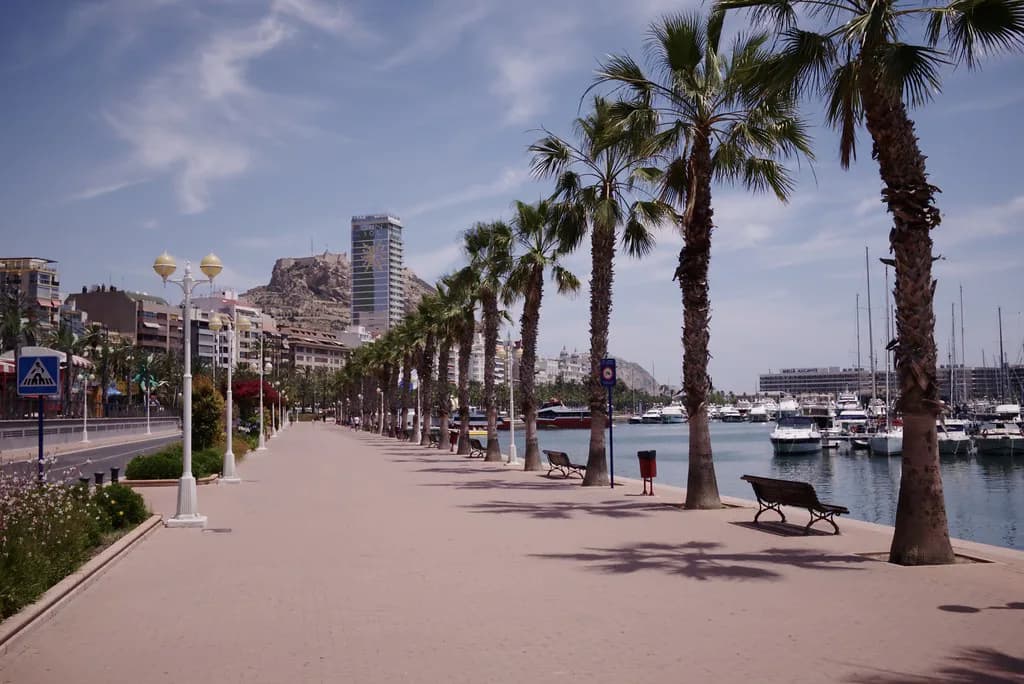
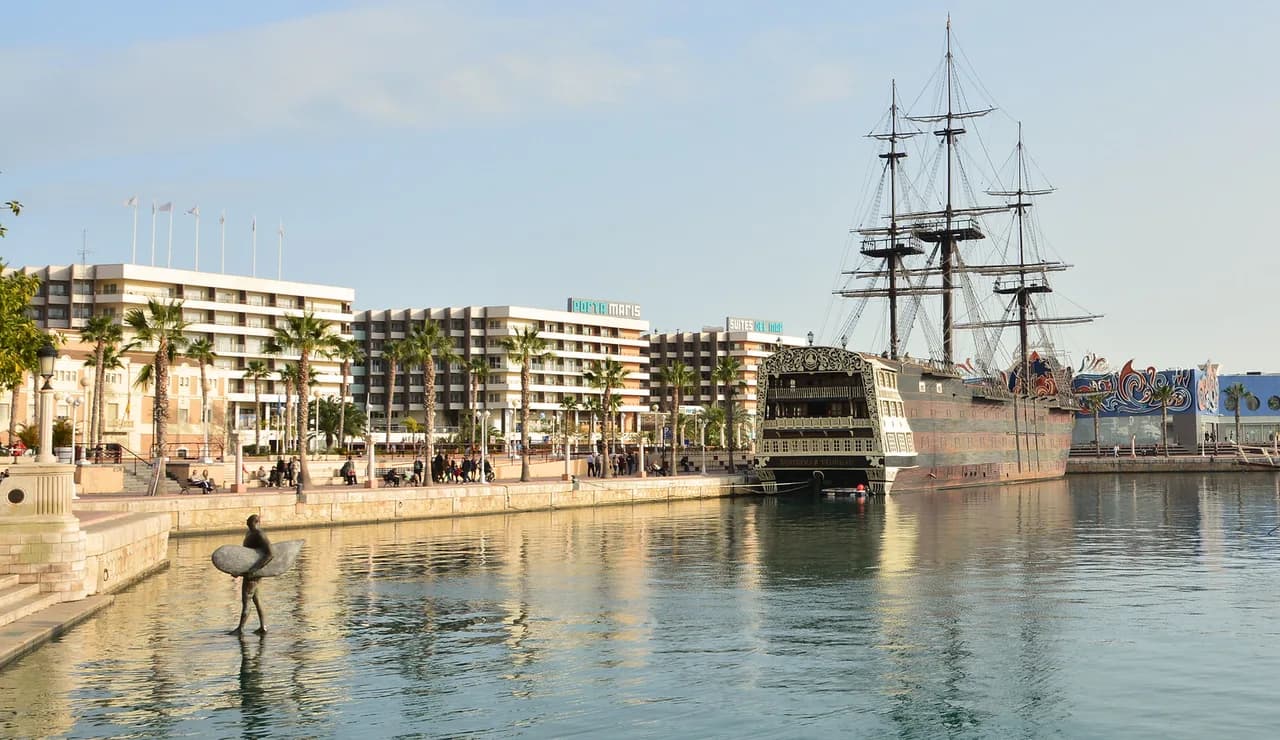
Start on the palm-lined Passeig Esplanada d'Espanya, the broad promenade near the beach, where the restaurants are set up for people-watching rather than speed. Walk it end to end, then cross to the marina and follow the water's edge past boats of every size for a flat, shaded start to the day.
Keep this morning deliberately light. The reward is an appetite for lunch at Spanish hours, which in Alicante means sitting down between 1:30pm and 4pm rather than at noon, when many kitchens are still setting up.
Day 1 afternoon: Mercado Central and the tapas streets around it
Mercado Central opens at 7am and closes at 2pm, and it shuts on Sunday, so build it into the middle of the day rather than treating it as an all-day stop. Inside are the meat, seafood and fruit and vegetable sections, and the surrounding streets are dense with cafés and tapas bars.
Arrive before one o'clock to see the stalls at full pitch, buy fruit for later and still have time for a sit-down lunch nearby. The tram stop called Mercat is close by, which makes the market an easy link to the rest of the day.
If the market is central to your trip, our guide to Alicante markets covers the halls and what each one is best for. For a wider sweep of free things to do, the market itself costs nothing to walk through.
Day 1 evening: Calle San Francisco and a late dinner from 8:30pm
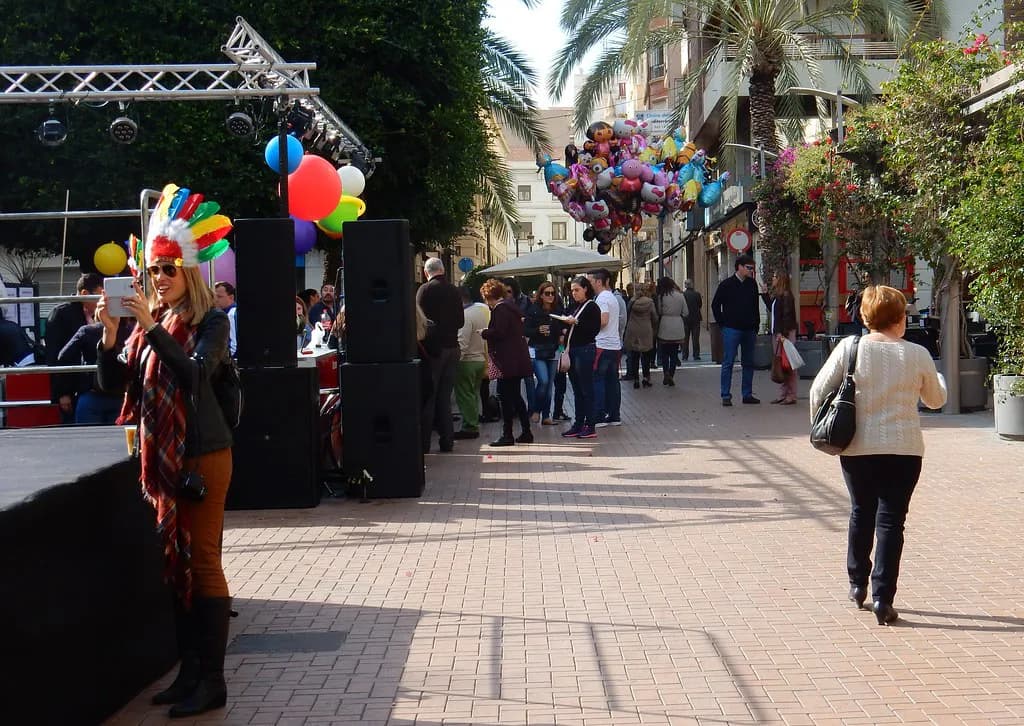
Calle San Francisco is the pedestrian street known for its mushroom sculptures, cleaned up and relaunched as a place to eat and stroll. It holds small restaurants, tapas bars, pastry shops and ice cream counters, so it suits a grazing evening rather than a single booked table.
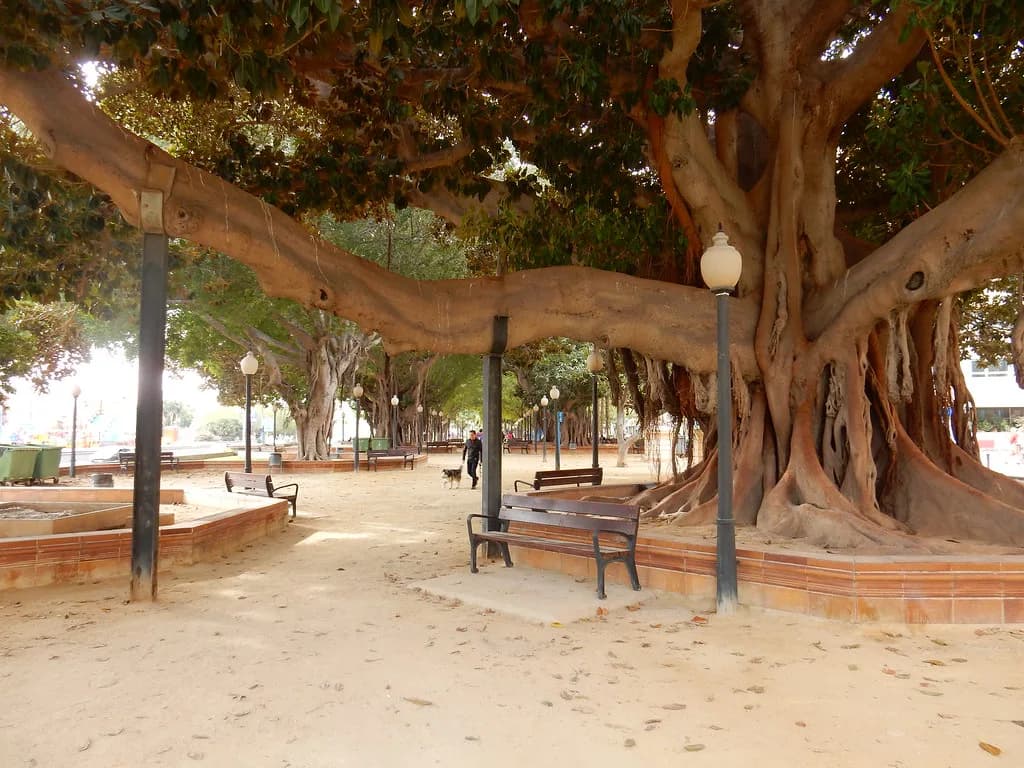
Eat late. Dinner in Alicante starts from 8:30pm or 9pm, so use the earlier evening for a drink on Plaza Portal de Elche, where a kiosk serves cocktails and coffee under giant ficus trees, or a quiet half-hour on the benches of Plaza de Gabriel Miró.
Nightlife around the market concentrates on the Ruta de la Madera, a short walk from Calle San Francisco. Keep the first night short if the castle is tomorrow morning.
Day 2 morning: Castillo de Santa Bárbara, three ways up
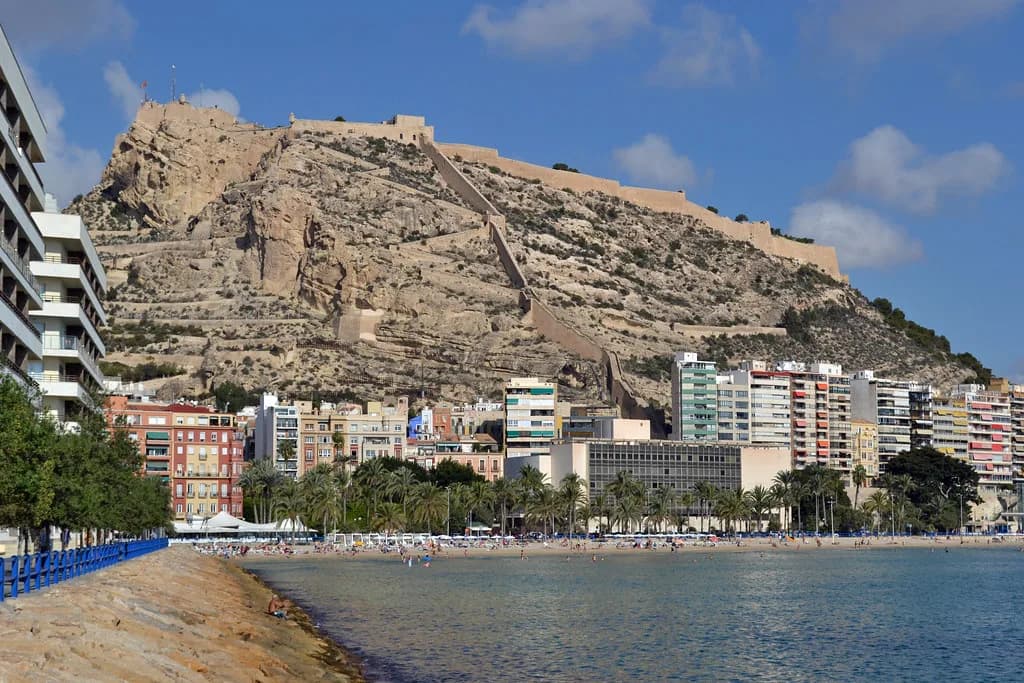
The castle sits on Mount Benacantil, 166 metres above the city, and entry is free; the cost is in how you get up. Walking takes around 30 minutes, the lift across the road from Postiguet Beach on Avenida Juan Bautista Lafora costs €2.70 and is free for visitors over 65 who show ID, and the shuttle bus from Plaza Puerta del Mar costs €1.45 each way and runs at roughly 20-minute intervals.
The sensible combination is the bus or lift up and the walk down into El Barrio de Santa Cruz, which saves the climb for the part with the views and ends you in the old quarter. Go early: the walk up is exposed, the heat in summer is punishing, and there is still plenty of walking once you are through the gate.
Castle opening hours tie in with the lift and bus service, so check the time before you set out rather than turning up on spec.
Day 2 afternoon: El Barrio de Santa Cruz and the Concatedral
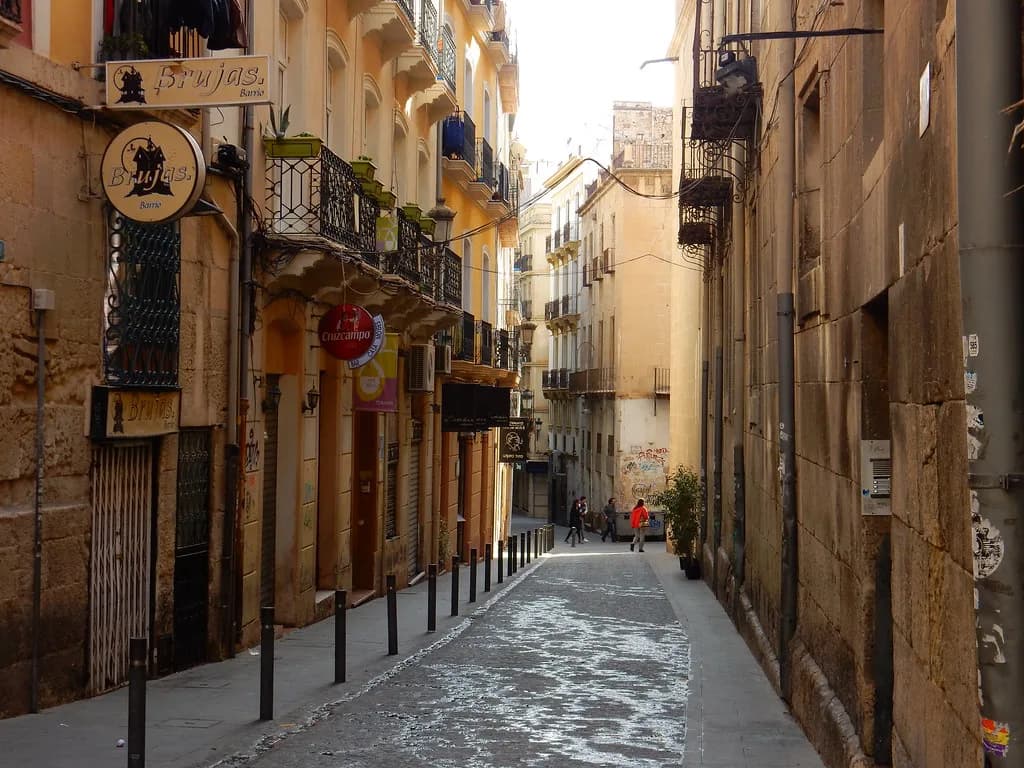
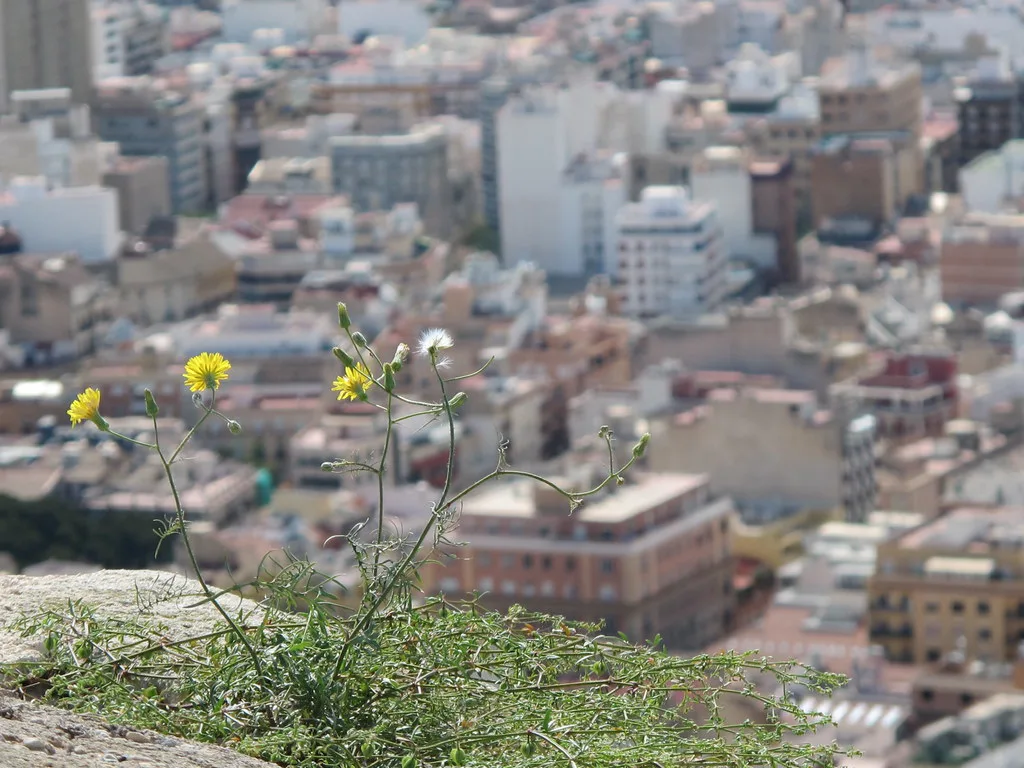
El Barrio de Santa Cruz is the old quarter, a residential hillside where houses are dressed with colourful plaques, pots and plants. It is quiet early in the morning and comes alive at lunchtime, when open doors carry the smell of cooking and children come out to play.
Drop into the Concatedral de Sant Nicolau de Bari d'Alacant, which sits so centrally that you will pass it anyway; the baroque chapel is the reason to step inside. From there, Plaza Portal de Elche and Plaza de Gabriel Miró give you two shaded squares within a few minutes of each other.
This is the afternoon for a long lunch and a slow wander. The Alicante Attractions: 6 Visitor Guides hub has individual write-ups of each sight if you want to go deeper on one of them.
Day 2 evening: Postiguet Beach
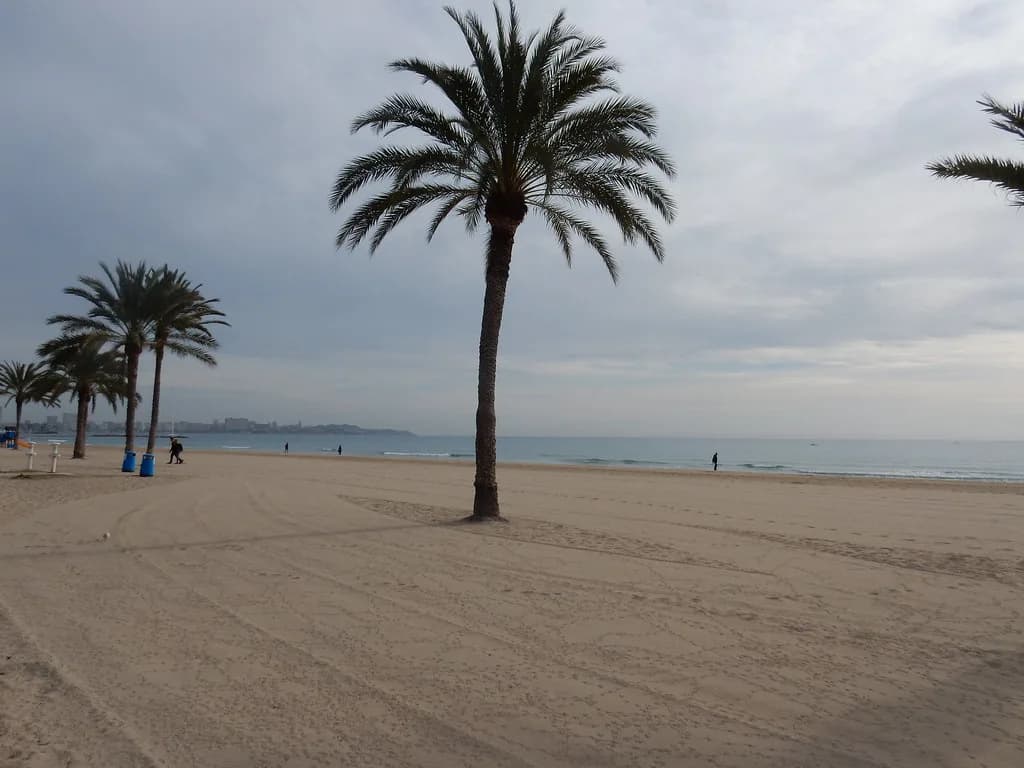
Postiguet Beach is a city beach within walking distance of the centre, which is exactly why it fills up; the cruise port is about 2km away and shuttle buses bring passengers in. The sand is golden and clean, with showers, a children's play area and lockers of different sizes rented from €2 per hour, charging point included.
Sun loungers and umbrellas can be hired by the day, with the price posted at the beach kiosk and worth confirming when you arrive. Swimming stays pleasant into early autumn, and an evening swim after a late-afternoon rest beats a midday session on hot sand.
If you are travelling in high summer, read up on Alicante in July before committing to a beach-heavy plan, because the city beach is busiest then.
Day 3 option A: MARQ archaeological museum by tram
Take the tram from Luceros to MARQ and make the current exhibition the reason for going. A past run at the museum included nine Terracotta Warriors from the Qin and Han displays, with entry at €5 per person at the time, which shows the kind of temporary show it stages rather than what is on now.
Check the museum's programme and ticket price before you travel, then build the morning around it. The tram ride is short, clean and fast, and it bypasses the road traffic that slows the buses.
An indoor collection is also the right call when the weather turns, which makes this the most flexible of the third-day options.
Day 3 option B: a slower day of squares, shopping and market food halls
Plaza de los Luceros is built around a showy centrepiece and works as a roundabout for a busy junction, with shops and restaurants around it for a wandery couple of hours. Pair it with a return to the market area at lunchtime, when the surrounding cafés and bars are in full swing.
For more structured retail, our shopping in alicante guide covers the main streets and what they are good for. Keep the afternoon free for a final swim or a drink on Plaza Portal de Elche.
If you only have a single day in the city, strip the plan back to the castle in the morning, the market before 2pm and the old town after that; our one day in alicante version sequences it hour by hour.
Getting there and around: the C-6 bus or a fixed-rate taxi
Alicante airport sits a short drive from the city, making arrivals and departures comfortable. The C-6 bus leaves from the Departures floor at Level 2, runs frequently through the day and is a reasonably priced option, paid to the driver by card, contactless or cash; the official white taxi with a green stripe charges a fixed rate depending on the time of day, with higher rates late at night and at weekends.
With hand luggage, the bus is the better trade: a fraction of the fare for a journey that drops you in the centre. With heavy cases or a late arrival, the fixed taxi rate removes the guesswork.
Inside the city, taxis can be hailed, picked up at ranks or booked through the PideTaxi app, which is useful for a pre-dawn airport run before the buses start.
Suggested meal timings that fit Spanish hours
Build the day around a lunch that starts between 1:30pm and 4pm and a dinner from 8:30pm or 9pm. That rhythm puts the market in the late morning, the castle early, and the beach in the evening, and it means you are eating when kitchens are actually serving rather than waiting for them to open.
A late, small breakfast and a proper mid-afternoon lunch will carry you to dinner without a slump. On a three-day trip, use one evening for a long sit-down meal and keep the others for tapas crawls along Calle San Francisco and around the market.
If you are visiting in October, the shoulder-season warmth makes the evening beach slot the most reliable part of the plan; our Alicante in October notes cover what to expect.
What to skip or save for a return trip
Skip anything that requires a car for the day. Costa Blanca day trips eat the hours you would otherwise spend on the castle, the old town and a proper lunch, and two days in the city will not stretch to both.
Alicante Town Hall is worth a look from the outside for its baroque frontage, and visitors have been able to walk inside, though it is worth asking at the door whether that still applies. Treat it as a five-minute stop rather than a scheduled sight.
Save the museums beyond MARQ, and any return to the market food halls, for a longer stay. The city rewards a second visit more than a rushed first one.
Where to go next within the Costa Blanca
Alicante makes a good base for the wider coast once you have done the city itself. If you are travelling in september, the sea is still warm and the promenade is less frantic than in high summer.
For a change of city entirely, the girona itinerary offers a compact Catalan old town on the same late-dining timetable. Closer to home, an ibiza itinerary covers the Balearic version of a short Spanish break if you would rather fly on than loop back.
Plan Your Visit
Two days gets you the castle, the market and the old town without rushing; three days lets you add MARQ or a slow morning of squares and shops. Whichever you choose, put the castle early, the market before 2pm, and dinner after 8:30pm.
Check castle opening hours, the current MARQ exhibition and beach hire prices before you go, since these change with the season. Everything else here you can plan around on foot.
Explore more Alicante guides
Frequently Asked Questions
How many days do you need in Alicante?
Two days is enough for the castle, Mercado Central, El Barrio de Santa Cruz and Postiguet Beach at a relaxed pace. A third day adds either MARQ by tram or a slower round of squares and shopping, and suits anyone who wants a proper long lunch rather than a sandwich between sights.
Is two days in Alicante enough?
Yes, if you keep both days in the city and put the castle and the beach on separate days. The main sights sit close together and the centre is walkable, so time lost to transport is minimal. The trade-off is that Costa Blanca day trips do not fit.
What can you do in Alicante in one day?
Take the shuttle bus or lift up to Castillo de Santa Bárbara early, walk down through El Barrio de Santa Cruz, reach Mercado Central before its 2pm closing, and finish on Postiguet Beach before a late dinner on Calle San Francisco. One day means one of those gets shortened.
Is the old town in Alicante worth visiting?
El Barrio de Santa Cruz is the old quarter, a residential hillside of decorated houses, pots and plants that is quiet in the morning and lively at lunchtime. It pairs naturally with the Concatedral de Sant Nicolau de Bari d'Alacant and the shaded squares nearby.
How do you get from Alicante airport to the city?
The C-6 bus leaves from Level 2 of the Departures floor and drops you in the centre; the official taxi is a fixed fare that rises late at night and at weekends. The bus suits light luggage, the taxi suits heavy cases or a very early flight.
When is the market open in Alicante?
Mercado Central opens at 7am and closes at 2pm, and it is closed on Sunday. Plan it as a late-morning stop with lunch nearby rather than an afternoon activity, and check the market's own information for public holiday changes.
Should you walk or take the lift to Castillo de Santa Bárbara?
The walk up takes around 30 minutes and costs nothing but effort, the lift from Avenida Juan Bautista Lafora is a paid shortcut and free for visitors over 65 with ID, and the shuttle bus from Plaza Puerta del Mar charges each way. Bus or lift up and walking down is the easiest combination.
Do you need to book Alicante attractions in advance?
Castle entry is free and does not work like a timed ticket, so the constraint is opening hours and how you get up the hill. For MARQ, check which exhibition is running and whether advance booking is advised before you build a morning around it.
Sources
Notes for eating well in Spain
Optional updates to our guides.
You might also like
Continue reading
More guides you'll find useful