Girona in September: Weather, Crowds and What to Do
Girona in September means gentler heat, thinner crowds and easy walking on the city walls, cathedral steps and old town lanes before the Costa Brava day trips.
On this page
September is one of the best months to see Girona: the worst of the summer heat has passed, the lanes of the Barri Vell are calmer, and you can climb the cathedral steps and walk the city walls without the crush. The trade-off is the coast, where beach weather on the Costa Brava is no longer guaranteed, so plan around the city and keep the sea for a short hop rather than the main event.
The city is compact and almost entirely walkable, so a September visit works as a half-day from Barcelona, an overnight, or a base for the surrounding region. Just remember that the historic core can be covered in four to five hours, which leaves little time for the wall walk and a long lunch unless you stay the night.
Why September Suits Girona
Girona sits between the mountains and the sea, roughly 100 kilometres north of Barcelona, and its medieval centre is small enough to explore on foot, so a mild month rewards lingering rather than rushing. September thins the summer queues at the cathedral and gives you room on the staircases and bridges that define the city. Fewer people on the cobbles also means an easier time at the Jewish quarter, El Call, which is one of the best-preserved in Europe and needs a slow wander to make sense.
It is also a month suited to the city's food culture: the terraces around Plaça de la Independència stay usable without the mid-August glare, and the local specialities that anchor a good lunch are the same ones you would want at any time of year. September is a trade-off rather than a peak, so approach it as a walking and eating month with the odd indoor stop.
What the Weather Does in September
The clearest guide to September is that the weather cools gradually across autumn. Temperatures ease from around 25°C to around 15°C as you move through September into November, and the same stretch brings fewer tourists and quieter streets, which suits exploring the old town on foot.
Read that as a shift rather than a forecast: early September can still feel like summer, while late September mornings and evenings want a layer. The practical response is a late-morning-to-evening rhythm, with the hottest stretch of the afternoon spent inside the Banys Àrabs, the Monastery of Sant Pere de Galligants or the Cinema Museum instead of on an exposed stretch of wall.
Check AEMET, Spain's national weather service, for the week you travel if you want precise September high temperatures, rainfall or sea conditions, because a month-long average hides how quickly the weather can change. Keep a light rain layer in your bag for the same reason, and treat the coast as a fair-weather plan rather than a fixed booking.
How Busy Girona Gets in September
Crowds thin noticeably as autumn arrives, so the headline sights feel less squeezed. That matters most at the Girona Cathedral, where a monumental staircase and the widest Gothic nave in the world draw steady streams of visitors, and in the Jewish quarter, whose narrow alleys can feel clogged in high season but manageable in late September.
Quieter streets do not mean empty ones: Girona is a working city of just over 100,000 people, and September brings a mix of visitors and everyday life. Weekday mornings are the calmest time for the cathedral steps and the Onyar bridges, while weekend afternoons fill up around Plaça de la Independència and the Rambla Llibertat.
For attractions with timed entry, book online in advance for the slots you care about most and keep the rest of the day loose. When you want to go beyond the highlights, a Girona itinerary that mixes the major sights with quieter corners works well in a month when you are not fighting for pavement space.
A September Day in Girona
Start with coffee on Plaça de la Independència, the colonnaded square ringed with café terraces where the city takes its time. From there, walk into the old town's maze of narrow stone streets toward the cathedral, taking in Carrer de la Força, the climb that once formed part of the Roman road and now leads up to the cathedral square.
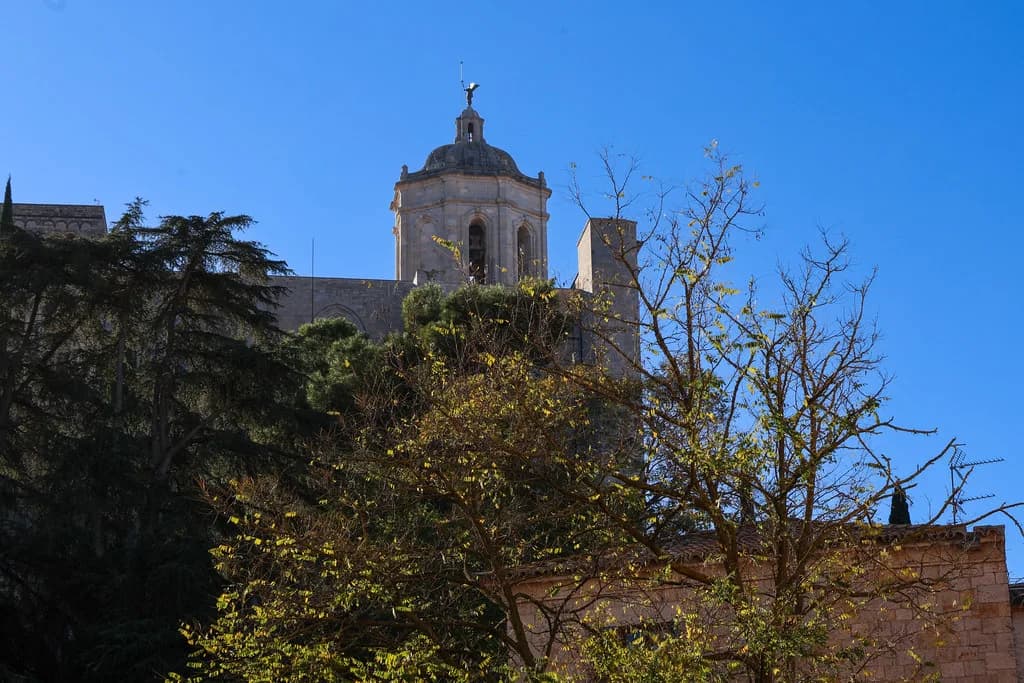
The cathedral is the anchor of any first visit: a Baroque façade, a dramatic flight of 90 steps and the widest Gothic nave in the world inside, plus a Romanesque cloister and the 11th-century Tapestry of Creation. Afterwards, work your way down through El Call and the Museum of Jewish History, which explains the medieval community that lived in these lanes until its expulsion in 1492.
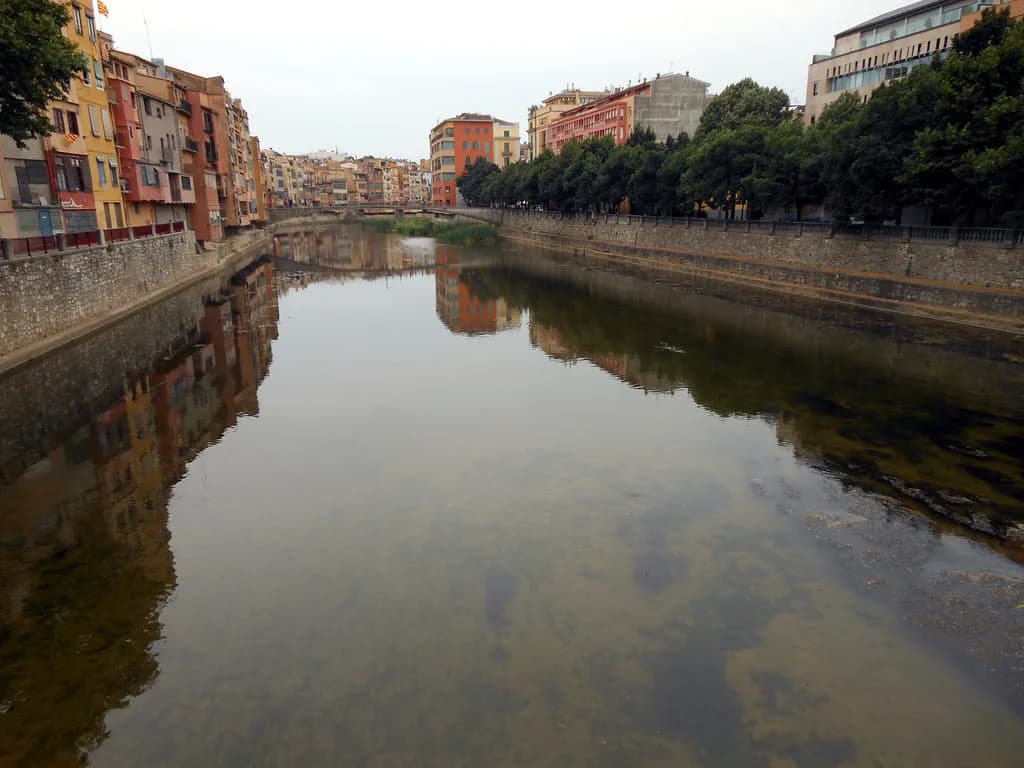
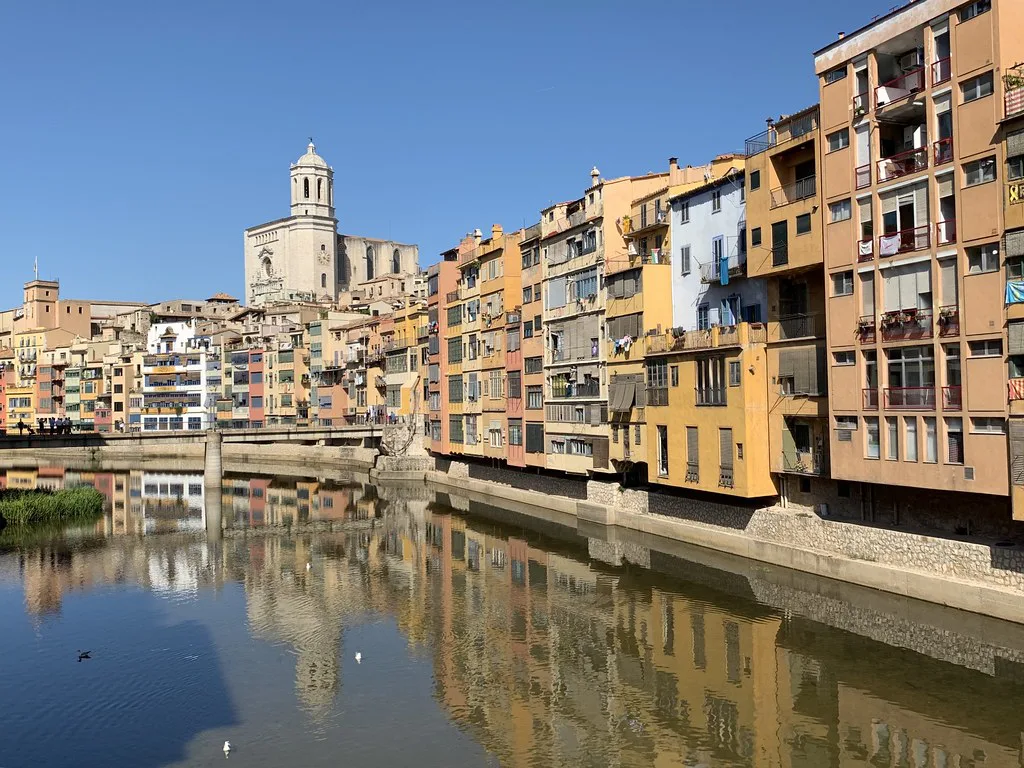
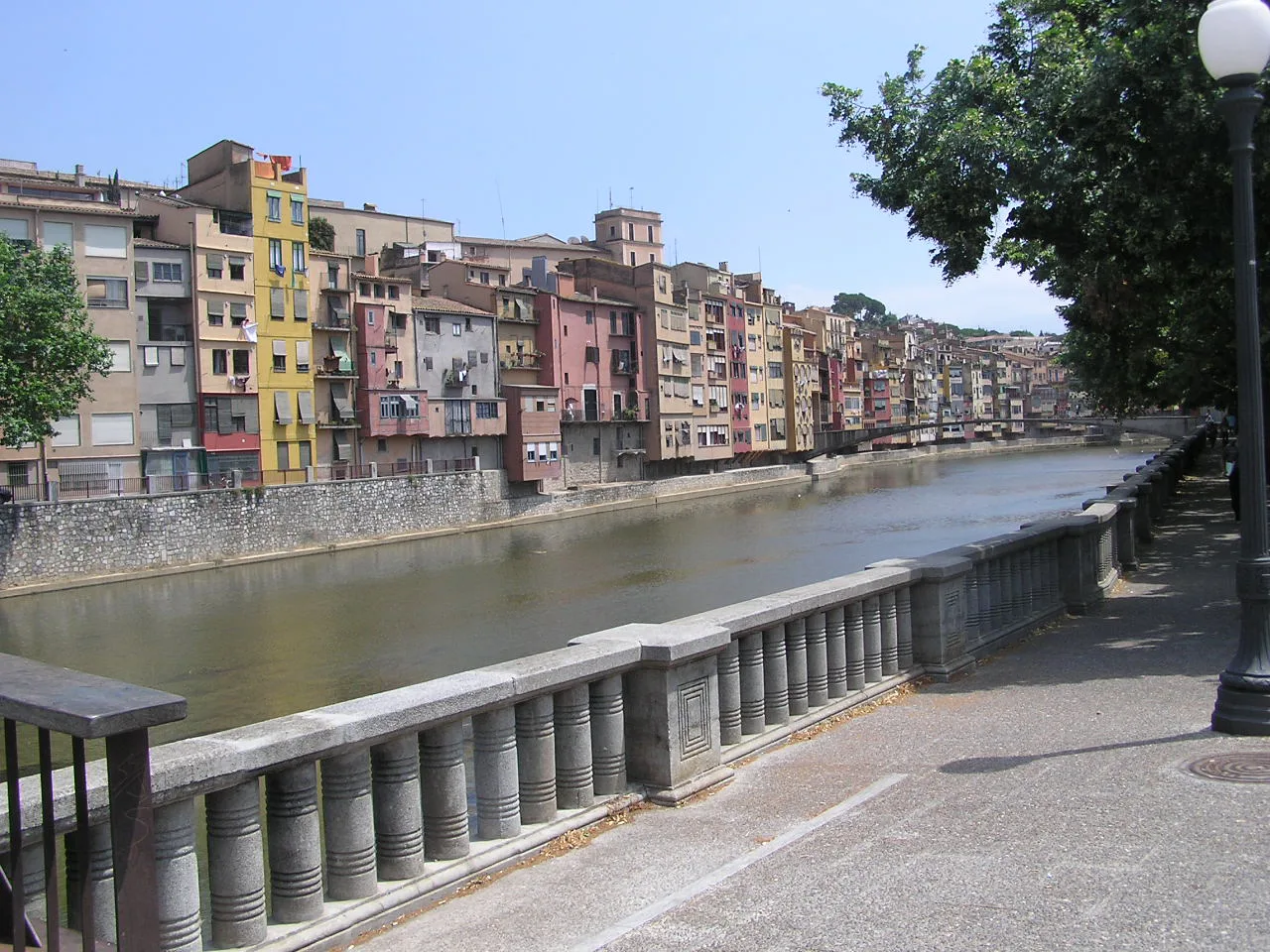
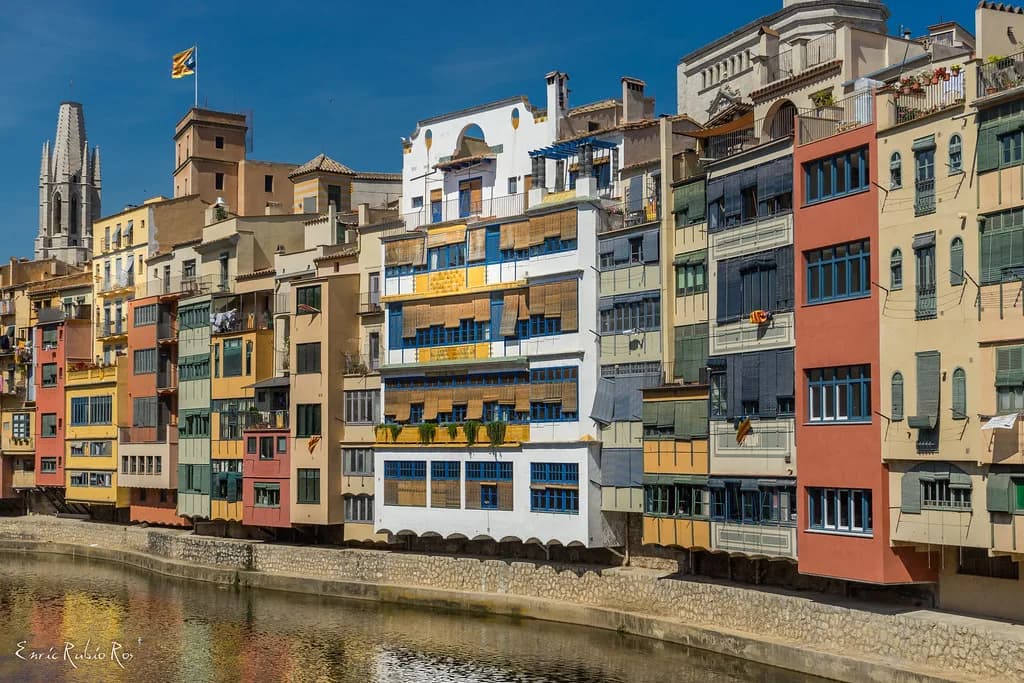
Finish by the river at the Pont de les Peixateries Velles, the red iron bridge designed by Gustave Eiffel's company before the Eiffel Tower, which frames the Cases de Onyar stacked along the water. The Pont de Pedra, the stone bridge at the entrance to the old town, gives a second fine angle on the same pastel houses.
Walking the Passeig de la Muralla and the Jardins dels Alemanys
The city walls are the best free thing to do in Girona and the walk that most justifies an overnight in September, when the heat no longer punishes an afternoon on stone. The restored Roman and medieval fortifications wrap around the old town and let you walk along the top for wide views of rooftops, the cathedral and the Catalan countryside.
The full length of the Passeig de la Muralla runs about 3 kilometres, with lookout towers you can climb, so treat the complete route as an option rather than the default. A shorter stretch near the cathedral, combined with the shady Jardins dels Alemanys, gives you the views without committing a whole afternoon.
Go early or late in the day: the walls offer almost no shade, and September afternoons can still be warm after a morning that felt autumnal. Carry water and wear shoes with grip, because the stone stairways and uneven surfaces are the one real annoyance of the route.
Indoor and Shady Stops for a Warm Afternoon
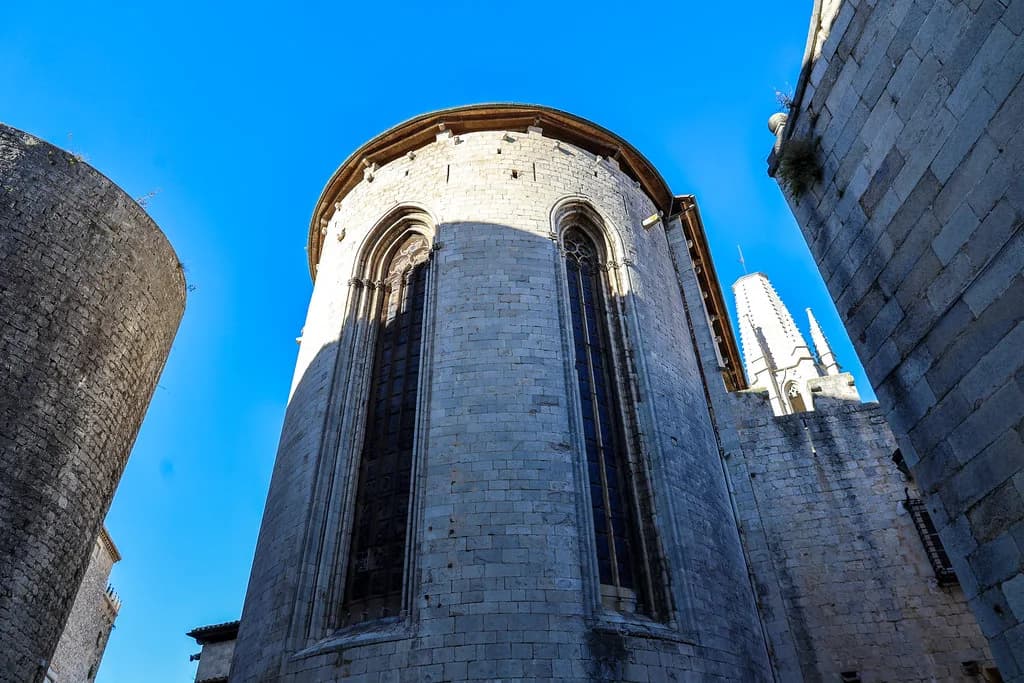
The Banys Àrabs, the 12th-century baths near the cathedral, are small but atmospheric, with stonework and a layout borrowed from Roman bathing traditions despite the name. Pair them with the Monastery of Sant Pere de Galligants, a 10th-century Romanesque building just outside the walls that now houses the Archaeology Museum of Catalonia, and you have an easy hour or two out of the sun.
The Cinema Museum, built around the Tomàs Mallol collection of early film equipment, is the most distinctive indoor stop in the city and a good bet for the hottest part of the day. The History Museum of Girona, housed in an 18th-century Capuchin convent, covers the city from Roman times to the present and works as a primer before you walk the streets again.
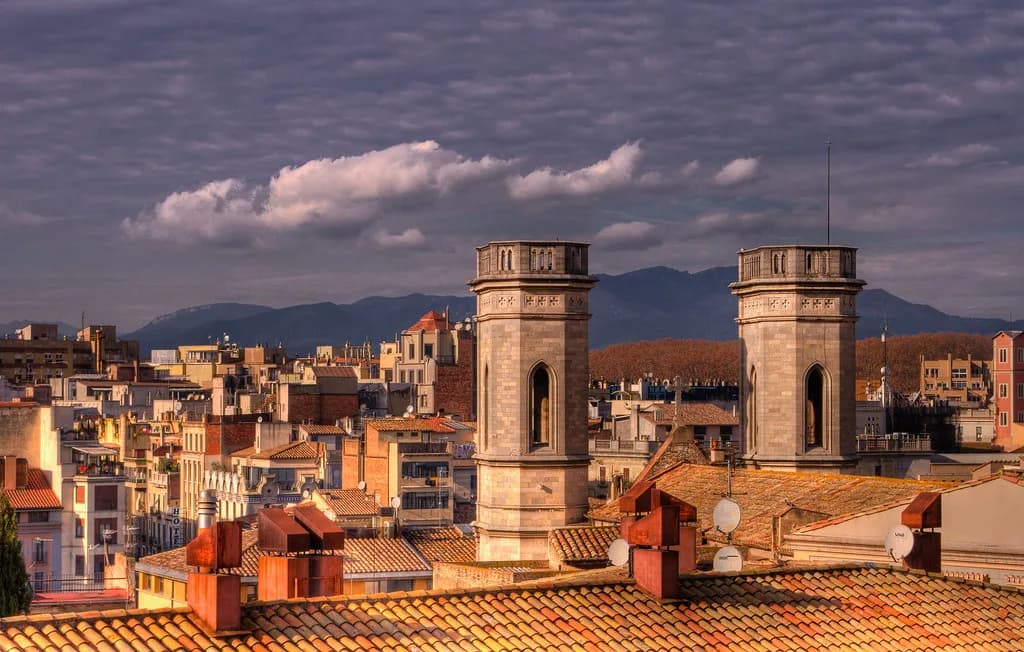
The Collegiata de Sant Feliu, a partly Gothic church whose silhouette marks the riverfront, holds the tomb of Girona's patron saint, Narcís, and was the city's main place of worship before the cathedral was built. La Devesa, one of the largest urban parks in Catalonia, gives you towering trees and shade on the flat, west side of the centre.
Where to Eat in September
Plaça de la Independència is the obvious place for a terrace meal, with cafés, bars and restaurants around the colonnades and plenty of outdoor seating for a mild September evening. Spanish meal times still apply: lunch runs roughly 1.30 to 4pm and dinner starts from about 8.30 to 9pm, so a late lunch is the better bet if you want the kitchen at its fullest.
For a proper sit-down of local cooking, Casa Marieta is known for classic Girona dishes such as duck with pears and suquet de peix, the Catalan fish stew. La Fabrica draws cyclists and locals for brunch or a light bite, and Bionbo Café Gastrobar serves creative dishes built on local ingredients; El Celler de Can Roca is the city's best-known table and needs booking well ahead.
El Bistrot, on the picturesque Pujada de Sant Domènec with its stone staircase and vaulted porch, is a good spot for a drink or a meal in one of the city's most romantic corners. Check the day's closing day before you commit, because Girona restaurants commonly shut one or two days a week, and an overnight stay gives you a second chance at the table you wanted.
Half-Day and Day Trips: Costa Brava, Empordà and Figueres
The Costa Brava is around 45 minutes away, with the postcard town of Calella de Palafrugell and the busier Lloret de Mar as the obvious targets. In September the sea is less certain than in July and August, so treat a beach day as a bonus rather than a plan, and check the forecast before committing. If you would rather anchor a September trip around reliable beach weather, Alicante in September makes a useful comparison.
The Empordà wine region, about 40 minutes from Girona between the Pyrenees and the coast, has family-run vineyards known for bold reds and crisp whites, and guided tours are the simple way in. Public transport to the wineries and coastal towns is limited, so rent a car for the day or join an organised trip rather than trying to string together buses.
Figueres, roughly 45 minutes away by train or car, holds the Dalí Theatre-Museum, the surreal centrepiece of any art-focused detour, plus cobbled streets and tapas cafés for the rest of the day. Combine it with a Costa Brava stop only if you have a car, since the connections between the two are the weakest link in the plan.
How Long to Give Girona in September
Four or five hours covers the historic core: the cathedral, El Call, a bridge or two and a meal. That makes Girona a realistic half-day from Barcelona, but an overnight is what buys you the city walls, the Jardins dels Alemanys and a slower dinner, and September's cooler evenings make that extra night worthwhile.
Two nights turns Girona into a base for the region, with one day in the city and one out towards the Costa Brava, Empordà or Figueres. If you are weighing a single day against a longer stay, a one day in Girona plan handles the highlights, while a second day is what lets you slow down.
Getting There and Getting Around
Girona is about 100 kilometres north of Barcelona, and the high-speed train between the two takes around 40 minutes, with direct trains running hourly and cheaper but slower services taking a little under 1.5 hours. Trains from Madrid and from France towards Barcelona also stop in Girona, which makes it easy to slot into a wider Catalan trip.
Once you arrive, you will not need a car or public transport inside the city, because the centre is pedestrianised and everything is within walking distance. The old town does involve a lot of stairs and cobblestones, so carry luggage a short distance from the station rather than dragging it through the lanes.
Plan Your September Visit
September gives you Girona at its most comfortable: cool enough for the cathedral steps and the city walls, quiet enough for the Jewish quarter, and lively enough for a terrace dinner on Plaça de la Independència. Build the day around a late-morning start, an indoor afternoon and an evening meal, and keep one day spare for the coast or the vineyards.
Check museum opening days and restaurant closing days directly before you travel, since both vary through the week and the season. If you are comparing months, our guide to Girona in October covers what changes as autumn settles in.
Explore more Girona guides
Frequently Asked Questions
Is Girona good for a holiday in September?
Yes. September brings a gradual cool-down after summer, with fewer tourists and quieter streets, which suits walking the old town, the cathedral steps and the city walls. The trade-off is the coast, where beach weather is less reliable than in midsummer.
What is the weather like in Girona in September?
Temperatures ease from around 25°C to around 15°C as autumn progresses from September into November, so early September can still feel summery while late September mornings and evenings need a layer. Check AEMET for the specific week you travel if exact highs or rainfall matter to your plans.
How busy is Girona in September?
Visitor numbers drop as autumn arrives, so the cathedral, the Jewish quarter and the bridges feel less crowded than in high summer. Weekday mornings are calmest, while weekend afternoons fill up around Plaça de la Independència and the Rambla Llibertat.
What can you do in Girona in one day?
Four or five hours covers the historic core: the cathedral, El Call, the Onyar bridges and a meal. Add the Passeig de la Muralla and the Jardins dels Alemanys if you stay the night, since the walls are the best free experience in the city.
Is Girona worth visiting for a day trip from Barcelona?
The high-speed train takes around 40 minutes from Barcelona, with direct trains running hourly, so a day trip is easy. An overnight is better if you want the city walls, a slower dinner and time to include Figueres or the Costa Brava.
What should you see in Girona's old town?
Prioritise the cathedral with its widest Gothic nave, the Jewish quarter El Call and its Museum of Jewish History, the Banys Àrabs, the Monastery of Sant Pere de Galligants and the river bridges. The streets around Carrer de la Força tie them together.
Are the Costa Brava and Empordà reachable from Girona without a car?
Public transport to the coastal towns and wineries is limited, so a rental car or an organised tour is the practical option. The Costa Brava is around 45 minutes away and the Empordà wine region about 40 minutes, but the journeys are not easily done by bus.
How long do you need in Girona?
Four to five hours covers the main sights in the historic core. An overnight adds the city walls and a relaxed evening meal, while two nights make Girona a workable base for day trips to the Costa Brava, Empordà and Figueres.
Sources
Notes for eating well in Spain
Optional updates to our guides.
You might also like
Continue reading
More guides you'll find useful