One Day in Girona: What to See on a Single Day
Spend one day in Girona with a walkable route through the old town, walls and river bridges, plus where to stop for lunch and an early dinner.
On this page
One day in Girona works because the historic core fits inside a compact loop: the River Onyar, the Barri Vell lanes, the cathedral steps and a section of the medieval walls all sit within easy walking distance. The trick is to give the morning to the sights that need daylight and the afternoon to eating and drinking at Spanish hours, rather than chasing a checklist. Start at the river, cross into the old town, climb the walls before lunch, then slow down.
Start at the River Onyar and the Pont de les Peixateries Velles
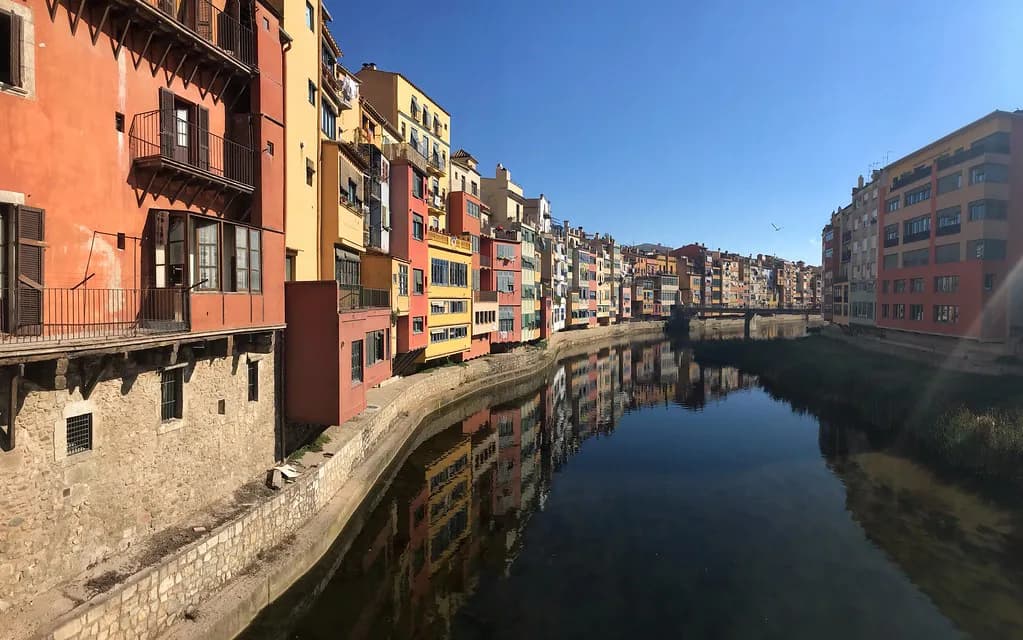
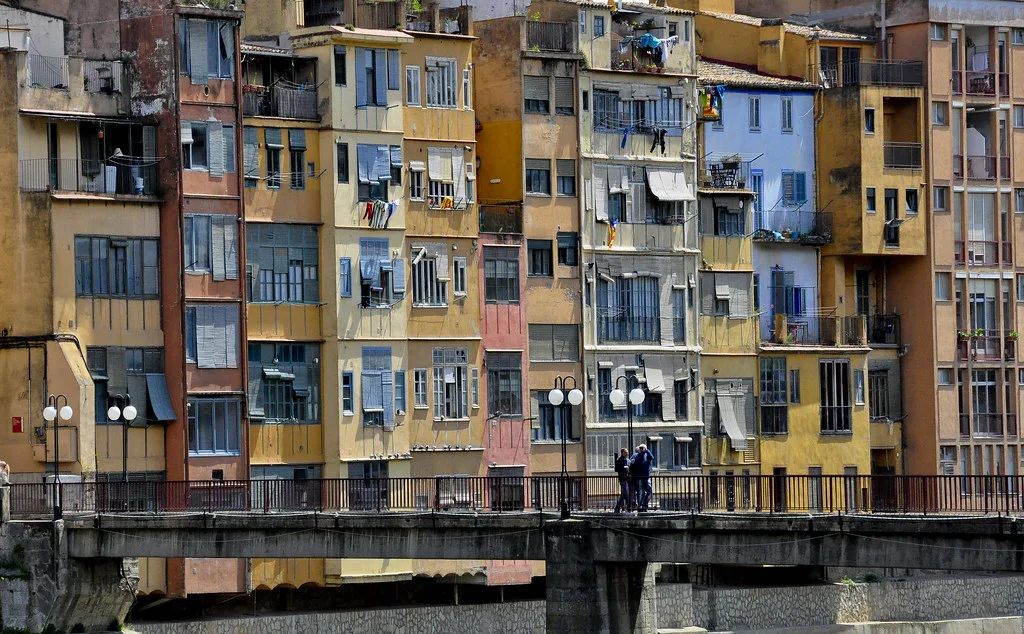
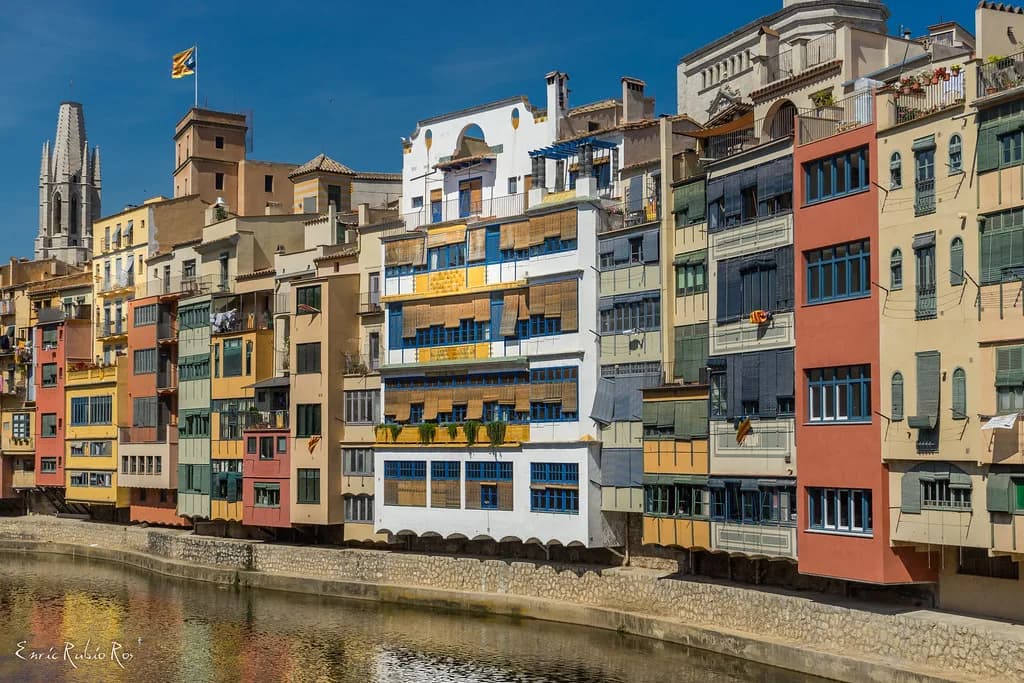
Begin on the river at the Pont de les Peixateries Velles, the red iron footbridge that frames the painted façades along the Onyar. The bridge was built by Gustave Eiffel's company in 1877, and the view back along the water is the photograph most visitors want before the day gets busy. Cross here into the Barri Vell and leave the main shopping streets behind.
The riverfront is a good place to orient yourself: the cathedral sits on the hill above, the old town wraps around it, and the walls run along the northern edge of the historic centre. If you are visiting in july or august, aim to cross the bridge early, because the open stone streets heat up quickly by late morning.
Barri Vell on Foot: Lanes, Courtyards and Balconies
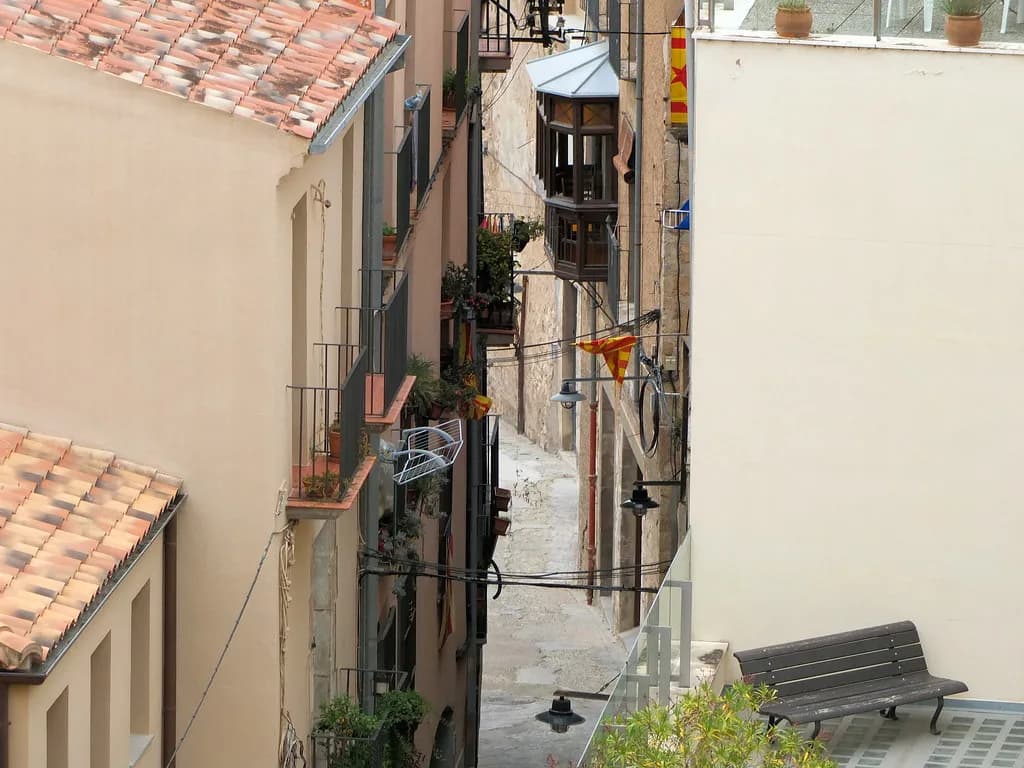
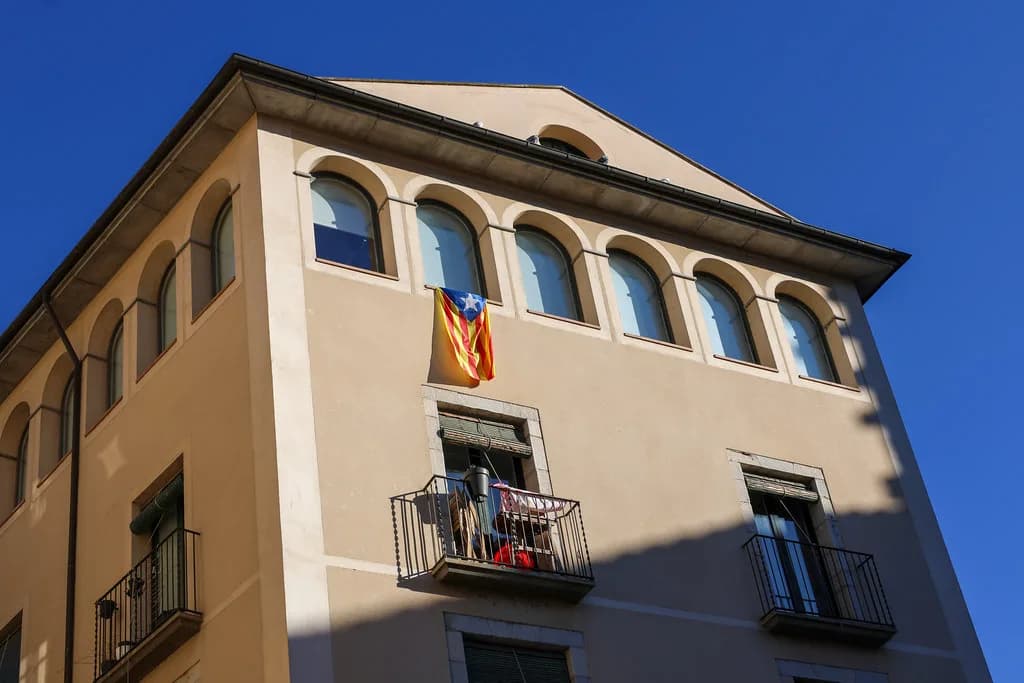
The Barri Vell is a maze of cobbled lanes, stone staircases and small courtyards, and getting slightly lost is part of the pleasure. Girona has an unusually well-preserved old town that dates from Roman times, with buildings adapted into bars, restaurants and boutiques rather than left as a museum piece. Look up at the balconies and down at the flagstones, and follow whichever lane pulls you uphill towards the cathedral.
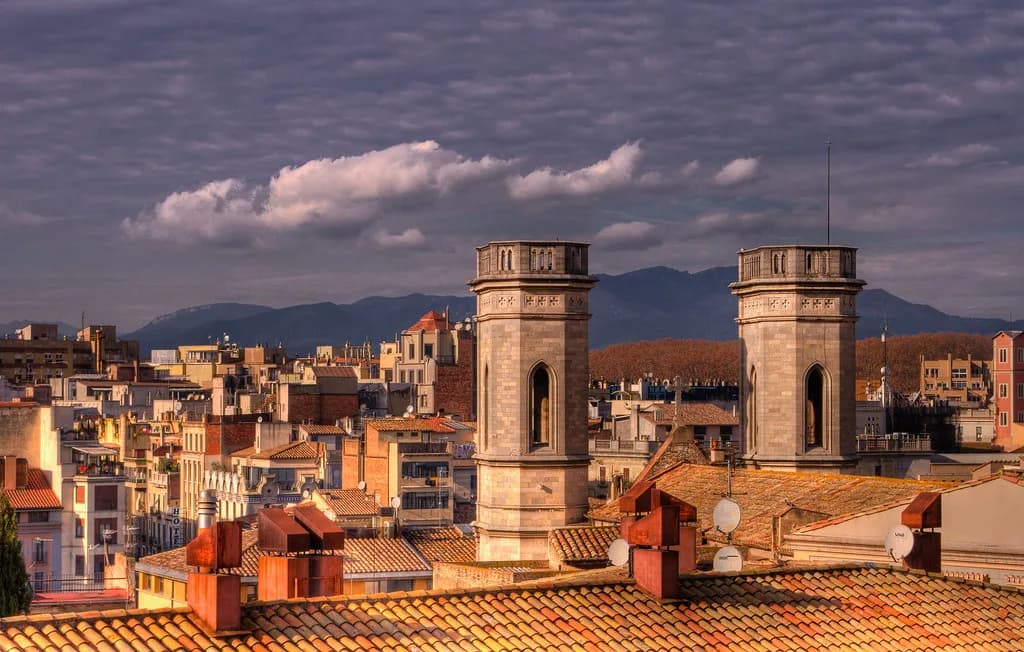
Walk without a rigid map for twenty minutes, then cut back towards Plaça de Sant Feliu. This square has a long history: it dates from 1200, although it was not completed until the early 1600s, and its bell tower dominates the skyline as both a defence tower and a bell tower. It is a natural pause before the cathedral steps.
Girona Cathedral and the Baroque Steps
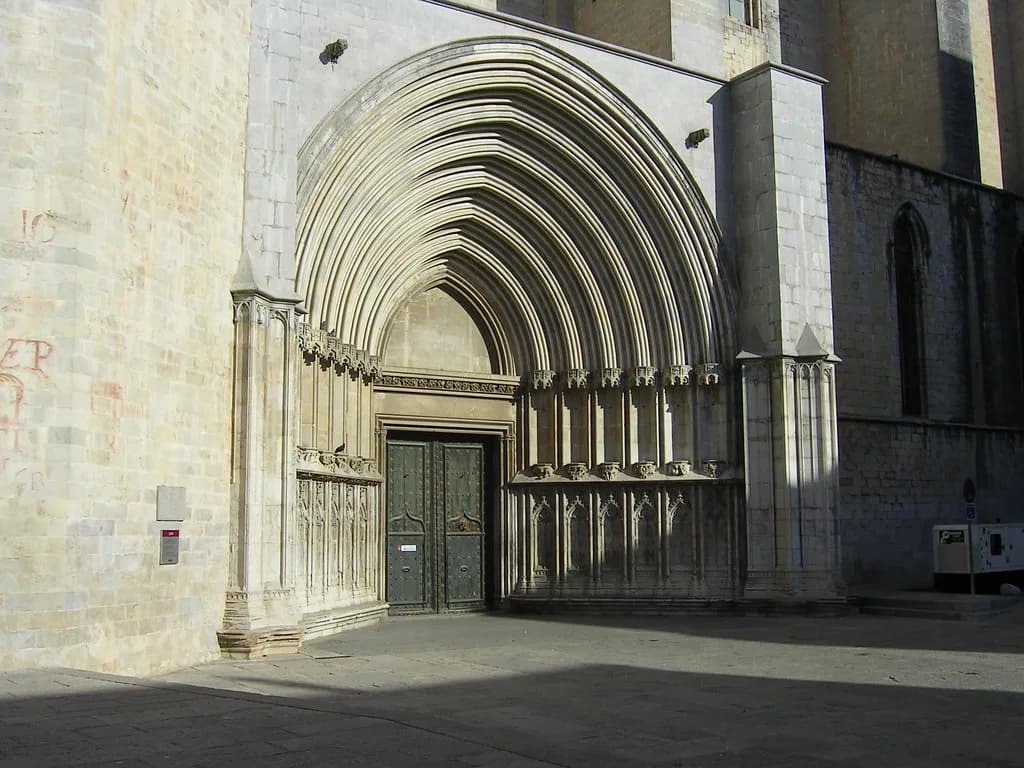
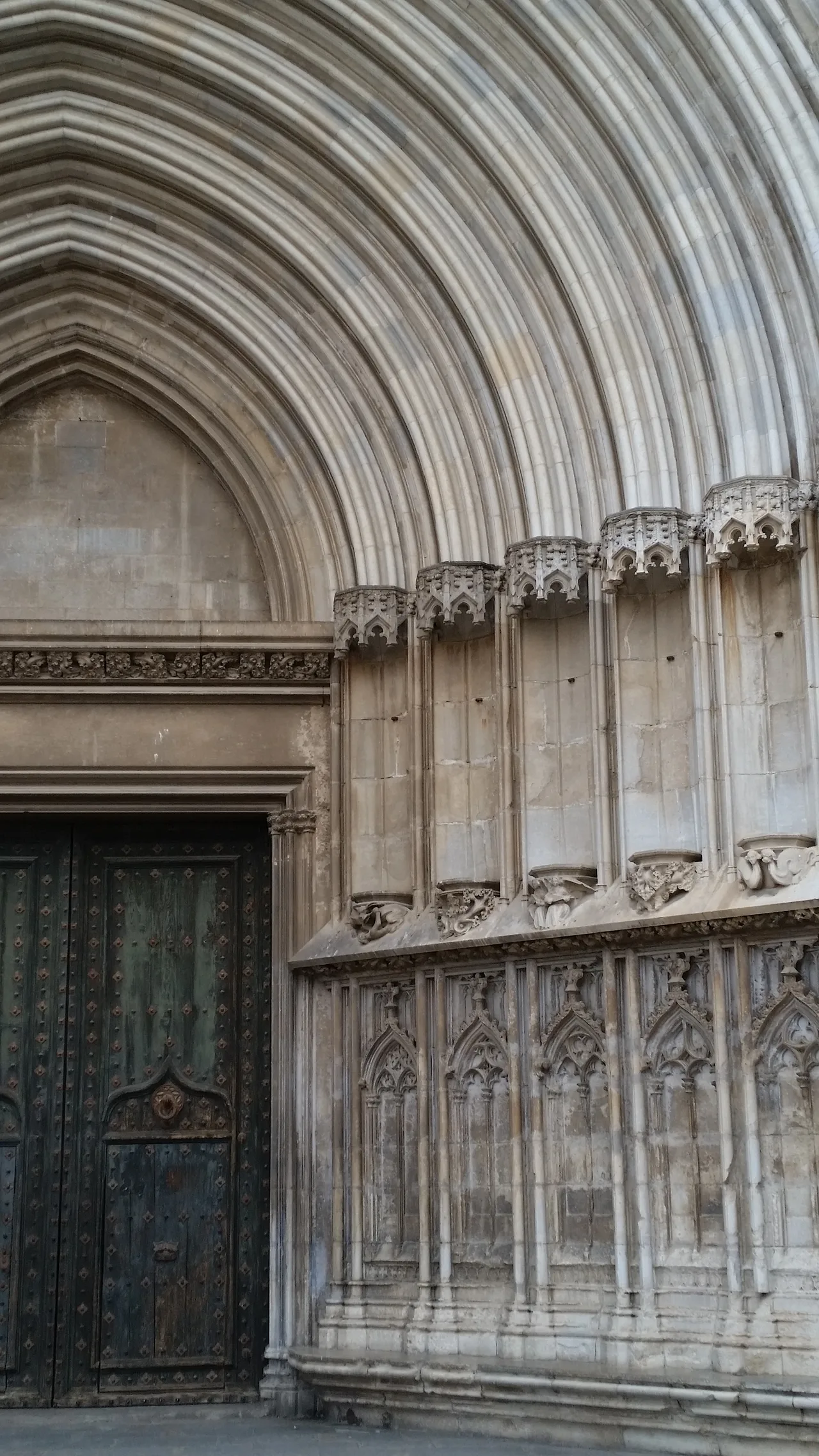
The cathedral is the obvious starting point for the architecture, and the Baroque façade and wide steps are what most people remember. Fans of Game of Thrones will recognise the steps from Cersei's walk of shame in series six, but the building holds its own without the television reference. Climb slowly, look back over the rooftops, and keep the cathedral visit to a comfortable length rather than trying to see everything inside.
The cathedral also has a quiet courtyard and cloister, a useful place to cool down and slow the pace before lunch. Basilica de Sant Feliu nearby can be entered on a single combination ticket with the cathedral, which saves time if you plan to see both. If you are working out whether Girona deserves a second day, this is the point to decide: the answer depends on how much church interior and museum time you want.
The Arab Baths (Banys Àrabs) and the Cloister Calm
The Banys Àrabs date from 1194, and the first room you enter, with its small octagonal pool surrounded by columns, is the most atmospheric. It is thought to have been the changing room, and the light through the lantern roof does most of the work. Go early or late in the day if you want the space closer to yourself, and do not miss the view from the roof.
This is a short visit, perhaps twenty minutes, which makes it easy to fit between the cathedral and the walls. If you are in Girona in september or october, the baths are a good indoor stop when a shower passes through without eating into your day.
Basilica de Sant Feliu and Plaça de Sant Feliu
The Basilica de Sant Feliu anchors the square of the same name, and its bell tower has served as both defence and signal through the city's history. The square itself is a good place to sit for ten minutes and reset before the climb to the walls. A single combination ticket covers the cathedral and the basilica if you want to see both interiors.
Walk the City Walls: Torre Gironella and the Passeig Arqueològic
The wall walk is the highlight of many visits, and the entrance is the step most people lose time to. Enter through the Jardins dels Alemanys and look for the sign to the Torre Gironella, where you ascend. From there you can walk roughly two kilometres along the walls, with far-reaching views over the old town; the section between the Muralles and the Passeig Arqueològic is the most impressive.
Take the walls before lunch, not after a big meal. There are many steep steps up to the wall and up and down the towers, so it is not a gentle stroll, and the exposed stone offers little shade at midday. Allow an hour if you walk the best section and stop for photographs, and carry water.
Lunch: Timing for the Menú del Dia and How to Order It
Spanish lunch runs from about 1:30pm to 4pm, and the menú del dia is the best-value way to eat in that window. El Pati de La Veïna in the Jewish Quarter served two courses with coffee and a glass of wine for less than 10 euros, in a quiet, quirky room with a mindfulness bell on the table. Prices change, so read the board outside before you sit down.
Order the menú rather than à la carte if you want speed and value: choose a first and second course, take the coffee included, and expect the wine to come as part of the deal. If you are travelling with children or want an earlier meal, note that many kitchens close between lunch and dinner, so a 1:30pm sitting keeps the afternoon free for the old town.
An Afternoon Table: Brots de Vi or Llevataps
Brots de Vi on Carrer de la Cort Reial is the practical choice for an early evening meal by Catalan standards. It has a buzzy, industrial room with exposed wood and metal chairs, outside seating in a more traditional style, and a short menu of salads, burgers and grilled dishes; a creamy buffalo mozzarella with fresh pesto and sweet sun-dried tomatoes is the dish to order. It opens all afternoon and starts serving its full evening menu from 7:30pm, which suits a one-day visit.
Llevataps on Plaça de l'Oli is the smarter room, with modern, casual ambience and a wine library on the wall. Its nine-course tasting menu with wine pairings was 66 euros, and it remains a good pick if you want one ambitious meal rather than several snacks. Book ahead if the tasting menu is the reason for your visit.
Sweet Stop: Rocambolesc Ice Cream and Torrons Vicens
Rocambolesc, run by the Roca brothers behind El Celler de Can Roca, serves imaginative ice cream and toppings; a traditional chocolate base with lavender marshmallows is the order to try. El Celler de Can Roca itself holds three Michelin stars and has been described as one of the world's best restaurants, and a table there requires booking many months ahead. For most day-trippers, the ice cream is the realistic taste of the family's cooking.
For something to carry home, Torrons Vicens sells regional sweets including torrons, mantecados and chocolate. A small bag of bunyols, the fried doughnuts scented with anise, is the other local snack worth trying if you pass a bakery. Keep both stops short so they do not eat into the wall walk or the afternoon lanes.
Plaça de la Independència for a Late-Afternoon Drink
Plaça de la Independència is a porticoed neo-classical square with a monument to the defenders of the city in the middle, and restaurants spill out from under the arches. It is the right place for a late-afternoon vermouth or a coffee after the walls, when the light softens and the day's walking is done. Sit under the arcade rather than in the open if you want shade.
Pacing and Trade-Offs: What to Drop With Only a Few Hours
If you have only a few hours, drop the museum interiors and keep the walls, the cathedral steps and the river. The walls give the best views for the least time, and the Barri Vell rewards a slow twenty-minute wander more than a rushed church visit. Skip the Arab baths if the queue is long; the octagonal pool is beautiful but small.
If you are weighing one day against two, the deciding factor is usually whether you want a day trip into the province, such as the Dalí museum in Figueres or the volcanic landscapes of the Garrotxa. On a single day, stay in the city and eat well rather than spending two hours on the road.
Where to Stay for an Early Start and an Easy Evening
Stay inside or just beside the Barri Vell so you can reach the river and the walls before the tour buses arrive. Pensió BellMiral is a historic option with stone walls and traditional furniture, and the included breakfast is a modern contrast. Staying centrally also means you can walk back from dinner without worrying about the last bus.
Eating Times: Lunch from 1:30pm, Dinner from 8:30pm
Build the day around Spanish meal times: lunch from 1:30pm to 4pm, dinner from about 8:30pm to 9pm. Between those windows many kitchens close, so plan a late-afternoon drink and a small snack rather than a full meal at 5pm. Brots de Vi's all-afternoon service and 7:30pm evening menu start make it the exception that solves the early-dinner problem.
If you are in Girona in august, expect the city to be busy and the heat to push the best walking hours to early morning and evening. The same advice applies to shopping and the market: do them before lunch or after the worst of the sun, and keep the middle of the day for a shaded table.
Plan Your Visit
A one-day visit to Girona works best as a loop: river, old town, cathedral, walls, then a long lunch and an early dinner. Climb the walls before eating, enter them via the Jardins dels Alemanys, and keep the afternoon free for the lanes and a square. Check current opening hours and menus on the day, since kitchens and sights change their schedules.
Explore more Girona guides
Frequently Asked Questions
What can you see in Girona in one day?
You can cover the River Onyar and its bridges, the Barri Vell lanes, Girona Cathedral and its steps, the Banys Àrabs, the Basilica de Sant Feliu and a two-kilometre stretch of the city walls. That is a full day on foot without rushing, provided you start in the morning and take lunch at Spanish hours.
Is one day enough for Girona?
One day is enough for the historic core, but not for the wider province. If you also want the Dalí museum in Figueres or the volcanic landscapes of the Garrotxa, add a second day or plan a separate trip. The city itself rewards a slow pace rather than a checklist.
What should you not miss in Girona?
The wall walk is the strongest single sight, especially the section between the Muralles and the Passeig Arqueològic. The cathedral steps and the Banys Àrabs are the other two highlights indoors and out. Leave time for the Barri Vell lanes rather than treating them as a corridor between sights.
Where do you eat lunch on a day in Girona?
Look for a menú del dia in the old town, served from about 1:30pm to 4pm. El Pati de La Veïna, in the Jewish Quarter, has offered a two-course lunch with coffee and wine. For the evening, Brots de Vi opens all afternoon and starts its full evening menu at 7:30pm.
Can you walk the Girona city walls for free?
The wall walk is an outdoor route rather than a ticketed attraction, and the climb starts through the Jardins dels Alemanys towards the Torre Gironella. There are many steep steps up to the wall and up and down the towers, so it is not suitable for everyone. Check locally before you go if you have mobility concerns.
How do you get to Girona from Barcelona?
Girona is served by high-speed trains from Barcelona, with journey times that make it a realistic day trip. Girona also has its own airport, used by Ryanair and other carriers, and Barcelona airport is about 90 minutes away by car. Check timetables and tickets with the rail operator before you travel.
Sources
Notes for eating well in Spain
Optional updates to our guides.
You might also like
Continue reading
More guides you'll find useful