A Girona Itinerary for 1–3 Days: Where to Walk and Eat
A practical Girona itinerary for one to three days, covering the cathedral, city walls and Jewish Quarter, with meals timed to Spanish lunch and dinner.
On this page
One day is enough to see Girona's core on foot, and three days let you repeat the best of it at a slower pace. The old town is compact and walkable from the train station, so the plan below is built around a single loop rather than transport. What shapes the day more than distance is timing: the cathedral and walls are best done before the tour groups build from around 10:00, and lunch and dinner follow Spanish hours.
Meals sit at the centre of the plan. Lunch runs from about 13:30 to 16:00 and dinner starts around 20:30 to 21:00, which leaves a long afternoon for the Eixample and a proper aperitif before eating. The stations below are named where a source supports them and left out where it does not.
One day or three: how much of Girona you actually need
A single day in Girona covers the main sights in roughly four to six hours of walking, which is why it works as a day trip from Barcelona. Two days give you room to eat lunch properly, cross into l'Eixample and return to the walls in better light. A third day is best spent outside the city, in Figueres, the Empordà or on the Costa Brava. If you are weighing a longer stay in another Catalan city, a 2–3 day Alicante itinerary is a useful comparison for how much time to give a single place.
The trade-off is depth against breadth. If you have one day, skip the museum interiors and treat the cathedral and the Jewish Quarter as the fixed points; with two or three days, add the monastery and the slower alleys behind the cathedral. The old town, the Barri Vell, has plenty of stairs and steep streets, so comfortable shoes matter more than a tight schedule.
Get in early: the train from Barcelona Sants
The train from Barcelona Sants to Girona takes about 38 minutes on the non-stop Renfe service, and an early departure is the single best decision in the plan. Catching a train around 08:20 puts you in the city before 09:00, with the cathedral steps and the river bridges almost empty. The station is about a 10-minute walk from the historic centre.
Book ahead rather than at the station. Fares booked in advance have been advertised from as low as €15 each way, and cheap seats sell out first; a bus takes around 1.5 hours and costs a similar amount, so the train wins on time. Carry the plan loosely: the first hour of quiet is worth more than any single sight.
Morning: Pont de Pedra, the Casas de Onyar and the Eiffel Bridge
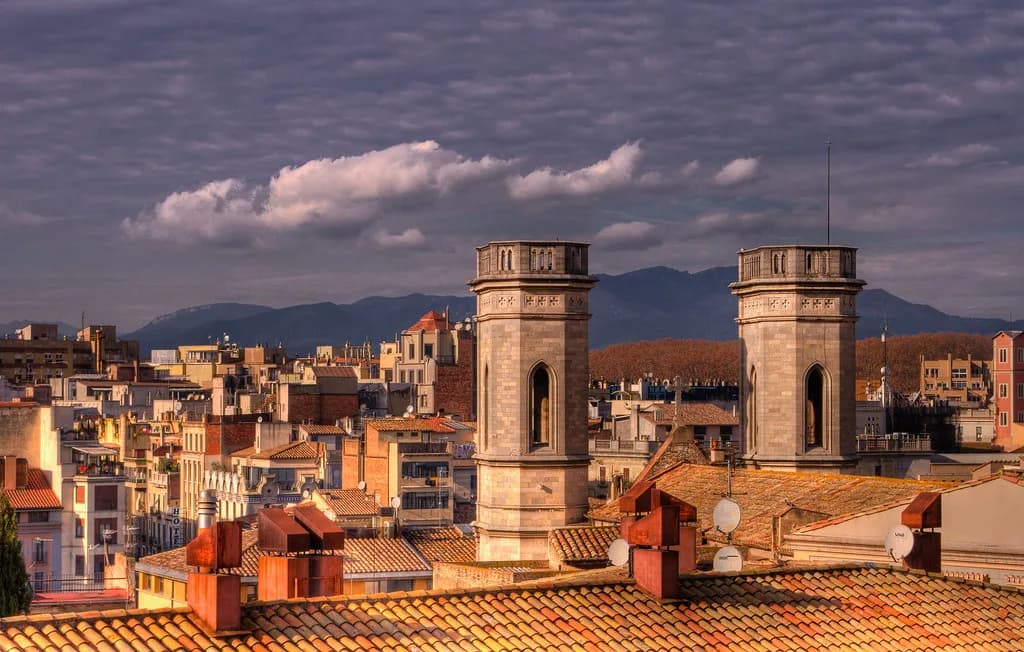
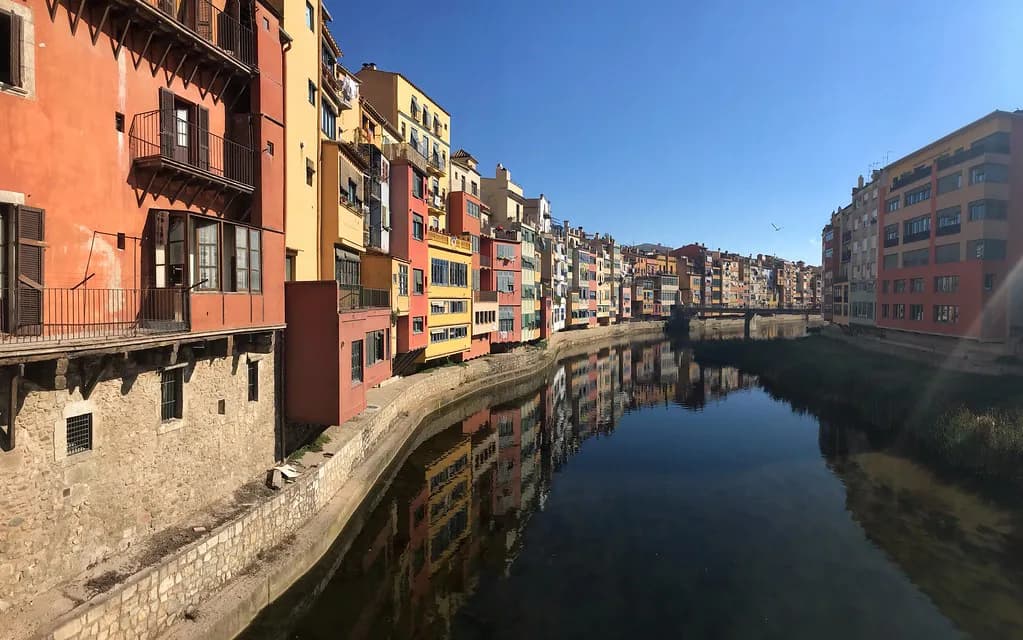
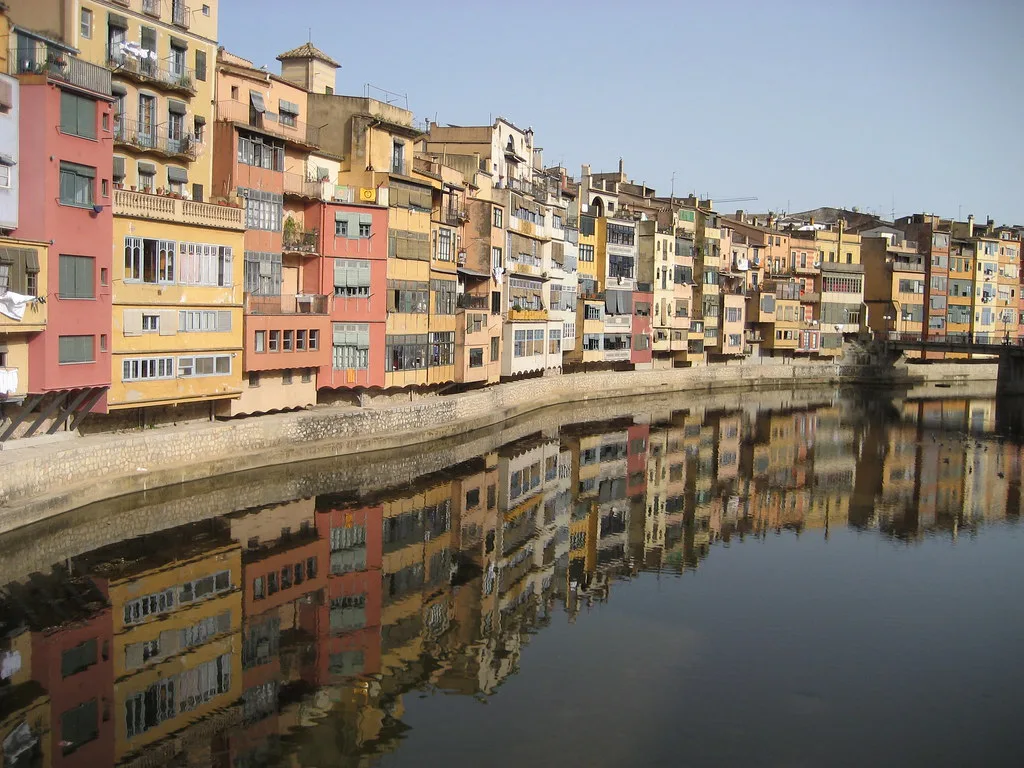
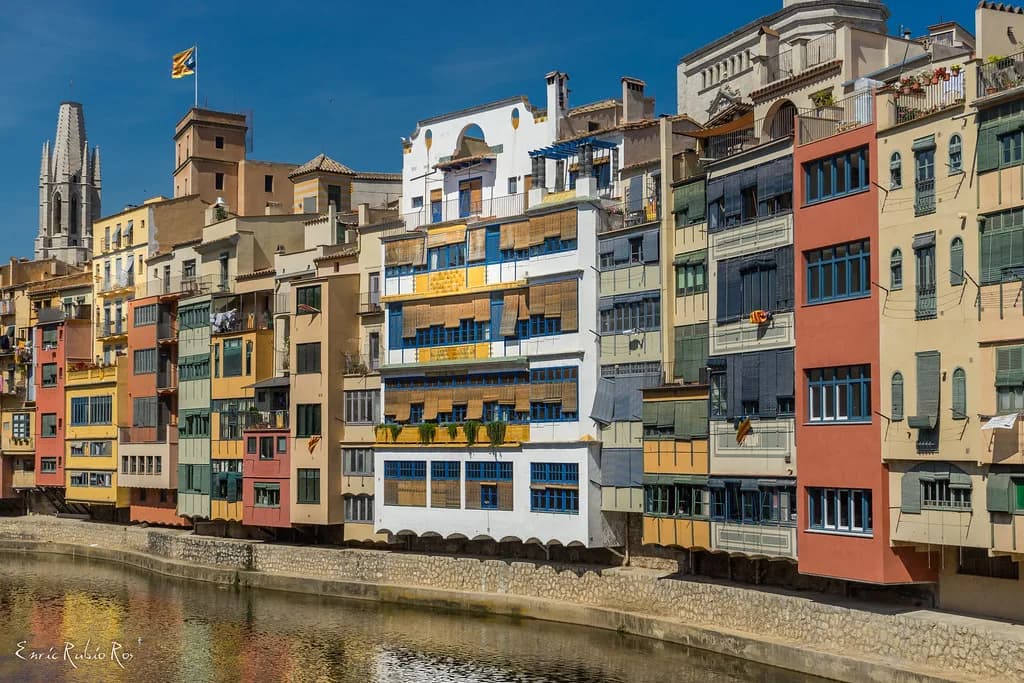
Start at the Pont de Pedra, where the old city meets the modern town and the row of painted houses along the Onyar river opens up in front of you. The cathedral rises behind them, and eleven bridges cross the water in easy reach. The red iron Pont de les Peixateries Velles, known as the Eiffel Bridge, was built by Gustave Eiffel's company before the Paris tower.
Cross into the old town at Plaça del Vi, where the city hall sits among porticoed bars, then weave between Carrer Ciutadans and La Rambla de la Llibertat. The whole area is pedestrianised, so this is a gentle warm-up rather than a route with a destination.
Climb to the Cathedral: the staircase, the nave and the witch
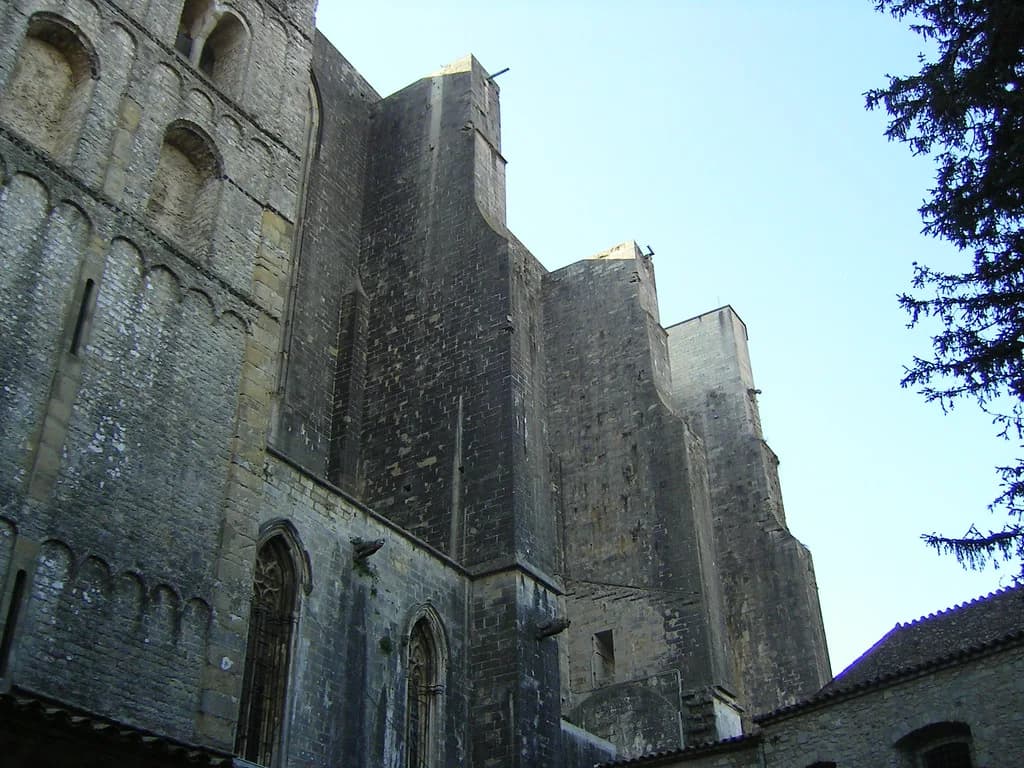
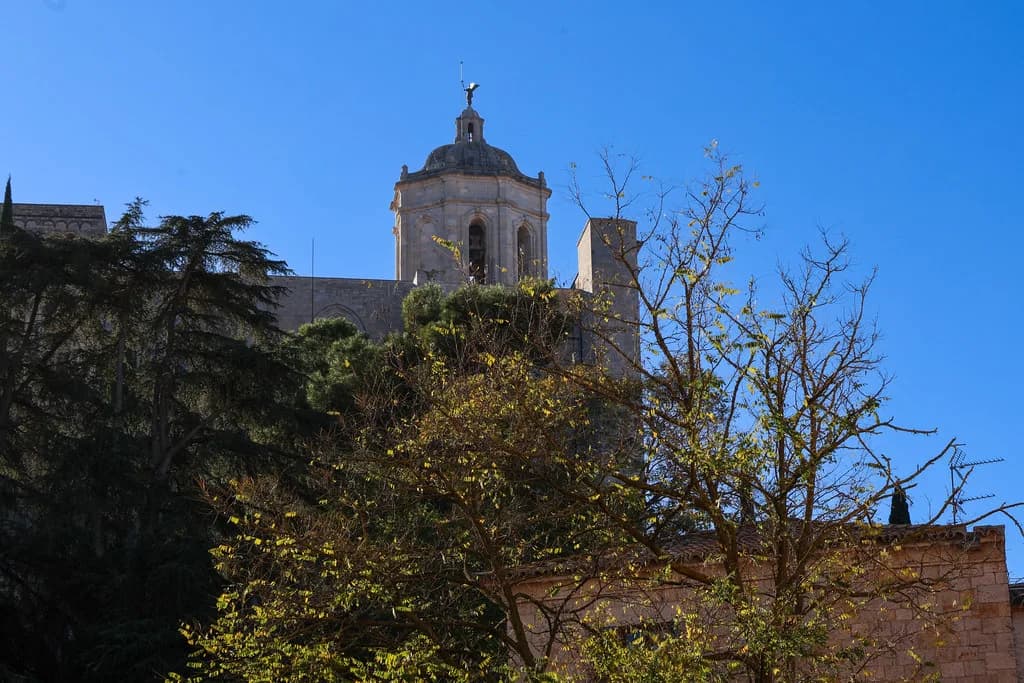
The cathedral sits at the top of a monumental staircase over Plaça de la Catedral, and the climb is the price of the view back down. Inside, the Gothic nave is the widest in the world, and the museum holds the 11th-century Tapestry of Creation and a Romanesque cloister. Look for the petrified witch, a gargoyle with its own legend.
Entry has been quoted as €7.50 including an audio guide, with the interior opening later than the square, so climb first and go in when the doors open. If the stairs put you off, a side alley off the square reaches the top without them, though you lose the theatre of the ascent. The cathedral steps and nearby streets appear in Game of Thrones, which is why the square fills fast after mid-morning.
El Call: the Jewish Quarter and the Sant Martí Sacosta steps
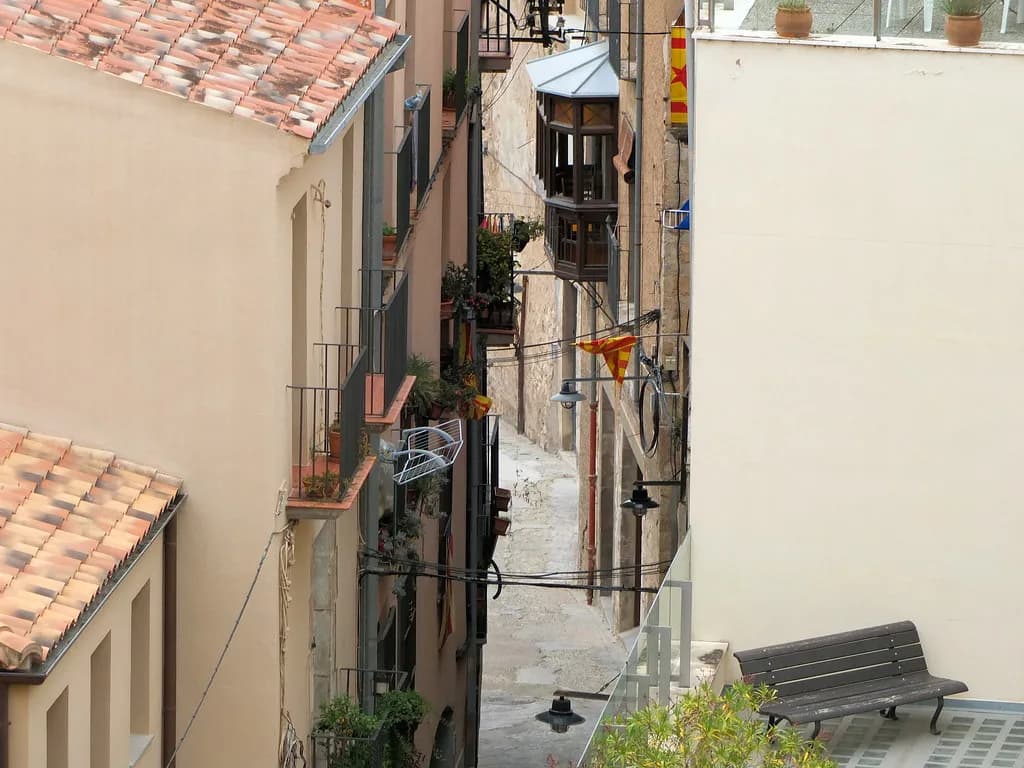
From the cathedral, Carrer de la Força runs through El Call, the medieval Jewish Quarter, one of the best preserved in Spain. The streets are narrow, dark and almost cinematic, with small staircases and stone buildings that reward slow wandering rather than a checklist. The community flourished here for centuries until the expulsion of 1492.
Behind the cathedral, Carrer del Bisbe Josep Cartañà and the steps up to Sant Martí Sacosta church are among the most photographed corners in the city. Both served as Game of Thrones locations, so expect company.
The city walls: entering at the Jardins dels Alemanys
Enter the walls from the Jardins dels Alemanys behind the cathedral, climb the Torre de les Hores for the view over the old quarter, and follow the Passeig de la Muralla. The full walkway runs about three kilometres, and the northern stretch, the Passeig arqueològic, leads you towards the monastery. Allow an hour for the walk at an unhurried pace.
The walls are the best way to understand the shape of the city, and the evening light is the reward for saving them for later in the day. If you are here in high summer, heat is the argument for doing them before the cathedral instead.
Arab Baths and Sant Feliu: the quick stops near the river
The Banys Àrabs are a short walk from the monastery, and the name misleads: they were built in the style of a Roman bath and have nothing to do with Moorish Girona. They are tiny, atmospheric and quick to see, with entry quoted at €2.
Down by the river, the Basílica de Sant Feliu was the city's main church before the cathedral, mixing Romanesque, Gothic and Baroque. Beside it on Plaça de la Lleona stands the lioness statue, a symbol of the city; the old steps that let visitors reach her have gone, so a rub now stands in for the traditional kiss.
Lunch: Le Bistrot on the Pujada de Sant Domènec
Le Bistrot sits where the Pujada de Sant Domènec staircase begins, with tables spilling onto the steps below a vaulted porch. The corner itself is one of the prettiest in Girona and appeared in Game of Thrones. Come at the start of Spanish lunch, around 13:30, rather than at 12:00, and you eat at the hour the kitchen is built for.
The lunch menu has been a rotating set of starter, main, a drink and dessert from €12, which is exceptional value for a sit-down meal in this setting. Treat that figure as historical pricing and confirm the current menu and price at the door. The food is solid Catalan cooking rather than fine dining, and the outdoor tables are the reason to choose it.
Afternoon in the Eixample: Plaça de la Independència
Cross the wooden bridge of Sant Feliu into l'Eixample, the newer half of the centre where locals live and go out. Plaça de la Independència is the main square here, ringed with bars and restaurants with tables out on the pavement. It is the natural place for an afternoon coffee or a pre-dinner drink.
Carrer Santa Clara runs past the square and is the main shopping street on this side of town. In the evening the square is the liveliest spot in the city, and it makes a sensible base for dinner rather than walking back into the old town.
Coffee and ice cream: La Fàbrica and Rocambolesc
La Fàbrica is a café popular with cyclists, with a menu running from avocado toast and chia bowls to sandwiches and pastries. Idle Hands is another good option nearby, known for pancakes and shakshuka. Either works as the mid-afternoon stop before the shops close.
Rocambolesc on Carrer Santa Clara is Jordi Roca's ice cream shop, and it is the dessert worth planning around. Choose between a cup with unusual toppings or one of the shaped popsicles, which are the more memorable option.
Dinner: patatas bravas and a Catalan sausage
Konig on Plaça de la Independència serves hearty Catalan food, and its patatas bravas are the dish to order, with a Catalan sausage alongside. It is a heavier, more casual meal than lunch at Le Bistrot, which suits the end of a walking day. Dinner starts around 20:30 to 21:00, so an aperitif on the square first is the local rhythm rather than time wasted.
Day two: the monastery of Sant Pere de Galligants and slower corners
The Monestir de Sant Pere de Galligants, a 10th-century former monastery, marks the end of the northern walls and is worth seeing from outside even if you skip the archaeology museum inside. From there the Banys Àrabs and the river are a few steps away, which makes a relaxed second morning.
Spend the afternoon doubling back through the Barri Vell without a route, and use the market to fill a picnic or a kitchen-shopping stop. If your dates fall in a shoulder month, the light and the crowds change the whole experience;
Day three: Figueres, the Empordà or the Costa Brava
With a third day, leave the city. Figueres and the Dalí museum, the Empordà wine country and the Costa Brava are all within reach, and the Empordà rewards walkers and cyclists as much as drinkers. Pick one rather than two: the roads eat time.
A half-day extension is the honest limit if you still want dinner in Girona. Beach time on the Costa Brava is best treated as an afternoon, with the evening back on Plaça de la Independència.
Where to base yourself: Barri Vell versus l'Eixample
The Barri Vell is the atmospheric choice, all stone alleys and medieval buildings, but it is hilly and quiet at night once the day trippers leave. L'Eixample is flatter, livelier and where locals actually eat and drink. Neither is more than a 15- to 20-minute walk from the sights.
Choose the old town for a short romantic stay and the Eixample for a longer one with more evenings out. If you are weighing a summer visit, the choice of base is also a choice about noise and heat.
Should you plan around El Celler de Can Roca?
El Celler de Can Roca is a booking problem rather than a stop on a walking route. Its published windows have been lunch from 12:30 to 14:30 Wednesday to Saturday and dinner from 20:00 to 21:30 Tuesday to Saturday, with tables taken up to 11 months ahead. If you want it, build the trip around the reservation, not the other way round.
For everyone else, Rocambolesc gives you a taste of the Roca brothers' cooking without the booking or the bill. Rocambolesc, on Carrer de Santa Clara, posts its service times and reservation policy on its own site.
Plan Your Visit
Build the day around the cathedral and walls before 10:00, lunch at 13:30, and an evening on Plaça de la Independència. That structure absorbs the crowds and the meal times without much effort, and it leaves the second and third days free to slow down.
Check current prices, opening hours and restaurant days directly before you travel, especially in August and around public holidays.
Explore more Girona guides
Frequently Asked Questions
How many days do you need in Girona?
One day covers the main sights in about four to six hours of walking. Two days let you eat lunch properly and add the Eixample and the monastery; a third is best used for a day trip to Figueres, the Empordà or the Costa Brava.
Is Girona worth a day trip from Barcelona?
Yes, if you have more than three days in Barcelona. The train from Barcelona Sants takes about 38 minutes, the station is a 10-minute walk from the old town, and an early departure gets you there before the tour groups arrive.
What should you see first in Girona?
Start at the Pont de Pedra for the view of the Casas de Onyar and the Eiffel Bridge, then climb to the cathedral before 10:00. The Jewish Quarter and the city walls follow naturally on foot.
Where should you eat lunch in Girona?
Le Bistrot on the Pujada de Sant Domènec serves a set lunch of starter, main, drink and dessert, and its terrace on the steps is the draw. Sit down around 13:30, when Spanish lunch begins.
What time do people eat in Girona?
Lunch runs from about 13:30 to 16:00 and dinner starts around 20:30 to 21:00. Arriving at 12:00 for lunch or 19:00 for dinner puts you ahead of the kitchens rather than in step with them.
Should you stay in the Barri Vell or l'Eixample?
The Barri Vell is atmospheric, medieval and hilly; l'Eixample is flatter, livelier and where locals eat. Both are within a 15- to 20-minute walk of the main sights, so the choice is about evenings and comfort.
Can you walk the Girona city walls in an hour?
The full Passeig de la Muralla runs about three kilometres, and walking it in an hour is realistic without long stops. Enter at the Jardins dels Alemanys behind the cathedral and finish near the monastery.
Sources
Notes for eating well in Spain
Optional updates to our guides.
You might also like
Continue reading
More guides you'll find useful