One Day in Palma de Mallorca: A Realistic Walking Itinerary
A practical one-day Palma itinerary covering Mercat de l'Olivar, La Seu, Castell de Bellver and a harbour dinner, with meal times and honest trade-offs.
On this page
One day in Palma covers the essentials comfortably if you accept that the afternoon holds only one big commitment. A market breakfast, a slow wander through the old town, La Seu and one further sight fit into daylight; a beach half-day or a long lunch means dropping something else. The route below runs on foot and costs little beyond cathedral and castle tickets.
Timing matters more than distance here. The city's sights are clustered, but the day bends around the Spanish eating rhythm, with lunch from about 1.30pm and dinner from around 8.30pm, and a final decision on how to use the late afternoon. Check cathedral and castle prices before you travel.
One day in Palma: the short answer
Prioritise three things: Mercat de l'Olivar in the morning, the old town and La Seu before lunch, and Castell de Bellver or the beach in the afternoon, finishing on the Passeig Marítim. That is a full day without rushing. Trying to add a museum, a boat trip and a long lunch to the same day produces a checklist rather than a visit.
The city rewards walking, and the old-town streets around the cathedral are the part most visitors remember. If your calendar has any flexibility, look at how many days in palma you really need before committing to a single day, because two days transform the pace. One day is enough for the headline sights, not for the island beyond them.
Start at Mercat de l'Olivar: what to eat, when it opens and when it shuts
Begin at Mercat de l'Olivar, set between Plaça d'Espanya and Carrer de Sant Miquel. It has traded since 1951 and the stalls are mainly food: fruit, vegetables, meat and seafood, with a small shopping arcade attached. Come hungry and graze rather than booking a table, since this is the cheapest and most characterful start to the day.
The hours dictate the plan: weekdays from 7am to 2.30pm, Saturdays until 3pm, and some Fridays open late until 8pm. Treat the market as a morning stop and don't plan dinner here. If markets are a highlight of your trip, compare the city's other halls in this guide to palma markets before you fix the order of the day.
Breakfast alternatives exist outside the market. Fornet de la Soca is a bakery worth naming for an early pastry and coffee before the market crowds build, which suits anyone arriving on a morning flight and needing food immediately.
Old-town wander: Passeig del Born, Carrer de Can Verí and a coffee stop
From the market, walk into the centre via Passeig del Born, where the luxury shops cluster, then turn onto Carrer de Can Verí, a narrow street lined with galleries and boutiques. It is a gentle 30 to 45 minutes if you don't shop seriously. Anyone planning to browse properly should set aside a separate block of time and read up on shopping in palma first.
Coffee stops are easy to find in this grid of streets, and the standard is high. Take one now rather than pushing straight to the cathedral, because the next two hours are standing and looking up. Keep the walking light: the morning is about orientation, not mileage.
La Seu: ticket price, terrace age limit and how long to allow
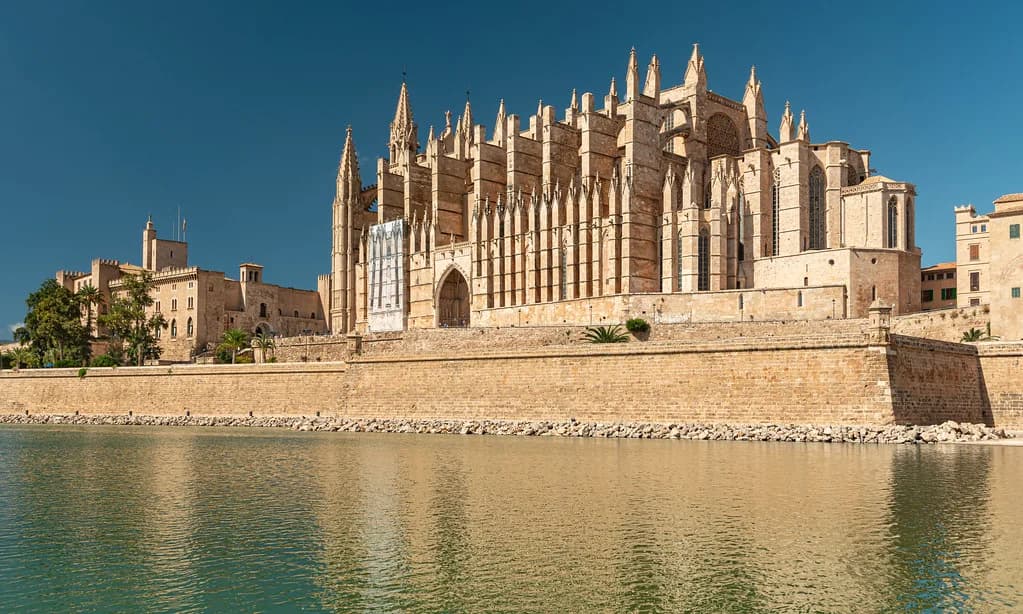
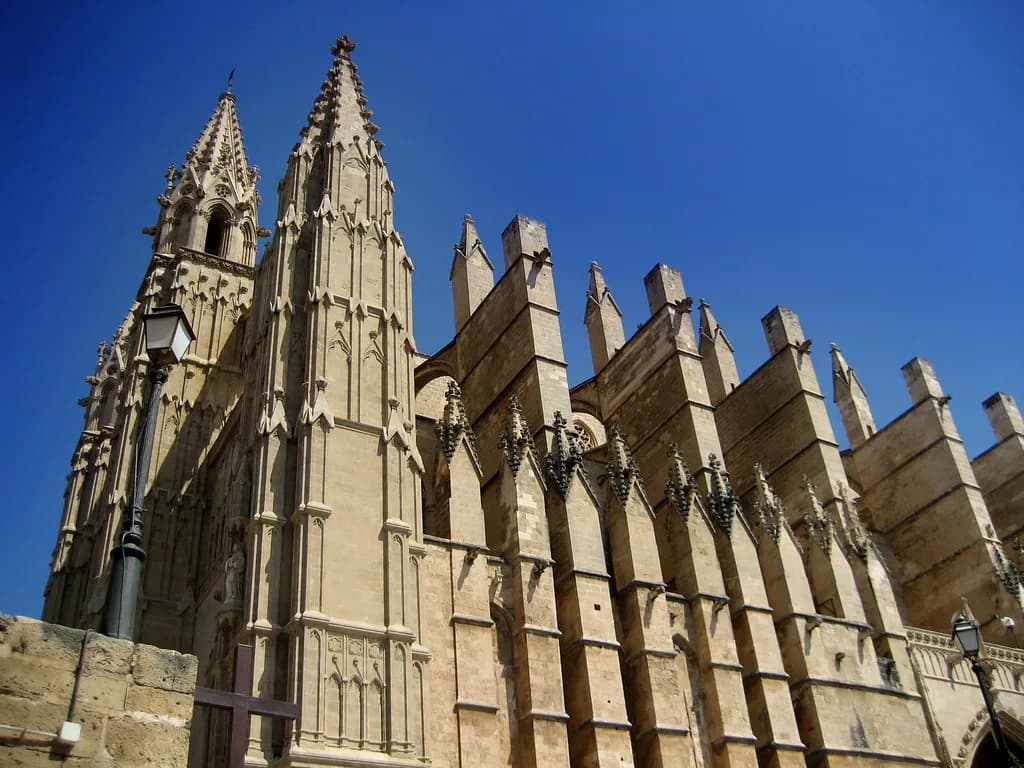
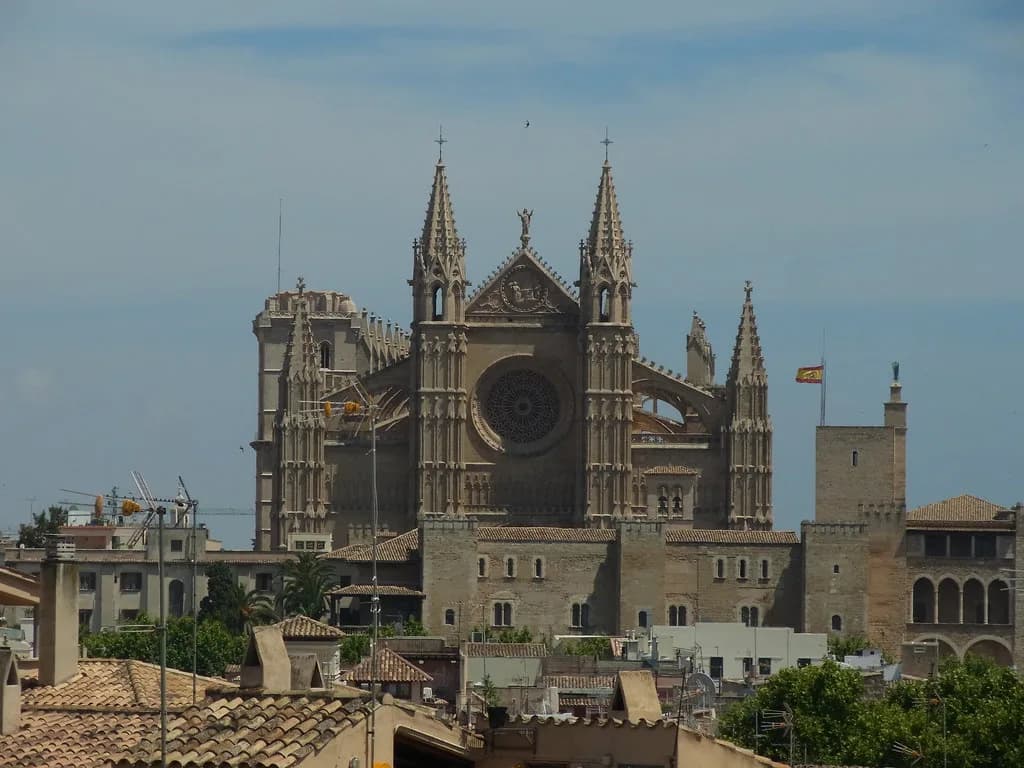
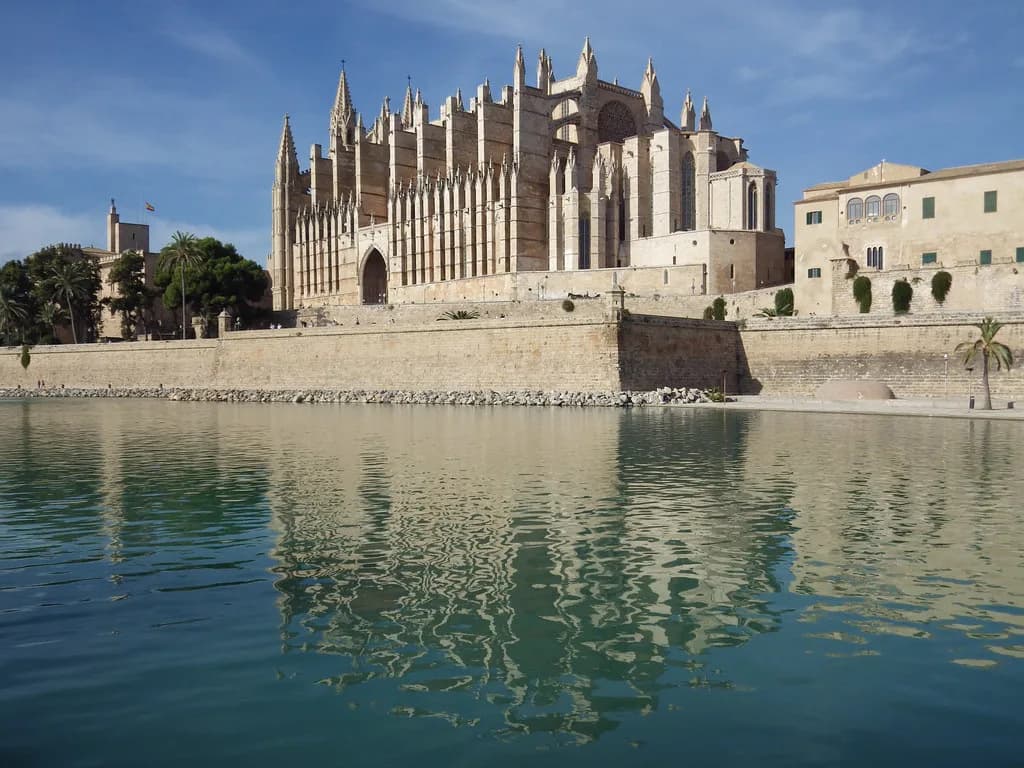
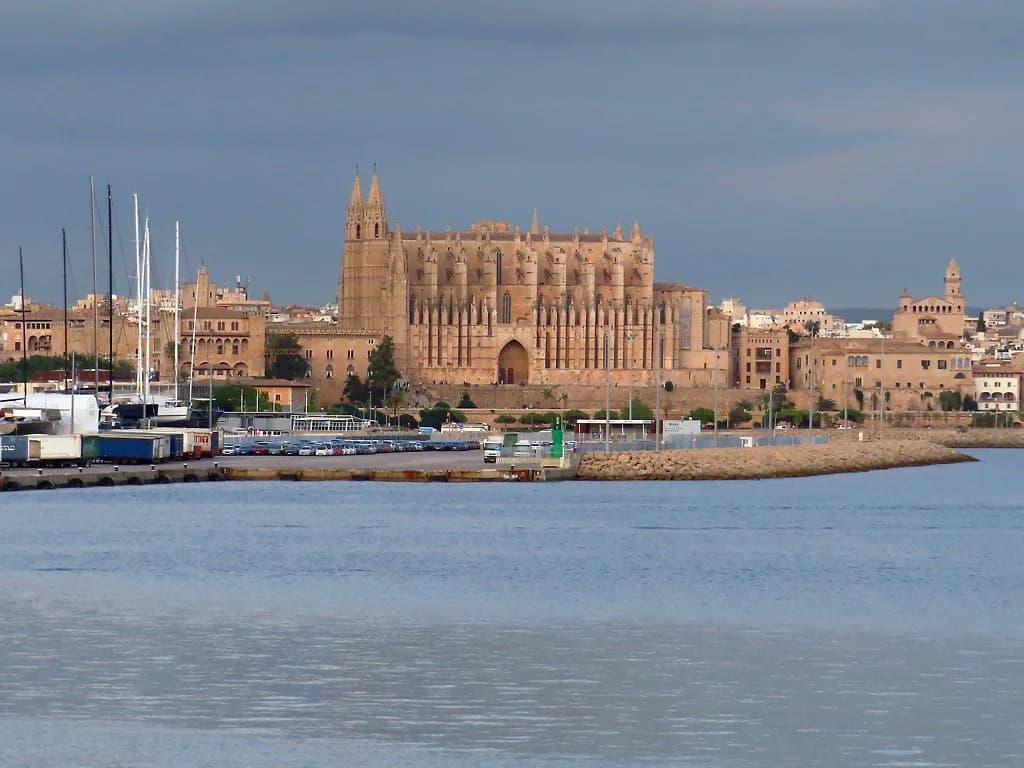
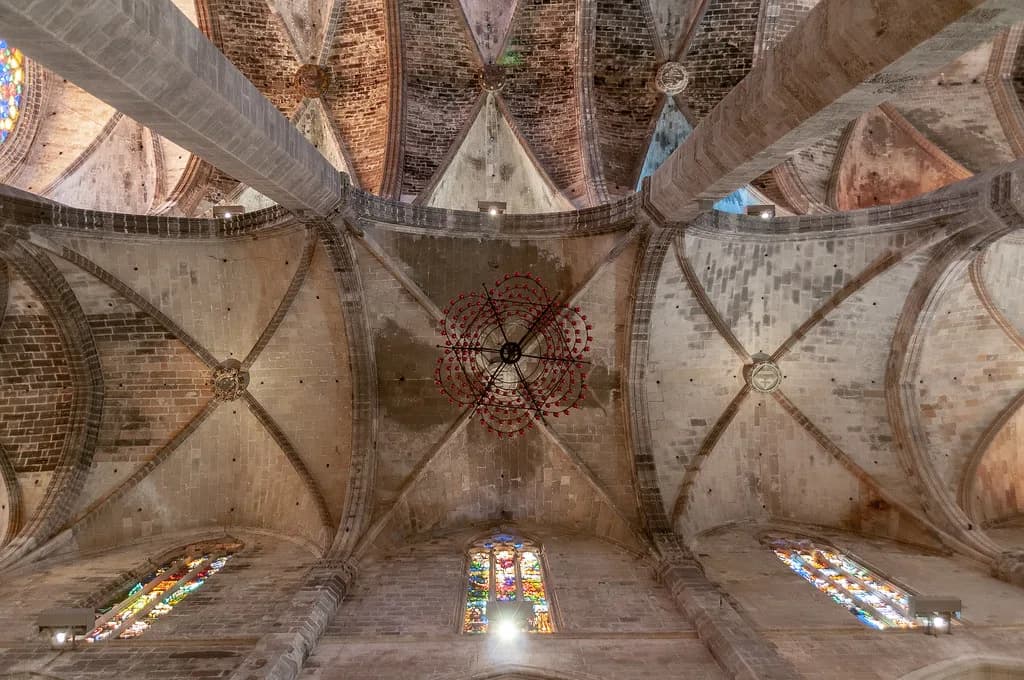
The Cathedral of Mallorca, La Seu, is the day's centrepiece. Construction ran from 1229 to 1601, and the nave reaches 44 metres, with the choir stalls designed in part by Antoni Gaudí before he walked away from the project. Allow about an hour inside, plus time for the museum of sacred art included with your ticket.
Entry is €25 per person, and the terrace has an age restriction: children must be over nine to go up. That single rule reshapes a family day, since one adult stays below with younger children while the rest climb. Prices and access rules can change, so it is worth checking before you buy tickets.
Book a slot rather than arriving hopeful in high season. A guided city tour that includes cathedral admission is also available, useful if you want context rather than a self-guided look. Wear something you can sit in on stone steps, and carry water in summer.
Optional swap: Palau Reial de l'Almudaina and the King's Gardens
Directly opposite La Seu stands the Palau Reial de l'Almudaina, the royal palace, with the King's Gardens alongside it. It is the obvious swap if you want a second interior without leaving the immediate area, and it keeps the morning compact. Choose palace or cathedral terrace, not both, if you also want a proper lunch.
Lunch: a market lunch versus a sit-down lunch at Can Cera
Two honest options. A market lunch of picked plates at l'Olivar is fast, cheap and lets you reach Bellver by mid-afternoon. A sit-down lunch at Can Cera in the old town is the slower, more expensive choice and will comfortably run to two hours, which removes the castle or the beach from the day.
Decide before you leave the hotel, not at 2pm on an empty stomach. If lunch is the main event, keep the afternoon local and wander the old-town backstreets afterwards. If the castle matters more, eat lightly at the market and be on your way by 2.30pm.
Afternoon: Castell de Bellver and the €4 ticket
Castell de Bellver sits about 3 km from the centre, a circular castle with two towers that once served as a royal summer residence and later a prison. It now houses the island's history museum, and the views take in the city and the pine woods below. Entry is €4 per adult, the best value ticket of the day.
The climb is the trade-off. It eats a chunk of the afternoon, and in heat it is the least comfortable part of the day. Check how you intend to get up there before you set off, and don't pair it with a beach visit unless you have a car or plenty of energy.
Beach detour instead: Illetas and Cala Comtessa
If you would rather swim, treat the beach as a half-day swap, not an addition. Illetas and Cala Comtessa are both about a 15-minute drive from the city, with calm water and pale sand. That drive time is why the beach replaces the castle rather than following it.
For lunch by the water, Balneario Illetas overlooks the beach and serves Mediterranean dishes, and it fills up. Book ahead if you are coming in summer, and accept that a leisurely lunch here ends the sightseeing day. Confirm the booking and opening arrangements directly before you rely on them.
Evening: Es Baluard, then dinner on the Passeig Marítim
Back in the city, the Es Baluard Museum of Modern and Contemporary Art occupies part of the old city walls and shows a broad modern collection with a strong local presence. It is a good late-afternoon stop because it is compact and indoors. An hour is enough for most visitors, and the museum's website lists what is on during your dates.
Then head to the Passeig Marítim for dinner. The promenade runs about 4 km along the harbour and is the natural place to end the day, whether you eat first or walk first. C'an Eduardo, on the promenade, is known for paellas and has a terrace facing the water. Tables fill in season, so book.
Spanish dinner service starts around 8.30pm to 9pm, so use the gap for the museum or a slow drink rather than sitting down at 7pm to an empty room. Watch the sunset from the promenade afterwards; the bay faces the right way for it.
Where to stay in Palma for a one-day stop
For a single night, stay in or beside the old town so the day starts on foot. That puts the market, La Seu and the evening promenade within a walk or a short taxi ride, and removes the need for a car. Hotels around the centre cost more than those in the bay resorts, and you are buying time.
If budget drives the choice, look at properties in the Can Pastilla area near the airport, which trade central location for lower rates and a bus or taxi into town. Check current availability and rates directly with the hotel or a booking site, since prices move with the season.
Getting in from the airport and getting around
Palma de Mallorca Airport is a 15-minute drive from the centre. A taxi costs from about €28, or you can take the A1 bus into the city, which is the cheaper option for solo travellers and couples. With luggage and two or more people the taxi often works out close enough in value to justify the door-to-door convenience. A hop-on hop-off bus runs from around €25 and stops at Bellver Castle and the Passeig Marítim, which is a reasonable way to cover the spread-out afternoon stops without a car. For everything inside the old town, walking beats any transport. If you are weighing up a single day against a longer stay, this breakdown of How Many Days in Palma de Mallorca? 1, 2 or 3 Days helps.
If you have a second day: Sóller, Valldemossa or the Coves del Drach
With a second day, leave the city. Sóller is about 40 minutes by road or an hour by the scenic train, and the tram on to Port de Sóller is part of the appeal. Valldemossa sits at the foot of the Serra de Tramuntana, roughly 20 minutes from Palma, and its Sunday market draws crowds.
The Coves del Drach, around an hour's drive away, run some 4 km with chambers reaching 25 metres and underground lakes, and they suit anyone who prefers geology to towns. Whichever you pick, book transport and check timings the day before. Weather shapes the choice: read up on palma in september or palma in october if you are travelling late in the year.
What one day in Palma costs
Add up the fixed costs before you go: La Seu, Bellver Castle, and either a taxi from the airport or the A1 bus. Round that against your own budget and decide where to trade down, usually on lunch or the hop-on bus, rather than on the cathedral.
Museums, the market and the old-town streets are where the day stays cheap. Es Baluard charges admission, so if the budget is tight, walk the old walls outside it instead and put the money towards dinner. Check each venue's current ticket price directly, since these change with the season.
Plan Your Visit
The workable shape is simple: market in the morning, La Seu before lunch, one afternoon commitment, promenade in the evening. Everything else is optional and can be cut without spoiling the day. Hold the fixed bookings to the cathedral and dinner and leave the rest loose.
Season changes the feel of the city. Peak summer heat argues for an early start and a long siesta, while spring and autumn allow more walking. If you are travelling in high summer, read palma in july and palma in august, or browse the wider Palma Attractions: 6 Visitor Guides hub, before you settle the order of the day.
Frequently Asked Questions
Is one day in Palma enough?
It is enough for the centre: Mercat de l'Olivar, the old town, La Seu and one afternoon sight such as Castell de Bellver. It is not enough for the island, and it leaves no room for a long lunch plus a beach. If you want a slower pace, give the city two or three days.
What should you not miss in Palma de Mallorca?
La Seu is the one unmissable interior, and Castell de Bellver gives the best views for a small ticket. The old-town streets around Passeig del Born and Carrer de Can Verí are free and worth an unhurried hour. The market in the morning rounds out the essentials.
What is there to do in Palma for free?
Walking the old town, the Passeig Marítim promenade and the market building cost nothing to enter, though you will pay for anything you eat. Browsing Carrer de Can Verí and the shops on Passeig del Born is free. Paid sights such as the cathedral and the castle are the day's main outlay.
Where should you eat lunch during a day in Palma?
Eat at Mercat de l'Olivar if you want speed and low cost, since the stalls do food rather than full menus. Book Can Cera if lunch is the main event and you accept losing the afternoon to it. Near the beach, Balneario Illetas needs booking ahead in season.
Can you do Palma as a cruise-ship day stop?
Yes, the centre is compact and walkable from the port, but the hours ashore decide the plan. Choose the cathedral and the old town, and drop the castle unless your ship stays late. Remember lunch runs from about 1.30pm, so eat before returning to the ship.
How much do Palma's main sights cost?
Ticket prices are set by each venue and can change between seasons. The cathedral and the castle publish their current admission on their own official pages, and the airport bus and taxi fares are listed by the local transport operators, so check those before you travel and budget from there.
Sources
Notes for eating well in Spain
Optional updates to our guides.
You might also like
Continue reading
More guides you'll find useful