Palma Itinerary: How to Plan 2–3 Days in Mallorca's Capital
Plan a Palma itinerary of two or three days with the cathedral terraces, old-town streets, Castell de Bellver views and honest notes on buses and meal times.
On this page
Two days in Palma covers the cathedral, the old town, the Castell de Bellver viewpoint and an afternoon gallery without rushing; a third day is best spent outside the city, on the antique train to Sóller, at Cala Major or on the sand at Platja de Muro. Palma suits this kind of plan because the centre is compact and walkable, with good public transport for the trips beyond it.
The plan below works around heat and around the Spanish meal clock rather than against them: climb the cathedral terraces and Bellver in the morning, sit out the hottest hours over a long lunch, and eat dinner from 8:30pm or later when kitchens are actually serving. If you are still deciding how long to stay, the guide to how many days in Palma sets one, two and three-day trips side by side.
Why Palma Fits a Two- or Three-Day Itinerary
Palma's historic centre is small enough to cross on foot, and the main sights sit within a short radius: the Catedral de Mallorca known as La Seu, the Palau de l'Almudaina opposite, the Ajuntament, the Banys Àrabs and a dense web of honey-stone streets. The city was founded in 123 BC with the Roman arrival in the Balearic Islands, and the old town still shows layers from the medieval Arabic city of Medina onwards.
That compactness is the argument for two days rather than four: you can see the core properly, add one viewpoint and still leave time for a beach or a mountain run. Travellers who want a slower pace or a proper beach day on each full day should plan on three days.
When to Go and How to Pace the Days
Mallorca averages around 300 days of sunshine a year, and the heat peaks in July and August. Bex's Coffee Travels recommends the shoulder season of May, September and early October for warm weather with fewer people and lower prices. In August the city itself is hot and busy, so shift outdoor sightseeing to the morning and keep the middle of the day for shade, lunch or a gallery.
Build each day around two outdoor blocks before 1:30pm, a long lunch, and an indoor or shaded stop in the mid-afternoon heat. Spanish lunch runs from about 1:30pm to 4pm and dinner starts at 8:30pm to 9pm, so an early evening walk or museum visit fills the gap before restaurants open properly.
Day 1 Morning: Catedral de Mallorca (La Seu) and Parc de la Mar
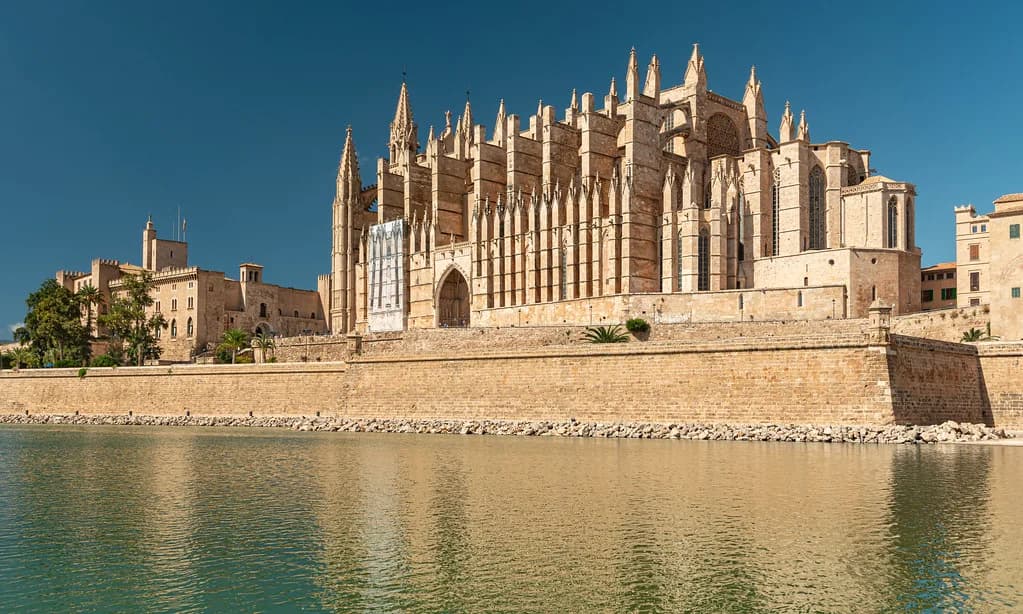
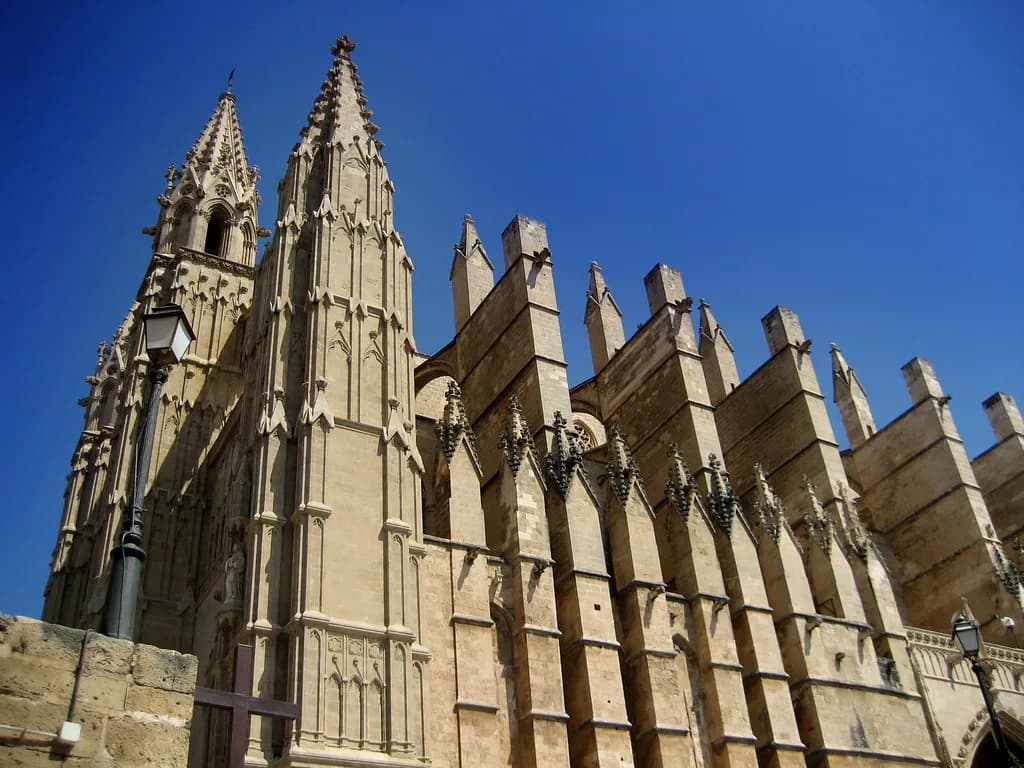
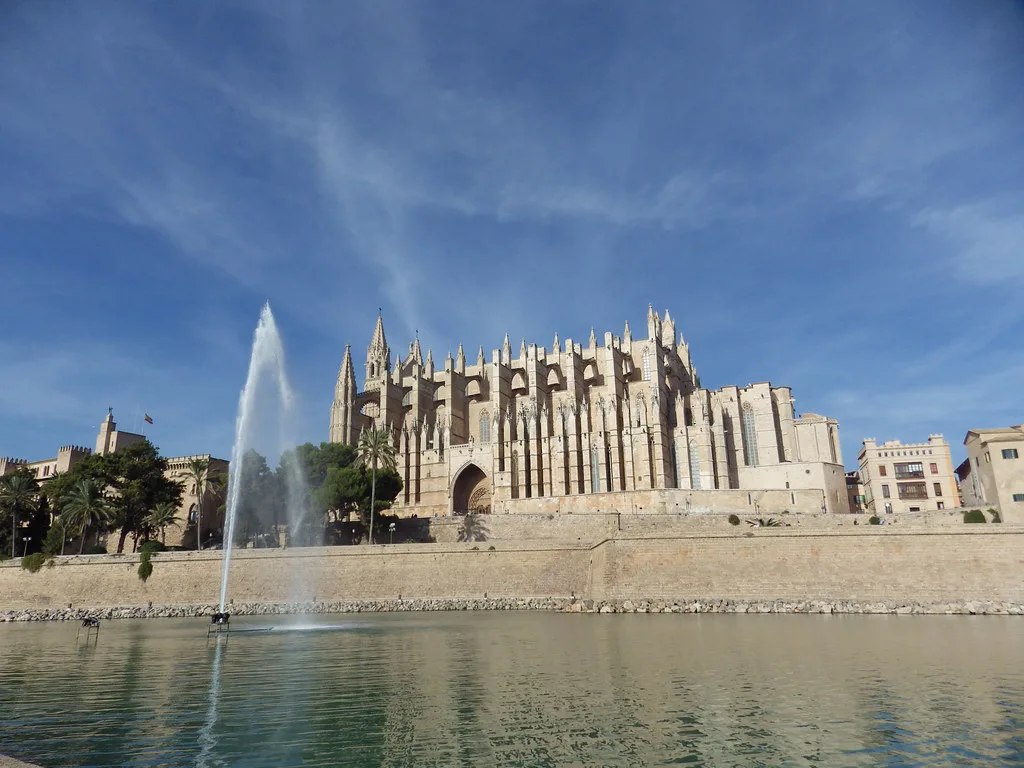
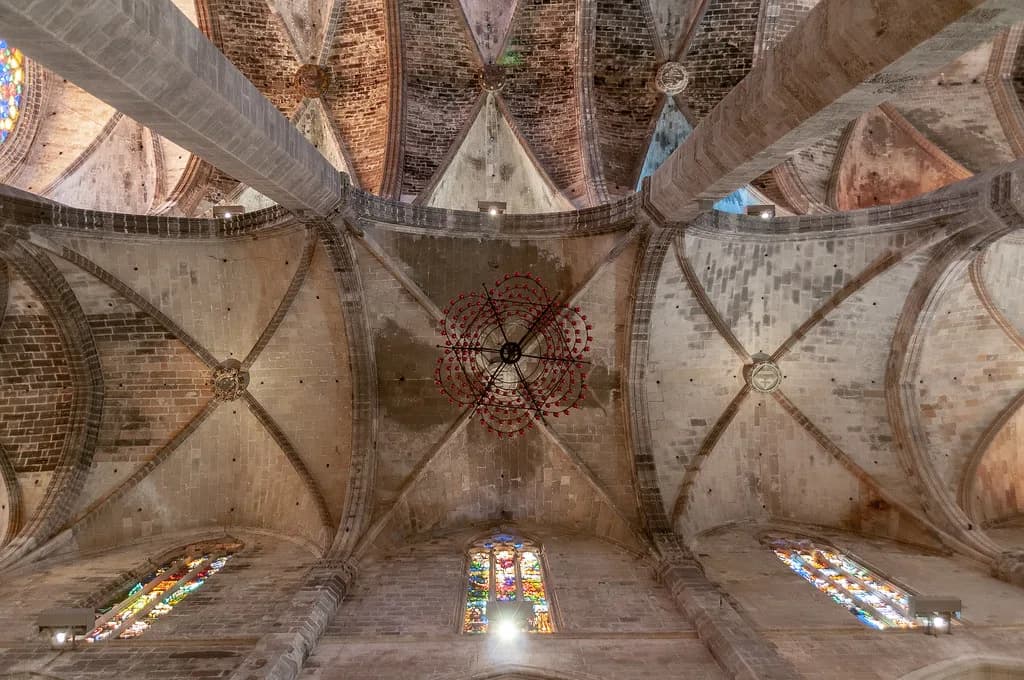
Start at La Seu, Palma's Gothic cathedral, which began construction in the 13th century and took more than 400 years to finish; Gaudí worked on its restoration in the early 20th century. Its Rose Window, made of 1,236 pieces of stained glass, throws colour across the nave when the sun comes through.
Book the cathedral ticket online to skip the queue, and take the earliest slot you can; a 10am terraces entry was still hot in July. The terraces ticket, which includes the climb of 215 steps, was €25 and an interactive audioguide €5 in 2025, and there is a dress code, so cover shoulders and knees.
After the climb, walk down to Parc de la Mar, where the lagoon reflects the cathedral's honey-coloured walls, and use it as a cool, shaded breather before lunch. For a fuller fix on the cathedral and the other headline sights, work through the Palma attractions guides before you go.
Day 1 Afternoon: Old Town, Palau de l'Almudaina and Banys Àrabs
Spend the early afternoon on foot in the old town, looking out for the royal palace, the Palau de l'Almudaina, the Ajuntament and the Banys Àrabs, one of the few surviving remnants of the medieval Arabic city of Medina. Several of Palma's best sights sit within a few minutes of each other, so plan a loop rather than a series of separate trips.
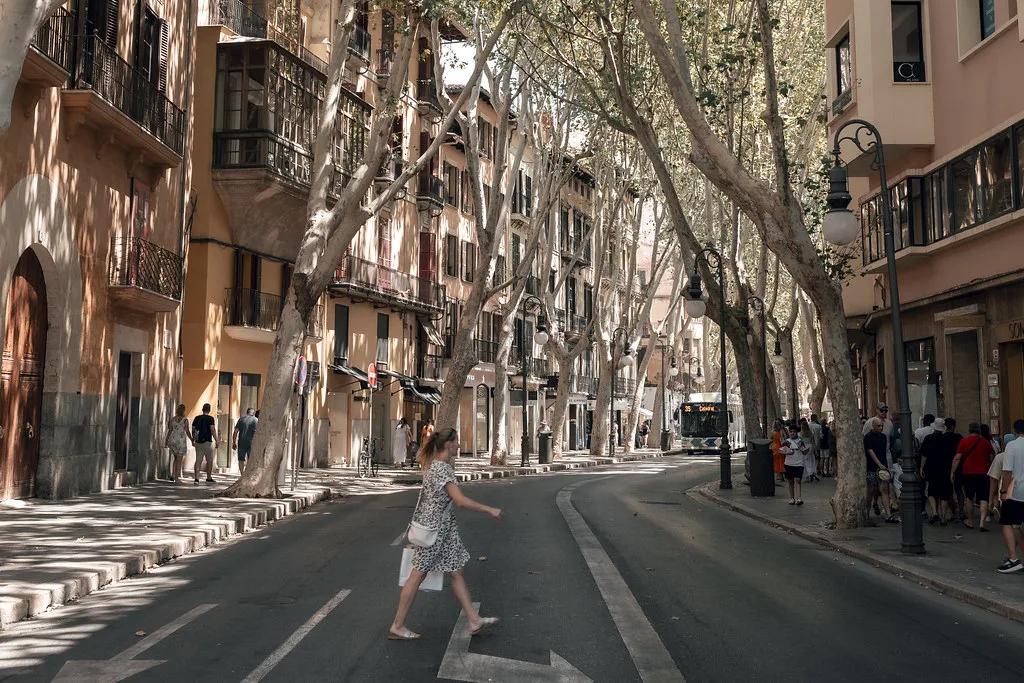
For shade, duck into hidden courtyards, along La Rambla or into the tranquil Jardí del Bisbe with its flowers. If you want a guide to explain the old town and cathedral, Bex's Coffee Travels recommends a walking tour that covers both.
If you have only one day in Palma, cut the old town loop to the cathedral and one nearby palace rather than trying to see everything.
Day 1 Evening: Where to Eat in the Old Town
For a first night, La Bodeguilla is a wine-cellar-like room in the old town where Bex's guide ate a tomato salad with cod, pistachio and garlic followed by Mallorcan suckling pig with panadera potatoes. For a formal tasting menu, Marc Fosh Restaurant, set in a former convent, serves a Michelin-starred menu that the same guide describes as beautiful to look at and immaculate in service.
For something more casual, La Rosa Vermutería, a neighbourhood restaurant and vermouth bar, lets you mix and match croquetas and serves tapas and small plates that work well for solo diners. Door 13, a speakeasy in a subterranean old-town space, is the place for a cocktail afterwards, with the Godfather Sour as one option and live music on some nights.
Reserve the tasting menu ahead if that is the night's plan, and treat tapas bars as walk-in options; bookable tables and walking-in tables suit different evenings in Palma.
Day 2 Morning: Castell de Bellver and the City Museum
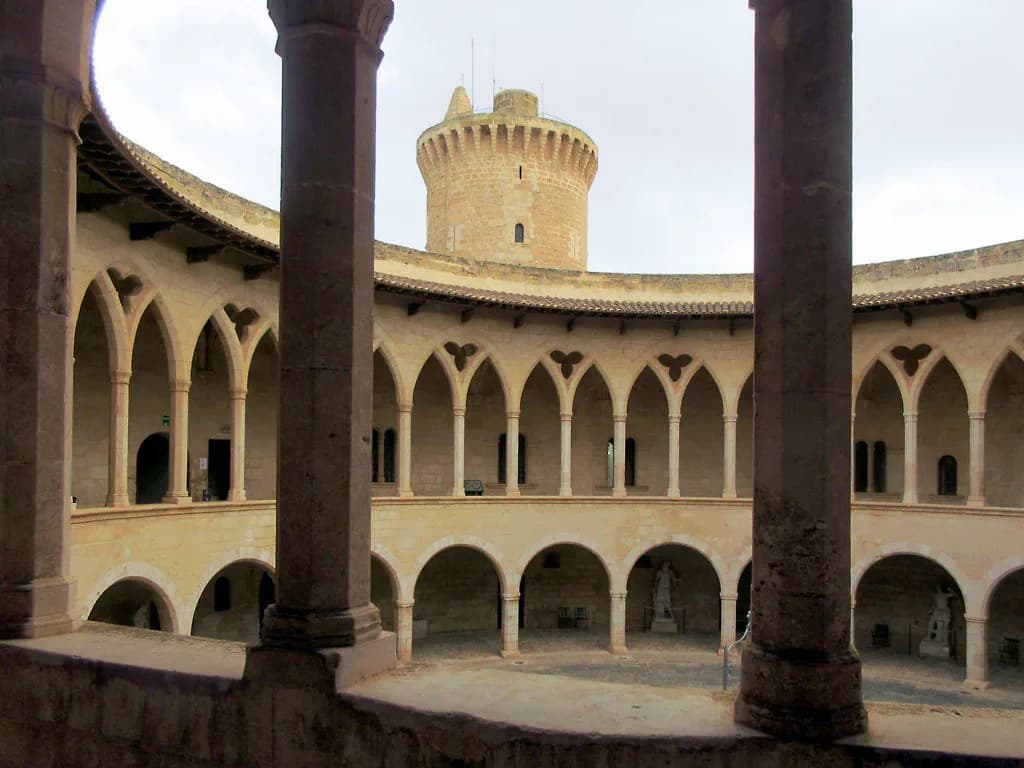
Take bus 4 from the centre to Castell de Bellver, a 14th-century fortress on a hill west of Palma; the bus stops at the entrance to the grounds and the castle is a 15-minute walk up stepped paths with some shade on the way.
Entry is usually €4, according to Bex's Coffee Travels, though it was free on the Sunday afternoon when she visited, so budget for the charge even if you hope for a free day. Inside there is a small but informative museum of the city's history and 360-degree views over Palma and the bay; summer concerts are also held there.
Do this first thing. The climb is steep and the castle is exposed, so it is far better in the cooler morning than after lunch.
Day 2 Afternoon: Modern Art and Cultural Centres
Use the hottest part of the day indoors at Es Baluard Museu, a modern art gallery, or Museu Fundación Juan March, a 17th-century mansion housing a small collection of paintings and sculptures. Casal Solleric, in an 18th-century neoclassical building, runs cultural events through the year, from dance to gastronomy.
Pick one rather than all three; each rewards time, and the point of the afternoon is to stay out of the sun, not to sprint between galleries. The Mallorca Calendar, which the guide recommends, is the place to check what exhibitions and events are running during your stay.
If you are in Palma in October, the weather is pleasant enough to split the afternoon between a gallery and a terrace.
Day 2 Evening: Tapas and Small Plates
Make the second night a tapas night and choose a small-plates bar where you can order in stages; La Rosa Vermutería is the casual option, and the waiter will guide you on quantity and order if you are dining alone. Ask for croquetas in mixed flavours so you can try more than one type without over-ordering.
La Vieja de Jonay Hernandez serves modern Canarian food with Latin American influences, and Bex's guide notes its daily lunch menu as superb value, so it can also work as a lunch stop if you prefer a tapas dinner elsewhere. Start with something sharp and refreshing, then share the cured mackerel with aguachile or the veal cheek arepa.
Check the restaurant's current serving days on its own website or social media, since Palma kitchens keep their own opening patterns and August and winter breaks vary.
Day 3 Option A: Sóller by Antique Train
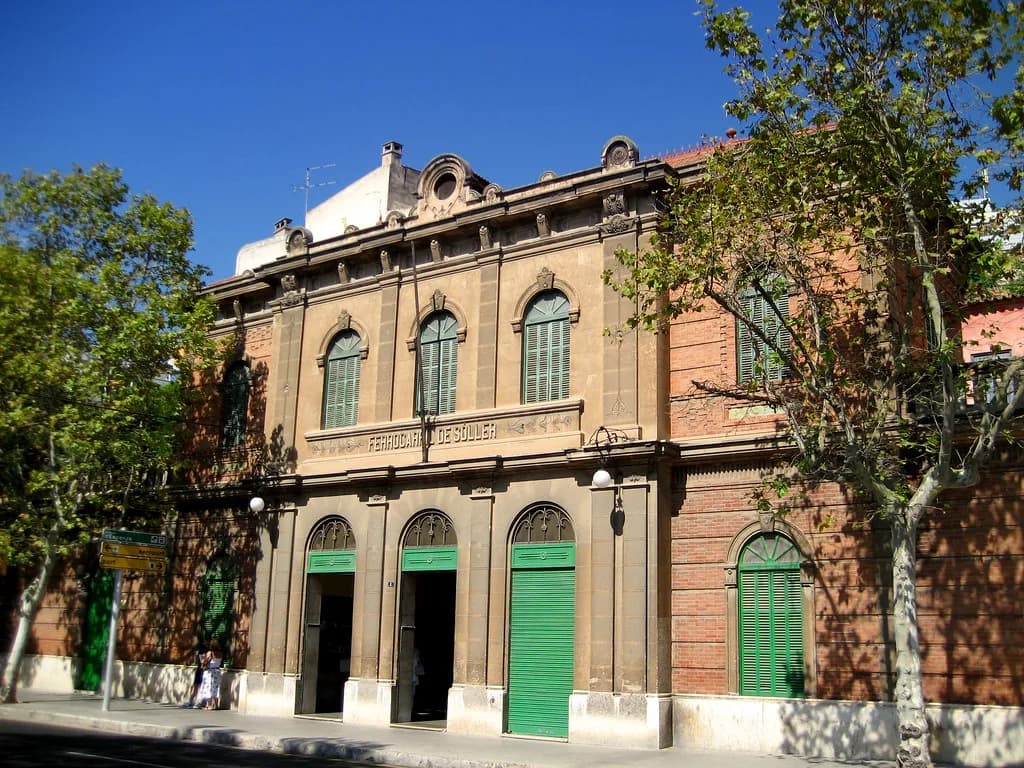
Take the antique wooden train from Palma to Sóller, an hour away on a narrow-gauge line that is around 100 years old, then the tram onwards to the beach at Port de Sóller. From Port de Sóller, a two-hour speedboat trip takes you to snorkel in the coves and bays of western Mallorca, with clear turquoise water; combo tickets cover train, tram and boat.
This route gives you mountains and coast in one day without a car, but it is a long day, so book the boat leg in advance and take a jacket for the water even in summer. Palma in July is the busiest version of this trip, and the same guide suggests the quieter shoulder months for a reason.
Day 3 Option B: Cala Major and Fundació Miró Mallorca
Cala Major is about three miles west of central Palma and around 30 minutes by bus on routes 4, 46 or 108, so you can combine a beach swim with a museum visit. On arrival, walk up the steps to Mirador Santa Eugenia for a bay view, then go to Fundació Miró Mallorca, set in the artist's former studios with a sculpture garden, before heading to the sand.
The beach is small and busy in peak season, and premium sun beds with an umbrella and a safe were listed at €70 a day in 2025; a dry bag is the cheaper answer if you plan to swim.
Day 3 Option C: Platja de Muro by Bus 302
For a full sand day, take bus 302 from Estacio Intermodal to Platja de Muro in the north of the island, a journey of 1 hour 20 minutes. The four-mile beach has golden sand and clear blue water, with an offshore sand bar that keeps the waves gentle; the Es Comú section at the southern end is backed by dunes and is a little less developed.
The same 302 route was charged by distance in four hops and paid by contactless card. An umbrella and lounger at Platja de Muro were cash only, so carry euros even if you tap for the bus.
This is a whole-day commitment, so skip it if you have only two days and keep it as the reason to add a third.
If You Have a Fourth or Fifth Day
Add Es Trenc, a four-mile beach in southern Mallorca with soft sand and clear water, together with Ses Covetes and Cala Pi on a small-group trip. Es Trenc is possible by public transport on route 508 to Sa Ràpita followed by a seafront walk, but it is awkward; check current fares and consider a guided trip if you have no car.
Bex's guide describes Ses Covetes as a good spot for snorkelling and paddleboarding along the cliffs, and Cala Pi as a turquoise cove where you can swim and sunbathe after taking in the clifftop view. A fourth day also works as a relaxed city day, revisiting whichever gallery or street you liked most.
For a quieter winter city break, the same guide points to Palma in the cooler months, when you can explore the city at a more relaxed pace.
Where to Stay: Old Town Versus the Port
Base yourself in the old town if you want to walk to the sights and have bars and restaurants on the doorstep; the Bex's Coffee Travels guide chose an old-town hotel on Avenida Jaime III, a 10- to 15-minute walk from most of her targets and close to the airport bus stop. Being in the old town rather than near the port put the main sights and public transport within easy reach.
In summer, a hotel with a pool pays for itself in comfort; the same guide stayed at Nakar Hotel in July 2025, with breakfast on the seventh floor and a rooftop infinity pool over the cathedral. Prices for a deluxe room are higher in July, so compare current listings for your dates.
Book summer accommodation early, as rates and availability tighten in July and August.
Getting Around: Airport Bus, EMT and TIB
The airport bus A1 is the simplest way into the city: it runs frequently through the day, takes around 30 minutes, and is payable in cash on board or by card at the machine at the airport bus stop. Tap your ticket when boarding and you do not need to tap out. Around the city, EMT buses take cash on board, though some central stops sell tickets by card; TIB coaches serve the rest of the island, charge by distance and are cheaper by card than cash. Carry small notes and coins just in case, and note that a car is more trouble than it is worth in the old town, where streets are narrow and parking at beaches like Es Trenc is difficult.
The metro exists but is only really useful for getting to and from the University of the Balearic Islands, so do not build an itinerary around it.
Shopping and Food Gifts
Palma's shopping is one of its better surprises, with beachwear and summer clothing at shops such as Dr Bloom, Les Filles au Soleil and Natura, and espadrilles in every colour at Alpargatería La Concepción. For a traditional Mallorcan gift, pick up a handmade basket at Mimbreria Vidal, ceramics and patterned fabric bags at Xamba, or local salt from Flor de Sal d'es Trenc.
For edible souvenirs, the 120-year-old Forn de la Concepció and Forn Fondo sell ensaïmada and Mallorcan pastries, and Forn Fondo also makes Mallorca-themed decorative biscuits. Mercat de l'Olivar is the place to stock up on picnic supplies, including cones of jamón ibérico bites.
Markets and small shops keep their own hours, so check before making a special trip for a particular stall or bakery.
Common Planning Mistakes
The biggest mistake is overfilling day one: the cathedral climb, the old town loop and a big evening meal are enough, and adding Bellver turns the day into a march. The second is underestimating the heat; the midday hours in July and August are for shade, lunch or a gallery, not for a hilltop fortress.
The third is leaving lunch too late and arriving at a closed kitchen, so aim for a table between 1:30pm and 4pm and plan an evening walk before an 8:30pm dinner.
Practical Notes on Money and Language
Mallorca uses the euro, and cards and contactless payments are widely accepted; cash matters on EMT buses, at the Banys Àrabs and for sun beds at Platja de Muro. Free ATM withdrawals can be hard to find and bank fees apply, so bring some euros from home.
The island's official languages are Spanish and Catalan, with the local dialect called Mallorquí, which is why you will see both platja and playa on signs. English is widely understood in hotels and restaurants, but a few words of Spanish or Catalan are appreciated.
Electricity is the European two-pin type F plug, and Mallorca runs on Central European Time, one hour ahead of the UK.
Plan Your Visit
Start with two days: the cathedral terraces and Parc de la Mar in the morning, the old town and a long lunch in the afternoon, and a tapas dinner from 8:30pm. Put Bellver and a gallery on day two, then choose Sóller, Cala Major or Platja de Muro for a third day depending on whether you want mountains, a city beach or a full sand day.
Book the cathedral and any boat trip ahead, carry euros for buses and sun beds, and treat the shoulder season as the sweet spot for weather and crowds.
If you are weighing Palma against other Spanish city breaks, the Alicante itinerary and the Girona itinerary offer useful comparisons for a short trip.
Explore more Palma guides
Frequently Asked Questions
How many days in Palma is enough?
Two days covers the cathedral, the old town, Castell de Bellver and an afternoon gallery at a comfortable pace. Add a third day if you want the antique train to Sóller, a Cala Major beach afternoon or a full beach day at Platja de Muro. Four or five days lets you add Es Trenc, Ses Covetes and Cala Pi or revisit favourite areas.
What should I do in Palma for 3 days?
Day one: the Catedral de Mallorca terraces and Parc de la Mar in the morning, then the old town, Palau de l'Almudaina and Banys Àrabs, with dinner at a tapas bar. Day two: Castell de Bellver by bus 4 in the morning, an art gallery in the afternoon and a cocktail at Door 13. Day three: train to Sóller, Cala Major or Platja de Muro by bus 302.
What should I not miss in Palma?
The cathedral's Rose Window and terraces, the honey-stone streets of the old town, the 360-degree views from Castell de Bellver and the city museum inside it. Food-wise, ensaïmada at Forn de la Concepció and jamón ibérico bites at Mercat de l'Olivar are easy additions.
How do I get from Palma airport to the city centre?
Bus A1 runs frequently through the day, takes about 30 minutes and has stops across the city. Pay in cash on board or by card at the machine at the airport bus stop. Tap your ticket when you board and you do not need to tap out.
What are the best day trips from Palma without a car?
Sóller by antique train and tram, Platja de Muro on bus 302, and Cala Major on bus routes 4, 46 or 108. Es Trenc is possible via bus 508 to Sa Ràpita and a seafront walk, but it is awkward without a car.
Where should I eat in Palma old town?
La Bodeguilla for wine-cellar-style dining and Mallorcan dishes, La Rosa Vermutería for tapas and vermouth, and La Vieja de Jonay Hernandez for modern Canarian food with Latin American influences. Marc Fosh Restaurant serves a tasting menu in a former convent, and Door 13 is a subterranean speakeasy for cocktails.
Is Palma worth visiting for a city break?
Yes: the old town is walkable, the cathedral and Bellver give you two strong sights, and beaches, mountains and Sóller are within day-trip reach. Summer is hot and busy, so book a hotel with a pool or beach access, and consider May, September or early October.
Sources
Notes for eating well in Spain
Optional updates to our guides.
You might also like
Continue reading
More guides you'll find useful