One Day in Ronda: A Realistic Walking Route With Lunch
Plan one day in Ronda with a walkable route across the Puente Nuevo, through the old town and into the gorge, plus lunch timing and what to skip.
On this page
Ronda fits comfortably into a day on foot because the sights stack up in a line: the bullring and the Alameda del Tajo park sit at one end, the Puente Nuevo spans the El Tajo gorge in the middle, and the old town of La Ciudad spreads out beyond it. You can cover the core in four to six hours at a walk, with stops, and still leave something for a return trip. The trade-off is steep ground and cobbles, so plan the walking order before you arrive rather than wandering uphill twice.
Why Ronda Works as a Day Trip
Ronda sits in Andalucía about 60 miles west of Málaga, a hilltop town of roughly 35,000 people split into two halves by the El Tajo gorge. The new town and the old quarter, La Ciudad, face each other across the drop, linked by the Puente Nuevo, and the compact centre means you rarely need transport once you are in. That geography is what makes a single day work: the big sights are minutes apart.
Group day tours from the Costa del Sol typically run about two hours each way with a short break, which leaves roughly six hours in town. That is enough for the bullring, the park, the bridge and a slow walk through the old streets, but not for everything on a long list. If you want the Arab baths and the museums as well, the arithmetic starts to bite, which is the argument for staying the night.
The honest calculation is that six hours covers the headline walk well and leaves the secondary sights for next time. Independent travellers arriving by train or bus gain flexibility on the return leg, but the same six-hour core still holds. Decide in advance which two or three things you would regret missing, and let the rest go. The same arithmetic applies if you are planning one day in Alicante, where a walkable route from castle to beach compresses the sights in a similar way.
Start at the Plaza de Toros and the Alameda del Tajo
Begin at the Plaza de Toros, the bullring, which holds both the Real Maestranza de Caballería collections of armour and antique weapons and the Museo Taurino's bullfighting prints, dress and memorabilia. Entry is ticketed, and you walk through the chapel and museum rooms before stepping into the ring itself. Whatever you think of bullfighting, the building and its displays carry the weight of the town's history.
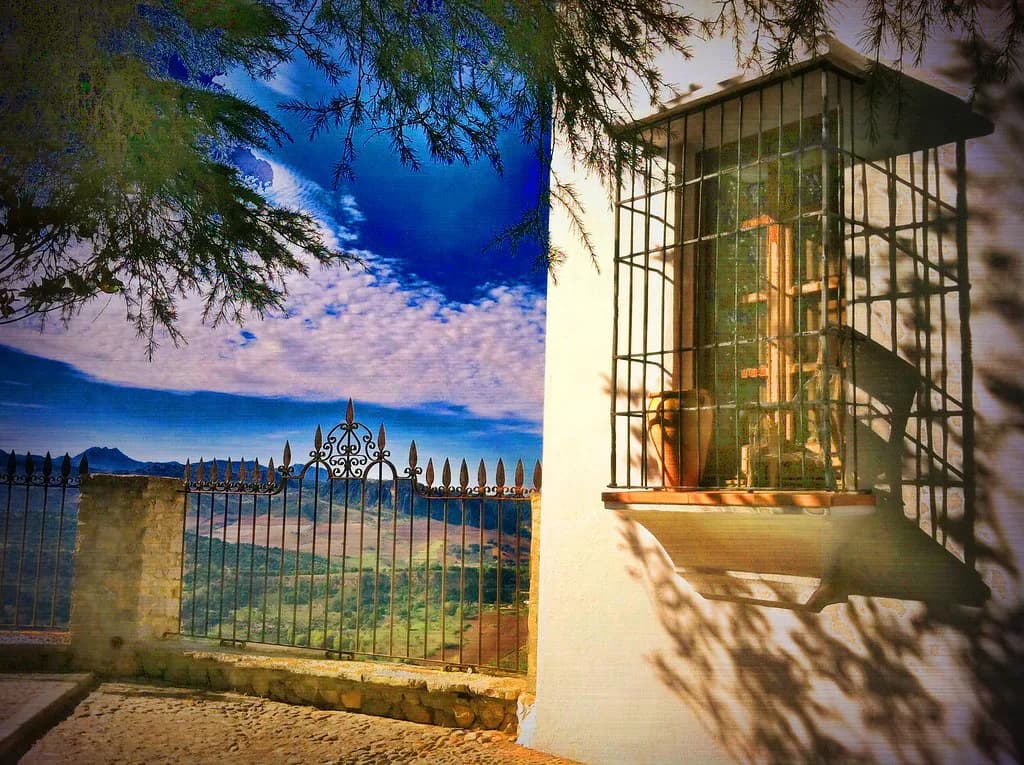
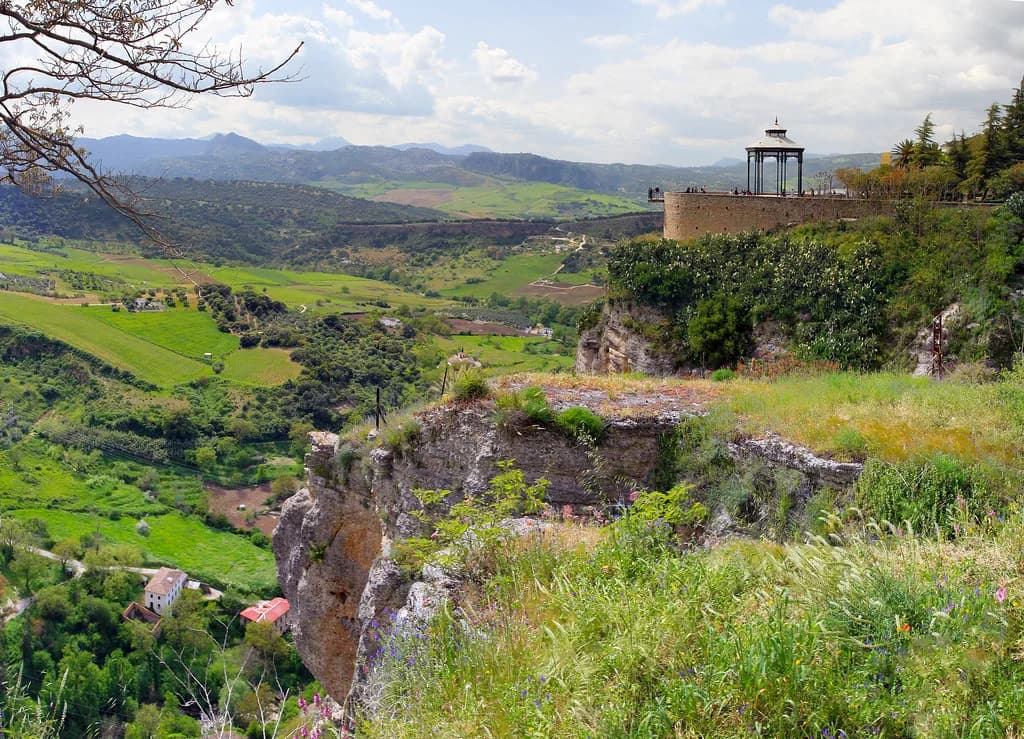
From the bullring, walk on into the Alameda del Tajo, the tree-lined park that runs to the cliff edge and delivers the first wide panoramas over the valley. It is a short, easy stretch before the ground turns steep, so use it to get your bearings and your photographs. Look for the overhanging balconies along this route near the Puente Nuevo — the ones with the rude nickname — but stay behind the railings, because the drop below is genuine.
The Puente Nuevo: The Classic Photograph and the Gorge Path
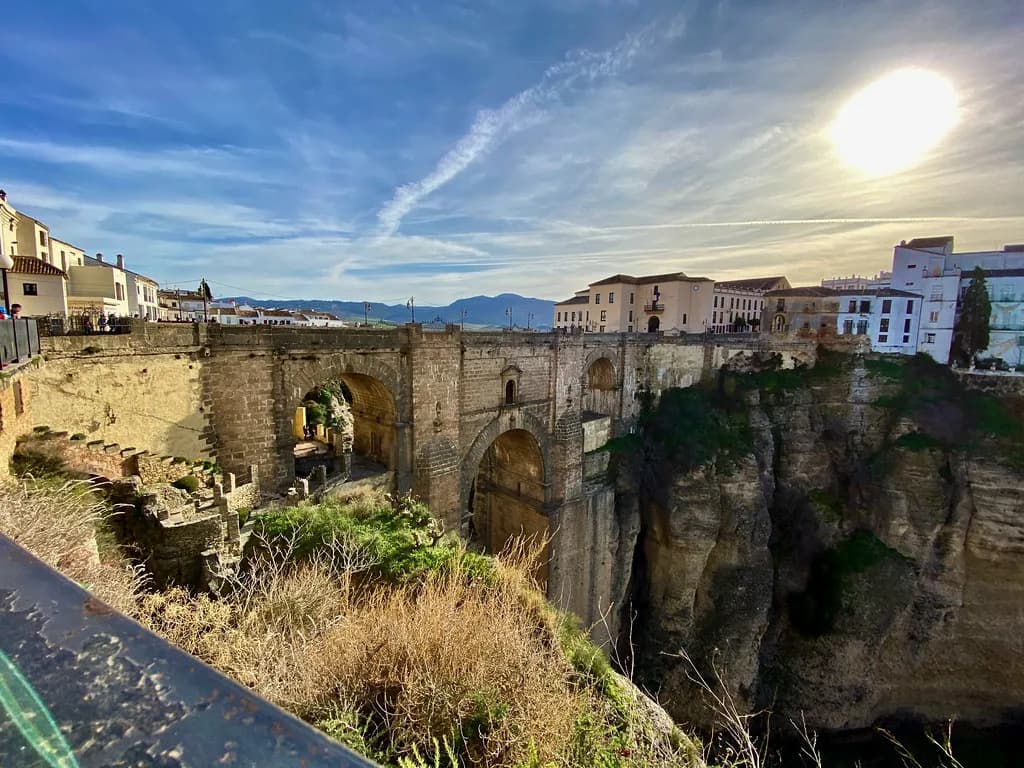
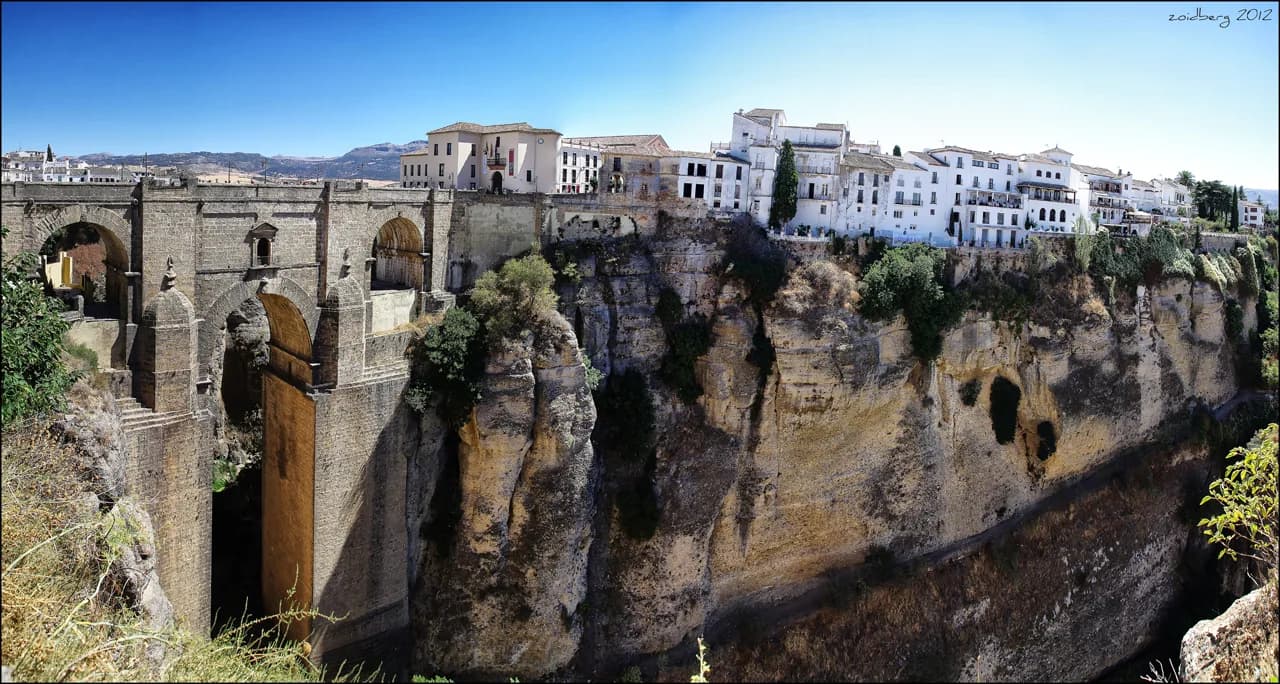
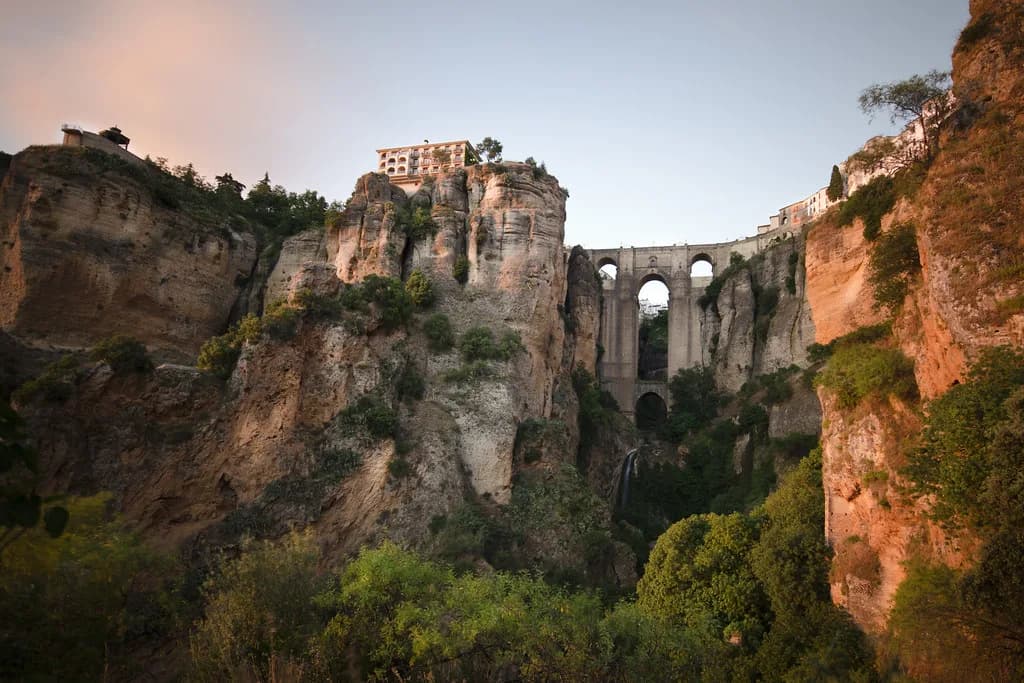
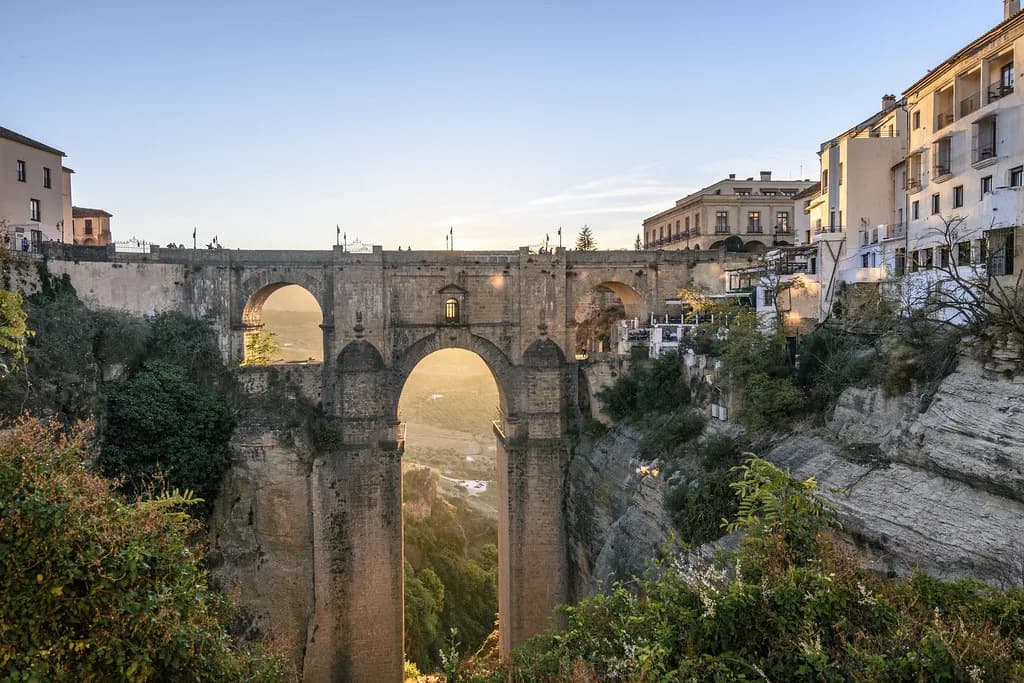
The Puente Nuevo is the bridge everyone comes for, and the classic shot is not taken from on top of it. Walk past the bridge towards the viewing points on the far side of the gorge for the full span framed against the cliff, then cross on foot to feel the height. Three bridges cross the El Tajo in total; the Puente Nuevo is the best known and the one on the postcards.
A steep cobbled path drops from near the bridge down into the gorge, and it takes more out of you than the distance suggests. Trainers or shoes with grip make it straightforward; slip-on shoes and a long skirt make the windy descent awkward, and the surface is uneven underfoot. Carry water, and treat the warning signs at the edges as instructions rather than decoration. Allow around an hour for the descent, the photographs and the climb back up.
Crossing into La Ciudad
Over the bridge, La Ciudad is a grid of whitewashed houses and cobbled lanes that rewards slow wandering rather than a checklist. The Casa del Rey Moro is carved into the cliffs of the El Tajo, built in the eighteenth century as a fortress and water mine with hanging gardens, and it is open to visitors who want the descent and the view from below. The gardens and mine take time and energy, so choose them over a second café stop rather than trying to do both.
On the far side of the gorge, the Jardines de Cuenca step down the cliff in terraces towards the Puente Viejo, giving you a view back to the bridges rather than from them. They are green, free to walk through and quieter than the main bridge viewpoints, which makes them a good place to pause. Watch the edges: visitors lean over the walls for photographs and the terraces drop away sharply.
If your day runs short, this is the point to cut. The Arab baths and the church of Santa María la Mayor are the sights most often sacrificed on a six-hour visit, and they are the strongest reason to come back with a night in town. A slower second day also lets you take in the Museum of Ronda and the town's long history without clock-watching.
Lunch: Build the Walk Around Spanish Timing
Spanish lunch service runs roughly from 1:30pm to 4pm, so a sit-down meal in Ronda means stopping in the early afternoon rather than grabbing something at one o'clock out of habit. Plan the morning around the bullring, the park and the bridge, then sit down between the gorge and the old town. A proper lunch costs you an hour and a half, so it has to be part of the route, not an interruption to it.
For a quicker stop with outdoor seating on the main shopping street, the bakery café Granier on Carrera Espinel, also called Calle La Bola, serves sandwiches, pizza-style focaccia and pastries, and works well for people-watching. It is inexpensive for what it is and reads as a chain rather than a local institution, which is the trade-off for speed and a table on the street. If you want a long Andalucian lunch instead, book the timing into the day and cut one sight to pay for it.
Restaurant opening days and August or winter closures vary from place to place, so a short list checked against the day you are travelling saves a wasted walk. Menus and prices are best confirmed directly with the places you shortlist.
Plaza del Socorro and the New Town
Walking back into the new town brings you to the Plaza del Socorro, marked by a fountain topped with a statue of Hercules above a car park and ringed by bars and cafés. It is a natural coffee stop and the gateway to the main shopping streets, where high-street names sit alongside local shops. The square is a crossroads rather than a sight, so treat it as a breather before the final stretch.
Carrera Espinel is the pedestrian spine of the new town, good for a wander if you want to break up the walking or pick up provisions for the journey back. Shopping is not why most people come to Ronda, but an hour here suits anyone travelling with companions who have had enough of viewpoints. Pair it with a late coffee rather than a full afternoon, because the gorge is the better use of daylight.
An Evening Plan in Ronda
If you are staying the night, use the early evening for a second walk to the gorge once the day-trippers have gone. The light softens, the bridge viewpoints empty out, and the same walk that felt crowded at midday becomes the best hour of the day. Dinner in Spain starts from about 8:30pm to 9pm, which leaves room for the walk and a drink before you sit down.
Anyone on a coach tour will be heading back before that, so the evening plan only applies if you have booked a bed in town. That is the strongest argument for splitting the visit across two days: the morning sights and the evening gorge walk are different experiences of the same town. A single day gives you the highlights; a night gives you the atmosphere.
What to Skip on a Four-Hour Visit
Four hours in Ronda covers the Puente Nuevo, the Alameda del Tajo and a walk through La Ciudad, and that is the right order to do them in. Skip the bullring interior and the Casa del Rey Moro mine, both of which swallow an hour each with queues and stairs. You will still see the gorge, the bridge and the white streets, which is what most people come for.
With four hours, eat standing or take a bakery stop rather than a sit-down lunch, because a full Spanish midday meal will consume a third of your time in town. Pick one viewpoint on each side of the gorge and resist doubling back. Everything else — the museums, the gardens, the Arab baths — belongs to a return visit.
Plan Your Day in Ronda
The route works best in one direction: bullring, park, bridge, gorge path, old town, then back through the new town for coffee. Wear shoes with grip, carry water for the gorge descent and set your lunch stop between 1:30pm and 4pm so you are not hunting for a table outside service. Build the day around those three fixed points and the rest of Ronda falls into place.
If you are weighing up a single day against a longer stay, the six-hour group tour covers the essentials and little more, while an overnight visit buys you the empty evening gorge and the secondary sights. Check opening days, ticket prices and restaurant hours directly with each place before you travel, since these change through the year.
Explore more Ronda guides
Frequently Asked Questions
Is Ronda worth visiting for a day?
Yes, if you want the gorge, the Puente Nuevo and a walkable old town in one go. A day covers the bullring, the Alameda del Tajo, the bridge and La Ciudad at an unhurried pace, leaving the museums, the Arab baths and the Casa del Rey Moro mine for another visit.
How many hours do I need in Ronda?
Six hours covers the main walk with a lunch stop. Coach tours from the Costa del Sol typically allow around that much time in town after a journey of roughly two hours each way, which is enough for the headline sights but not the secondary ones.
What can I do in Ronda in four hours?
Head straight for the Puente Nuevo and the gorge viewpoints, walk through the Alameda del Tajo for the cliff-edge panoramas and finish with a wander through La Ciudad. Skip the bullring interior and the water mine, and eat a bakery lunch rather than a sit-down meal.
Where should I eat during one day in Ronda?
For a quick stop, the bakery café Granier on Carrera Espinel, also called Calle La Bola, has outdoor seating and inexpensive sandwiches and pastries. For a proper lunch, sit down between 1:30pm and 4pm, when Spanish midday service runs, and confirm opening days with the restaurant directly.
What is the best order to see Ronda's sights on foot?
Start at the Plaza de Toros, walk through the Alameda del Tajo to the bridge viewpoints, cross the Puente Nuevo and explore La Ciudad before looping back through the new town and Plaza del Socorro. Doing it in one direction avoids climbing the same streets twice.
Should I stay the night in Ronda?
Staying over gives you a second walk to the gorge in the early evening after the day-trippers leave, plus time for the Casa del Rey Moro and the Jardines de Cuenca. Dinner starts from about 8:30pm to 9pm, so there is room for the walk first.
Sources
Notes for eating well in Spain
Optional updates to our guides.
You might also like
Continue reading
More guides you'll find useful