Sitges Markets: Food Hall, Weekly Stalls and What to Expect
A practical guide to Sitges markets, covering the covered food market near the station and the weekly stalls in Poble Sec, with opening days and honest trade-offs.
On this page
Sitges runs two kinds of market, and knowing which is which saves a wasted morning. The covered food market near the train station is a weekday affair with a published schedule and closure list, while the outdoor stall markets appear only on specific mornings. Plan around the days rather than the town's reputation as a place to wander and shop.
The practical rule is simple: food shopping before lunch, browsing after. The food market opens early and shuts in the early afternoon, so it fits neatly before a meal at Spanish lunch hours, roughly 1:30–4pm. Stall markets are morning-only, which leaves the afternoon free for the shopping streets around Plaça Cap de la Vila.
What Sitges Markets Cover
There are two distinct things to plan for. The first is the town's covered food market, sitting just above the Mercadona supermarket near the train station, where you buy produce, meat and cheese rather than souvenirs. The second is the open-air stall markets that set up on particular mornings, selling clothes, handicrafts and art objects rather than groceries.
Treat them as separate outings with separate timetables. Turning up for the food hall on a Sunday or a public holiday gets you a locked door, and turning up for the outdoor stalls on the wrong weekday gets you an empty square. If you only have one day, the covered market is the more dependable bet because it opens Monday to Saturday.
The Covered Food Market Near the Station
Sitges' market is built around 32 stands, 31 of them trading, with 10 commercial stands arranged in an island and a supermarket on site. That layout makes it a proper provisioning stop rather than a photo opportunity: you can assemble a picnic or self-catering lunch in one pass. There is also a gastronomic information space and a well-equipped area with cold chambers.
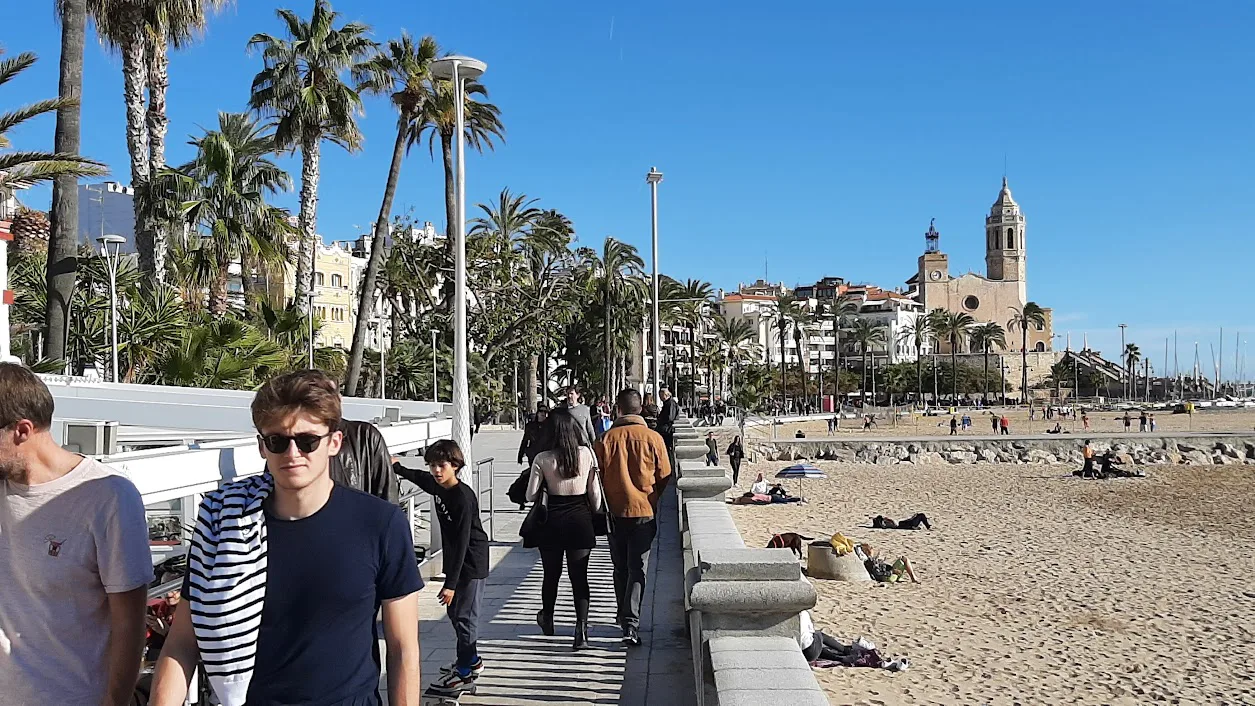
The setting is practical rather than picturesque. You are above a supermarket, near the station, with a car park access on Carrer Salvador Mirabent, which suits anyone arriving by train or driving in for the morning. Come here for jamón, cheese, olives, fruit and bread, then take it to the seafront on the Passeig Marítim.
For a beach day, this is where the picnic comes from. Buy what you need here before the sand, since the shops in the centre, especially near the beaches, charge far more for the same provisions.
Opening Hours and Closure Days
The food market opens Monday to Saturday from 8.30 to 14.00, with a second session on Tuesdays, Thursdays and Fridays from 17.30 to 20.30. It is closed on Sundays and public holidays, and on a published list of dates through the year including 1 and 6 January, 24 June, 24 August, 1 November and several days around Christmas. If your trip lands on one of those dates, shift your food shopping to a supermarket instead.
The closure list is long enough that a quick check before you travel is worth the two minutes. Note it down: 1 and 6 January, 14 and 17 April, 1 April, 24 June, 24 August, 11 and 23 September, 12 October, 1 November, and 6, 8, 25 and 26 December.
The evening sessions matter for self-caterers arriving on an afternoon train. Tuesday, Thursday and Friday give you a second window between 17.30 and 20.30, which lands neatly before dinner at Spanish hours, from about 8:30–9pm. On other weekdays, shop in the morning or use the supermarket on site.
The Poble Sec Friday Market
In the Poble Sec area, a Friday market sells clothes, handicrafts and art objects. This is the browsing market rather than the grocery run: come for textiles, gifts and small pieces to take home, and bring cash as a sensible default for stallholders anywhere in Spain.
Pair it with a wander rather than a schedule. A Friday puts both the food market and the Friday stall market within reach on the same day, so one full day can cover both.
Thursday and Saturday Morning Stalls
Sitges also holds outdoor markets on Thursday and Saturday mornings. These are morning-only, which means arriving late leaves you with stalls already packing away, so treat the first half of the day as the window.
If your dates are fixed, check which of those mornings you actually have. In busier months the calendar fills quickly with local festivities, and a market morning can collide with other plans: sitges in july brings the Festa Major de Sitges around Sant Bartomeu, when the town's attention turns to processions rather than shopping, so plan the market for another day.
Late-season visitors have more room to manoeuvre. In sitges in september the summer crowds thin and the morning market becomes a calmer, quicker stop before a day in the Garraf Massif.
Shopping Streets to Pair With a Market Morning
Start at Plaça Cap de la Vila, where the shopping streets fan out in every direction. Carrer Sant Francesc and Carrer Major read as one long retail strip, while Carrer Jesús and Carrer Parellades mix shops with restaurants in roughly equal measure.
One local quirk works in your favour: Sitges shops generally do not close for a midday siesta, and many trade later into the evening than the 20:00 norm in other Spanish cities. That means a market morning does not have to end at lunch, and you can shop after eating rather than rushing between the two.
Buying Foodie Souvenirs
Beyond the market hall, three central shops cover the edible souvenir shortlist. La Boulangerie Francaise handles French pastries and bread, Xocolatl covers chocolate, and Xarcuteria Fontanals sells sauces, cheeses, cured meats, canned tuna and pasta. Fontanals is the one to visit if you want to carry a taste of the town home in a suitcase.
If your interest is the plate rather than the packet, read up on sitges food before you go so the market stalls make sense: xató de Sitges and the town's malvasia wines are the things to look for. A market visit lands better when you know what you are looking at.
What the Markets Are Not
Do not plan an evening of market browsing. The outdoor stalls are morning affairs, the food hall closes at 14.00 on most days, and Sunday shuts the covered market entirely. Sunday in Sitges is a beach, a long lunch and a walk, not a shopping day.
Equally, the markets are not a bargain-hunting destination in the way some visitors expect. Prices near the beaches run high, so buy provisions from the supermarket or the market hall and save the central shops for gifts you actually want.
Cash, Cards and Shopping Practicalities
Bring some cash for the stall markets, where small independent sellers may not take cards, and rely on cards in the covered market and supermarkets. No price list is published for the stalls, so judge by what is displayed at each stand rather than expecting fixed rates.
The main money-saving decision is where you buy food. Central shops near the beaches charge considerably more than the supermarket and market hall, so a quick shop at the market covers breakfast, snacks and a picnic without eating into your lunch budget.
Pairing a Market Visit With the Rest of the Day
A sensible market day starts at the food hall between 8.30 and 10.00, moves to the shopping streets around Plaça Cap de la Vila, and finishes with lunch at Spanish hours, roughly 1:30–4pm. If you want a sit-down meal rather than a picnic, the best restaurants in sitges fill up in that window, so book or arrive early.
For something lighter, a tapas lunch after the market lets you eat well without a long sitting. The best tapas in sitges are a natural fit for a market morning: a few plates, a glass of malvasia, and the afternoon still free.
If your trip runs into high summer, expect the town to be busy and the market to be brisk. sitges in august brings the Festa Major de Sant Bartomeu, so check the calendar and shop on a quieter morning if the festivities clash.
Beyond Sitges: Markets Elsewhere in Spain
If market browsing is a highlight of your trips, other Spanish destinations reward the same habit. alicante markets include the Alicante Central Market, a proper city food hall worth building a morning around, and fuerteventura markets such as those around Caleta de Fuste run on a set weekly rhythm that is worth checking before you travel.
Comparing the two is instructive: mainland city markets tend to be larger and more food-focused, while island markets lean towards crafts and resort shopping. If you are heading to the Canaries, fuerteventura markets are a different experience from a Catalan town market, and worth planning around the day rather than the hour.
Plan Your Visit
Build your Sitges day around the market timetable: food hall Monday to Saturday from 8.30, evening sessions on Tuesday, Thursday and Friday, outdoor stalls on Thursday and Saturday mornings, and the Poble Sec stalls on Friday. Check the published closure list before you travel, since public holidays shut the covered market.
Then let the rest of the day follow the Spanish clock: shop the centre through the afternoon, eat lunch between 1:30 and 4pm, and leave dinner for 8:30pm or later. That rhythm fits the town far better than squeezing everything into a morning.
Explore more Sitges guides
Frequently Asked Questions
What days are the markets in Sitges on?
The covered food market trades Monday to Saturday, with an evening session on Tuesdays, Thursdays and Fridays. Outdoor stalls run on Thursday and Saturday mornings, and the Poble Sec market selling clothes, handicrafts and art objects is held on Fridays. Check the market's published closure list before setting out, because public holidays close the covered hall.
Is the Sitges market open on Sundays?
No. The covered food market closes on Sundays and public holidays, alongside a published list of individual dates through the year. Sunday is better spent on the beach, a long lunch or a walk along the seafront. If you need groceries, use a supermarket instead.
Where is the food market in Sitges?
It sits near the train station, just above the Mercadona supermarket, with car park access on Carrer Salvador Mirabent. The hall holds around 32 stands plus a supermarket, an information space and cold chambers, so it works well for assembling a picnic before a beach day.
What time does the Sitges food market open?
Doors open at 8.30 from Monday to Saturday and the hall closes at 14.00. On Tuesdays, Thursdays and Fridays it reopens from 17.30 to 20.30, which suits anyone arriving on an afternoon train and shopping before a late Spanish dinner.
What can you buy at Sitges markets?
The covered hall is for food: produce, cured meats, cheese, olives and bread. The outdoor stalls and the Friday Poble Sec market lean towards clothes, handicrafts and art objects. For edible souvenirs, central shops such as Xarcuteria Fontanals sell cheeses, cured meats, sauces and canned tuna.
Should I pay by card or cash at Sitges markets?
Cards work in the covered market and supermarkets. For small outdoor stalls, carry some cash as a sensible default, and check what each stand displays rather than expecting a published price list.
Sources
Notes for eating well in Spain
Optional updates to our guides.
You might also like
Continue reading
More guides you'll find useful