Things to Do in Santiago de Compostela: City Guide
Plan your days in Santiago de Compostela: the cathedral and Pórtico de la Gloria, the old town, Mercado de Abastos, parks and museums, plus where to eat.
On this page
Santiago de Compostela is worth seeing for its cathedral alone, but the city holds a day or two of sights around it, from a working seafood market to contemporary galleries and green viewpoints. The compact old town means you can walk between most of them, and the eating is distinctly Galician rather than generic Spanish.
Plan around two fixed points: a morning at Mercado de Abastos, which runs from 7am to 3pm Monday to Saturday, and a cathedral visit you book ahead if you want to see the Pórtico de la Gloria. Between them, the arcaded streets of the medieval quarter and a park bench fill the afternoon.
Start at Praza do Obradoiro
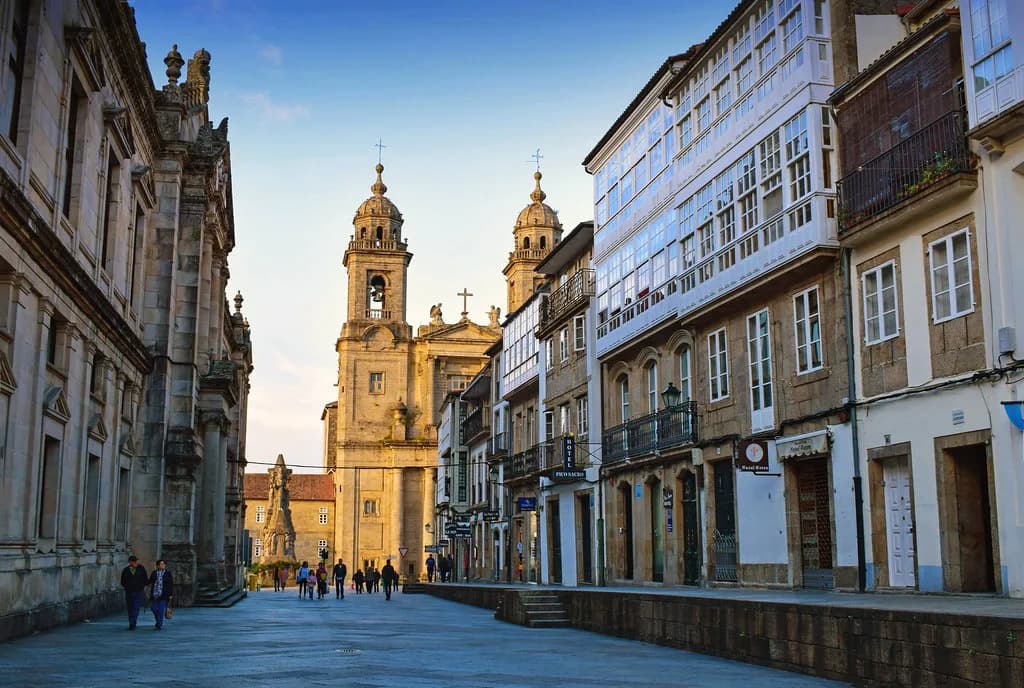
Praza do Obradoiro is the main square outside the cathedral entrance and the natural place to begin, whether or not you have walked a Camino. Look beyond the cathedral facade and you will see the Hostal dos Reis Católicos to the north, built in the 15th century as a refuge and hospital for pilgrims and now a five-star Parador hotel. Opposite stands the colonnaded Pazo de Raxoi, with the early 16th-century Colexio de San Xerome on another side, its Romano-Gothic doorway worth a detour.
The square works as a compass for the rest of your day: the old town funnels off it in narrow lanes, and the Alameda Park sits a short walk away on the edge of the medieval streets. Arrive early if you want photographs without crowds, especially in a busy Camino year. If your trip falls in high season, read what to expect in santiago de compostela in august before you commit to dates around the square.
Inside the cathedral: the Pórtico de la Gloria, St James's tomb and Pilgrim Mass
The apostolic crypt beneath the main altar holds the sepulchre said to contain the relics of Saint James, reached by steps behind the high altar, where a traffic-light system controls the queue to pass behind his effigy. Pilgrim Mass is held daily at noon, and the huge incense burner known as the botafumeiro swings on selected dates rather than every day, so treat it as a bonus. Check the cathedral's own schedule on arrival rather than counting on a particular day.
Book a cathedral and museum guided tour with Pórtico de la Gloria entry if you want the carvings explained rather than read from a panel, or a shorter cathedral and museum tour if your time is tight. Walking pilgrims still qualify for the Compostela certificate at the pilgrim office, and the city's own guidance covers the rituals, the Holy Door and the crypt in detail.
Rooftops, museums and the long view
The most magnificent views of the cathedral and the city come from the cathedral's stone rooftop and the North Tower, which reward the climb with a perspective you cannot get at street level. Pair a rooftop slot with the museum so you are not retracing steps; the Gelmírez Palace and the archive, home to medieval manuscripts such as the Codex Calixtinus, sit within the same complex.
For a different skyline, head to mount Gaiás and the Cidade da Cultura, the contoured complex designed by Peter Eisenman that looks back over the city. It is a taxi or bus ride rather than a stroll from the old town, so give it a half-day and skip it on a one-day visit.
Wander the medieval quarter: Rúa do Vilar, Rúa Nova and the arcades
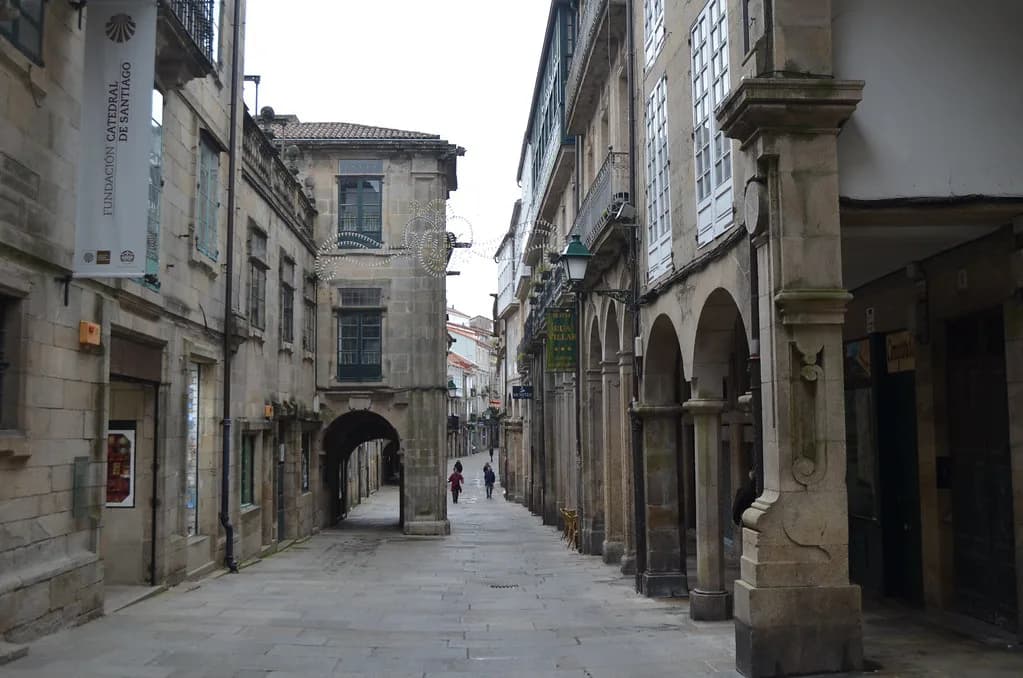
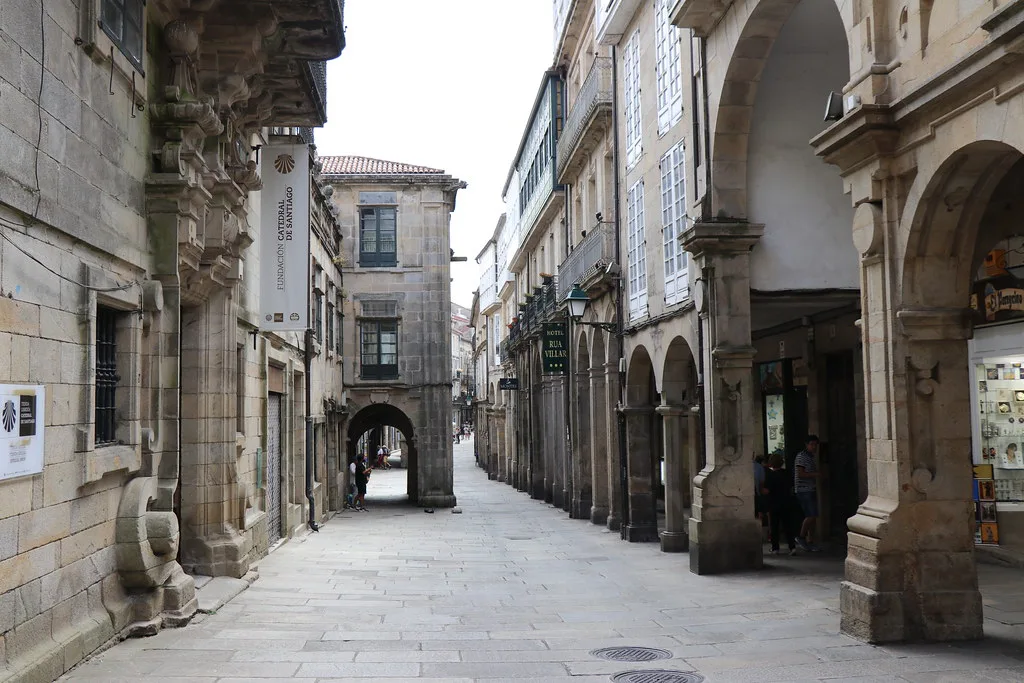
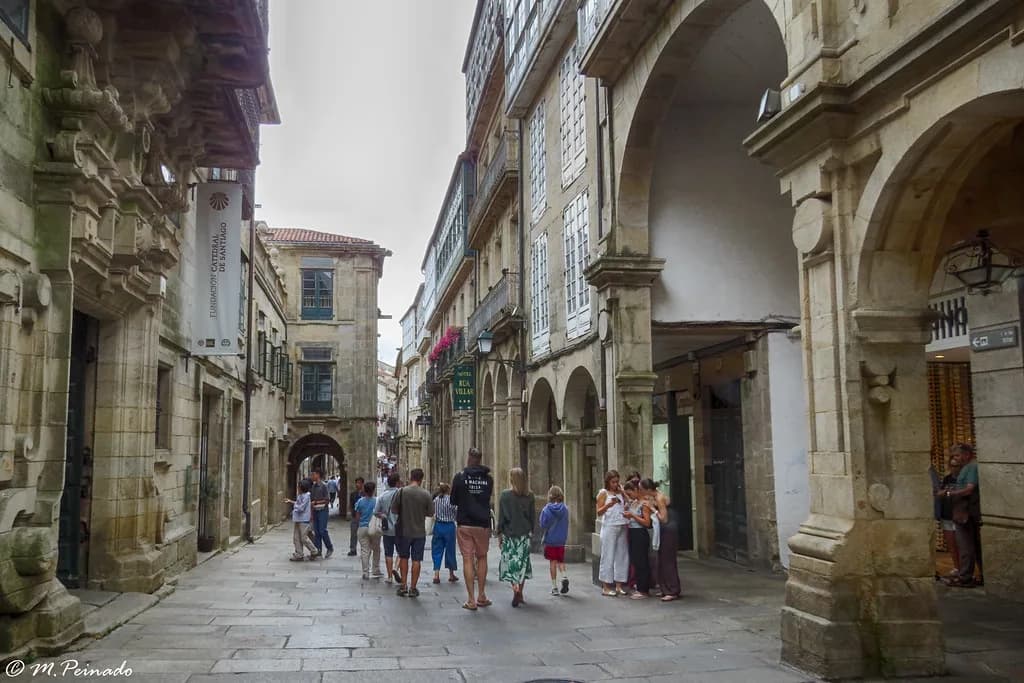
The maze of streets spreading out from the cathedral has been UNESCO World Heritage since 1985, and many buildings are arched at ground level to shelter walkers from rain and sun. Rúa Nova and Rúa do Vilar are the colonnaded pair to aim for when it rains, lined with boutiques, gourmet shops and souvenir stalls. The Berenguela bell marks the hours across the old town as you go.
If you arrive at the end of a Camino and want to plan the last stretch properly, use a santiago de compostela itinerary to slot the old town walk around fixed cathedral slots. Even in wet weather the arcades make this the most reliable part of the day.
Eat your way down Rúa do Franco
Rúa do Franco is where most visitors head for restaurants, bars and tapas, but the same dishes appear across the city. Order pulpo á feira, the Galician-style octopus, empanada, Herbón peppers or a Spanish omelette, and drink Galician wine with it. Portions are made for sharing, so two or three plates per person is usually plenty before a main.
For a more creative kitchen, the city's Michelin-starred restaurants are A Tafona by Lucía Freitas and Casa Marcelo, while Abastos 2.0, Pampín Bar, Horta do Obradoiro, A Maceta and Auga e Sal are known for quality and invention. Book the starred rooms well ahead and treat the rest as walk-in possibilities at lunch. If your visit falls in september, expect the restaurant rhythm to shift with the Camino season, which you can read about in the month-by-month guide.
Mercado de Abastos: buy seafood and have it cooked
The 19th-century Mercado de Abastos, open 7am to 3pm Monday to Saturday, is the best way to see how central the sea is to Galicia, with fish and seafood piled high inside and vegetable stalls run by local farmers outside. Stalls also sell dairy, meat, fruit, bread and crafts. Several eateries inside will cook what you have just bought, which turns the market into lunch rather than a shopping stop.
Treat the market as a morning errand before it shuts: it is not an afternoon option, so plan your cathedral or museum slot after lunch instead. Sample San Simón da Costa, the smoked cow's-milk cheese shaped like the better-known Tetilla, or take a wedge home. This is also where a rainy day can be salvaged with a long, warm lunch.
Museo do Pobo Galego and the triple spiral staircase
Galicia's leading ethnographic museum occupies the former convent of San Domingo de Bonaval, and the entrance covers the convent as well as the museum. Inside are models, exhibitions and photography on local traditions, farming, seafaring and the region's village houses, plus frescoes and sculpture in the old church. The triple spiral staircase is the architectural highlight and worth the visit on its own.
Behind the museum and gallery, Bonaval Park was once the convent cemetery and was remade by Álvaro Siza Vieira into a quiet green space with lawns, flowers and shade. It is a good place to sit after a museum hour, and it links neatly to the contemporary art gallery next door.
Centro Galego de Arte Contemporánea and Bonaval Park
The Centro Galego de Arte Contemporánea sits in a building designed by Álvaro Siza Vieira and shows established and emerging artists from Galicia, with a dozen private galleries nearby covering an eclectic range of styles. It is the best contemporary art stop in the city and a sensible rainy-day swap for the rooftop. Architecture fans get the building as well as the exhibitions.
Allow an hour for the gallery and another for the park, and you have a natural half-day for a second visit. If you are choosing between cities, our things to do in alicante covers a very different, beach-led day and shows how much a compact old town can pack in.
Museo de Magia: live shows and hands-on tricks
The Museo de Magia on Praza de San Miguel dos Agros is a small, hands-on museum with live shows on the hour and optical illusions and tricks you can try yourself. It opens Tuesday to Sunday, 11am to 1:45pm and 4pm to 8:45pm. That split schedule makes it a good filler between a late lunch and dinner, when other sights have closed.
Parks and people-watching: Alameda Park, Plaza de Cervantes and Porta Faxeira
Alameda Park dates from the 16th century and sits on the edge of the medieval streets, with the tree-lined Paseo da Ferradura offering the classic view of the cathedral and old town. It is also where the Portuguese Camino passes, so walkers and locals share the paths. Take a book and sit, or catch a local festival if one is on.
For people-watching, Plaza de Cervantes draws both locals and pilgrims, while Porta Faxeira bustles with people heading to the university, work or a terrace bar. Both are free, and both give you a better feel for Santiago than another museum. Sit with a coffee and watch the city move.
If you are weighing up how to spend your days, our guide to how many days in santiago de compostela breaks the city into one, two and three-day shapes so you can see where a park hour fits. This is the part of the day that makes the city feel lived-in rather than simply visited.
Santiago cake and an Estrella Galicia beer
Tarta de Santiago is the city's signature sweet: an almond cake dusted with icing sugar around the symbol of Saint James, sweet and moist, and gluten free. It is easy to find across the old town and a sensible thing to take home. Pair it with an ice-cold Estrella Galicia, the regional lager, which is slightly darker and richer than the national version.
Souvenir shops sell the cake and wine beside the scallop shells and jet figurines that pilgrims have carried for centuries. Buy a wedge from a bakery rather than a tourist pack, and it will travel better. If you visit in october, the weather still suits a terrace beer, which you can read about in the month guide.
One day or two: what to cut when time is short
With one day, do the cathedral and Praza do Obradoiro in the morning, then Mercado de Abastos before it shuts at 3pm, and finish with the arcaded old town and a long lunch on or near Rúa do Franco. Cut the museums, the Cidade da Cultura and the magic museum; they need a second day to do properly. Book the Pórtico de la Gloria tour for your first morning so a slot cannot slip away.
With two days, add the Museo do Pobo Galego and Bonaval Park on the second morning, then the rooftop or the contemporary gallery in the afternoon, and a park hour before dinner. If you are completing the Camino de Santiago, keep the day you arrive light and let the cathedral be the first thing you see properly.
Continuing to Finisterre and Muxía
Many Caminos end in Santiago, but you can keep walking to Finisterre and Muxía on one of Europe's westernmost coasts, the Finisterre-Muxía Way. The route is quieter than the main pilgrim trails, and the symbolism of the end point makes it meaningful for many walkers. The Romans saw Finisterre as the end of the world.
If you cannot spare the days, small-group day tours to Finisterre and Muxía run from Santiago, some with a fishing village or waterfall stop. If you want the beach instead of the coast path, our things to do in fuerteventura is a different island day entirely.
Getting there and around
Alsa, FlixBus and Rede Expressos run daily buses between Porto's Casa da Música interchange and Santiago, taking around four hours, or you can drive in about two and a half. Some services stop at Valença do Minho and others at Viana do Castelo, so choose the stop that suits you before booking. Once in the city, the old town is walked, not driven.
Practical points: meal times, market mornings and booking ahead
Santiago eats late by British and American habits: lunch runs from about 1:30pm to 4pm and dinner starts around 8:30pm to 9pm, so a market lunch fits neatly before the stalls close. Book the Pórtico de la Gloria tour and any Michelin-starred table before you travel, because slots and tables fill. Carry a light rain layer; the arcades are an umbrella you cannot carry.
Plan Your Visit
Santiago de Compostela is a one-day city that betters into two: cathedral, square and market first thing, arcades and lunch next, then parks, museums or a rooftop on a second morning. The dishes to order are pulpo á feira, empanada, Herbón peppers, San Simón da Costa and tarta de Santiago, with a Galician wine or an Estrella Galicia alongside.
Explore more Santiago de Compostela guides
- Best Restaurants in Santiago de Compostela
- How many days do you need in Santiago de Compostela?
- Santiago de Compostela in August
- Santiago de Compostela in October
- Santiago de Compostela in September
- Santiago de Compostela Itinerary
- Shopping in Santiago de Compostela
- Best Tapas in Santiago de Compostela
- What to Eat in Santiago de Compostela
Frequently Asked Questions
Is Santiago de Compostela worth seeing?
Yes. The cathedral and Praza do Obradoiro alone justify the trip, and the surrounding old town has been UNESCO World Heritage since 1985. Add Mercado de Abastos, a couple of museums and the parks, and you have a day or two of genuinely Galician city life.
Does the botafumeiro swing every day?
No. The incense burner swings on selected dates rather than at every Pilgrim Mass, and the cathedral publishes the schedule. Pilgrim Mass itself is held daily at noon. Treat the botafumeiro as a bonus rather than the reason for visiting.
What should you do in Santiago with only one day?
Start at Praza do Obradoiro and visit the cathedral, then head to Mercado de Abastos before it shuts at 3pm for a seafood lunch. Finish with a wander through the arcaded streets around Rúa do Vilar and Rúa Nova. Leave the museums and the Cidade da Cultura for a second day.
How long do you need in Santiago de Compostela?
One day covers the cathedral, Obradoiro and a market lunch. Two days lets you add the Museo do Pobo Galego and Bonaval Park, the rooftop or the Centro Galego de Arte Contemporánea, and a proper sit in Alameda Park.
What food should you try in Santiago de Compostela?
Pulpo á feira, empanada, Herbón peppers, San Simón da Costa cheese and tarta de Santiago. For a special meal, A Tafona by Lucía Freitas and Casa Marcelo are the city's Michelin-starred restaurants.
Where can you go by train or bus from Santiago de Compostela?
Buses link Santiago with Porto, as well as other Galician cities, and the compact old town is best seen on foot. Check current timetables and fares with the operator for your travel dates.
Sources
Notes for eating well in Spain
Optional updates to our guides.
You might also like

Continue reading
More guides you'll find useful