Best Tapas in Santiago de Compostela: What to Order
Galician tapas in Santiago de Compostela: pulpo a la gallega, clams and pimientos de Padrón, plus how tapas bars, raciones and Spanish meal times work.
On this page
Santiago de Compostela does seafood tapas better than almost anywhere on the Camino, and the shortlist is clear: pulpo a la gallega, clams and pimientos de Padrón. The city is the finishing point of the Camino de Santiago, so its bars cater to hungry walkers rather than to a fine-dining crowd, and the eating is short, briny and unfussy. Build your evening around the old town near the cathedral and you can eat well without straying far.
Two practical points shape a crawl here. Spanish lunch runs roughly 1:30–4pm and dinner from about 8:30–9pm, so a 6pm hunt for a full plate of octopus will disappoint. Tapas bars in Santiago are also seafood-first rather than curated tasting experiences, which is exactly why they suit a one-night stop.
What Santiago de Compostela does best on a tapas crawl
Galicia's coastline supplies the tapas table, and Santiago inherits it. Octopus, clams and the region's fried green peppers are the dishes to judge a bar by, and they appear across the old town rather than in one specialist quarter. If you want the wider picture of the city's food, from market produce to sit-down meals, the Santiago de Compostela food guide maps it out.
Keep expectations calibrated. This is a pilgrim city, so the tapas culture is built around short stops and shared plates, not long tasting menus. That makes it cheap to graze across several bars in an evening, and easy to eat well on foot with a pack still on your back.
The Galician dishes to order first
Pulpo a la gallega is the flagship: octopus that comes either grilled with herbs and oil or boiled and served on potato with paprika. Order it at the first bar of the night and use it to gauge the kitchen. Clams are the second Galician staple, typically steamed and served with tomato sauce, and they reward anyone who likes their tapas salty and simple.
Pimientos de Padrón are the safest crowd-pleaser and the biggest gamble on the table. The thick green peppers are fried in oil and salted, and roughly one in ten turns out fiercely hot, with nothing on the outside to reveal which one. Order a bowl for the table and let everyone take their chances.
If you want a third plate, add croquetas: a potato-and-béchamel shell around ham and cheese, ordered in small numbers and eaten fast while hot. They are the least Galician thing on this list and the most reliable filler between seafood rounds. Pair them with a small glass of wine rather than a large one so you can keep moving.
How a tapas bar works in Santiago: raciones, tapas and the plate of sticks
Ordering in Santiago means choosing a size as well as a dish. A tapa is a small plate, a ración is a full portion to share, and the price rises accordingly, so a table of four should lean on raciones and add a couple of tapas to fill gaps. For a wider spread of sit-down options beyond bar food, the best restaurants in Santiago de Compostela include places where a plate of clams becomes a proper course.
The stick system matters north of Galicia and catches visitors out. In pintxos bars, elaborate bites are speared with a stick and the colour and number of sticks left on your plate determine the bill at the end.
In Santiago the plate you are handed with a drink is more likely to be a small complimentary bite than a stick-counted pintxo, but do not assume it is free. If a bar offers you a choice of tapa with your drink, ask which one is included before saying yes.
Timing your crawl around Spanish meal times
Lunch is the main tapas window for seafood. Aim for 1:30–4pm and you will eat pulpo and clams at their freshest, with a proper table and no elbow-jostling. Turn up at 5pm and you are in the dead zone between lunch and dinner, when many kitchens are resetting.
Dinner starts late, from about 8:30–9pm, which leaves the late afternoon for sightseeing rather than queuing at a closed bar. Use the gap to walk the old town and see the Santiago de Compostela Cathedral, then start drinking and picking at plates when the bars wake up.
If your trip falls in high summer, heat and crowds change the rhythm of the day. Santiago de Compostela in August is the busiest month on the pilgrim calendar, so book tables and start the crawl slightly earlier than you might in spring.
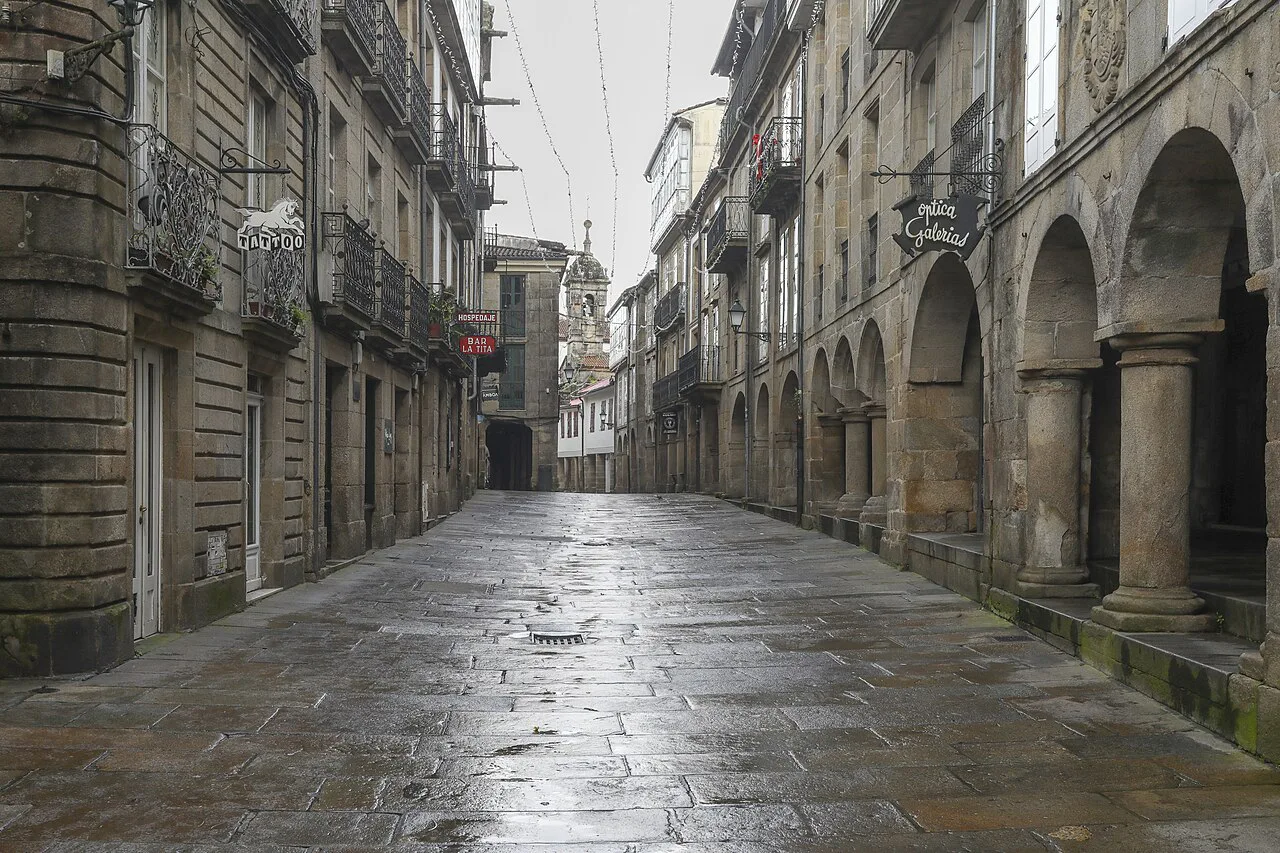
Barrio Húmedo lessons from León: free tapas with a drink and what it costs
León, further along the Camino, is the benchmark for free tapas culture. Its central Barrio Húmedo fills with locals from about 8pm, and the city's tapas bars are known for handing over a free plate with each drink, with morcilla, cecina and patatas bravas as the safe bets. Visit with an appetite for several rounds rather than one big table.
Prices in León stay low, which is part of the appeal of a crawl there. Wine in León has been reported at around €1.80 a glass in 2017, with a corto of beer at a similar level, and ordering the beer also earns the free tapa.
Santiago's bar culture is a cousin of León's rather than a copy. Complimentary bites with a drink do turn up, but the seafood plates are usually paid for and priced by portion, so budget for food rather than relying on free tapas to cover dinner.
San Sebastián and Pamplona contrasts: pintxos and montaditos
San Sebastián, on the Northern Way, shows the Basque end of the tapas spectrum: gildas of anchovy, olive and chilli, txipirones en su tinta cooked in their own ink, and brocheta de gambas from the Bay of Biscay. Order a txikito, a small glass of wine, and eat standing at the bar as the locals do.
Pamplona, the early pilgrim stop in Navarra, runs on montaditos: mini baguettes filled with Iberian ham and idiazábal, the Basque smoked cheese. The more elaborate versions come with a stick through the middle and are counted at the end to build your bill.
The contrast is useful when planning a Santiago crawl. Galicia's tapas are plated and paid for, the Basque country's are speared and counted, and all three regions expect you to eat standing with a drink in one hand.
Building an evening route near the cathedral and the old town
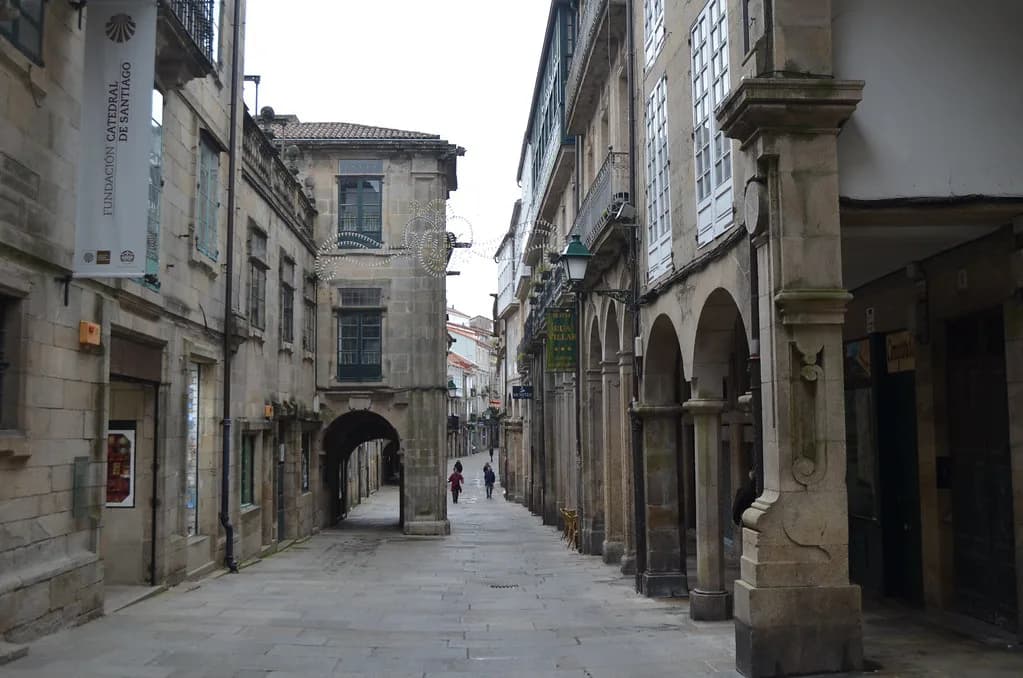
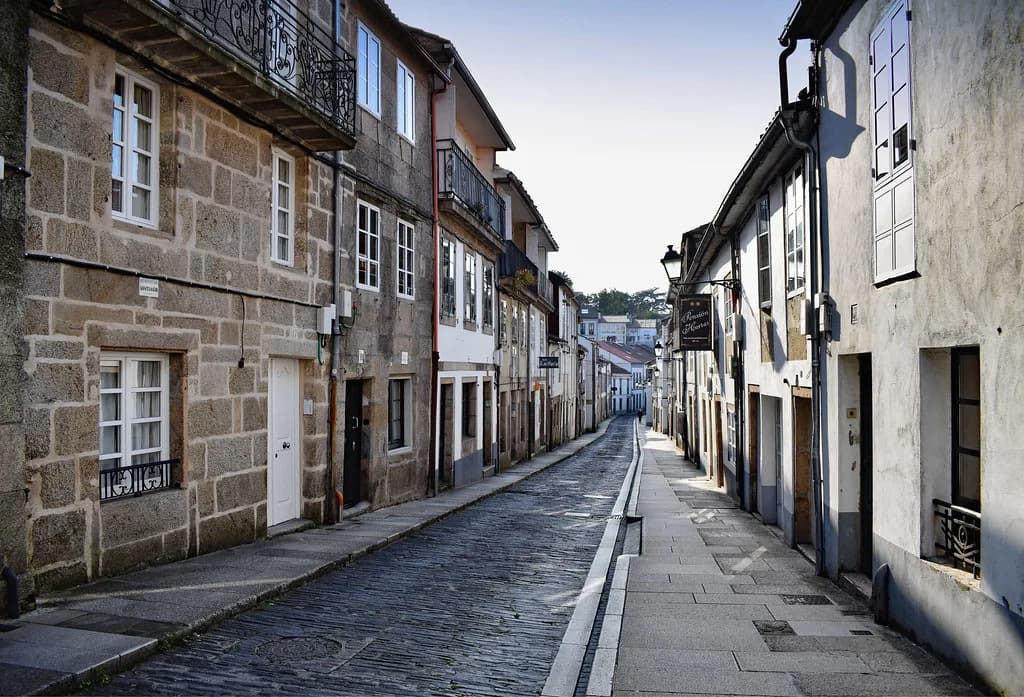
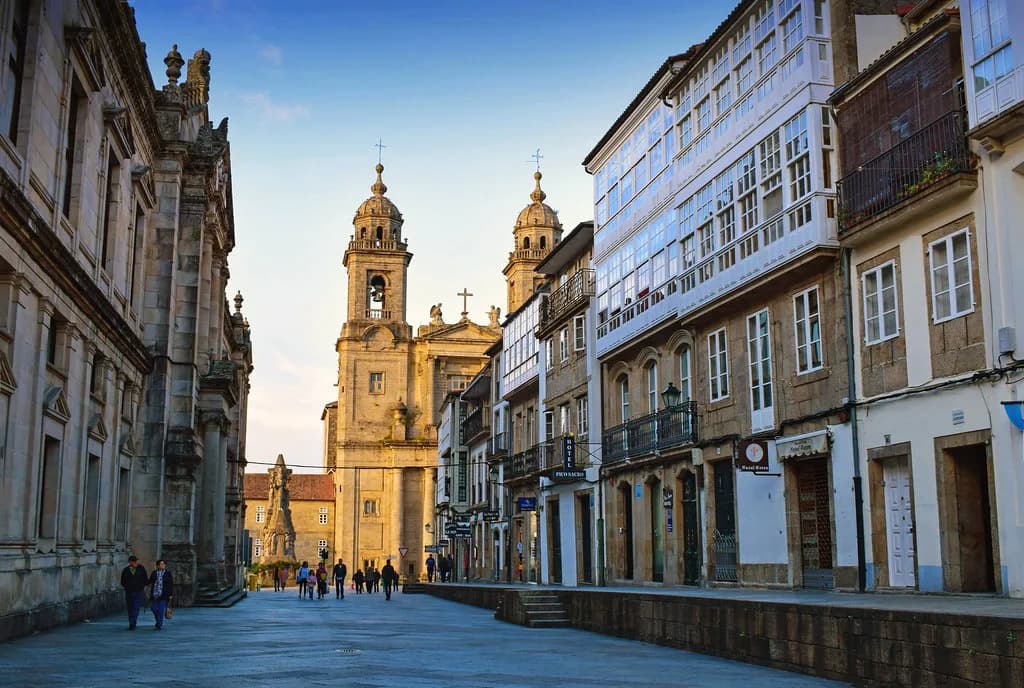
Keep the route short. Santiago's old town is compact, and the cathedral squares give you natural anchors for starting and finishing near your accommodation in the Casco Histórico, where narrow streets and arcades keep a bar crawl sheltered from rain.
Plan three or four stops rather than eight: pulpo at one bar, clams at a second, croquetas and peppers at a third, then a final drink near the cathedral. Walking the city on a set plan is easier than improvising with tired legs, and a Santiago de Compostela itinerary keeps the food stops in the same neighbourhood.
If your stay is short, decide in advance what you are willing to miss. How many days in Santiago de Compostela you need depends on whether food or sightseeing is the priority, and one night is enough for either a cathedral visit or a proper tapas crawl, not both at leisure.
Drinks to pair with Galician tapas
Small glasses keep a crawl going and stay close to local habits. A txikito of wine or a corto of beer lets you drink across several bars without tipping into a long night, and both suit salty seafood far better than a large measure of anything.
Albariño, Galicia's white wine, is the natural partner for pulpo and clams, while a light red works with croquetas and peppers. Ask for the house wine by the glass and let the bar choose; local pouring is where the value sits.
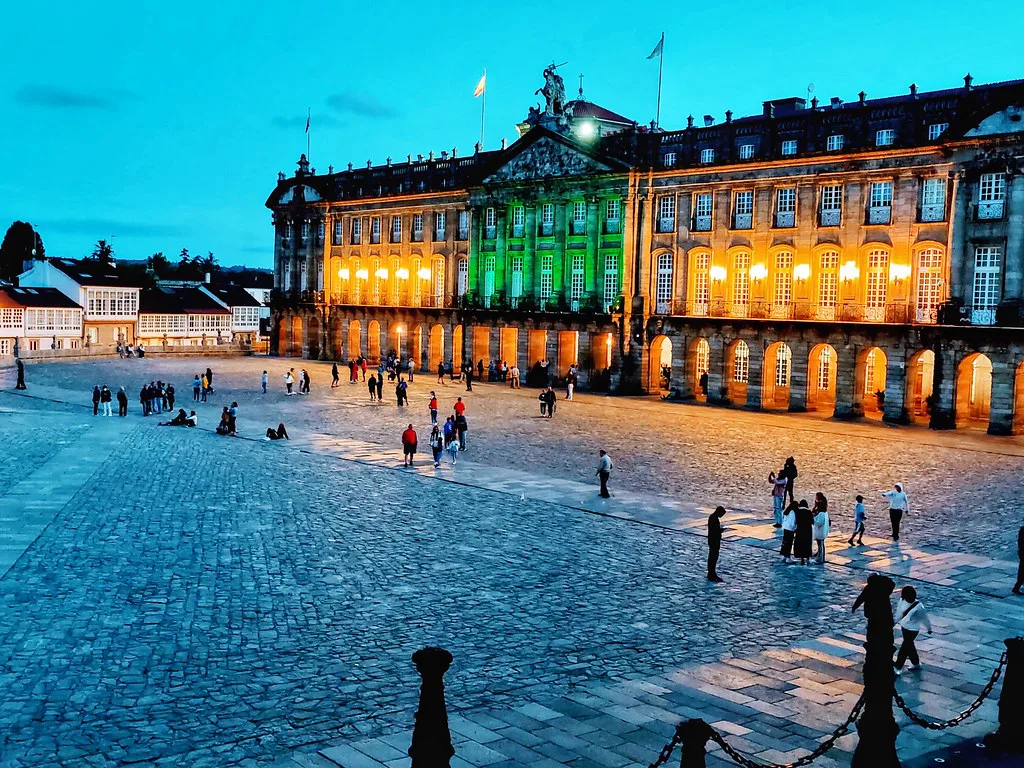
A seafood-first shortlist for lunch versus a bar-hop for dinner
At lunch, go seafood-first and sit down. Order pulpo a la gallega and clams as raciones to share, add bread and a bottle of Albariño, and treat it as the main meal of the day in the Spanish manner. This is the highest-value eating window of the trip.
At dinner, switch to bar-hopping from about 8:30pm. Eat smaller plates across more bars, add croquetas and peppers, and finish with a short walk past the illuminated cathedral. Bar food and standing eaters give the evening energy that a sit-down meal cannot match.
What to skip when you only have one night in the city
Skip the hunt for paella. It is a Valencian dish and not where Santiago's kitchens put their effort, so a seafood rice will rarely outclass the octopus and clams you could be eating instead.
Skip the long sit-down dinner too. With one night, choose three bars close together, order the Galician classics, and leave the fine-dining and shopping for another trip.
Finally, skip any assumption about opening days. Bar closing days are not fixed citywide and some kitchens take time off in August or winter, so confirm the plan for your dates, and look at Santiago de Compostela in September if you want the tail end of the pilgrim season with thinner crowds.
Plan Your Visit
Santiago de Compostela rewards an early start: lunch at 1:30pm with octopus and clams, a light afternoon, then three short bar stops from 8:30pm. Book nothing more elaborate, keep the route near the cathedral, and eat standing where the locals do.
Time your trip with the season. Autumn is calmer than the August rush, and Santiago de Compostela in October gives you cooler walking and shorter queues at the bars near the cathedral.
If you want a sense of how these bar rules work elsewhere in Spain before you go, the best tapas in Alicante and the best tapas in Nerja follow the same size-and-count logic with different local plates.
Frequently Asked Questions
What food is Santiago de Compostela famous for?
Galician seafood tapas: pulpo a la gallega, clams steamed with tomato sauce, and pimientos de Padrón fried in oil and salted. The city sits at the end of the Camino de Santiago, so its bars are built around short, shared plates rather than long tasting menus.
What are the best tapas to try in Santiago de Compostela?
Start with pulpo a la gallega, served grilled with herbs and oil or boiled on potato with paprika, then order clams and a bowl of pimientos de Padrón. Croquetas work as a filler between seafood rounds. Order a small glass of wine rather than a large one so you can move between bars.
Is tapas free in Santiago de Compostela?
Not reliably. A complimentary bite sometimes arrives with a drink, but the seafood plates are usually paid for and priced by portion, so budget for food rather than counting on free tapas to cover dinner. León, further along the Camino, is the city known for a free plate with every drink; the bill still follows what you order.
What time do people eat tapas in Santiago de Compostela?
Lunch runs roughly 1:30–4pm and dinner from about 8:30–9pm, so the late afternoon is a quiet gap between services. Aim for lunch if you want pulpo and clams at their freshest with a proper table, and start a bar crawl from about 8:30pm.
Should I order raciones or tapas in Santiago de Compostela?
Order raciones when you are sharing at a table of three or four, and add a couple of tapas to fill gaps. A tapa is a small plate and a ración is a full portion, so the price rises with the size. At the bar, smaller plates across several stops keep the evening moving.
Sources
Notes for eating well in Spain
Optional updates to our guides.
You might also like


Continue reading
More guides you'll find useful