Santiago de Compostela in August: Crowd & Eat Guide
Plan Santiago de Compostela in August with honest advice on pilgrim crowds, late Spanish mealtimes, free tapas on Rúa do Franco and market lunches.
On this page
August puts Santiago de Compostela at the height of the pilgrim season: the European walking calendar is in full swing, the cathedral square fills early, and the city runs on late Spanish hours. Build your day around lunch from 1:30pm to 4pm and dinner from 8:30pm to 9pm, with a market lunch and a shaded afternoon in between. It is a month for pacing, booking your bed and choosing where you eat rather than racing through a top-ten list.
August in Santiago de Compostela: the short answer
Come for the Old Town, the cathedral and the food, and expect company. Pilgrim numbers peak from May to September, and August sits squarely in that window, so the last stretch of the Camino Frances into the city is the busiest part of the route. If you want the granite squares and the pulpo without the scrum, plan your sightseeing for the morning and your eating for the Spanish hours.
The trade-off is simple: you get long daylight, everything running and a city in festival spirits, but you pay for it in queues at the cathedral and tight beds on the final stages. Walking the Camino Frances through August means several hundred pilgrims a day on the last 100km from Sarria, according to a month-by-month walking guide. Book accommodation ahead and treat late afternoon as rest time rather than more sightseeing.
How busy the city gets in August
The crowd rhythm follows the Camino, not the coach tours. Pilgrims arrive through the morning, the Praza do Obradoiro fills around midday when walkers come in from the final stage, and the streets around Rúa do Franco and Rúa Nova stay lively into the evening. The practical response is to book the cathedral and museum visits for early morning and leave the middle of the day to the market and the parks.
The Camino weather guide is blunt about the final stretch: from Sarria the route becomes genuinely busy, and popular albergues fill quickly, so earlier arrivals or advance booking become necessary. That pressure feeds straight into Santiago's guesthouses and hotels in August. Reserve a bed before you decide your stages, not after.
Weather in August and how to plan a day around it
Galicia stays moderate compared with the baked Meseta, but August afternoons on exposed sections between Burgos and León regularly exceed 30°C according to the walking guide. In Santiago itself the reliable strategy is an early start, a proper sit-down lunch at 1:30pm or later, and a slow hour in the shade before you go back out. Carry water and don't schedule a long walk for 3pm.
Use the parks for the hot slot. The Parque de San Domingos de Bonaval offers shaded woods, hydrangea gardens and a lawn above the old monastic cemetery with views back to the cathedral towers to the west, while the Museo do Pobo Galego sits in the same convent complex. Both make a cool, quiet counterweight to the crowded squares.
Why meal times matter: lunch from 1:30pm, dinner from 8:30–9pm
Santiago keeps Spanish hours, and August is when they work in your favour. Lunch runs from 1:30pm to 4pm, so a market lunch or a set menu lands in the hottest part of the day; dinner starts from 8:30pm to 9pm, which means the evening is for a wine and a tapa first. Arriving at a restaurant at 7pm will leave you looking at closed doors or an empty room.
That gap between lunch and dinner is exactly when the wine bars and craft beer spots earn their keep. Nómade Santiago pours a large selection of natural Galician wines by the glass on Rúa do Franco, and Xuntanza on Rúa de Xelmírez has a decent craft beer list with an outdoor terrace. Both are pre-dinner stops rather than full meals.
Where to eat: tapas bars and free pinchos on Rúa do Franco
Santiago is generous with the free tapa, and Rúa do Franco is the spine of it. Bar La Tita on Rúa Nova, just off the Franco, serves a generous free slice of tortilla de Betanzos with your drink: potatoes, egg, salt and olive oil, no onion, and barely set inside. It is one of the cheapest good eats in the Old Town and a fine first stop.
For seafood, A Taberna do Bispo on Rúa do Franco has been serving Galician tapas with a seafood focus since 2003, while Taberna O Gato Negro on Rúa da Raíña is the modest, famously generous octopus stop nearby. Mesón 42 on the Franco takes traditional Galician dishes in a more modern direction, with empanada, grilled scallops and octopus toast on the menu.
Prices for a full tapas crawl vary too much to promise, so check the board or ask before ordering. What you can count on is the free pincho culture: a drink usually brings a small plate, and in Santiago that often means tortilla. Order a caña, take the tapa, and move on rather than committing to a full racion at the first bar.
A market lunch at Mercado de Abastos and Abastos 2.0
The Mercado de Abastos is the food heart of the city, a stone market dating to 1937 with eight long halls and a central courtyard, two of them given over to seafood. Producers there sell oysters grown near Illas Arousa, and you can carry them to a small wine bar around the corner for a fresh albariño; steamed zamburiñas are the obvious next order. Ask at the stalls and the bar for that day's prices.
Abastos 2.0 is the sit-down counterpoint, tied to the market and listing the food miles of its seafood, all within 100km on one visit. Reserve: it takes bookings and fills. If you want the market stalls and oysters rather than a plated menu, go earlier and graze.
Galician dishes to order: pulpo á feira, tortilla de Betanzos, zorza, scallops
Order pulpo á feira with paprika and olive oil, and expect it grilled with char at Abastos 2.0 or piled generously at O Gato Negro. Tortilla de Betanzos is the local benchmark, gooey in the middle, and Bar La Tita hands it out free with a drink. Then there is zorza, chopped pork marinated with garlic, salt and paprika, served on fries with sliced cheese at the no-frills Xachegou on Rúa da Algalia de Abaixo, where wines were €2.80 a glass on one visit.
For a fuller picture of the regional larder, from scallops and mussels to local cheese, start with a Santiago de Compostela food guide before you sit down, then order by what the bar does well rather than by the longest menu. August is also when cold dishes earn their keep: mussels escabeche and tomato salad beat a heavy stew at 3pm.
Modern and non-Galician options: O Testo, DeLito, NuMaru
When seafood fatigue sets in, O Testo on Rúa de Abril Ares runs modern spins on Galician cooking, with anchovy toast and a xarda (horse mackerel) dish that leans Asian. DeLito on Rúa de San Pedro is the steak answer, ageing beef in a fridge on display and serving chuletón rubia gallega with potatoes and pimientos padrón; a lunch deal there was around €18 on one visit. NuMaru Korean, on Avenida do Mestre Mateo and Rúa de Vista Alegre, had a €16 lunch including soup, main, drink and dessert on one visit. Treat those figures as indicative rather than current.
Book or go early. These three sit outside the main Franco crawl, which makes them a good evening plan after a long day's walking, and they give you a reason to cross into the newer streets north of the historic centre.
Speciality coffee and wine bars for a pre-dinner stop
Coffee in Santiago has moved well beyond the standard solo. Ratiños, the first speciality shop in the city, now has two sites, the original on Praza de Entrepraciñas and a larger, calmer one on Rúa de San Pedro with Wi-Fi and tables for working. Mori Coffee Shop on Rúa Nova roasts on site and serves tomato and jamón toasts for breakfast.
For wine before dinner, Xénese on Tránsito da Mercé keeps a strong list of local and European wines by the glass and sends out a small plate of Galician pie and olives with the first glass. Order a slice stuffed with zorza and cheese with the next round. These are short stops, which suits the 8:30pm dinner start.
The cathedral and Old Town when you are not eating
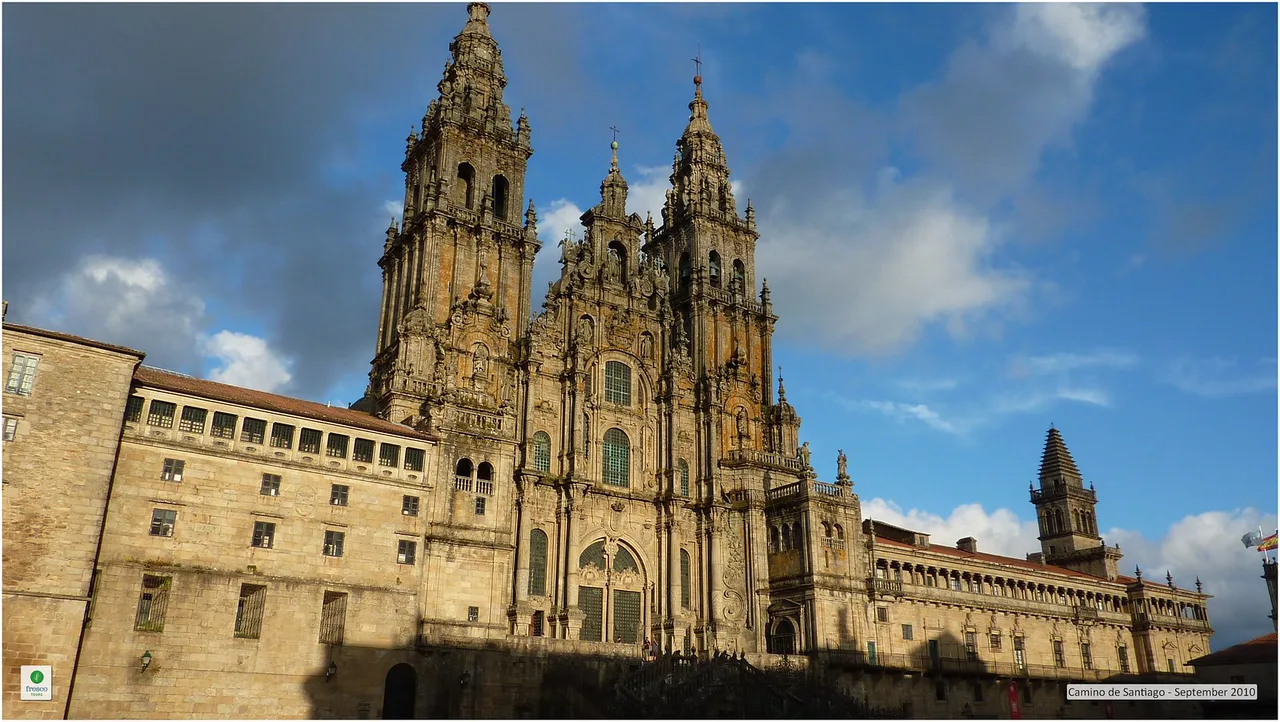
The Catedral de Santiago de Compostela anchors everything: a Romanesque core with Gothic and Baroque layers, the Pórtico de la Gloria by Master Mateo and the Obradoiro facade that appears on Spain's small euro coins. A cursory look around the cathedral is free, while the rooftop and tower visits are ticketed and worth buying directly from the cathedral shop rather than from a private tour company, according to visitor reports. Check current ticketing and pilgrim mass times before you go, as these are the details most likely to shift.
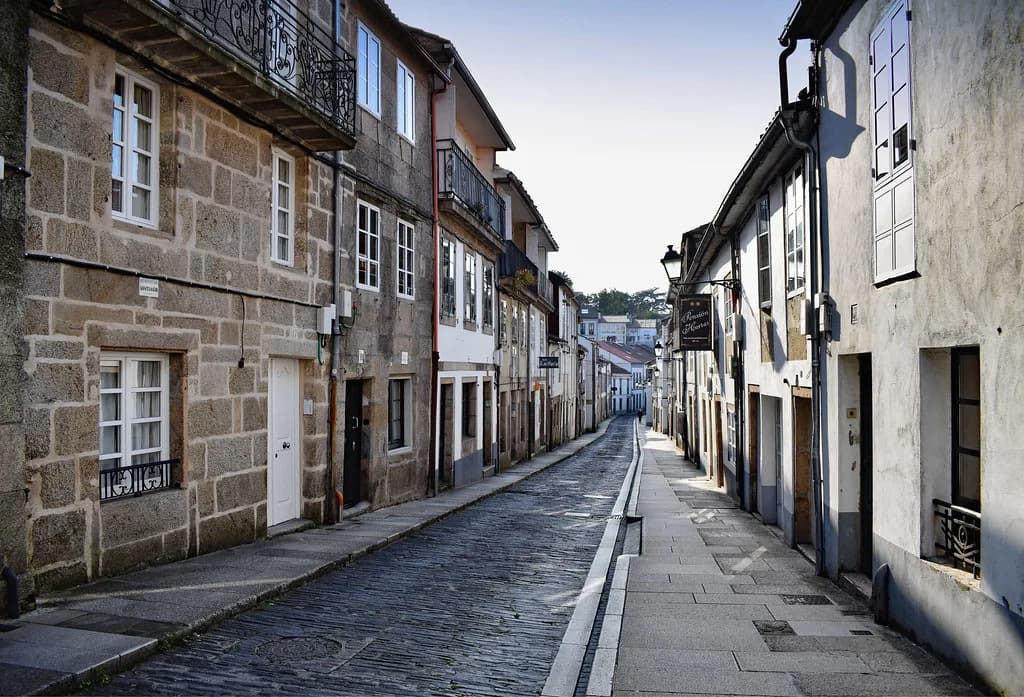
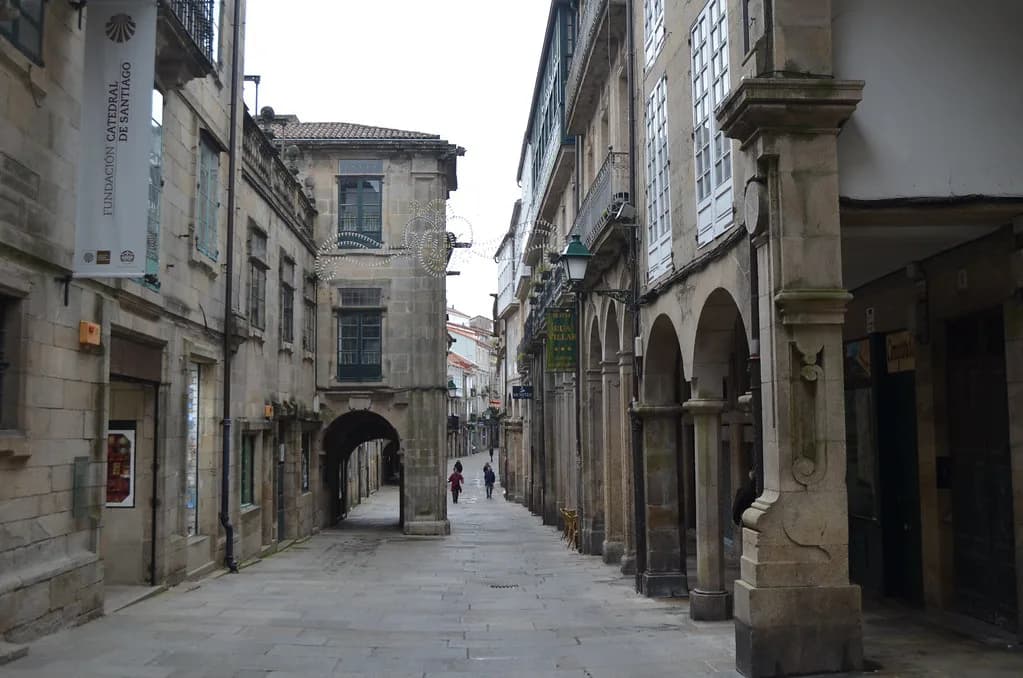
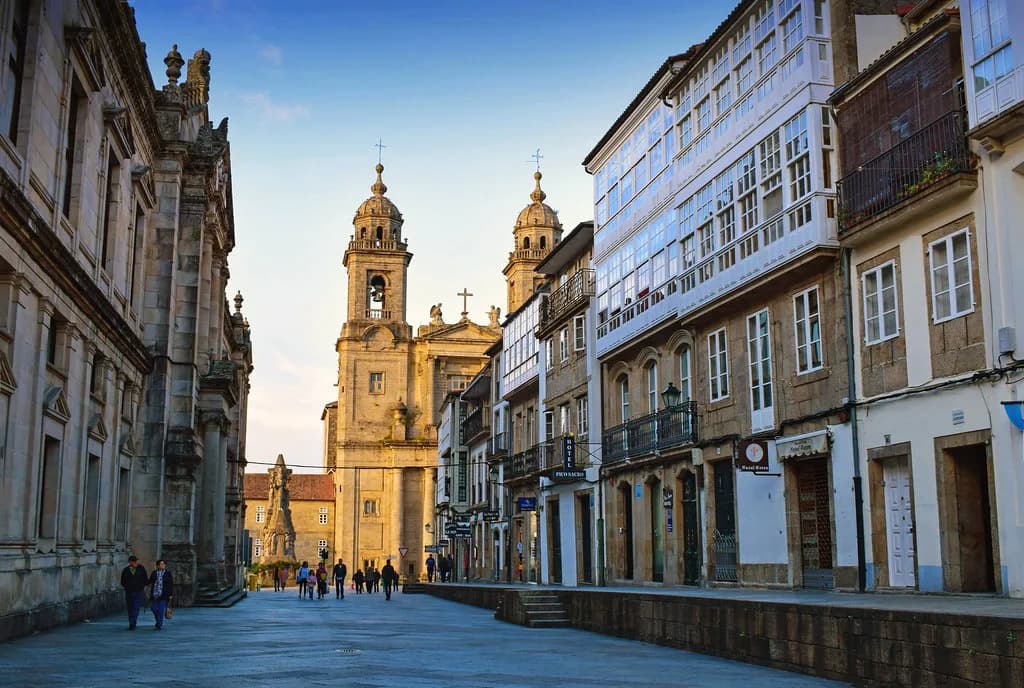
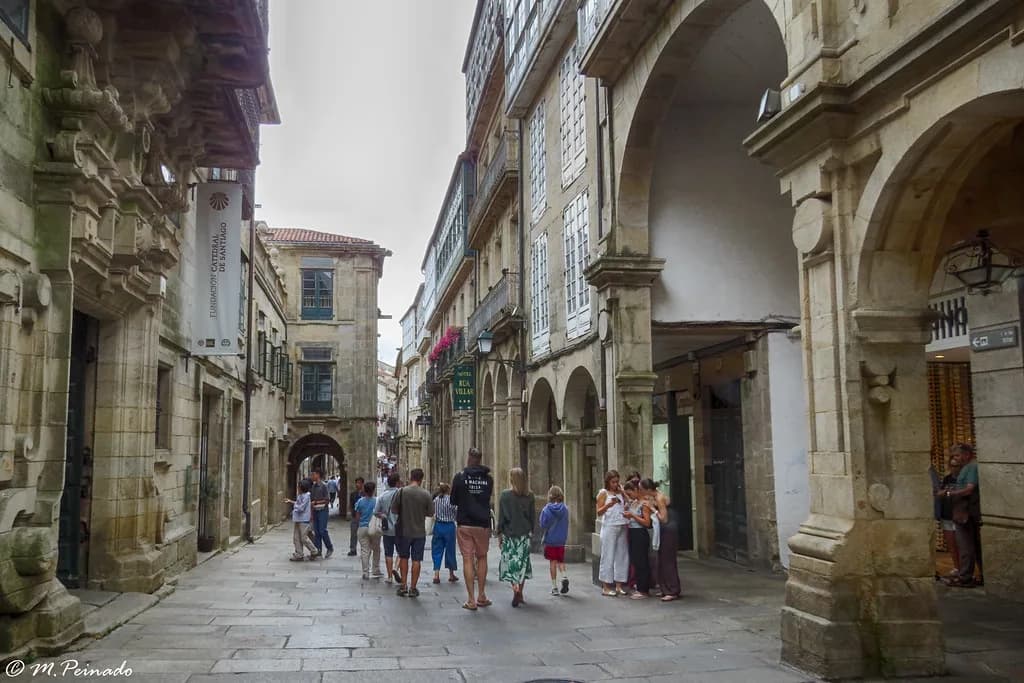
Beyond the cathedral, the Old Town rewards a slow wander: arcaded stone streets, monasteries, small museums and squares that change character through the day. The Cathedral Museum adds context if you want the history behind the pilgrimage, and the Museo do Pobo Galego covers Galician trades, dress and traditions in a former convent.
Live Galician music after dinner
Galicia's Celtic roots surface most clearly in its traditional music, and after a late dinner you can usually find it in the bars. Casa das Crechas on Vía Sacra holds gigs weekly, with Wednesday foliada nights, an informal crowd and plenty of outdoor seating in summer. A Gramola on Praza de Cervantes often has live music after dinner, including gaita-led folk groups.
Plan this as your after-dinner slot, not a pre-club night: music tends to start late and dinner finishes around 11pm in August. One drink can turn into three when a band is playing. That is the point.
Where to base yourself if you are walking the Camino
If you are finishing the Camino, the Old Town puts you within a short walk of the cathedral, the market and the bars, but book early: August is peak season and the last 100km is the busiest section. Hostal Nómade Santiago, above the wine bar of the same name on Rúa do Franco, offers private rooms in the middle of the action. Quieter options sit just north of the historic centre, close to Nariño on Rúa dos Pelamios.
If you want three days of eating and sightseeing rather than a single evening, a Santiago de Compostela itinerary helps you group the cathedral, the market and the parks by neighbourhood. Base anywhere within walking distance of the Obradoiro: the city is small, compact and walkable.
Practical trade-offs: heat, crowds and booking ahead
August asks you to choose between maximum atmosphere and minimum friction. The city is full, the food is at its best, and the evenings are long and sociable, but the queues and the last-minute bed hunt are real. Plan the cathedral for early morning, book Abastos 2.0 and DeLito ahead, and keep the afternoon slow. For a coastal alternative to this peak-season crunch, see Alicante in August.
If the crowds wear you down, remember how quickly the city changes: the walking guide recommends May, early June or September for the best balance of weather, crowds and prices. If your dates are fixed in August, you get the same streets with more people and warmer afternoons. September is the calmer alternative if you can shift.
Plan Your Visit
Santiago in August is best treated as a slow eating day with sightseeing attached: market oysters and albariño at lunch, shaded parks in the afternoon, a free tortilla pincho on the Franco before dinner, then pulpo and Galician music late into the warm evening. Book the bed and the sit-down restaurants, and let the meal times do the rest.
Explore more Santiago de Compostela guides
Frequently Asked Questions
Is Santiago de Compostela crowded in August?
Yes. Pilgrim numbers peak from May to September, and the final 100km of the Camino Frances from Sarria is the busiest section, filling albergues and city beds. Book accommodation ahead and do cathedral visits early in the morning.
What is the weather like in Santiago de Compostela in August?
Galicia stays moderate compared with inland Spain, but August afternoons on exposed sections of the Camino regularly exceed 30°C. Plan an early start, a long lunch and a shaded afternoon, and carry water on any walk.
What time do people eat dinner in Santiago de Compostela?
Dinner starts from 8:30pm to 9pm, and lunch runs from 1:30pm to 4pm. Turn up at 7pm and you will find empty rooms; use the gap between meals for a wine or a craft beer instead.
Where can you get free tapas in Santiago de Compostela?
Many bars send out a small plate with a drink. Bar La Tita on Rúa Nova is known for a free slice of tortilla de Betanzos with each order, and Nariño, Xénese and Xuntanza all hand out tapas or snacks with wine or beer.
What food should you try in Santiago de Compostela?
Start with pulpo á feira, tortilla de Betanzos, zorza, scallops and oysters from the rías. Add xarda if you see it on a modern menu, and rubia gallega steak if you want Galician beef.
Is the Mercado de Abastos worth visiting?
Yes, even for a short stop. The market has seafood halls, cheesemongers, baked goods and produce, plus small restaurants inside. Producers there sell oysters grown near Illas Arousa, which you can take to a nearby wine bar for an albariño; ask at the stall and the bar for that day's prices.
What is there to do in Santiago de Compostela besides the cathedral?
Walk the Old Town squares, visit the Cathedral Museum and the Museo do Pobo Galego, spend a hot afternoon in the Parque de San Domingos de Bonaval, and catch live Galician folk music at Casa das Crechas or A Gramola after dinner.
Is Santiago de Compostela worth seeing?
Yes. The cathedral and the Romanesque-to-Baroque Old Town give the city its weight, but the food scene, market and late-night music are what make a stay memorable, especially in the sociable August evenings.
Sources
Notes for eating well in Spain
Optional updates to our guides.
You might also like

Continue reading
More guides you'll find useful