Málaga Itinerary: Decide Your 3-Day Plan and Tapas Stops
A practical three-day Málaga itinerary covering the Alcazaba, Picasso Museum, Atarazanas market and Malagueta beach, with tapas bars and a Ronda day trip.
On this page
Three days gives Málaga room to breathe: a compact old town you can cross on foot, a city beach ten minutes from the centre, and day trips that start from a bus station within walking distance of most hotels. The plan below puts the Alcazaba and the market on day one, Picasso and the beach on day two, and a full-day excursion on day three.
Build the days around Spanish meal times rather than British ones. Lunch runs from 1:30pm to 4pm and dinner rarely starts before 8:30pm or 9pm, which leaves a long afternoon for museums, a swim at Malagueta beach or a climb to Gibralfaro. Order a tapa or a media portion first and add more if you are still hungry; the larger ración arrives as a full plate, and it is easy to end up with far more food than you intended.
When to Go and How the Day Fits Spanish Meal Times
Málaga claims around 300 days of sunshine a year, so the season matters less than the hour you go out. August can hit 38–40°C, while spring and autumn sit more comfortably in the 23–27°C range, which suits long walking days around the Alcazaba and the port.
The heat dictates the rhythm of any summer trip. If you are visiting in Málaga in August, put the fortress and castle climb in the morning, keep the middle of the day for air-conditioned museums or the shade of Parque de Málaga, and eat late.
July is the other month to plan carefully, with the beach busiest and the old town at its hottest by mid-afternoon, so an early start for Gibralfaro and a late dinner keep the day bearable. On the Costa del Sol the sea stays warm well into autumn, which is why the same plan works with less heat in September.
Shoulder months reward the same plan with less effort. In Málaga in September the sea stays warm and the streets are calmer, and by Málaga in October the walking is comfortable enough to cover the Centro Histórico de Málaga on foot without ducking into shade every ten minutes.
Where to Base Yourself
The old town around the cathedral, the Picasso Museum and Calle Larios puts almost everything on your list within a 10–15 minute walk, which is why hotels such as Hotel Catalonia Puerto del Mar work well as a base. Soho, the grid of streets between the old town and the port, is quieter at night but still close to the marina bars.
La Malagueta suits anyone who wants the beach on the doorstep, with the chiringuitos along the sand and the walk into the centre taking about ten minutes. The trade-off is distance from the late-night tapas bars around Plaza de Uncibay and the Picasso Museum.
Wherever you stay, Málaga Airport is only a 15–20 minute taxi ride from the centre, so a short break does not lose half a day to transfers. That makes two nights in the city workable if you keep the day trip for a longer visit.
Day 1 Morning: Get Your Bearings, Then Gibralfaro
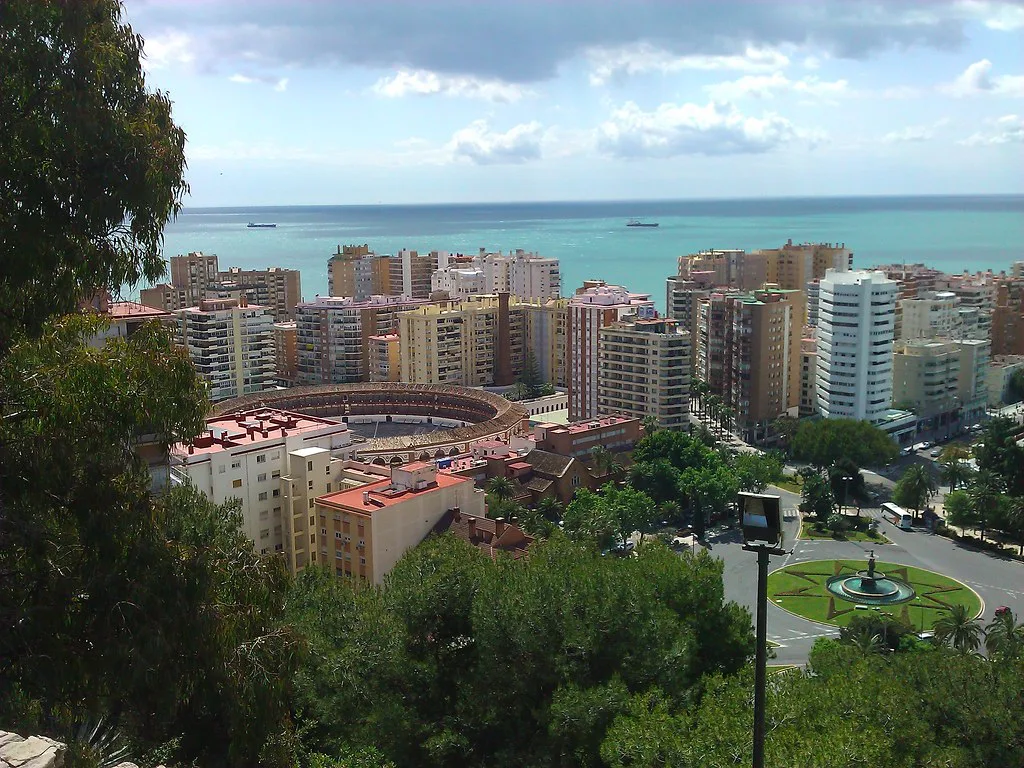
Start with a tuk-tuk or walking tour on your first morning, because it covers a lot of ground quickly and shows you how compact the centre is. A two-hour tuk-tuk ride typically takes in the harbour, the bullring and a stop at Gibralfaro for the panoramic view over the city, the port and the cathedral.
If you would rather walk up, save the Castillo de Gibralfaro for the morning cool and take the climb slowly. The reward is the same view across the coast, and the castle sits directly above the Alcazaba, so you can drop down into the fortress afterwards.
Both Gibralfaro and the Alcazaba can be covered on one combined ticket, which keeps the day efficient. If you only have one day in Málaga, the Alcazaba and the Roman Theatre below it are the pair to prioritise.
Day 1 Lunch: Mercado Central de Atarazanas
Mercado Central de Atarazanas is the city's oldest market and the liveliest lunch stop in the centre, with stalls piled with fruit, fish and meat and a Moorish arch over the entrance. Arrive around 9am to see locals doing their shopping, or come at lunch for tapas served straight from the counters.
The market is open from 9:00am on weekdays, so time a market lunch for a weekday if you want to see the stalls in full swing.
Decide between the bar stools and the terrace before you order. Snacking at the bar inside Bar Central is cheaper, while the seats outside the market come with table service and a higher bill, so the same plate of fried dogfish, clams with garlic butter or grilled octopus costs more.
Portion sizes catch most visitors out here. Ask for a tapa or a media of the dishes you want, add a racion only if you are sharing across a table, and remember that the seafood plates at the market restaurants are generous enough to turn a snack into a full lunch.
Day 1 Afternoon: Roman Theatre and the Alcazaba
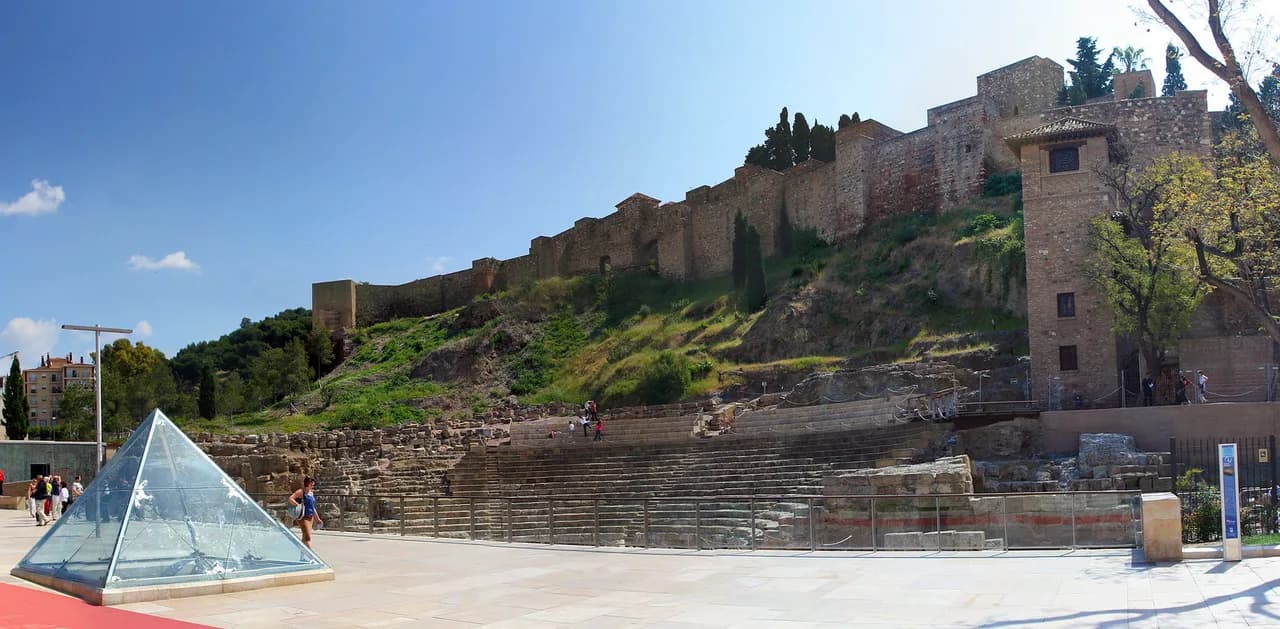
The Roman Theatre sits directly below the Alcazaba, rediscovered in 1951 after centuries underground, and you can see the stands and gateways from the street for nothing. A glass pyramid reveals the original Roman foundations, so even a quick look on the way up is worth the detour.
The Alcazaba is the highlight of the day, an eleventh-century fortress that ranks among the best preserved in Spain. Look closely at the doorways and you will spot marble columns taken from the Roman Theatre below and reused as supports, a detail that makes the two sights one story.
Tickets can sell out and the queues build in the afternoon, so book a guided entry or go early. A guide earns their fee here, explaining how the fortress was designed to resist invasion and how the coastline has shifted since it was built.
Day 1 Evening: Moscatel at Antigua Casa de Guardia
Begin the evening at Antigua Casa de Guardia, the city's oldest winery, established in 1840, where wines come straight from the barrels into small tumblers and the tab is chalked up on the wooden counter as you go. Order a glass of moscatel, the sweet local wine, and treat it as a warm-up rather than a full stop.
Move on to Taberna El Mentidero for tapas and a glass of Rioja, with a tomato and avocado salad and battered aubergine drizzled with molasses among the plates worth ordering. Finish the crawl with pork cheeks, orange chicken or goat's cheese on toast with tomato marmalade, and a glass of vermouth if you want something cold and spiced.
If you would rather settle in one place, El Pimpi near the foot of the castle serves a simple menu of local dishes and has a warren of rooms and a large plaza outside. Los Gatos on Plaza de Uncibay is the better pick for a buzzing bar and a terrace for people-watching over a caña.
Day 2 Morning: The Picasso Museum
Picasso was born in Málaga, and the museum housed in a renovated palace holds more than 250 works, from paintings and sculptures to early sketchbooks. Allow a couple of hours if you read the information boards, and look out for Musketeer with Sword among the collection.
Tickets sell out well in advance and visitors are regularly turned away on the day, so book online before you travel and slot the museum into the first morning. His childhood home and the bronze statue nearby make an easy add-on if you have time before lunch.
Day 2 Midday: Málaga Cathedral
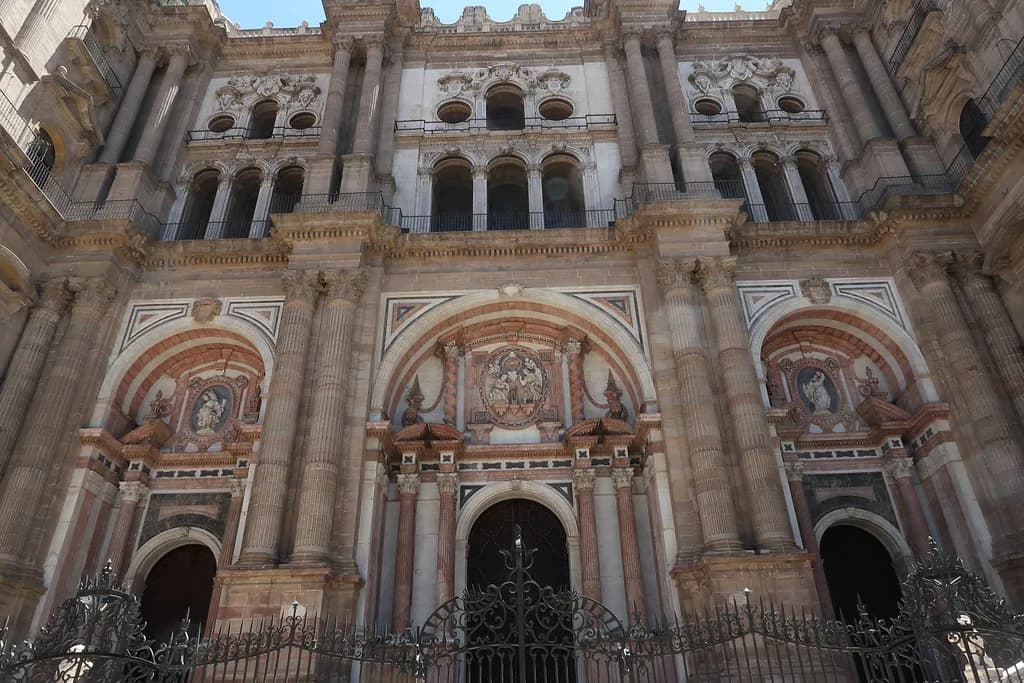
Málaga Cathedral, nicknamed La Manquita or the one-armed lady because its second tower was never finished, is a fifteen-minute walk from the Picasso Museum and a good way to escape the midday sun. Entry was reported at €10 per person with only a short queue, and you can take a guided tour or pick up a headset and go at your own pace.
The interior justifies the stop: soaring ceilings, stained glass and carved wood, with the scale hitting you as soon as you step in. The headset commentary is informative enough to make the visit worthwhile even if you normally skip audio guides.
Day 2 Afternoon: Parque de Málaga and Malagueta Beach
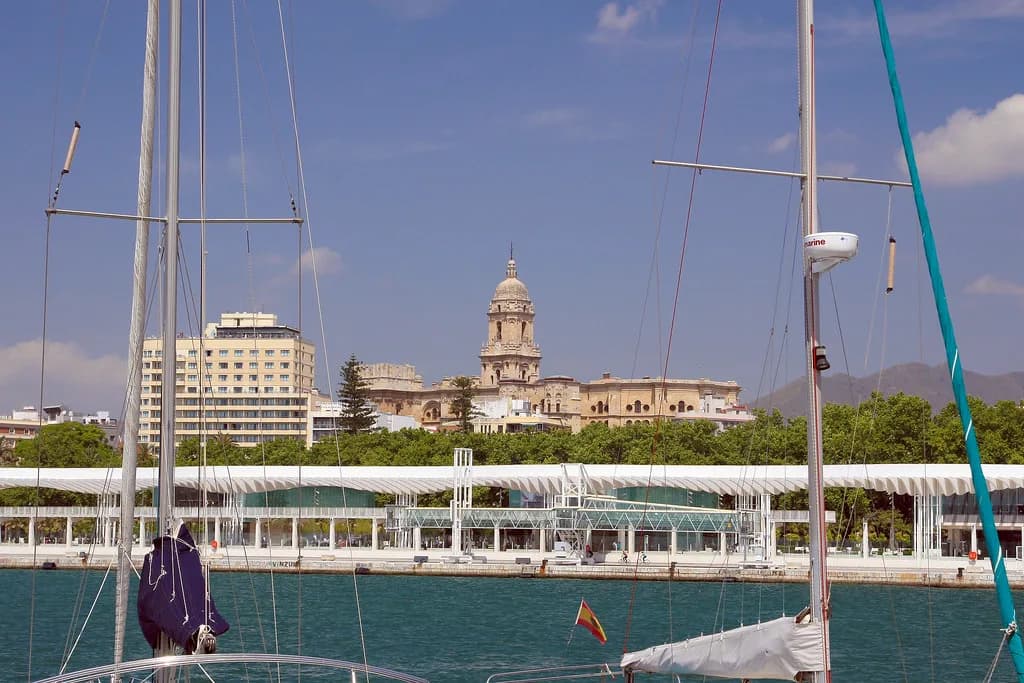
Parque de Málaga runs from the old town alongside the port towards Malagueta beach, a free stretch of tall palms, exotic plants and bright green parakeets that you will hear before you see. It is noticeably cooler under the canopy, which makes it the right walk between the cathedral and the sand.
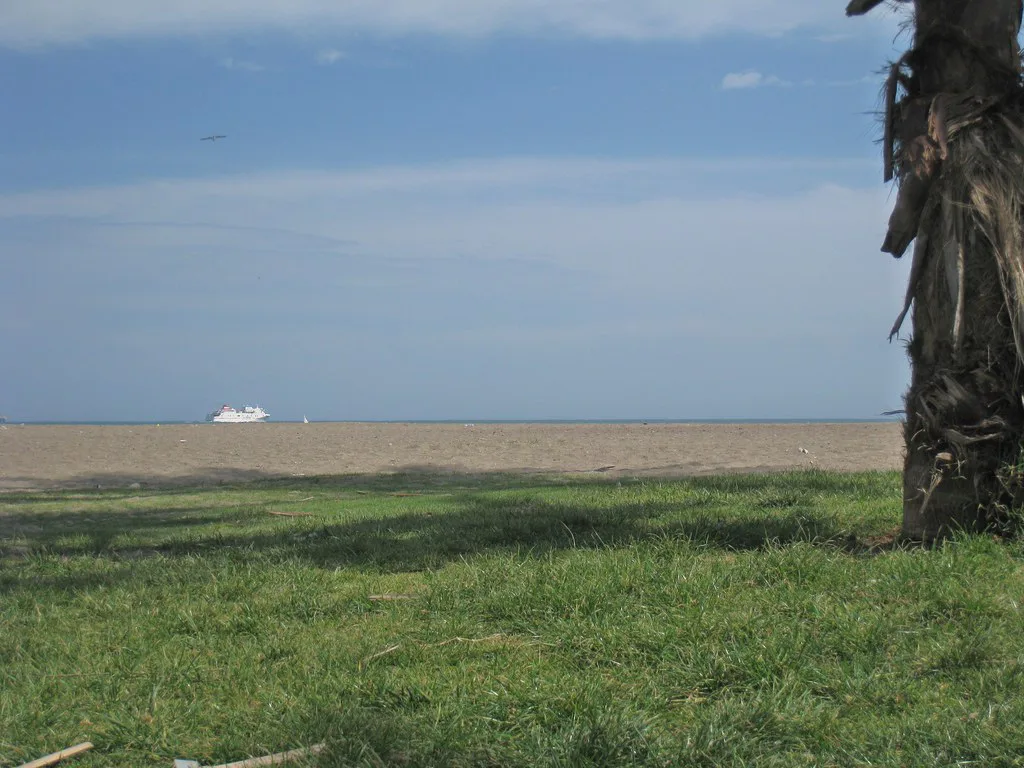
Malagueta is the closest beach to the centre, roughly a ten-minute walk from the old town, with a long stretch of sand and a promenade lined with bars and restaurants. Swim, walk or simply sit; the water stays warm enough for a dip well into autumn.
If you want a longer ride, a flat, segregated cycle path follows the beach east towards Pedregalejo and west towards the Reserva Natural Desembocadura del Río Guadalhorce, about 30–40 minutes away and good for birdwatching. Pack water and snacks, because there are no shops or cafés at the reserve.
Day 2 Evening: Sardines at a Chiringuito, Then Flamenco
For dinner, eat at one of the chiringuitos along Malagueta beach, where sardines skewered on canes are grilled over open boat barbecues and served with squid and other marinated fish landed nearby. Chiringuito El Cachalote, about halfway along the beach, is a straightforward choice for grilled sardines and salads.
Pedregalejo, the old fishing village further east, has a less touristy feel and chiringuitos such as El Caleno, El Kiosko and Pez Tomillo, or you can try El Tintero II, where there is no menu and plates of cooked fish are brought round and auctioned off at the table.
Book a flamenco show for afterwards, either at Teatro Flamenco Málaga or at Kelipe, and arrive early for a decent seat. Expect solo dancers rather than pairs, with guitar and vocals carrying the performance, and a room dark enough to make the footwork the main event.
Day 3: Ronda and Setenil de las Bodegas by Coach
The classic day trip pairs Setenil de las Bodegas, where houses, bars and cafés are built into the rock face, with Ronda and its Puente Nuevo bridge over the gorge. Coach tours leave early, often around 8:30am, and return to Málaga by late afternoon, so expect a long day with a fair amount of time on the bus.
In Setenil, climb to the Mirador del Carmen for the view over the whitewashed houses, and treat the cafés as a coffee stop rather than a full meal. Public toilets are scarce, so buy something if you need to use a restaurant bathroom.
In Ronda, walk the gorge, cross the bridge and take in the views from Alameda del Tajo. The bullring holds around 5,000 spectators and can be visited outside the annual fights, and for a view over the ring you can take a drink on the terrace of the hotel opposite rather than paying entry.
The honest trade-off is time. The coach day is convenient and covers two places in one go, but you get a couple of hours in Ronda rather than a full afternoon, and the best bridge photographs require a steep walk down and back up.
Day 3 Alternative: Córdoba by Train
If a long coach day does not appeal, Córdoba is about 50 minutes from Málaga by direct train, which makes it the more relaxed alternative. The Mezquita-Catedral alone justifies the trip, dating from 785AD, with the Roman bridge and the Alcázar within walking distance of each other.
Choose Córdoba over Ronda if you want more time on your feet and less on a bus, and Ronda if you want the dramatic bridge and the whitewashed hill town in a single day. Granada and Seville need longer than a day to do them justice.
Where to Eat Beyond the Plan
Casa Aranda is the local institution for churros con chocolate, savoury and crisp outside with a silky chocolate for dipping, and it opens in the evenings too if you want a post-dinner treat. It has two locations in the centre, both with tables spilling into the street.
For a sit-down meal, Mesón Ibérico serves classic local cooking and fills quickly, so book or join the queue 15–20 minutes before opening. Mesón Mariano, on a side street behind the square with Los Gatos, is known for roasted kid, grilled artichoke and excellent jamón.
Cortijo de Pepe has a section of its menu dedicated to the coal grill, and the chorizo and octopus are the plates to order. Uvedoble takes a more modern approach to tapas, with squid-ink fideos with aioli and prawns and grilled tuna among the highlights.
For a wine-led evening, Los Patios de Beatas pours more than 50 wines by the glass, and Vinumplay near Malagueta beach runs self-service machines so you can try several in small samples. Vinoteca Bouquet is a good stop for advice if you are unsure what to order.
Rooftop Drinks and What They Cost
The rooftop at AC Hotel Málaga Palacio has one of the best views in the city, looking over the cathedral and harbour, and access was reported at €11 per person including one drink, bought in the lobby without pre-booking. The terrace is open to the public from 4pm daily and there can be a queue.
The alternatives are easier to walk into. Terraza de San Juan puts you within touching distance of a medieval church tower, Terraza Room Mate Victoria looks over the port and sea, and Terraza de la Alcazaba faces the fortress and Roman amphitheatre; Batik and Lolita Skyview are further options.
What Three Days Costs and What to Skip
Budget for the cathedral at €10 per person and the AC rooftop at €11 including a drink, with market lunches and tapas varying by how many plates you order. Day-trip coaches vary by operator and itinerary, so price them against the train before you commit.
Skip the temptation to fill day three with both a day trip and a museum, because the coach day already runs from morning to late afternoon. The free sights, Parque de Málaga, the Roman Theatre viewed from the street and Malagueta beach, keep the trip affordable without eating into your time.
Book the Picasso Museum and the Alcazaba ahead, keep the midday hours for shade or air conditioning, and order smaller portions than you think you need. Those three habits prevent most of the common mistakes on a first visit.
If You Have a Fourth Day
With an extra day, the Caminito del Rey walk is the standout excursion from Málaga, though it is not one for anyone uneasy with heights. Granada and Seville are reachable by coach or train but deserve trips in their own right, so add a night rather than squeezing them into a day.
You can also use the day for the parts of the city a three-day plan leaves out: Hammam Al Andalus for the underground Turkish baths, the Wine Museum for a small but interesting collection, or a wander through the street art between Parque de Málaga and Alameda station.
Plan Your Visit
Three days in Málaga works because the city is compact: the Alcazaba, the market, the cathedral and the beach all sit within walking distance of each other, and the airport is a short taxi ride away. Set the days around Spanish meal times, book the Picasso Museum and the Alcazaba before you fly, and decide early whether day three is Ronda by coach or Córdoba by train.
Whether you are planning a first trip or extending one, the same logic applies as in an Alicante itinerary or a Girona itinerary: fewer stops, more time in each place, and meals planned around the local clock rather than the one you keep at home.
Explore more Málaga guides
Frequently Asked Questions
How many days should you spend in Málaga?
Three days covers the old town, the Alcazaba, the Picasso Museum, the cathedral and a beach afternoon without rushing, with room for one day trip. Two days works if you drop the excursion, and a fourth day suits the Caminito del Rey or more time in the city itself.
What should I do in Málaga for 3 days?
Day one: a tuk-tuk or walking tour, Gibralfaro, a market lunch at Atarazanas, the Roman Theatre and Alcazaba, then moscatel at Antigua Casa de Guardia. Day two: the Picasso Museum, the cathedral, Parque de Málaga, Malagueta beach and a flamenco show. Day three: Ronda and Setenil by coach, or Córdoba by train.
Should I book the Picasso Museum in advance?
Yes. Tickets sell out well in advance and visitors are turned away on the day, so book online before you travel and put the museum in your first morning to avoid a wasted afternoon.
Is Ronda or Córdoba a better day trip from Málaga?
Ronda pairs the Puente Nuevo gorge with Setenil de las Bodegas but means a long coach day with only a couple of hours in Ronda. Córdoba is about 50 minutes by direct train and gives you more time on foot, with the Mezquita-Catedral as the centrepiece.
Where should I eat tapas in Málaga?
La Tranca and Colmado 93 for traditional tapas with vermouth and sherry, Los Gatos on Plaza de Uncibay for a buzzing bar, and Cortijo de Pepe for coal-grilled chorizo and octopus. Uvedoble is the pick for modern tapas, and Casa Aranda handles churros con chocolate.
What does the cathedral and rooftop cost in Málaga?
Cathedral entry and access to the AC Hotel Málaga Palacio rooftop with one drink are both charged per person; the cathedral publishes its ticket prices at its own ticket desk and online, and the rooftop ticket is bought in the hotel lobby, where staff confirm the current rate.
Sources
Notes for eating well in Spain
Optional updates to our guides.
You might also like
Continue reading
More guides you'll find useful